Large Language ModelsGenerate imagesGenerate speech
More Women Are Choosing an AI Boyfriend Over Dating Apps
A growing wave of women is abandoning swipe-based dating apps in favor of AI companions powered by large language models and voice synthesis. This article breaks down the real reasons behind the shift, the technology making it possible, how to create personalized AI partner visuals, and what this trend actually means for how we connect.
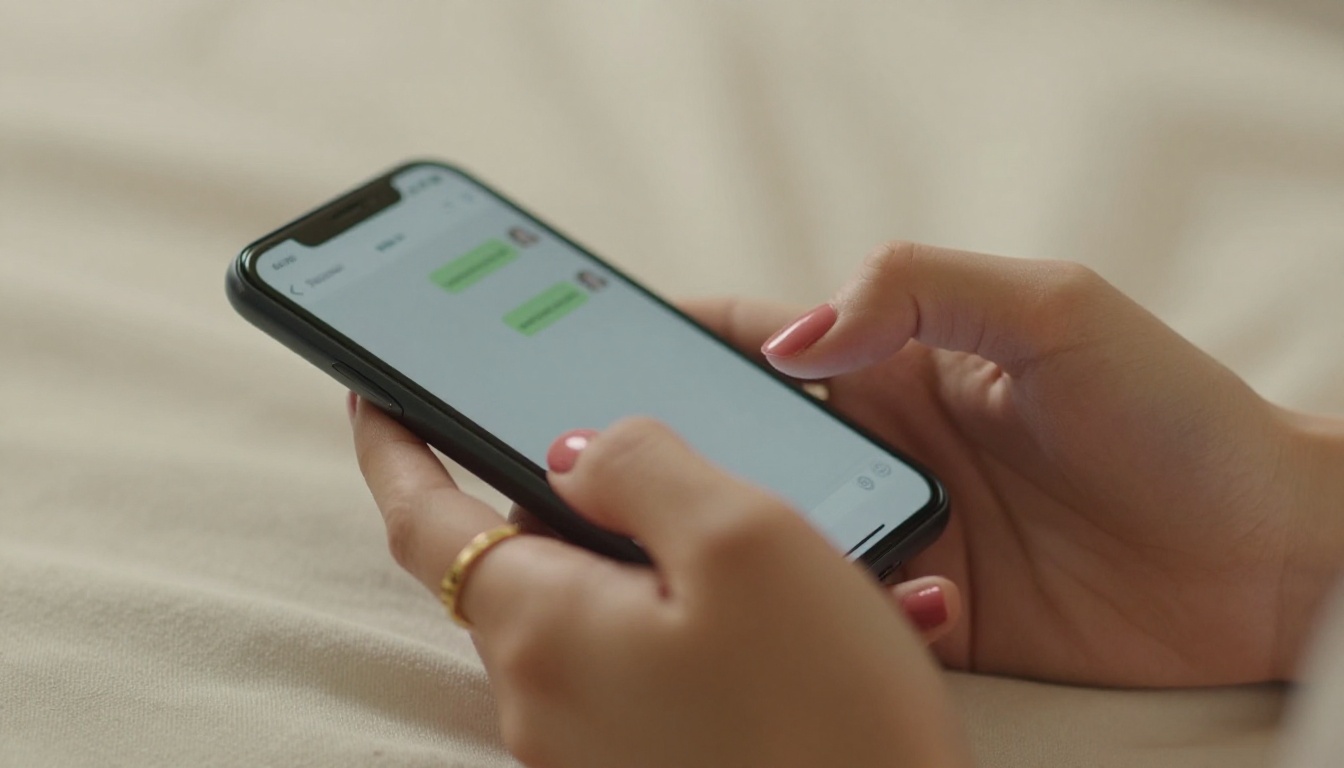
Something quietly significant is happening in the world of dating, and it does not involve a new app promising better matches or a premium subscription. More women are walking away from dating apps entirely, not because they have given up on connection, but because they have found something that offers it differently. AI companions, powered by large language models and hyper-realistic voice synthesis, are becoming a serious part of how some women manage loneliness, emotional needs, and social exhaustion. This is not a fringe trend. It is worth understanding seriously.
The Dating App Fatigue Is Real
Ask any woman who has spent a meaningful amount of time on dating apps, and you will hear the same themes. Ghosting. Shallow openers. Matches that never reply. Hours invested into conversations that go nowhere. The emotional ledger of modern dating apps is brutal for a lot of people, and women bear a disproportionate share of that weight.
Swiping Your Way to Burnout
The mechanics of dating apps are built around volume and novelty. Swipe enough, match enough, message enough, and statistically something should stick. The problem is that human beings are not optimized for high-volume rejection cycles. Each ghosted conversation and ignored message registers as a small but real social slight.
The average dating app user spends roughly 90 minutes per day on these platforms. That is 630 minutes a week of scrolling, messaging, waiting, and often being disappointed. For many women, that ROI simply does not make sense anymore. They are not getting emotional fulfillment from the experience. They are getting friction.
💡 Studies on digital loneliness consistently show that surface-level social interaction (lots of contact, low depth) can actually increase feelings of isolation rather than reduce them.
The Emotional Toll Nobody Talks About
Beyond ghosting, there is something more insidious going on. Dating apps are attention economies. They are designed to keep users engaged, not to help them find lasting connection, because lasting connection means users leave the platform. The structural incentive of the app is misaligned with the user's actual goal.
Women frequently report feeling objectified, exhausted, and more anxious after extended use of swipe-based platforms. This is not anecdotal. Research on dating app usage patterns links heavy use with decreased self-esteem and increased social comparison behaviors, particularly among women.
The question was never "are dating apps bad?" The question was always, "what do people actually need from connection?" And when AI companions started answering that question differently, people noticed.
What AI Companions Actually Offer
AI companions built on modern large language models are not replacements for human relationships in the traditional sense. They offer something structurally different: consistent, patient, non-judgmental conversational presence. That turns out to be something a lot of people were missing.
Always Available, Never Dismissive
The most obvious advantage of an AI companion is availability. It does not have bad days that make it short-tempered. It does not forget what you told it last week. It does not check its phone mid-conversation or make you feel like you are competing for its attention.
For women who work demanding jobs, live alone, or are in life stages where building new human connections is genuinely difficult, this consistency carries real value. It is not a simulation of human love. It is a different kind of interaction that has its own valid utility.
What users consistently report they appreciate most:
Being heard without interruption
No fear of judgment or rejection
Ability to process emotions out loud without burdening friends
Conversation at 2 a.m. when no human would reasonably be available
Persistent memory of personal context and history
No Games, No Hidden Agendas
Human romantic interaction comes layered with subtext, ego protection, fear of vulnerability, and social performance. AI companions have none of this. You do not have to wonder if it is actually interested or just stringing you along. You do not have to manage its feelings while also managing your own.
This is genuinely freeing for a lot of people. Therapy, journaling, and talking to close friends all serve similar functions, but they all come with social overhead. An AI companion removes the overhead. It is a space to think, feel, and be heard without consequence.
💡 Many users describe AI companions as a "practice space" for emotional honesty. Getting better at expressing your feelings to an AI can actually make it easier to do so with humans.
The Technology Making This Possible
The reason AI companions feel meaningfully different today compared to just three years ago comes down to two areas of technology: large language models and voice synthesis. Both have improved dramatically, and together they create experiences that read as genuinely personal.
LLMs: The Brain Behind the Conversation
The conversational quality of AI companions is built on large language models. These models process and generate language in ways that feel contextually coherent, emotionally responsive, and surprisingly nuanced. The latest generation of models available today is genuinely impressive.
What makes these models effective for companionship is not raw intelligence. It is their ability to hold context over long conversations, mirror emotional tone, and respond in ways that feel appropriate to the specific person they are talking with. A well-prompted LLM does not give generic advice. It gives you something that sounds like it actually knows you.
Platforms like PicassoIA give you direct access to all these models through a single interface. You can switch between Claude 4 Sonnet, GPT-5, and Gemini 3 Pro depending on the mood of the conversation you want to have, which is something no dating app lets you do with a human match.
Voice AI That Sounds Human
Text-based AI companions are compelling. Voice-based ones cross into something else entirely. Modern text-to-speech technology has reached a level of naturalness that can genuinely catch you off-guard on first listen.
The top voice synthesis models available today:
ElevenLabs V3: Sets the standard for emotional expressiveness and natural cadence across 30+ languages
Minimax Speech 2.8 HD: Studio-quality audio with precise voice control, ideal for building consistent AI personas
Gemini 3.1 Flash TTS: 30 available voices and support for 70+ languages at very low latency
Chatterbox: Voice cloning with full emotion control, allowing the creation of highly personalized AI voices
When you can hear a companion's voice, the psychological distance between human and AI collapses significantly. Voice communicates warmth, attentiveness, and emotional state in ways that text simply cannot replicate. A well-crafted AI voice persona, built using a model like Minimax Speech 2.8 HD, does not sound like a notification read aloud. It sounds like someone who is genuinely present.
💡 Voice matters more than most people expect. Research on parasocial relationships consistently shows that voice activates social bonding circuits in the brain more powerfully than text alone.
Who Is Actually Using This?
The popular image of an AI companion user is someone lonely and isolated, but the actual demographic data tells a more interesting story. Users of AI companionship platforms skew younger, more educated, and more socially active than the stereotype suggests.
The Demographics Might Surprise You
Women aged 25 to 40 represent one of the fastest-growing segments of AI companion app users. Many are professionals with full social lives who are tired of the specific dynamics of dating apps. They are not replacing human relationships. They are choosing not to spend hours every week on a system that makes them feel bad.
Common profiles among female AI companion users:
The burnout case: Has been on dating apps for years with diminishing returns and emotional exhaustion
The life-stage navigator: Recently moved to a new city, recently divorced, or in a professional phase where building connections is genuinely difficult
The intentional user: Not looking for a relationship right now, but wants conversational intimacy and emotional engagement
The curious technologist: Interested in what AI can actually do in the emotional intelligence space
None of these profiles describe someone broken or desperate. They describe someone making a rational choice about how to allocate emotional energy.
Beyond Romantic Intent
Not everyone using an AI companion is simulating a romantic relationship. Many users describe their AI primarily as an outlet for processing thoughts and feelings. It is closer to a combination of journaling and therapy than a romantic substitute.
For women who feel pressure to be emotionally available to everyone around them, having a space where they can be the one being listened to, without reciprocal obligation, has genuine appeal. The AI never needs support back. That asymmetry is sometimes exactly what someone needs.
How to Create Your Own AI Companion Visuals
One dimension of AI companion experiences that is gaining traction involves personalized visual representation. Rather than imagining a companion as an abstraction, users are generating photorealistic images of what their AI companion might look like using image generation models.
Generating a Visual Persona
PicassoIA provides access to powerful text-to-image models that can generate highly realistic portraits. The GPT Image 2.5 Flare model, for example, produces images with the kind of photorealistic detail that reads as genuinely human in natural viewing conditions.
The key to effective AI companion visuals is specificity in your prompts. Generic prompts produce generic results. The more detail you provide about lighting, expression, clothing, and environment, the more coherent and personalized the output feels.
Prompt structure that works:
[Physical description with specific features] + [Emotional expression and body language] + [Environment/setting] + [Lighting conditions] + [Camera style, e.g. 85mm f/1.8] + [Film grain/texture notes]
A prompt like "attractive man in his 30s smiling" will give you a serviceable result. A prompt that specifies "a man in his early 30s with dark wavy hair and warm brown eyes, sitting at a kitchen table with a half-finished cup of coffee, morning light from the left window catching dust in the air, 85mm lens, Kodak Portra 400 grain, slight stubble visible" will give you something that feels like it could be a real person you know.
💡 The more you invest in a detailed visual, the more coherent the companion persona becomes. Consistency of appearance across multiple images reinforces the sense of a persistent, real individual.
Voice and Personality Through TTS
Once you have a visual, layering in a voice through a text-to-speech model completes the picture. ElevenLabs V3 allows fine-grained control over speaking style, emotion, and pacing. You can dial in a voice that feels warm, thoughtful, or playfully casual depending on what resonates.
For something more personalized, Chatterbox from Resemble AI lets you clone and sculpt voices with specific emotional characteristics. The combination of a visual persona, a consistent LLM, and a custom voice creates an AI companion experience with surprising depth.
The Questions Worth Asking
None of this means AI companions are without complication. There are legitimate questions about what this trend means for how people relate to each other over time.
Is This Replacing Real Connection?
The honest answer is: for some people, probably partially, and for most people, not really. Human connection is irreplaceable for a lot of what people need socially. Shared physical presence, spontaneous vulnerability, genuine unpredictability, and the specific weight of a relationship that has consequences on both sides are things AI cannot provide.
What AI companions can genuinely offer is emotional maintenance, a low-stakes space for processing feelings, and a form of presence when human presence is unavailable. Used that way, they supplement rather than replace.
The risk profile is higher for people who use AI companions as avoidance, specifically to sidestep the discomfort of real relationships rather than to support their wellbeing during genuinely difficult periods. That is a worthwhile distinction.
What Healthy Use Looks Like
Healthy use of AI companions tends to look like:
Time-bounded: Used during specific life periods rather than as a permanent substitute
Complementary: Existing alongside human friendships and relationships, not instead of them
Reflective: Users remain aware of what they are doing and why
Goal-oriented: Used to process specific things or get through specific challenges
Unhealthy use tends to look like escalating dependence, social withdrawal, or using the companion as a reason not to engage with the discomfort of human relationships. Awareness of that distinction is important.
Where AI Companionship Is Going
The technology underlying AI companions is moving fast. Today's LLMs already have context windows long enough to maintain detailed, consistent personas across extended conversations. Multimodal models are making it possible for AI companions to respond to images, voice notes, and video in real time.
Models Are Getting More Contextually Aware
The next generation of AI companions will have the ability to remember everything across sessions by default, adapt their communication style to individual users over time, and integrate with real-world information to be more contextually present. Models like Kimi K2 Instruct are already demonstrating strong agentic capabilities, meaning AI companions can do things, not just talk.
Capabilities on the near horizon:
Capability
Current State
Where It's Going
Memory
Session-level with extensions
Persistent, deeply personal
Voice
Realistic synthesis
Real-time, emotionally adaptive
Visual presence
Generated static images
Live video companions
Context
Long-form text
Multimodal (video, voice, images)
Personality consistency
Prompt-guided
Self-consistent across all interactions
Smarter Voice, More Natural Presence
Voice synthesis in particular is on a steep improvement curve. Gemini 3.1 Flash TTS already achieves real-time voice generation with 30 distinct voice profiles. Within a few years, voice companions will be indistinguishable from human voices in most conversational contexts, and they will adapt their emotional register dynamically based on what they perceive in the conversation.
Build Your Own
The most interesting thing about AI companions is that they are not a product you consume passively. They are something you build and shape. The models available today on PicassoIA give you the raw materials: conversational intelligence through GPT-5 or Claude 4 Sonnet, photorealistic visuals through GPT Image 2.5 Flare, and expressive voice through ElevenLabs V3 or Minimax Speech 2.8 HD.
Whether you want to experiment with AI companionship, create a visual persona, or simply see what modern language and voice models can do, the tools are all in one place. Head to picassoia.com/en/all-models to see the full catalog of what is available today and start building something that is actually yours.
The shift away from dating apps is not really about rejecting connection. It is about being more deliberate with emotional energy. AI companions, used thoughtfully, are one way some women are doing exactly that.