Music to text conversion technology represents one of the most significant advancements in audio processing, bridging the gap between auditory experiences and actionable data. What began as simple speech recognition has evolved into sophisticated systems capable of extracting lyrics, analyzing musical structure, and transforming audio content into searchable, analyzable text. The implications extend across music production, content creation, academic research, and accessibility services.
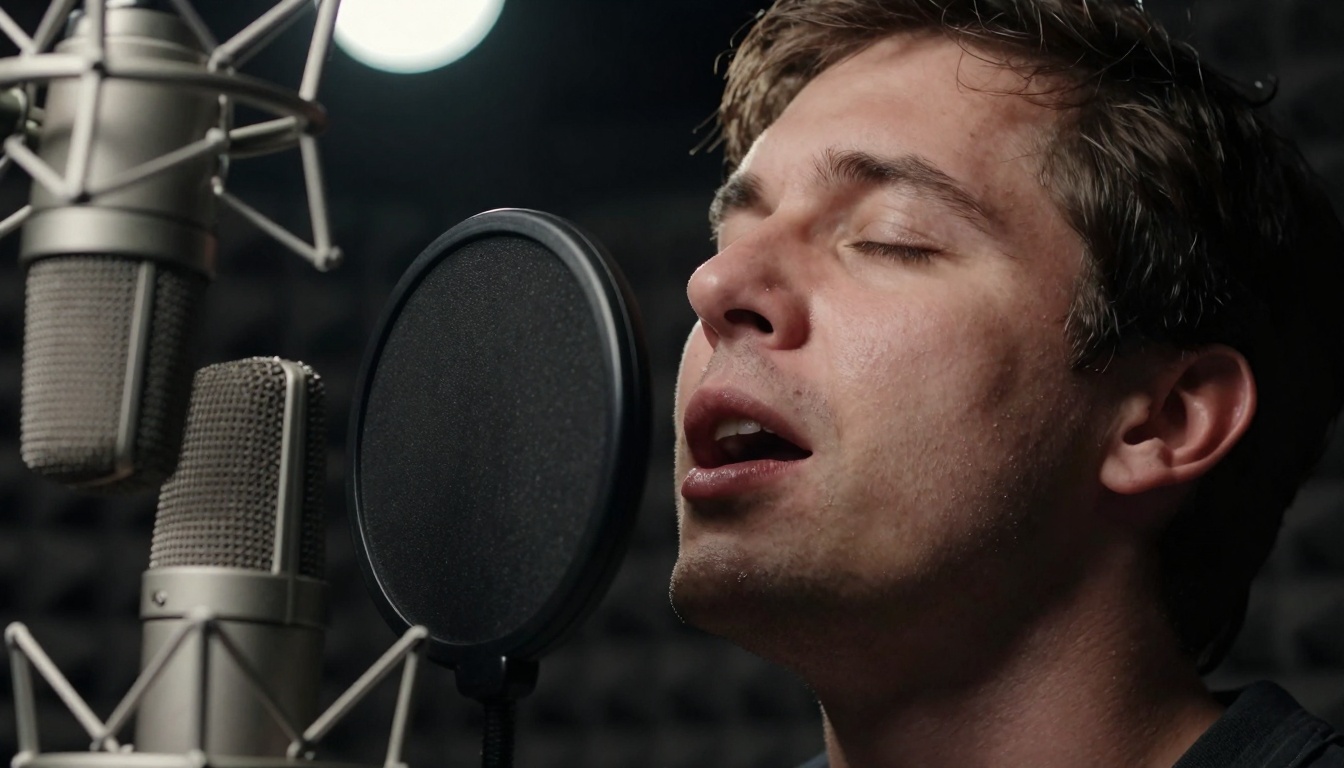
Close-up aerial shot of vocalist recording showing the intersection of performance and technology
Why Music Transcription Matters
The transition from audio to text isn't merely about convenience—it's about preservation, accessibility, and analysis. Consider historical music archives: thousands of hours of recordings exist without proper documentation. Music transcription tools convert these analog treasures into searchable digital formats, preserving cultural heritage while making it accessible to researchers and enthusiasts.
For content creators, transcription enables multiplatform distribution. A podcast interview with a musician becomes a blog post, social media snippets, and searchable content. Music educators use transcription to create accessible learning materials, while music therapists document sessions for clinical analysis.
The commercial impact is equally significant. Music labels use transcription for copyright verification, ensuring proper attribution and royalty distribution. Streaming platforms employ these tools for content moderation and playlist categorization based on lyrical content.
💡 Real-world application: A music historian working with 1950s jazz recordings used AI transcription to identify previously undocumented lyrics, leading to new scholarship about cultural influences during that era.
Core Technologies Behind Audio-to-Text Conversion
Modern music transcription systems combine multiple AI technologies into cohesive workflows:
Speech Recognition Engines
Advanced models like Google's Gemini 3 Pro and OpenAI's GPT-4o Transcribe form the foundation. These systems excel at converting clear speech but face challenges with musical elements.
Music-Specific AI Models
Specialized models address music's unique characteristics:
- Vocal isolation algorithms separate singing from instrumentation
- Pitch detection systems identify musical notes and melodies
- Rhythm analysis engines detect tempo and timing patterns
- Harmonic analyzers identify chords and musical structure
Hybrid Approaches
The most effective systems combine speech recognition with music analysis. For example, a system might:
- Isolate vocal tracks from the full mix
- Apply noise reduction to remove instrumental interference
- Use speech recognition for clear sections
- Apply music-specific models for challenging passages
- Cross-reference with known lyrics databases
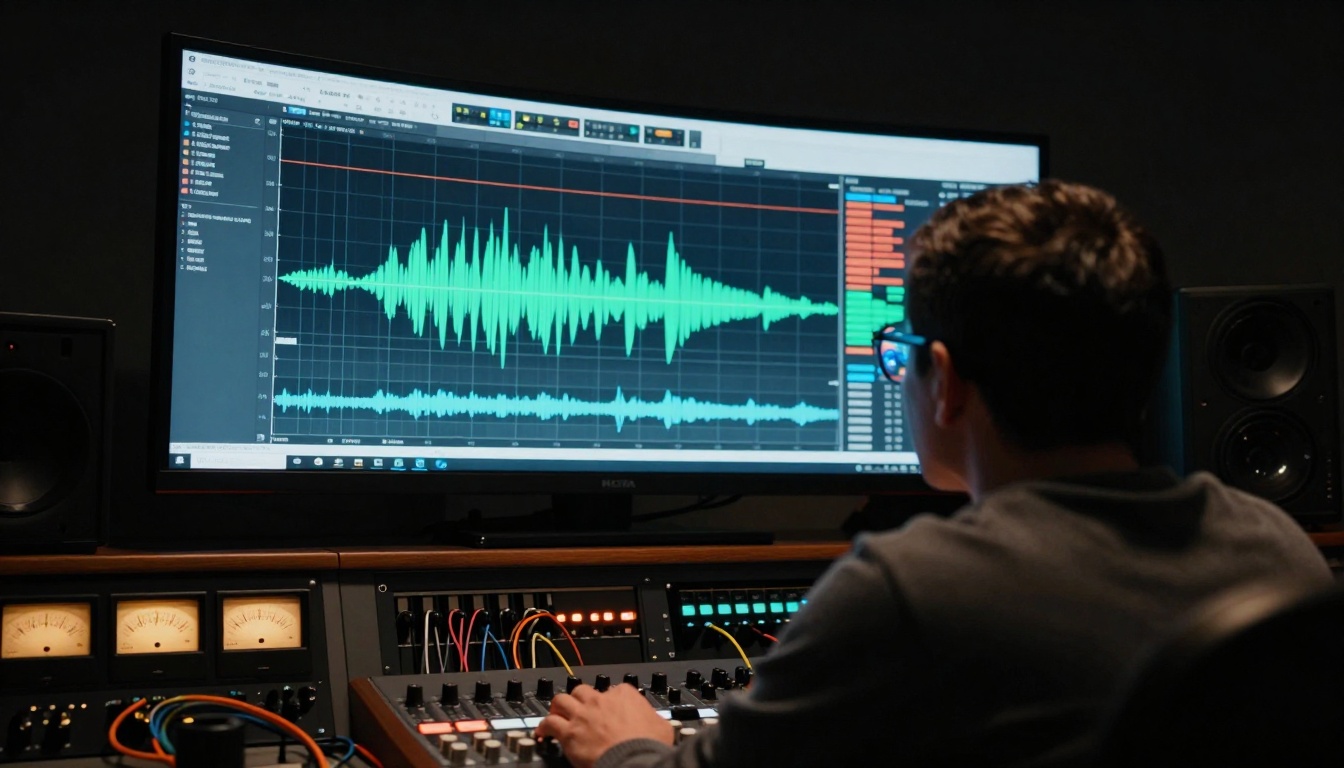
Professional analysis environment showing waveform visualization alongside transcription interface
Speech Recognition vs Music Transcription
While related, these technologies address fundamentally different challenges:
| Aspect | Speech Recognition | Music Transcription |
|---|
| Primary Input | Clear spoken language | Singing with musical accompaniment |
| Challenges | Accents, background noise | Melodic variation, instrumental overlap |
| Accuracy Baseline | 95-98% for clean audio | 70-85% for complex music |
| Output Format | Plain text with timestamps | Lyrics with musical notation markers |
| Use Cases | Meetings, interviews, dictation | Song analysis, lyrics extraction, music education |
Music introduces complications speech systems rarely encounter:
- Melodic variation: Pitch changes that distort vowel sounds
- Rhythmic patterns: Timing that differs from natural speech
- Emotional delivery: Stylistic choices that alter pronunciation
- Instrumental interference: Background music masking vocals
💡 Technical insight: The most successful music transcription systems use adaptive thresholds—lowering confidence requirements for challenging musical passages while maintaining strict standards for clear sections.
Practical Applications in Music Industry
Lyrics Documentation and Publishing
Record labels and publishers use transcription tools to create official lyrics sheets. This process, once manual and error-prone, now achieves near-perfect accuracy with AI assistance. The workflow typically involves:
- Source audio preparation (isolating vocal tracks)
- AI transcription with confidence scoring
- Human verification of flagged sections
- Formatting for publication (including timing markers)
Content Creation and Marketing
Music bloggers, podcasters, and social media creators extract quotes and lyrics for:
- Article content with accurate musical references
- Social media posts featuring song lyrics
- Video captions synchronized with audio
- Podcast show notes with musical excerpts
Academic Research
Musicologists and historians employ transcription for:
- Comparative analysis of lyrical themes across eras
- Cultural studies examining language evolution in music
- Performance practice documentation
- Archive digitization projects
Accessibility Services
Transcription enables music access for:
- Hearing-impaired audiences through captioned music videos
- Language learners studying lyrics with audio support
- Memory care patients with lyric-based cognitive therapy
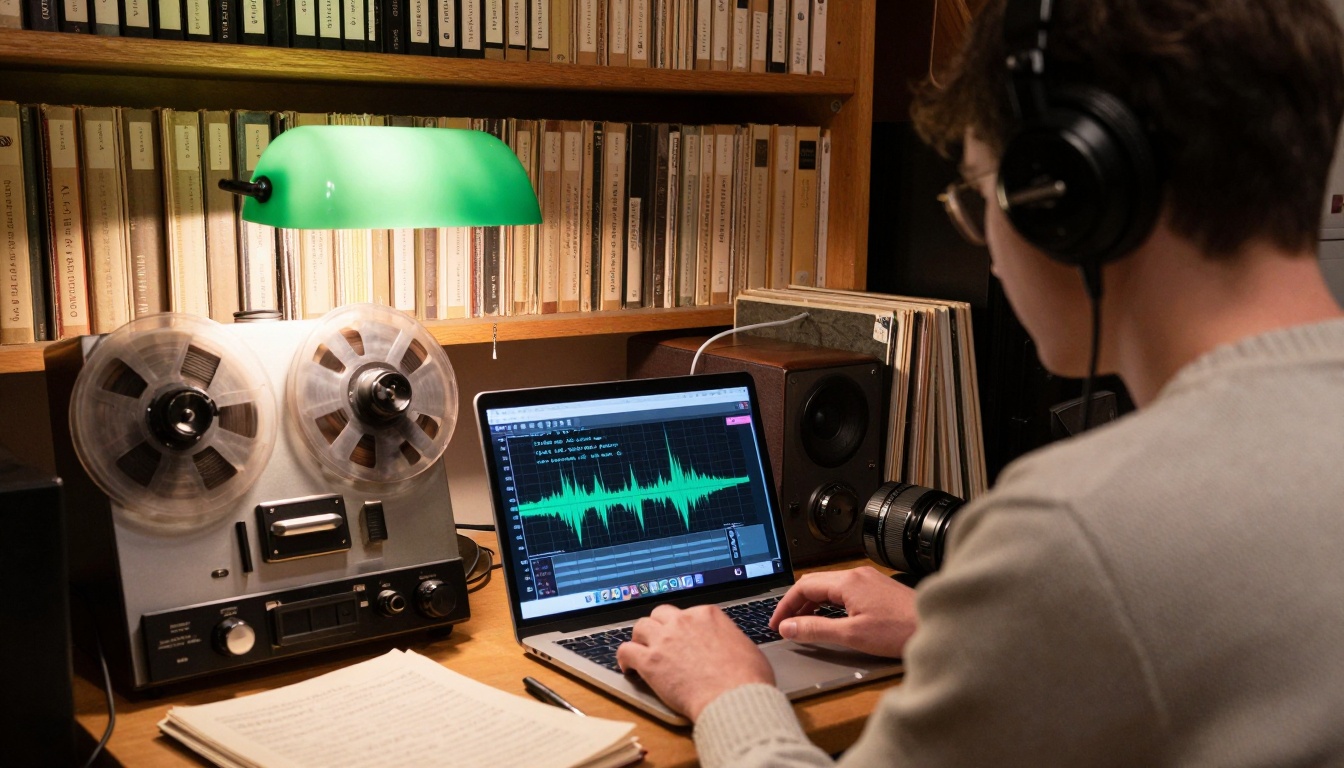
Over-the-shoulder view of archival work converting historical recordings to searchable text
Accuracy Factors and Error Analysis
Music transcription accuracy depends on several interrelated factors:
Audio Quality Variables
| Factor | Impact on Accuracy | Mitigation Strategies |
|---|
| Signal-to-noise ratio | High background noise reduces accuracy 30-50% | Vocal isolation algorithms, spectral subtraction |
| Recording quality | Low-bitrate recordings lose high-frequency detail | AI-based audio enhancement, bandwidth expansion |
| Vocal processing | Heavy compression/distortion obscures lyrics | Dynamic range restoration, harmonic reconstruction |
| Instrumental density | Dense arrangements mask vocal frequencies | Source separation models, frequency masking |
Performance Characteristics
Singing styles present unique challenges:
- Rap/hip-hop: Fast delivery, complex rhyme schemes
- Opera/classical: Extended vowels, vibrato effects
- Screamo/metal: Distorted vocals, extreme dynamics
- Folk/traditional: Regional accents, unconventional phrasing
Language and Dialect Considerations
Multi-language support varies significantly:
- Major languages (English, Spanish, Mandarin): 85-90% accuracy
- Lesser-resourced languages: 60-75% accuracy
- Regional dialects: Additional 10-15% accuracy reduction
- Code-switching (multiple languages in one song): Specialized models required
Integration with Music Production Workflows
Modern DAWs (Digital Audio Workstations) increasingly incorporate transcription capabilities:
Recording Session Integration
During vocal recording sessions, real-time transcription provides:
- Lyrics verification against written sheets
- Take comparison across multiple performances
- Phrasing analysis for consistency checking
- Timing synchronization with click tracks
Mixing and Mastering Phase
At the mixing stage, transcription assists with:
- Vocal level balancing based on lyrical importance
- Effect automation synchronized with lyrical content
- Sibilance detection for de-essing optimization
- Breath noise management for clean mixes
Post-Production Applications
After mixing, transcription enables:
- Lyric video creation with precise timing
- Metadata generation for distribution platforms
- Accessibility file creation (subtitles, captions)
- Educational material development
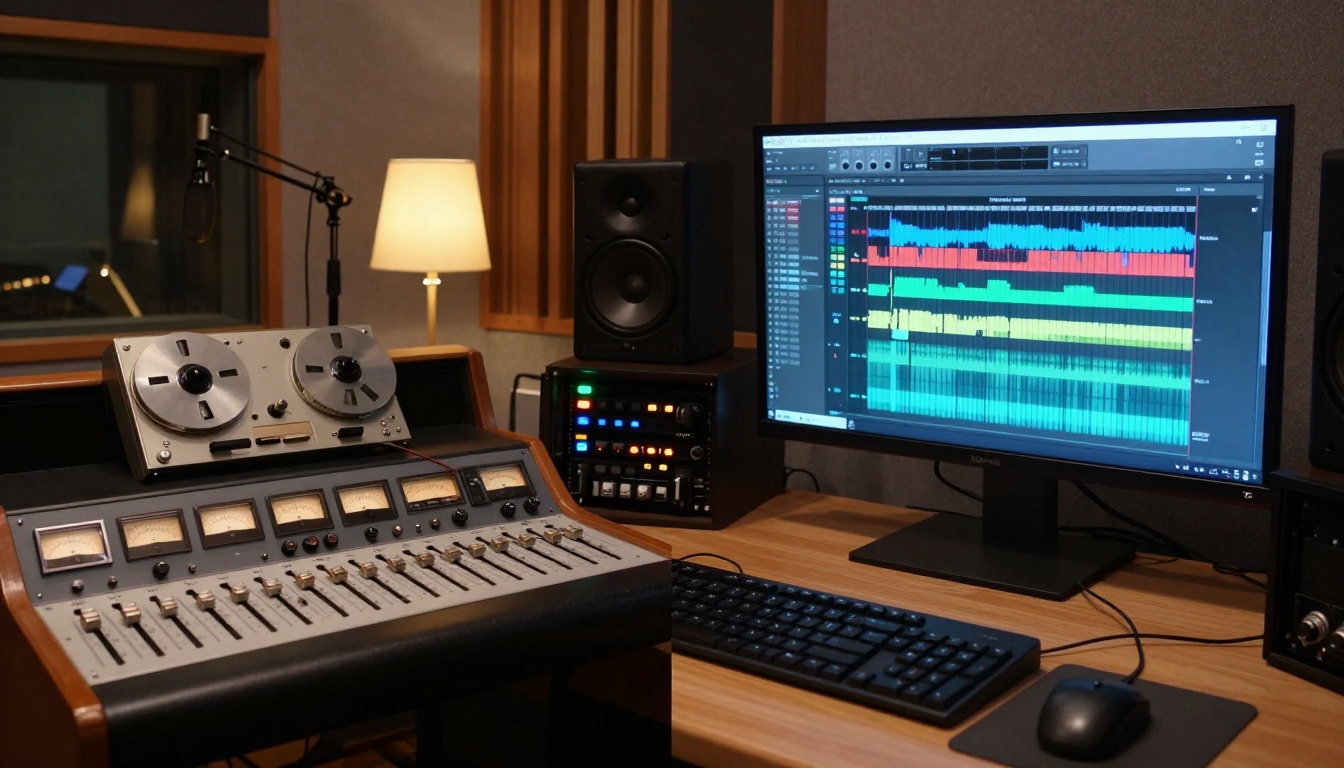
Visual comparison between traditional recording methods and modern transcription technology
Future Developments in Music AI
The evolution of music transcription technology points toward several emerging trends:
Real-time Performance Support
Upcoming systems will provide live transcription during performances, offering:
- Lyric prompting for artists during concerts
- Audience engagement through synchronized displays
- Accessibility services for live events
- Performance analysis for training purposes
Multimodal Analysis Integration
Future tools will combine audio transcription with:
- Visual analysis of performance videos
- Emotion detection from vocal delivery
- Movement correlation with lyrical content
- Crowd response measurement
Personalization and Adaptation
AI systems will learn individual characteristics:
- Artist-specific models trained on particular vocal styles
- Genre adaptation for specialized music forms
- Language model fine-tuning for lyrical patterns
- Accent normalization for regional variations
Vocal Isolation Techniques
Effective music transcription begins with clean vocal extraction:
Spectral Subtraction Methods
These traditional approaches identify and remove instrumental frequencies based on spectral templates. While effective for simple arrangements, they struggle with:
- Overlapping frequencies where vocals and instruments share ranges
- Dynamic arrangements with changing instrumental textures
- Harmonically complex music with dense chord structures
Deep Learning Separation
Modern AI models like Demucs and Spleeter use neural networks trained on thousands of song examples. These systems excel at:
- Source identification distinguishing vocals from specific instruments
- Real-time processing for live applications
- Adaptive learning improving with more data
- Multi-format output (stems for further processing)
Hybrid Approaches
The most effective current systems combine:
- Initial separation using deep learning models
- Frequency masking to remove residual instrumental content
- Harmonic reconstruction to restore vocal clarity
- Post-processing for natural sound quality
Multi-language Song Support
Global music consumption demands multilingual transcription capabilities:
Language Detection Systems
Before transcription begins, systems must identify:
- Primary language of the lyrics
- Code-switching points where languages change
- Regional dialect indicators for accuracy optimization
- Lyrical language vs spoken language distinctions
Translation Integration
Advanced systems provide:
- Transcription in original language
- Translation to target language
- Cultural context preservation for idioms and references
- Rhyme pattern maintenance where possible
Specialized Language Models
Different languages require different approaches:
- Tonal languages (Mandarin, Vietnamese): Pitch contour analysis
- Agglutinative languages (Turkish, Finnish): Morpheme-based processing
- Right-to-left scripts (Arabic, Hebrew): Script adaptation
- Character-based systems (Chinese, Japanese): Character recognition
Live music transcription enables new forms of engagement:
Concert Applications
During live performances, systems can:
- Display lyrics for audience sing-alongs
- Provide translations for international audiences
- Generate social media content in real-time
- Create instant archives of performances
Rehearsal Support
For practicing musicians, transcription helps:
- Memorization tracking for lyric recall
- Phrasing consistency across rehearsals
- Timing accuracy with metronome integration
- Performance comparison across multiple takes
Educational Uses
In music education, real-time transcription:
- Documents improvisation for jazz and contemporary studies
- Analyzes technique through lyrical delivery patterns
- Provides feedback on diction and articulation
- Creates practice materials from live sessions
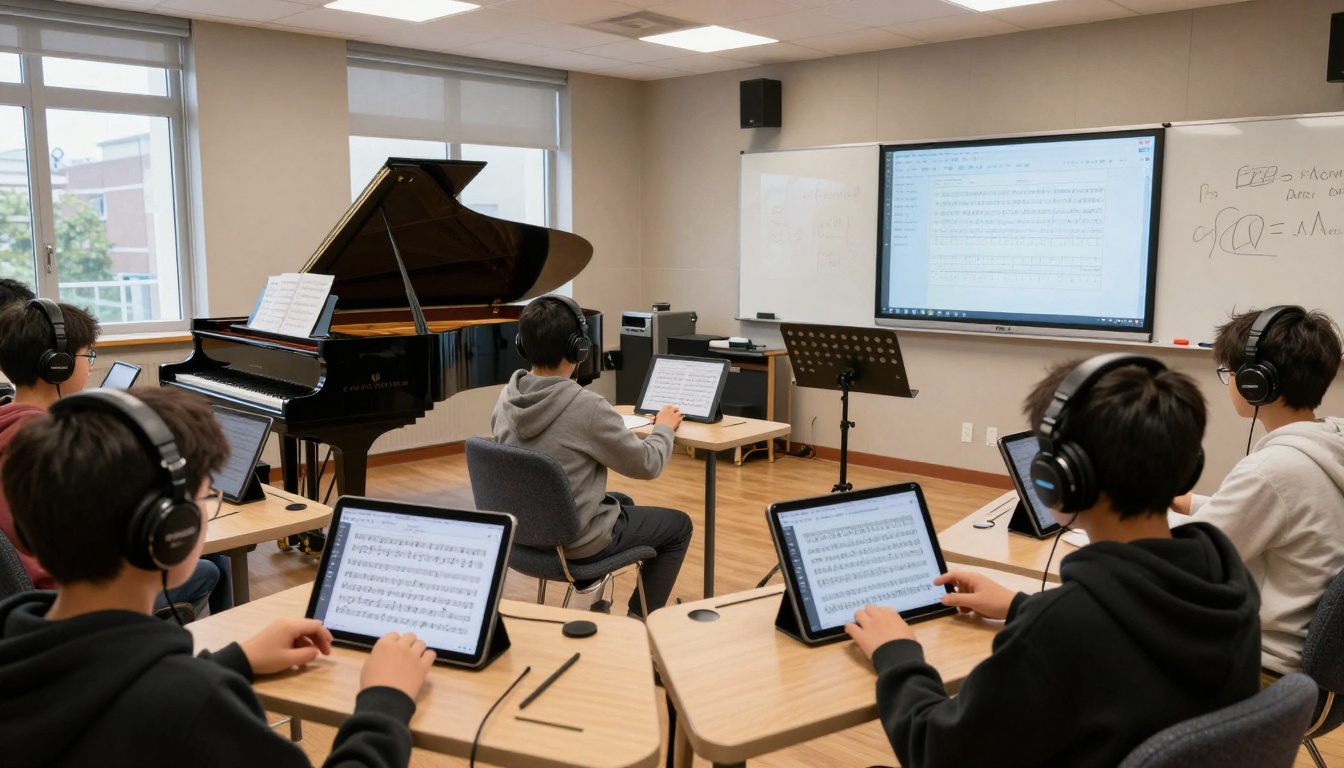
Music education environment where technology enhances traditional learning methods
Beyond lyrics, music transcription extracts valuable metadata:
Structural Analysis
Systems identify:
- Verse/chorus/bridge sections
- Repetition patterns in lyrical content
- Thematic development across the song
- Narrative progression in story-based lyrics
Emotional and Thematic Analysis
AI models can detect:
- Emotional tone (joy, sadness, anger, etc.)
- Thematic categories (love, politics, personal growth)
- Cultural references and historical allusions
- Literary devices (metaphor, simile, symbolism)
Technical Metadata
For production purposes, systems extract:
- Vocal range and tessitura
- Breath point locations
- Consonant/vowel distribution
- Dynamic variation patterns
Copyright Detection Systems
Music transcription plays a crucial role in intellectual property management:
Similarity Detection
By converting music to text, systems can:
- Identify lyrical similarities across songs
- Detect melodic patterns in transcribed form
- Compare harmonic structures through textual representation
- Analyze rhythmic patterns as temporal data
Database Integration
Transcription enables integration with:
- Copyright registration databases
- Royalty collection systems
- Music publishing platforms
- Legal evidence documentation
Fair Use Analysis
For legal applications, transcription helps:
- Quantity analysis of copied material
- Transformative use assessment
- Market impact evaluation
- Educational use documentation
Music Education Applications
Transcription technology revolutionizes music pedagogy:
Skill Development
Students use transcription tools for:
- Ear training through lyric identification
- Sight-singing practice with synchronized audio
- Composition analysis studying successful songs
- Performance preparation for recitals and concerts
Accessibility Enhancement
Technology makes music education more inclusive:
- Hearing-impaired students access lyrics visually
- Non-native speakers learn through transcribed translations
- Learning differences accommodated through multi-modal presentation
- Remote learning enabled through digital materials
Assessment and Feedback
Educators employ transcription for:
- Progress tracking across learning periods
- Objective assessment of technical skills
- Personalized feedback based on precise analysis
- Curriculum development informed by student capabilities
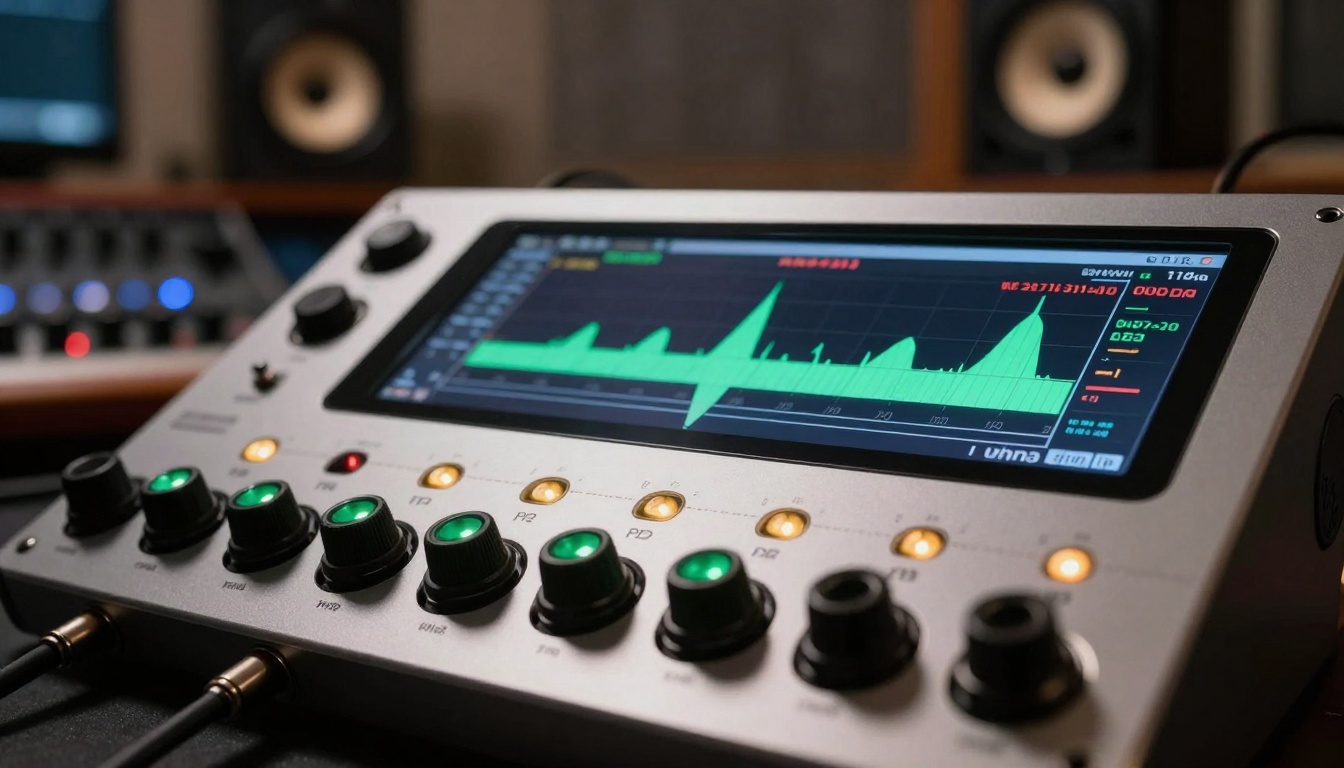
Technical view of audio processing equipment enabling precise vocal extraction
Practical Implementation Guide
For those implementing music transcription systems:
System Selection Criteria
Consider these factors when choosing tools:
- Accuracy requirements for your specific use case
- Language support for your musical repertoire
- Integration capabilities with existing workflows
- Cost structure (per-minute, subscription, enterprise)
- Technical support and developer resources
Workflow Optimization
Maximize efficiency through:
- Batch processing for large audio collections
- Quality pre-screening to identify challenging files
- Human verification protocols for critical applications
- Automated formatting for different output needs
Quality Assurance
Maintain standards through:
- Accuracy benchmarks specific to music types
- Regular system evaluation against new music
- User feedback integration for continuous improvement
- Comparative testing across multiple systems
The Role of AI Music Generation
Interestingly, the relationship between music transcription and AI music generation represents a complete cycle. Tools like Minimax's music-01 and Stability AI's Stable Audio 2.5 create music from text prompts, while transcription systems convert music back to text. This bidirectional relationship enables:
- Style analysis through generated music transcription
- Prompt optimization based on transcription results
- Creative experimentation with text-to-music-to-text workflows
- Educational applications demonstrating musical concepts

Club environment where DJ performance integrates with lyric analysis technology
Getting Started with Music Transcription
For those beginning with music transcription:
Initial Steps
- Identify primary use cases (archival, creative, educational, commercial)
- Select appropriate tools based on music types and languages
- Prepare sample audio representing typical content
- Establish accuracy benchmarks for evaluation
Common Pitfalls to Avoid
- Overestimating accuracy for complex music genres
- Neglecting audio quality preparation steps
- Underestimating human verification requirements
- Ignoring copyright considerations for published music
Success Measurement
Track progress through:
- Accuracy improvement over time
- Processing efficiency gains
- User satisfaction metrics
- Business impact measurements
Looking Forward
The convergence of music and text continues evolving. As AI models like Google's Gemini 3 Pro for speech-to-text advance, and music generation tools like Google's Lyria 2 become more sophisticated, the boundary between audio creation and textual analysis continues blurring.
What remains constant is the human element—the creative spark that generates music worth transcribing, and the interpretive intelligence that extracts meaning from those transcriptions. The tools enhance our capabilities but don't replace the essential human connection to music.
For creators exploring these technologies, the recommendation remains: start with clear objectives, select tools matching your specific needs, and maintain realistic expectations about current capabilities while anticipating rapid advancement. The music-to-text journey represents not just technological progress, but expanded access to musical experiences across audiences, applications, and generations.
Consider experimenting with these technologies in your own creative workflows. The intersection of audio production and textual analysis offers new possibilities for content creation, education, and artistic expression that continue redefining what's possible in music technology.


