Google's entry into the accessible AI image generation space with Nano Banana represents more than just another tool—it's a democratization of creative technology that previously existed behind paywalls and technical barriers. The platform's name, while unconventional, hints at its approach: small in computational footprint yet powerful in output, like concentrated energy in compact form.

Close-up view of the Nano Banana interface showing real-time image generation progress
What Makes Nano Banana Different
The landscape of AI image generators has become crowded, with options ranging from subscription-based professional tools to limited free tiers. Nano Banana distinguishes itself through Google's infrastructure advantage—access to computational resources that smaller competitors can't match, delivered without direct user cost.
💡 The free access model isn't just about price. It's about removing friction for experimentation, allowing designers, marketers, educators, and hobbyists to explore AI image generation without financial commitment barriers that often stop creative exploration before it begins.
The Technology Behind the Scenes
Nano Banana builds on Google's years of research in diffusion models and neural architecture search. Unlike earlier generations of image AI that produced recognizably artificial outputs, Nano Banana's training incorporates:
- Multi-scale attention mechanisms that maintain coherence across image dimensions
- Adaptive denoising schedules that preserve detail while removing artifacts
- Contextual style transfer that understands artistic intent beyond literal prompt interpretation
Conceptual representation of the neural networks powering Nano Banana's image generation
Free Access vs Paid Alternatives
| Feature | Nano Banana | Mid-Tier Competitors | Premium Alternatives |
|---|
| Cost | Free | $10-30/month | $50+/month |
| Speed | Moderate | Fast | Very Fast |
| Quality | Professional | Professional | Studio-grade |
| Customization | Standard | Advanced | Extensive |
| Commercial Use | Allowed with attribution | Limited licenses | Full commercial rights |
| API Access | Limited | Available | Priority access |
The table reveals Nano Banana's positioning: it offers professional-quality output without the recurring costs that make similar tools inaccessible for individuals and small teams.
Getting Started with Nano Banana
Accessing Nano Banana requires only a Google account—no specialized hardware, no software installations, no credit card information. The interface follows Google's design philosophy: clean, intuitive, and focused on the core task of transforming text into images.
Team collaboration using Nano Banana for comparative image analysis
Creating Your First Image
The process follows a straightforward pattern:
- Navigate to the Nano Banana interface through Google's AI tools portal
- Enter your text prompt in the designated field
- Select basic parameters (aspect ratio, style influence)
- Initiate generation with a single click
- Review and refine the output as needed
What appears simple on the surface masks sophisticated backend processing. Each generation request routes through Google's optimized inference pipelines, balancing speed with quality through intelligent resource allocation.
Prompt Strategies That Work
Effective prompting with Nano Banana follows specific patterns that leverage its training:
For photorealistic outputs:
- Include specific lighting conditions ("morning light through window")
- Specify camera details ("85mm lens, shallow depth of field")
- Add texture references ("weathered wood grain", "satin fabric folds")
For artistic styles:
- Reference artistic movements ("impressionist style", "art deco influence")
- Include color palette guidance ("muted earth tones", "vibrant primary colors")
- Specify composition elements ("asymmetrical balance", "leading lines")
💡 The most successful prompts combine concrete visual elements with atmospheric qualities. "A cozy bookstore interior with afternoon sun streaming through stained glass windows, warm wood shelves filled with leather-bound volumes, atmospheric dust particles visible in light shafts" consistently produces more compelling results than "a bookstore".
Advanced Features You Should Know
Beyond basic text-to-image conversion, Nano Banana includes capabilities often reserved for premium tools:
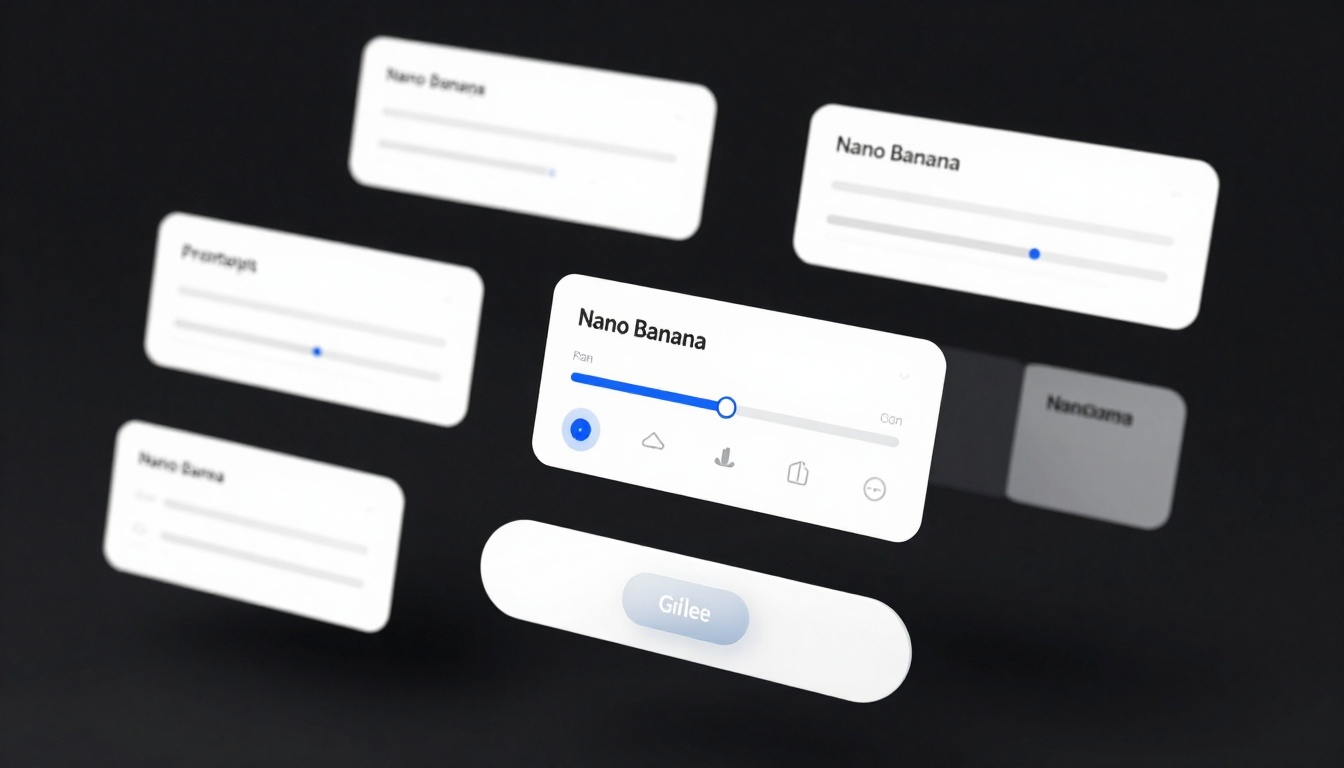
Floating UI elements showing Nano Banana's interface components
Parameter Customization Options
While maintaining simplicity, Nano Banana provides control through:
- Style intensity sliders that adjust how strongly artistic influences apply
- Detail preservation settings for maintaining specific elements during generation
- Consistency controls for generating image series with unified aesthetic
- Negative prompting to exclude unwanted elements from outputs
Style Transfer Capabilities
The platform excels at contextual style application—not merely overlaying filters, but understanding how different artistic approaches transform subject matter:
- Photographic styles (documentary, portrait, architectural)
- Painting techniques (oil brushwork, watercolor transparency)
- Digital art aesthetics (vector minimalism, pixel art precision)
How Nano Banana Compares
Positioning requires context. Nano Banana exists within Google's broader AI ecosystem and competes with independent offerings.
vs Other Google AI Models
Within Google's portfolio, Nano Banana serves a specific niche:
| Google AI Tool | Primary Function | Relationship to Nano Banana |
|---|
| Imagen | Research-focused image generation | More advanced, less accessible |
| Gemini | Multimodal understanding | Provides contextual intelligence |
| Vertex AI | Enterprise AI platform | Infrastructure foundation |
| Nano Banana | Accessible image creation | User-facing application layer |
The relationship is complementary rather than competitive. Nano Banana represents the public-facing implementation of Google's image generation research.
vs Third-Party Solutions
The competitive landscape includes both established players and emerging alternatives:
Strengths of Nano Banana:
- Google infrastructure reliability
- No hidden costs or usage limits
- Seamless Google account integration
- Consistent quality across generations
Areas where alternatives excel:
- Specialized artistic styles (some competitors focus on niche aesthetics)
- Community prompt libraries (established platforms have shared resources)
- Advanced control interfaces (professional tools offer finer granularity)

Google data center infrastructure supporting Nano Banana's computational needs
Practical Applications
The value of any tool emerges through use cases. Nano Banana's accessibility opens applications previously limited by cost or complexity.
For Content Creators
Social media professionals, bloggers, and digital marketers find immediate utility:
- Generating unique header images for articles and social posts
- Creating visual concepts for campaign brainstorming
- Producing placeholder visuals during content development
- Experimenting with visual styles before commissioning custom work
The speed advantage—concepts to visuals in minutes rather than days—transforms creative workflows.
For Marketing Teams
Small to medium businesses benefit particularly:
- Product visualization before physical production
- Campaign concept testing with minimal investment
- Brand style exploration across visual approaches
- Localization adjustments for different market aesthetics
💡 The cost-benefit calculation shifts dramatically when image generation moves from expensive external services to internal capabilities. A marketing team that previously allocated $5,000 monthly for stock imagery and custom graphics can redirect those resources while maintaining or improving visual quality.
How to Use Nano Banana on PicassoIA
The integration of Nano Banana within the PicassoIA platform provides structured access with enhanced features. PicassoIA serves as an aggregator and optimizer for AI models, including Google's offerings.
Digital artist adjusting parameters within the Nano Banana interface
Step-by-Step Tutorial
Accessing Nano Banana through PicassoIA follows this workflow:
- Navigate to PicassoIA and locate the Nano Banana model page
- Authenticate with your Google account (required for Nano Banana access)
- Access the generation interface through PicassoIA's unified dashboard
- Enter your prompt in the designated text field
- Adjust available parameters (style, aspect ratio, detail level)
- Initiate generation and monitor progress
- Download or refine the resulting image
PicassoIA adds value through parameter presets, prompt templates, and output organization that the native interface lacks.
Parameter Optimization Tips
Through PicassoIA, you gain access to enhanced controls:
- Batch generation settings for producing multiple variations efficiently
- Output format options beyond basic image downloads
- Metadata inclusion for tracking generation parameters
- Integration capabilities with other PicassoIA tools
The platform also offers Nano Banana Pro for users needing enhanced capabilities, though the standard version meets most creative needs.
Visual comparison showing text prompt transformation into generated image
What Users Are Saying
Community feedback reveals patterns in how different audiences adopt and adapt the tool.
Community Feedback
Early adopters report consistent themes:
- "The quality surprised me—I expected compromises for a free tool, but outputs rival paid services."
- "Accessibility changes everything—my small nonprofit can now produce professional visuals."
- "The learning curve exists but manageable—effective prompting requires practice but delivers results."
- "Integration with Google ecosystem simplifies workflow compared to standalone tools."
Common Success Patterns
Analysis of successful implementations shows:
- Iterative refinement produces better results than single attempts
- Specificity beats brevity in prompt effectiveness
- Parameter experimentation reveals capabilities documentation doesn't highlight
- Real-world reference integration (uploading inspiration images) enhances outputs
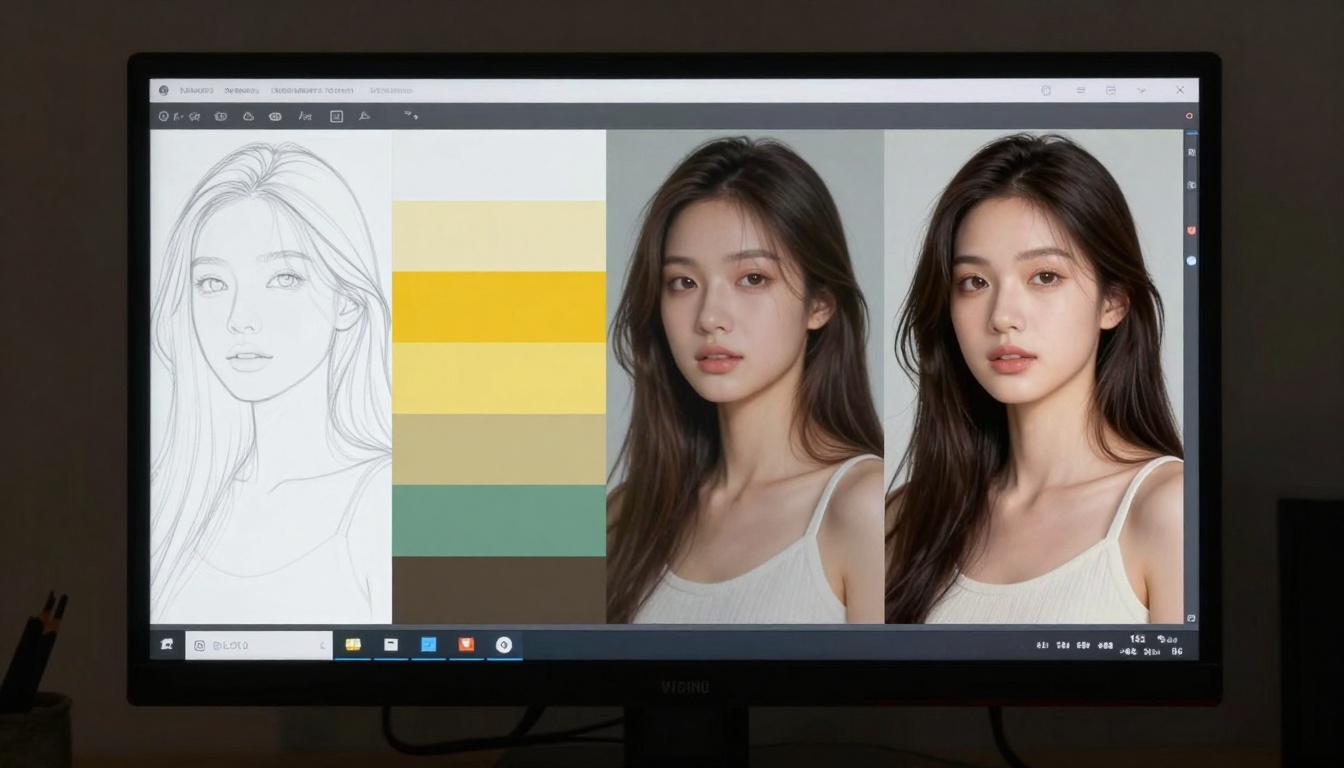
Progressive stages of AI image generation from concept to completion
Looking Forward
Nano Banana's existence signals Google's commitment to democratizing advanced AI capabilities. The free model suggests strategic positioning rather than temporary promotion—an investment in building user familiarity with Google's AI ecosystem.
For individual creators, the tool removes financial barriers to professional visual creation. For organizations, it represents cost reduction without quality compromise. For the broader creative community, it accelerates the integration of AI-assisted workflows.
The platform's continued evolution will likely focus on:
- Enhanced control interfaces for specialized applications
- Integration with Google's broader creative suite
- Community features for prompt sharing and collaboration
- Enterprise management capabilities for organizational use

Professional photographer reviewing Nano Banana generated images in practical context
Final Considerations
Adopting any new technology involves adjustment. With Nano Banana, the adjustment period proves shorter than with more complex alternatives, while the capability ceiling remains surprisingly high.
The most effective approach combines exploration with intentional practice. Begin with simple prompts to understand baseline quality, then progressively incorporate the specific details that transform generic outputs into compelling visuals.
The cost structure—or lack thereof—removes the risk from experimentation. Failed attempts carry no financial penalty, encouraging the iterative refinement that ultimately produces superior results.
The integration advantage within Google's ecosystem simplifies adoption for existing users, while the standalone capability ensures accessibility for those outside Google's primary services.
As AI image generation continues evolving, tools like Nano Banana that prioritize accessibility without compromising capability will likely define the next phase of creative technology adoption. The barrier isn't technical skill or financial resources—it's simply awareness that the capability exists and understanding how to apply it effectively.
Your next step might begin with a simple test: describe a visual concept you've imagined but lacked resources to create, and discover what Nano Banana produces from that description. The experience often proves more illuminating than any analysis of capabilities.


