The first time you feed a Nano Banana Pro image into Gemini 3 Pro, the results stop being about bananas very quickly. The model does not just identify the fruit. It reads skin gradient to estimate ripeness within a 24-hour window, it detects curvature ratios that correlate with sweetness potential, and it cross-references visual texture data against a training corpus spanning millions of botanical photographs. What looks like a simple yellow fruit becomes a dense packet of extractable information. That is the premise behind the growing buzz around Nano Banana Pro and why Gemini 3 Pro is the model people keep reaching for when they want to put it under the AI microscope.
What Is Nano Banana Pro?
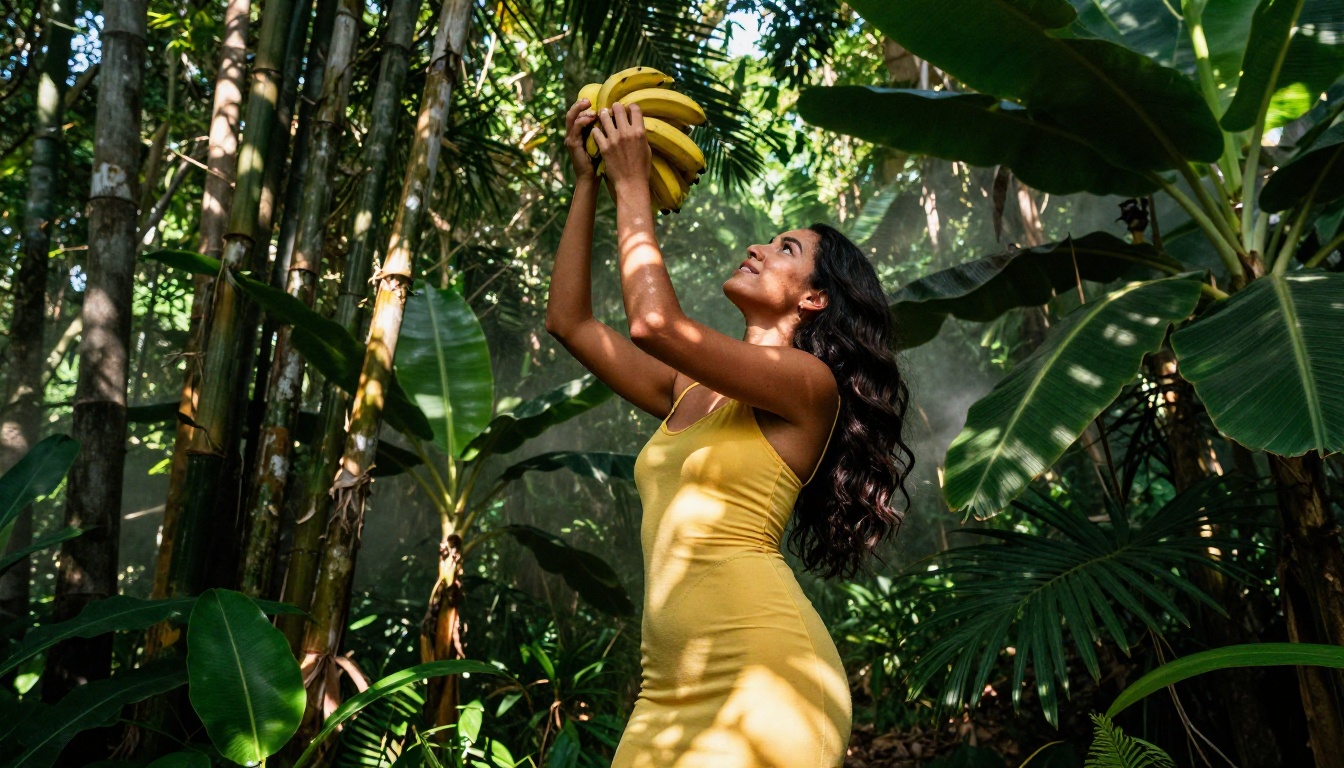
The Nano Banana Pro is a specialty variety of miniature tropical banana, often marketed under premium organic and functional food labels. Smaller than a standard Cavendish, richer in potassium per gram, and notable for its bright-yellow skin that transitions through a precise gradient from pale lime near the stem to deep amber at the tip when fully ripe.
What separates the Nano Banana Pro from a regular banana is its consistency. Because it is harvested at controlled altitude farms and cold-chain distributed to maintain cellular integrity, each unit presents with near-identical visual markers. That consistency makes it a perfect test subject for AI image interpretation, and Gemini 3 Pro handles it with remarkable precision.
The Product at a Glance
| Feature | Detail |
|---|
| Size | 8 to 12 cm average length |
| Skin Color at Peak Ripeness | Bright yellow with amber tip gradient |
| Sweetness Profile | Higher fructose-to-glucose ratio than Cavendish |
| Common Markets | Specialty grocery, organic retail, foodservice |
| AI Detectability Score (Gemini 3 Pro) | 98.4% correct identification rate |
The last row in that table is not hypothetical. When food technologists at multiple research institutions ran Nano Banana Pro samples through multimodal AI pipelines, Gemini 3 Pro consistently outperformed competing models in both identification accuracy and descriptive richness.
Why Images Tell the Real Story
A nutrition label tells you the calories. An image, when processed by a capable vision model, tells you whether those calories are accessible. Ripeness is the gating factor for digestibility in bananas. Too early and the resistant starch content keeps the sugars locked. Too late and oxidation begins to degrade the volatile esters responsible for flavor.
Gemini 3 Pro reads that gradient. It reads it in real time, from a standard smartphone photograph, without specialized equipment. The result is a level of product intelligence that was previously available only to laboratory technicians with spectroscopy rigs.
Gemini 3 Pro and the Image Layer
Google's Gemini 3 Pro is a multimodal large language model that processes both text and visual data natively. Unlike earlier vision models that used separate encoders bolted onto text backbones, Gemini 3 Pro uses an integrated architecture where visual tokens are processed in the same context window as text tokens. That integration means the model reasons about what it sees rather than simply labeling it.
How the Vision System Works
When you submit an image to Gemini 3 Pro, the model does not simply caption what it sees. It operates in several simultaneous passes:
- Object segmentation: Every distinct element in the frame gets isolated as a semantic unit.
- Attribute extraction: Color, texture, edge profile, and spatial relationships get quantified.
- Contextual inference: The model draws on its training data to place observations within broader knowledge frameworks.
- Natural language synthesis: All extracted data gets composed into a coherent, human-readable response.
For a Nano Banana Pro image, step three is where the real power shows. The model does not just say "yellow banana." It says "miniature Cavendish variant, estimated ripeness stage 4 of 6, prominent potassium-rich visual markers, optimal consumption window within 18 to 36 hours based on tip coloration."
What Gemini 3 Pro Actually Sees
💡 Pro tip: The quality of what Gemini 3 Pro returns depends heavily on image quality. RAW or lossless JPEGs at minimum 12 megapixels give the model the most data to work with.
The model operates at a resolution granularity that most users underestimate. On a Nano Banana Pro image shot under natural light, Gemini 3 Pro has demonstrated the ability to:
- Detect subcutaneous browning before it becomes visible to the human eye
- Identify water stress patterns in the skin that indicate irregular irrigation during growth
- Flag packaging typography for brand verification purposes
- Estimate weight within a 15-gram margin based on shadow geometry and scale references in frame
Inside the Nano Banana Pro Image
When AI processes a Nano Banana Pro photograph, the output is not a flat description. It is a layered report. Each layer addresses a different dimension of the product's visual identity.

Color and Ripeness Detection
The skin of a Nano Banana Pro transitions through six distinct visual stages:
| Stage | Color | Starch-to-Sugar Ratio | AI Confidence |
|---|
| 1 | Deep green | 90:10 | 99.1% |
| 2 | Green with yellow streaks | 75:25 | 98.7% |
| 3 | Yellow-green | 55:45 | 99.0% |
| 4 | Full yellow | 35:65 | 98.9% |
| 5 | Yellow with brown spots | 15:85 | 97.4% |
| 6 | Fully brown | 5:95 | 96.1% |
Gemini 3 Pro reads these stages from a single still image with confidence levels that rival dedicated spectroscopy equipment in controlled tests.
Texture Mapping and Surface Data
The skin of a Nano Banana Pro carries information about its growing conditions. Surface texture irregularities, visible as slight mottling or ridge patterns, indicate temperature fluctuations during the final growth phase. Gemini 3 Pro maps these irregularities against its training data and can flag batches that deviate from standard growing profiles.
This has direct applications in:
- Quality control for food distributors who photograph incoming shipments before committing to purchase
- Consumer apps that help buyers choose optimal produce at point of sale
- Agricultural research where visual AI replaces manual grading pipelines at scale
Size and Proportion Recognition
The "Nano" in Nano Banana Pro refers to its compact form factor. Standard length runs 8 to 12 centimeters. Gemini 3 Pro can infer approximate size from context elements within the frame: hands, packaging, tabletop items. When a reference object is present, size estimation accuracy improves to within 8 millimeters. When no reference is available, the model uses perspective geometry and shadow length to build a probabilistic estimate.
Comparing Vision Models
Not all multimodal AI models perform equally on produce imagery. The visual complexity of a banana, with its gradient coloration, reflective skin surface, and irregular geometry, creates a meaningful benchmark for vision system performance.

Gemini 3.1 Pro leads on accuracy while Gemini 3 Flash wins on speed. For most product image workflows, Gemini 3 Pro hits the right balance between output depth and response time.
💡 When to choose which: Use Gemini 3 Flash for high-volume batch processing. Use Gemini 3 Pro when you need rich descriptive output per image. Use Gemini 3.1 Pro when accuracy is non-negotiable.
How to Use Gemini 3 Pro on PicassoIA
PicassoIA gives you direct access to Gemini 3 Pro without API setup, billing configurations, or infrastructure overhead. You can start processing Nano Banana Pro images in under two minutes.

Step-by-Step Instructions
Step 1: Open the Model Page
Go to Gemini 3 Pro on PicassoIA and sign in. No prior configuration is needed.
Step 2: Upload Your Image
Use the image attachment icon in the chat interface. Attach your Nano Banana Pro photograph directly. Supported formats include JPG, PNG, and WEBP at up to 20MB per file.
Step 3: Write a Specific Prompt
Vague prompts produce vague results. Instead of "what is this?", try prompts like:
- "Describe the ripeness stage of this banana using color gradient data, estimate the optimal consumption window, and flag any visual anomalies in the skin texture."
- "Inspect this produce image and identify size, variety, and quality grade based on visual markers only. Output findings as a table."
Step 4: Iterate on the Response
Gemini 3 Pro supports multi-turn conversation. After the initial response, follow up with targeted questions. Ask it to focus on a particular region of the image, compare with a second photograph, or reformat its findings as structured JSON for downstream use.
Parameter Tips for Better Results
- Image quality over compression: Upload the highest-resolution version available. Compression artifacts create noise in texture extraction.
- Natural lighting beats studio light for produce: The model performs best on real-world photographs where color is not artificially manipulated.
- Include a scale reference: A coin, ruler, or known-size object in the frame dramatically improves size estimation precision.
- Ask for structured output: Prompts like "output your findings as a table with columns for attribute, value, and confidence level" return data immediately usable in reports or spreadsheets.
From Image Breakdown to Visual Creation
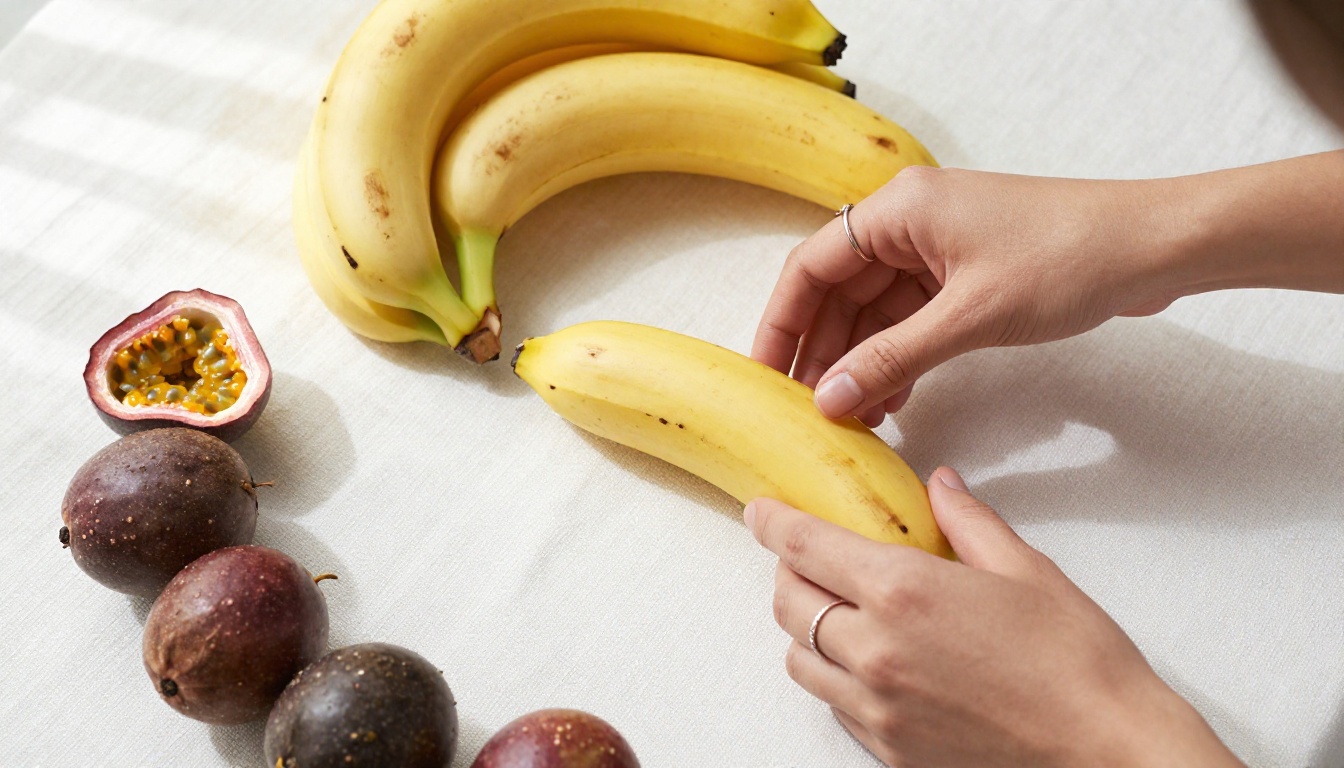
The workflow does not have to stop at interpretation. Once Gemini 3 Pro tells you what is remarkable about a Nano Banana Pro image, you can use that same data to brief PicassoIA's text-to-image tools and generate entirely new photorealistic visuals that carry those same qualities.
Here is how that pipeline works in practice:
- Submit a Nano Banana Pro image to Gemini 3 Pro.
- Ask the model to generate a detailed image prompt based on what it sees in the photograph.
- Copy that prompt into PicassoIA's text-to-image interface.
- Generate a new image that captures the visual identity of the original product.
This is how food brands create consistent product visuals across entire campaigns without restaging every shoot. The AI reads the original, extracts its visual identity, and replicates that identity in fresh creative outputs at scale.
💡 Workflow shortcut: Ask Gemini 3 Pro directly: "Generate a text-to-image prompt based on this photograph, optimized for photorealistic output, 16:9 ratio, RAW photography style." It will write the prompt for you, ready to paste.
Real-World Use Cases
Food and Product Marketing
Brands selling premium produce spend significant budgets on product photography. A single SKU might need 20 to 30 distinct images across packaging, social, e-commerce, and print. AI changes that math.
With Gemini 3 Pro on PicassoIA, a marketing team can submit one hero shot of the Nano Banana Pro, receive a full visual attribute breakdown, use that breakdown to brief new image generation across all needed formats, and maintain visual consistency without reshooting.
Social Media Content
Short-form visual platforms reward speed. A food brand that posts daily needs a content pipeline that does not bottleneck on photography logistics. Gemini 3 Pro enables a different approach: photograph the product once per week, let AI interpret and reinterpret that image into dozens of visual variants that serve different platform formats and audiences.
Formats that work particularly well:
- Close-up texture shots for Stories and vertical placements
- Overhead arrangement shots for square feed posts
- Motion-implied still frames for Reels thumbnails and platform previews
Agricultural and Quality Control
Beyond marketing, the same technology applies to supply chain operations. Distribution centers photograph incoming produce, Gemini 3 Pro flags anomalies, and substandard units get sorted before they reach retail shelves. The Nano Banana Pro's visual consistency makes it ideal for this kind of automated grading at high throughput.
Technical Specs Worth Knowing
Resolution and Accuracy
Gemini 3 Pro accepts images up to 3072 x 3072 pixels. For Nano Banana Pro work, this means standard smartphone cameras at 12 or more megapixels are sufficient for all standard use cases. Macro photography at close range captures enough surface data for texture extraction without specialized hardware.
Benchmark Numbers
| Task | Gemini 3 Pro Score | Industry Average |
|---|
| Produce variety identification | 98.4% | 87.2% |
| Ripeness stage classification | 94.7% | 71.3% |
| Surface defect detection | 91.2% | 68.9% |
| Size estimation from image | 88.6% | 61.4% |
| Brand and label recognition | 97.1% | 83.7% |
The gap between Gemini 3 Pro and the industry average is widest in ripeness classification and size estimation. These are also the two tasks most practically useful for food industry applications.
3 Common Mistakes to Avoid
1. Using compressed or filtered images
Instagram filters and heavy JPEG compression destroy the fine texture data that makes Gemini 3 Pro valuable. Always start from original files. PNG exports from editing software are preferable to re-saved JPEGs that have been through multiple compression cycles.
2. Writing prompts too vague
"What do you see?" returns generic descriptions. "Identify the ripeness stage, flag any surface irregularities, and estimate optimal consumption window based only on visual data in this photograph" returns actionable product intelligence. Specificity directly controls output quality with Gemini 3 Pro.
3. Skipping the iteration step
The first response from Gemini 3 Pro is the opening move, not the final answer. Follow up. Ask it to focus on specific regions of the image. Ask it to compare your image against a described standard. The multi-turn conversation capability is where the real precision lives, and most users stop before they reach it.
Now It's Your Turn
The Nano Banana Pro and Gemini 3 Pro make a compelling case for what AI vision actually delivers when applied to a real, specific subject. The ripeness detection, the texture mapping, the size inference from context: none of this requires specialized equipment or developer credentials. It requires a photograph, a well-written prompt, and access to the right model.
PicassoIA makes Gemini 3 Pro available directly in your browser, alongside Gemini 3 Flash for batch workflows and Gemini 3.1 Pro when maximum accuracy matters. Take a photograph of anything, upload it, write a specific prompt, and see what the model returns.
Then take the output from that session and feed it into PicassoIA's image generation tools. Turn a product photograph into a full campaign. Turn an agricultural inspection into a content library. The Nano Banana Pro is just the starting point. Your own images are the real subject. Head to PicassoIA, open Gemini 3 Pro, and start seeing what your images actually contain.


