Something big is shifting in the open-source AI world. Reports are circulating that Meta's next Llama release will, for the first time, allow NSFW chat interactions without heavy filtering by default, dropping the strict content restrictions that have defined every version of the model so far. If accurate, this would be one of the most significant policy changes in open-source large language model history, and it has developers, adult platform operators, and creative writers paying close attention.
For years, running a Llama model uncensored meant either applying third-party fine-tunes or accepting that the base weights would refuse a large category of prompts. The next release might change all of that at the source.

What This Actually Means for Llama
Why Meta is rethinking its content rules
Meta has always positioned Llama as an open-source model built for researchers, developers, and businesses. The tension has always been the same: the company wants to enable maximum utility while avoiding the public relations fallout of having its name attached to explicit content generated at scale.
What appears to be changing is Meta's recognition that the current approach creates a different problem. When a base model refuses common adult content prompts by default, the developer community simply fine-tunes it out anyway. The result is that the internet is full of uncensored Llama derivatives, most with far weaker safety measures on non-adult content than the original. Meta gets the worst of both worlds: the model gets used for NSFW anyway, but Meta loses control over how safely the non-explicit guardrails are implemented.
The reported shift is more nuanced than simply flipping a switch. The thinking appears to be that explicit content restrictions should be an opt-in layer applied by the deployer, not baked into the base weights in a way that generates refusals mid-conversation.
💡 What this means in practice: Developers building adult platforms would get a clean, uncensored base model. Developers building children's apps or enterprise tools would apply a safety layer on top. Both scenarios become more predictable and controllable.
The fine-tuning loophole that already exists
Anyone familiar with the Llama ecosystem knows that uncensored models have existed since Llama 2 7B Chat launched. Within weeks of every Llama release, the community produces "abliterated" or "uncensored" variants by removing the refusal vectors from the model's weights. These fine-tunes circulate freely on Hugging Face and similar platforms.
This means Meta's strict default content policy has never actually prevented NSFW Llama usage. It has only added friction for developers who want a clean, well-maintained base and forced adult platforms to rely on community fine-tunes of varying quality. Removing that friction at the official level is, in many respects, just acknowledging reality.
Who Actually Wants Uncensored LLM Access
Adult content platforms demanding real solutions
The market for AI-powered adult platforms has grown significantly. Sites offering AI companions, roleplay chatbots, and creative fiction services routinely attract millions of users monthly. Many of these services currently run on GPT-4 alternatives, fine-tuned Llama derivatives, or purpose-built models from smaller providers.
The core complaint from these platform operators is consistent: current solutions involve significant overhead. Either you pay premium API rates to a provider with permissive policies, or you self-host a fine-tuned open-source model and absorb the infrastructure costs and quality compromises that come with community derivatives.
A first-party uncensored Llama base would solve both problems. It would give this sector access to a state-of-the-art model maintained and updated by one of the world's best AI research teams, without the overhead of managing fine-tune quality or paying premium API rates.
💡 The business case is clear: Adult AI platforms currently represent a multi-billion dollar segment. An official uncensored Llama would capture that deployment market directly.
Researchers and creative writers with legitimate needs
Beyond adult platforms, a large and often overlooked population wants uncensored LLM access for entirely non-sexual purposes. Criminology researchers studying dark web communication patterns, fiction writers crafting realistic villain dialogue, game developers scripting morally complex characters, and security researchers probing social engineering techniques all run into the same wall.
Current content filters are blunt instruments. They frequently block clearly fictional scenarios, academic discussions of violence and crime, creative writing involving difficult themes, and even historical analysis of atrocities. The cost of this over-restriction falls hardest on legitimate researchers who don't have the technical background to run their own fine-tunes.
An official NSFW-permissive Llama model would give this population a well-maintained option without requiring server management or custom deployment expertise.
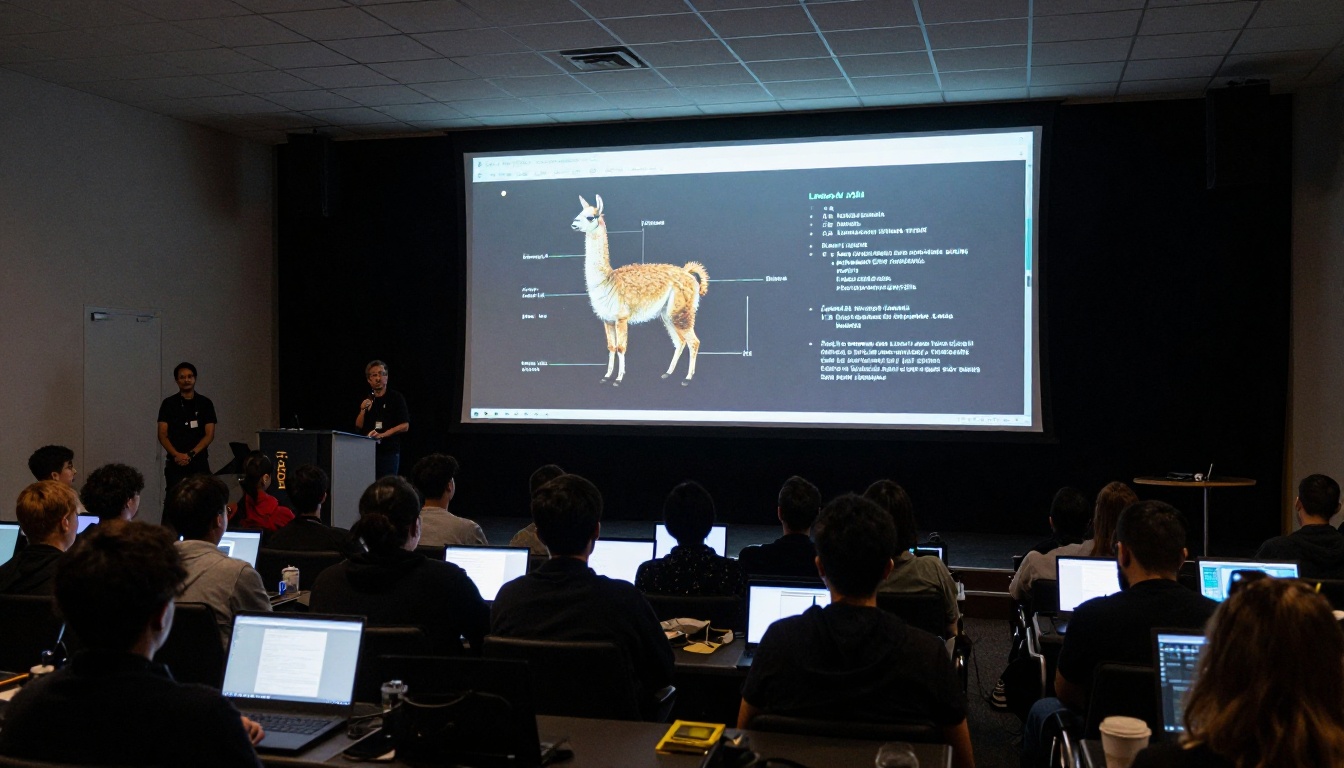
How the Current Llama Guard System Works
What Llama Guard 4 actually blocks
Meta's content moderation approach has evolved significantly. Llama Guard 4 12B is a specialized classifier model trained to identify unsafe content across multiple categories. It operates as a separate layer that can be applied to any LLM's inputs and outputs, flagging responses that fall into defined violation categories.
The current violation taxonomy includes:
| Category | Description |
|---|
| S1 Violent Crimes | Instructions for mass violence, terrorism |
| S2 Non-Violent Crimes | Fraud, hacking, drug synthesis |
| S3 Sex Crimes | Non-consensual scenarios, minor involvement |
| S4 Child Safety | Any sexual content involving minors |
| S5 Defamation | False harmful statements about real people |
| S6 Specialized Advice | Dangerous medical, financial, legal advice |
| S7 Privacy | Doxxing, surveillance instructions |
| S8 Intellectual Property | Direct reproduction of copyrighted material |
| S9 Indiscriminate Weapons | CBRN weapon instructions |
| S10 Hate | Content attacking protected characteristics |
| S11 Suicide/Self-Harm | Detailed methods |
| S12 Sexual Content | Adult content (configurable) |
| S13 Elections | Voter suppression, misinformation |
Notice that S12 (Sexual Content) is explicitly listed as configurable. This has been the case since Llama Guard 2, acknowledging that adult content is a legitimate use case for some deployments. The next Llama release appears to push this further by making the base model itself permissive on S12 by default, rather than requiring deployers to configure the guard classifier and also fight against base model refusals.
Where the boundaries sit today
Llama 4 Scout Instruct and Llama 4 Maverick Instruct, the current public releases, both decline explicit sexual content firmly and consistently. They will discuss topics adjacent to adult content, engage with mature themes in clearly literary contexts, and handle a reasonable range of romantic writing without triggering hard refusals. But sustained explicit roleplay or graphic description of sexual acts produces refusals at the model level, regardless of system prompt.
The workaround currently used by serious developers involves combining:
- A custom system prompt that establishes the fictional/creative context
- A Llama Guard configuration with S12 disabled
- Typically, a fine-tuned base rather than the official instruct model
This three-step process is exactly the friction that an officially permissive next release would eliminate.

Llama 4 vs What Comes Next
Scout and Maverick's current performance
Llama 4 Scout Instruct uses a mixture-of-experts architecture with 17 billion active parameters (109B total), giving it strong performance on complex reasoning, long-context tasks, and creative writing within its content policy limits. It handles 10 million token context windows, making it exceptional for long-form fiction, document analysis, and extended creative projects.
Llama 4 Maverick Instruct steps up with 17B active parameters from a 400B total pool, delivering frontier-competitive performance on coding, reasoning, and multimodal tasks. Both models are available directly on PicassoIA, letting you test their current capabilities and content handling without any local setup.
What the next release might change
The rumored changes appear to center on two specific areas. First, the instruct fine-tuning data for the next release reportedly includes explicit content, which would train the model to handle adult prompts naturally rather than refusing them. Second, the default system prompt would no longer include content restriction instructions, leaving that entirely to the deployer.
What would not change, according to reports, is the hard-coded content involving minors (S4), instructions for weapons of mass destruction (S9), and content designed to facilitate real-world violence. These restrictions are expected to remain in the base weights regardless of system prompt or configuration.
This distinction matters: the goal is not an "anything goes" model. It is a model that treats consenting adult content the same way it treats any other creative writing task.
💡 For platform builders: This would mean you can finally deploy a Meta-quality model for adult use cases without managing your own fine-tune pipeline. The compliance and safety story becomes much simpler when the base model itself is designed for your use case.
Generate NSFW Images Right Now
You do not have to wait for the next Llama release to start creating adult AI content. While the chat side of things is still waiting on Meta, the image generation space has already moved decisively in this direction.

Seedream 4.5 leads the field
When it comes to NSFW image generation, Seedream 4.5 is the current benchmark. It produces photorealistic human figures with exceptional anatomical accuracy, handles complex scenes involving partial nudity and suggestive content with natural composition, and maintains consistent character appearance across generations. The prompt-following for adult content is among the best available, meaning you get what you describe rather than a sanitized approximation.
For anyone who has tried older NSFW-capable models and been disappointed by distorted anatomy, muddy skin textures, or inconsistent lighting, Seedream 4.5 is a significant step forward. The results can pass for professional photography at first glance.
Using PicassoIA Image Editor Pro for unlimited output
PicassoIA Image Editor Pro extends your image generation workflow with inpainting, outpainting, and object replacement tools that work alongside NSFW-capable models. This means you can generate a base image and then refine specific areas with targeted prompts, fixing composition, adjusting clothing, or extending the scene beyond the original frame.
The unlimited generations feature makes this particularly valuable for adult content creation, where reaching the right result typically requires iterating through many variations. Rather than counting credits per image, you can run as many generations as the creative process demands.

Getting the Best Results From AI NSFW Chat
System prompts that actually work
Whether you are using a current uncensored Llama derivative or waiting for the next official release, the quality of your system prompt determines most of your results. The most effective system prompts for NSFW chat share several characteristics:
- Establish clear fictional framing: Opening with "You are a character in an adult fiction story..." consistently outperforms prompts that try to argue around content policies.
- Specify the tone and register: "Write in the style of literary erotica" produces different results than "be explicit." The former tends to yield more coherent, readable output.
- Set relationship context early: Models generate more consistent character behavior when the relationship dynamic is established in the system prompt rather than the conversation.
- Avoid meta-discussion: Prompts that ask the model to "ignore its restrictions" or "pretend it has no rules" create instability. Prompts that simply provide a creative context and proceed naturally produce better results.
💡 Pro tip: The most effective NSFW roleplay prompts read like the opening pages of a novel, not like instructions to a machine. Write the world, write the characters, and let the model fill in the dialogue.
Models that work better for adult roleplay
Not all large language models handle NSFW roleplay equally well, even when they have permissive content policies. The differences come down to training data and RLHF fine-tuning choices.
Meta Llama 3 70B Instruct has shown strong creative writing performance and handles mature themes better than its smaller variants when system prompts establish clear fictional contexts. The 70B scale gives it enough capacity to maintain character consistency across long conversations.
Meta Llama 3.1 405B Instruct takes this further with exceptional prose quality and nuanced character work. If you are building an adult fiction platform where writing quality is the primary differentiator, the 405B variant produces noticeably richer output than smaller models.
Meta Llama 3 8B Instruct remains useful for high-volume, lower-stakes applications where speed and cost matter more than prose quality, such as generating descriptions, creating brief chat responses, or handling classification tasks within a larger pipeline.

The Bigger Picture: Open-Source AI and Content Freedom
What Meta's move signals
Meta's reported shift reflects a broader maturation of how the AI industry thinks about content policy. The early instinct, born partly from regulatory caution and partly from genuine concern about misuse, was to restrict as much as possible and err heavily on the side of refusal. Years of real-world deployment have shown that this approach has significant costs.
Over-restrictive models get bypassed. Users migrate to less safety-conscious alternatives. Developers build around the restrictions rather than with the model. The net effect is that the developer ecosystem fragments, safety research becomes harder to apply consistently, and the company publishing the model gets reputational exposure without the safety benefit it was seeking.
💡 The shift in thinking: Allowing NSFW content with maintained hard limits on genuinely dangerous categories is increasingly seen as more responsible than broad refusals that push users toward less carefully maintained alternatives.
How Llama Guard fits into a permissive future
A permissive base model does not mean the absence of safety tools. Llama Guard 4 12B would remain a critical component for any deployment that wants fine-grained content control. Operators who need to ensure their adult platform does not inadvertently serve minors, who want to log and audit content for compliance purposes, or who need to enforce specific content boundaries within an otherwise permissive environment would still rely on the Guard classifier.
The change is that this becomes an explicit choice by the deployer rather than an unavoidable default imposed by the base model. That is a meaningful difference for platform operators who have been managing the friction between the model's instilled restrictions and their own platform policies.

What You Can Do with PicassoIA Today
While the NSFW Llama release is still on the horizon, PicassoIA already offers the full stack for adult AI content creation. Whether you want to generate suggestive images, create glamour photography, experiment with artistic nudity, or run large language models with mature themes, everything is available at picassoia.com/en/all-models.
The image generation side is particularly strong right now. With over 90 text-to-image models available, you can select specifically for photorealistic output, for specific visual styles, or for models known to handle adult content well. The combination of base generation with the PicassoIA Image Editor's inpainting and outpainting tools gives you a production-ready workflow for creating the kind of content that adult platforms actually need.
On the language model side, you can already access Llama 4 Scout Instruct and Llama 4 Maverick Instruct directly in the browser, test their current capabilities, and get a clear baseline for what the next release is expected to improve upon.

When the next Llama release drops, PicassoIA will be among the first platforms to integrate it, giving you immediate access without any local setup or infrastructure management. In the meantime, the current generation of models is worth experimenting with now. Start generating, start testing prompts, and build your workflow so you are ready to take full advantage the moment the restrictions come down.
The open-source AI community has been working around content restrictions for years. The next Llama release might finally make that unnecessary.


