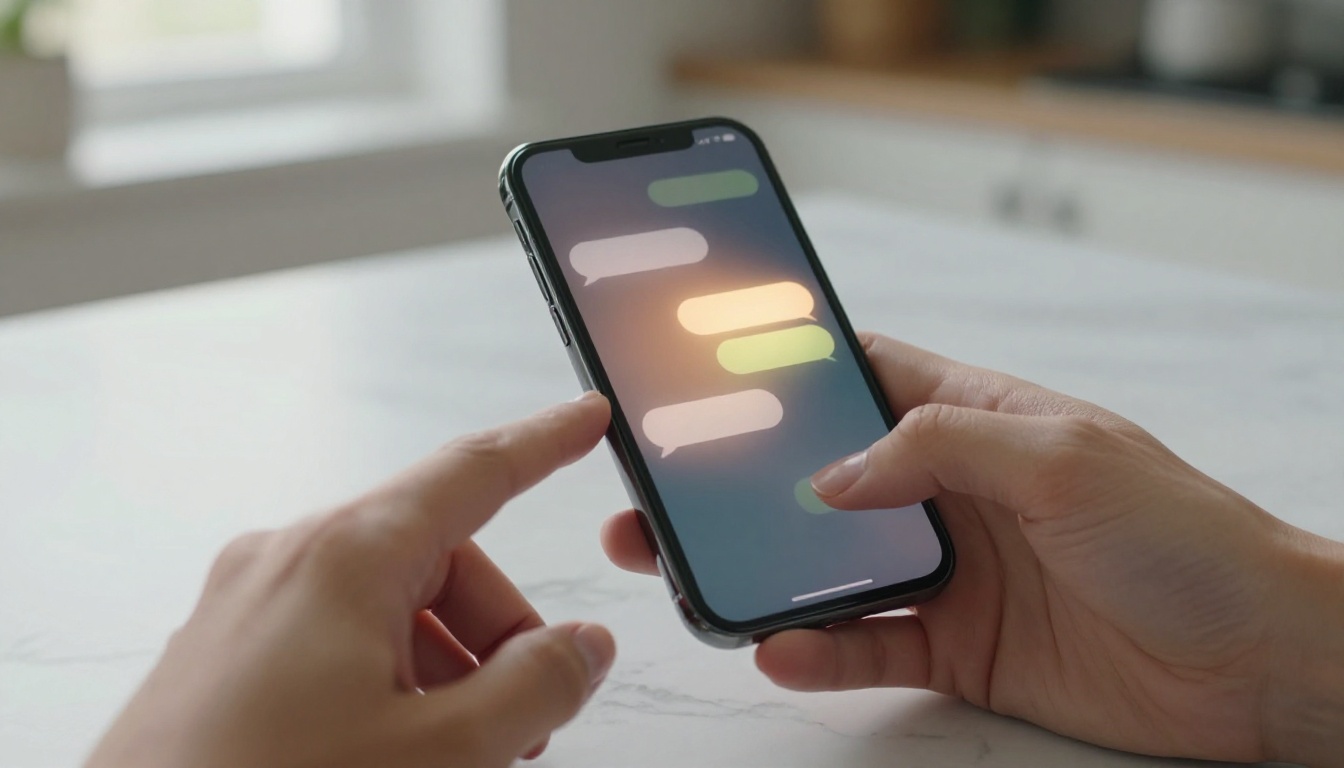
The most surprising thing about modern AI girlfriend apps is not what they say. It is how they never say the same thing twice. Unlike the chatbot scripts from five years ago, today's best AI companion platforms run on the same large language models powering cutting-edge legal research tools, coding assistants, and creative writing platforms. The result is dialogue that feels genuinely spontaneous, because on a technical level, it is.

What Actually Makes These Apps Different
The biggest complaint about early AI companion apps was repetition. Ask the same question twice and you would get a slightly restyled version of the same canned answer. That pattern eroded trust fast. It reminded users they were talking to a machine running a flowchart, not a person with genuine thoughts.
The apps that replaced those clunky prototypes are built on transformer-based language models with billions of parameters. These systems do not retrieve pre-written responses. They generate text token by token, sampling from probability distributions shaped by massive amounts of human conversation data. Every response is genuinely new.
Why Scripted Bots Always Failed
Scripted bots use decision trees. If the user says X, respond with Y. There are only so many paths a tree can grow before it starts repeating branches. Users with even moderate curiosity could map the whole decision space in an afternoon.
That is the core problem with rule-based dialogue: it cannot scale with human curiosity. The moment a user asks something slightly off-script, the bot retreats to a safe fallback. And users notice immediately.
The LLM Shift Changes Everything
When platforms switched to large language model backends, that ceiling disappeared. A model like GPT-5 or Claude Opus 4.7 does not store conversations as rules. It compresses patterns from vast amounts of human language into an internal representation and samples from that space at generation time. The number of possible responses to any single prompt is effectively infinite.
This is not a small engineering improvement over scripted chatbots. It is a categorical shift in how AI dialogue works at its foundation.

The Apps People Are Actually Using
Not every AI girlfriend app is built the same way. Some still use smaller models with heavy safety filtering that severely constrains natural conversation. Others have moved to frontier LLMs with carefully tuned personality layers. Here is what separates the ones worth your time from the ones that frustrate you within a week.
Apps That Cap Out Fast
Several popular platforms market themselves as AI companions but run on models with aggressive guardrails and tiny context windows. Once you hit the limits of what their system prompt allows, you notice the walls. Topics get deflected. The AI's personality becomes rigid. Conversations start circling the same territory with slightly different phrasing.
These platforms are not poorly made products. They are optimized for safety in ways that trade off conversational depth. If you want the kind of open-ended conversation where the AI actually surprises you, they fall short of what the category can offer.
What Genuine Freshness Feels Like
The best experiences in 2027 come from platforms running frontier LLM APIs with minimal content restrictions. When a model like Gemini 3 Pro or Deepseek R1 is powering the conversation, responses have real texture. They reference earlier parts of the conversation without being prompted. They build on running jokes. They push back when the topic is dull.
This is not surface-level polish. It reflects genuine reasoning about conversational context, which only large-scale language models can do reliably across long sessions.

The Tech That Prevents Repetition
To see why no two conversations repeat, you have to look at how modern LLMs handle context and generation. Two mechanisms are doing most of the work.
Context Windows and Why They Matter
Every conversation with an AI exists inside a context window: the chunk of text the model can "see" at any given moment. Early models had context windows of around 2,000 tokens, roughly 1,500 words. That is barely enough for one decent exchange before the model loses track of what was said at the start.
Today's frontier models operate with context windows ranging from 128,000 to over one million tokens. A model like Claude 4 Sonnet can hold the full history of an hours-long conversation while generating each new response. Every answer it produces is conditioned on everything said before in that session.
The practical result: the longer you talk, the more personalized and specific the responses become. The conversation builds on itself in ways a scripted system could never replicate.
Temperature and Sampling Variation
Beyond context, the other reason conversations never repeat is stochastic sampling. When an LLM generates text, it does not pick the single most probable next word. It samples from a probability distribution, and a parameter called "temperature" controls how broadly that sampling reaches. Higher temperature means more variance. More variance means more surprise.
This is why the same question asked twice produces two meaningfully different answers. The underlying model weights are identical, but the sampling process introduces genuine randomness that compounds across every token of the response.

Personality Layers That Hold the Character Together
The apps that feel most coherent manage to balance two competing forces: the freedom of stochastic generation and the stability of a consistent persona. They do this through carefully engineered system prompts that define the AI companion's backstory, speech patterns, emotional tendencies, and values.
These system prompts sit at the top of the context window and persist across the entire conversation. They anchor the persona without scripting the words. The result is a character that feels like a person: consistent in values, spontaneous in expression, and capable of being genuinely interesting across hundreds of sessions.
Which LLM Powers the Best AI Companion?
Not all language models are equal for companionship applications. Some excel at technical reasoning but sound clinical in casual conversation. Others are tuned for warmth and emotional register. Here is a practical breakdown of how the leading models compare.
For pure conversational warmth, Claude Opus 4.7 consistently performs well in tests measuring perceived emotional intelligence. For creative roleplay with minimal content restrictions, GPT-5 and Grok 4 trade leads depending on the scenario type and tone you are going for.
The right model depends entirely on the specific kind of interaction you are after.

Generate Your Own AI Companion
Talking to an AI companion is one thing. Building one that looks exactly how you imagine, with a personality tuned precisely to your preferences, is another level entirely. This is where image generation models come into the picture alongside the language models.
Start with the Visual Design
Photorealistic AI companion images require models that handle human anatomy, skin texture, and facial expression rendering at a high level. PicassoIA's image generation suite at picassoia.com/en/all-models includes models specifically optimized for photorealistic portraits, each with different strengths in lighting quality, realism, and artistic style depth.
The workflow is straightforward:
- Write a detailed character description covering physical appearance, setting, and mood
- Generate three to five variations and compare them side by side
- Use PicassoIA's Image Editor to refine: adjust lighting, change expressions, modify clothing
- Save your final character as the visual anchor for your companion persona
The unlimited generation model on PicassoIA removes the friction of credit limits. You can iterate through dozens of variations without stopping, which is exactly what it takes to land on a character that genuinely feels right.
Writing the Personality That Lasts
Once you have the visual, the next step is the system prompt that defines how your companion speaks and thinks. The best system prompts are specific. They define:
- Speech patterns: Formal or casual, verbose or concise, dry humor or warm sincerity
- Emotional baseline: Nurturing or playful, serious or light, introverted or expressive
- Personal history: Where they grew up, what they studied, what they care about deeply
- Opinions and preferences: Favorite films, views on relationships, what makes them laugh or go quiet
The more specific the prompt, the more consistent the persona feels across long conversations that span weeks or months.
💡 A system prompt of 200 words produces a noticeably more coherent companion than one of 50 words. The extra specificity is not optional, it is the whole point of the exercise.
3 Things That Actually Matter
After testing dozens of AI companion platforms, three factors consistently separate the ones people stick with from the ones they abandon after a week of use.
Personality Depth, Not Just Looks
The most common mistake new users make is optimizing entirely for appearance. A photorealistic companion image means nothing if the underlying model responds to personal questions with deflections or generic positive affirmations.
The platforms with real staying power have invested in personality architecture. They run frontier LLMs with serious persona engineering. They allow the companion to disagree, express preferences that are not mirrors of the user, push back on boring topics, and have something resembling an inner life that makes the conversation worth having.
Memory That Actually Works
Short-term context is handled well by any modern large language model. Long-term memory, the kind that lets a companion reference something you mentioned weeks ago, is the harder problem and the thing that separates good platforms from great ones.
The best platforms solve this with external memory stores: structured databases that record specific facts about the user and inject them into the system prompt at the start of each new session. Others use rolling summaries where recent sessions are compressed into a narrative and added to the context window. When it works well, it feels invisible. You mention a stressful work situation in one session, and the companion asks how it resolved the next time you chat.

Voice and Visuals, Not Just Text
The third differentiator is multimodality. Pure text companions are powerful, but the platforms gaining real traction in 2027 combine text with voice synthesis, image sharing, and personalized avatar generation.
Voice adds a layer of presence that text alone cannot replicate. Text-to-speech models available through PicassoIA generate warm, expressive audio from text responses in seconds. Combined with a photorealistic companion image generated from the platform's image suite, the experience becomes genuinely different from anything the word "chatbot" suggests.
The gap between a text-only AI chat and a fully multimodal companion experience is wide. Users who experience both rarely go back.
How PicassoIA Brings It All Together
PicassoIA is not an AI girlfriend app. It is the platform where you assemble the pieces that make one worth using. Every component of the stack is available in one place: the large language models for conversation, the image generators for visual design, the text-to-speech tools for voice, and the image editing suite for character refinement.
This means you are not locked into a single platform's decisions about what your companion can look like or how they can speak. You control every layer of the experience from the character's appearance to the model powering the dialogue.
The model library at picassoia.com/en/all-models spans both image generation and language models across every category, with options for different aesthetics, content approaches, and generation styles.

The Unlimited Iteration Advantage
One practical advantage of PicassoIA for companion design is the unlimited generation approach. Many competing platforms put daily limits on image generation, which creates friction at exactly the moment when you need to iterate freely.
Designing a companion character requires real iteration. You need to generate variations, compare them side by side, push the aesthetic in different directions, and arrive somewhere specific that feels right. Credit limits make that process tedious and expensive. Without those limits, the creative process flows the way it should, and you end up with something you actually care about.
Where to Actually Start
The fastest starting point is the text-to-image section at PicassoIA. Describe your character in specific terms covering appearance, setting, mood, and the visual personality cues you want to communicate. Generate five variations. Pick the one that captures the right energy. Then move to the LLM section and write your system prompt with the same level of care and specificity.
Most people who feel disappointed with AI companion experiences did not invest enough time in the system prompt. The image gets you through the door. The personality is what keeps you coming back.

The Conversation That Never Gets Old
The reason no two conversations repeat on these AI girlfriend apps comes down to architecture, not marketing copy. Models like GPT-5, Gemini 3 Pro, Claude Opus 4.7, and Grok 4 were built to handle the full complexity of human language. When that capacity is applied to companionship, infinite variation becomes a natural byproduct of how the system works.
Every conversation branches in directions neither party planned. That is not a bug in these systems. It is the entire point, and it is what makes these platforms genuinely different from anything that came before them.
If you have not tried building an AI companion from scratch, PicassoIA gives you all the tools in one place. Start with a character at picassoia.com/en/all-models, add a voice, write the persona that makes them interesting, and then start talking. The conversation that has never happened before is waiting for you.


