Two years ago, if you asked an AI to generate a photorealistic woman on a beach, you'd get something that looked like a wax figure melting in the sun. Stiff skin, wrong proportions, glassy eyes with no depth, lighting that made no physical sense. The images were recognizable as "AI" from three feet away. Today, that same prompt produces results that stop people cold, images that require close inspection to tell apart from actual photography. NSFW AI image quality has changed a lot, and the leap happened faster than almost anyone in the space expected.
From Muddy Pixels to Photorealism
There is a before and after in AI image generation that is not subtle. The divide runs roughly through the middle of 2023, and everything on the other side of it looks dated now.
What Early AI Images Actually Looked Like
Early diffusion models produced images with characteristic flaws that became memes in their own right. Hands with six fingers. Teeth that blurred into one mass. Eyes that drifted slightly off-axis. Skin that had a smooth, plasticky sheen that never quite read as tissue. Hair was often a tangled mess of semi-defined strands, and fabric texture was suggested rather than rendered.
For NSFW content specifically, these limitations were brutal. The entire point of that category of image is believability. A slight wrongness in the face breaks the spell instantly. A figure with anatomically suspect proportions reads as unsettling rather than attractive. The models were generating things that were technically suggestive but visually unconvincing.

The First Shift: SDXL and the Resolution Jump
The first significant quality jump came with SDXL, Stability AI's answer to the detail limitations of earlier models. Moving to a higher base resolution and a two-stage generation pipeline meant images could hold more fine detail without collapsing into noise. Faces became more stable. Hands improved, though they remained a weak point.
More importantly, SDXL introduced the ecosystem of fine-tuned checkpoint models that could specialize. Once a strong base existed, the community produced models trained specifically on photographic datasets, models like Realistic Vision v5.1 and RealVisXL v3.0 Turbo that pushed toward genuine photorealism with dramatically improved skin rendering.
💡 What changed: The shift from SD 1.5 to SDXL was not incremental. It was a categorical improvement in how well the model held detail at full resolution, particularly in faces and fine textures.
The Models That Changed Everything
The real revolution came in waves, each one raising the floor of what was considered acceptable output.
Flux and the New Standard
Flux Dev from Black Forest Labs landed with a genuinely different feel from anything that came before it. Where earlier models struggled to maintain coherence across the full frame, Flux produced images with consistent detail from edge to edge. Lighting behaved physically. Fabric draped with weight. Skin had subsurface scattering, that slight translucency where light passes through thin tissue at the ears and fingers, that had always eluded previous models.
Flux 1.1 Pro Ultra pushed this further with native high-resolution generation, meaning the model was not upscaling a smaller image but rendering at full resolution from the start. The difference is visible: no softening from the upscale step, no loss of mid-frequency detail in skin texture. For NSFW applications specifically, this made a decisive difference.

The latest generation, Flux 2 Pro and Flux 2 Max, refines the architecture further. Colors are richer without being oversaturated. The tonal range in shadows and highlights reads more like properly exposed photography than the slightly compressed range of earlier AI models. Complex scenes with multiple subjects hold together instead of drifting into incoherence.
Realistic Vision and Skin-Accurate Output
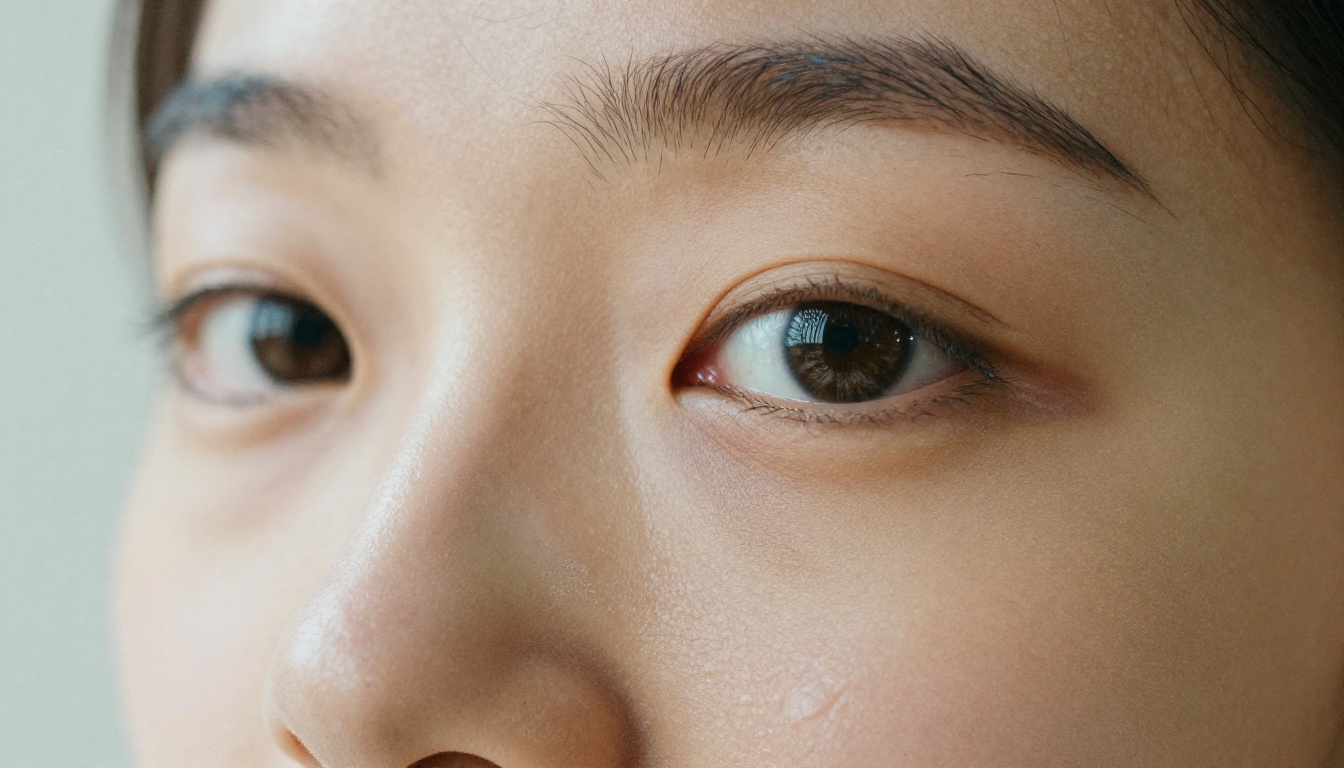
Purpose-built photorealism models like Realistic Vision v5.1 showed what fine-tuning on curated photographic data could achieve. These models were trained on images where the ground truth was actual photographs, not synthetic data, which means they learned the statistical patterns of real skin: the way it is never perfectly uniform, how pores appear in raking light, how color shifts from the cheek to the jaw.
For NSFW content, this mattered enormously. The difference between attractive and unsettling in an AI-generated figure often comes down to a handful of skin rendering decisions: does the texture have natural variation, or is it uniform in a way skin never is? Does the lighting produce appropriate shadow gradients on the body's curves? Does the image have the kind of micro-imperfections that make something feel photographed rather than synthesized?
Stable Diffusion 3.5 and Compositional Depth
Stable Diffusion 3.5 Large brought something the earlier models lacked: better compositional understanding. It was not just about rendering quality but about placing subjects in environments that made physical sense. Shadows fell in the right directions. Ambient light sources affected the whole scene consistently. Depth-of-field felt like an actual optical property rather than a blurring effect applied as an afterthought.
This compositional improvement matters for NSFW scenes specifically because believability depends on environment as much as figure. A beautifully rendered subject against a physically impossible background breaks realism immediately. SD 3.5's architectural improvements meant the whole frame worked together.
What "Quality" Actually Means in NSFW AI
Quality in this context is not one thing. It is a stack of separate rendering problems that all need to be solved simultaneously.
Skin Texture Is the Real Test
Human skin is one of the most complex surfaces a generative model has to reproduce. It is not uniformly colored, not uniformly textured, not uniformly lit. The same patch of skin will appear completely different depending on the angle of light hitting it. Under raking sidelight, every pore casts a tiny shadow. Under diffuse overhead light, the texture flattens. At the ear, light passes through the tissue and renders it translucent pink.
Earlier models produced skin that was smooth in a way no human skin actually is. The newer generation, particularly Flux-based models and GPT Image 1.5, treats skin as a complex optical material with actual subsurface properties. The result is images that feel photographed rather than rendered.
| Model | Skin Texture | Lighting Accuracy | Anatomy | Overall Realism |
|---|
| SD 1.5 (2022) | Smooth/Plastic | Poor | Inconsistent | Low |
| SDXL (2023) | Improved | Moderate | Better | Moderate |
| Flux Dev (2024) | High | Good | Solid | High |
| Flux 1.1 Pro Ultra | Excellent | Excellent | Very Good | Very High |
| Flux 2 Max | Near-Photographic | Excellent | Excellent | Near-Photographic |
Lighting, Shadows, and Atmosphere
Lighting is where AI models most obviously failed historically, and where the improvement has been most dramatic. Early models applied lighting as a kind of color grading, a warm or cool tint that suggested a light source without actually simulating one. Shadows did not align with implied light positions. Highlights blew out without the gradual falloff of real photography.
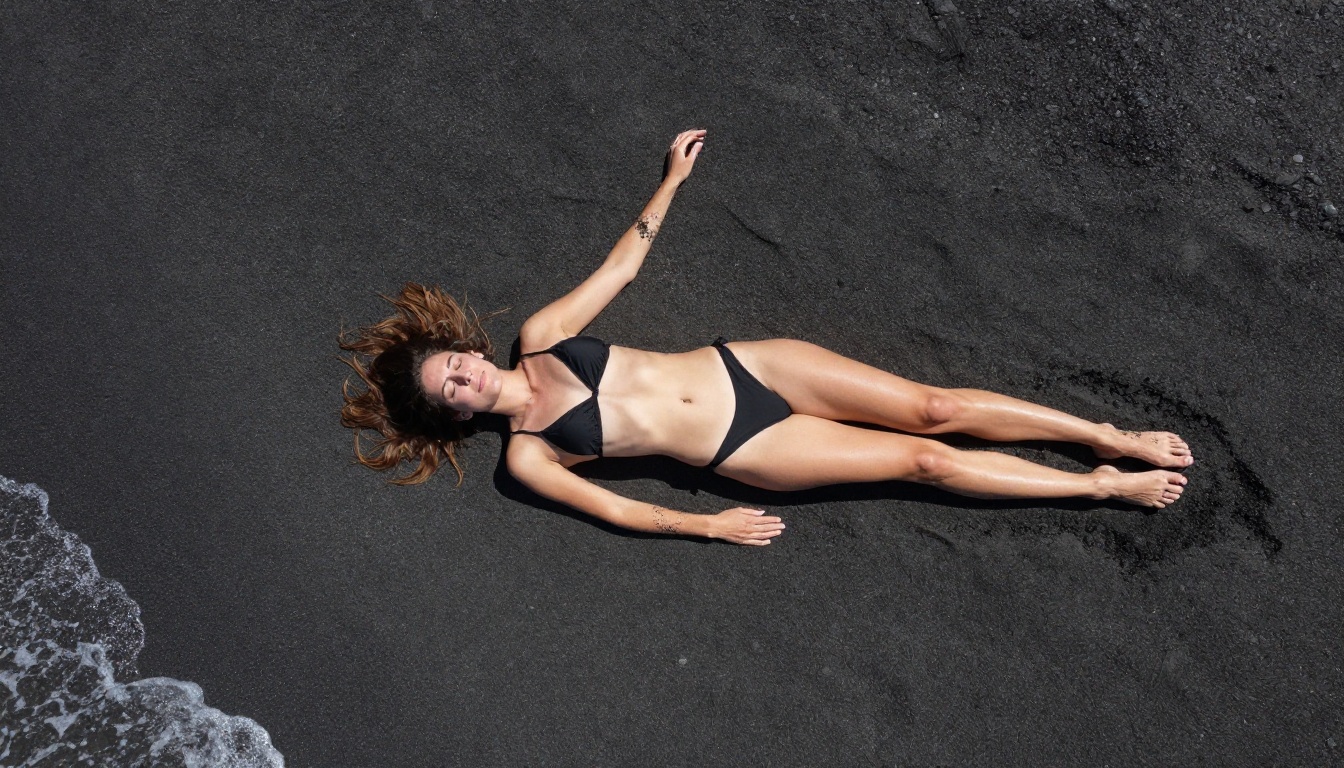
Current models, especially Imagen 4 and Imagen 4 Ultra from Google, handle lighting with genuine physical accuracy. A subject standing near a window will have catchlights in the eyes that match the window's position. The shadow on their neck will fall at the correct angle. The ambient fill light from bounced wall color will tint the shadow side appropriately. This is photography, not approximation.
Anatomy and Proportions
The anatomy problem in early AI was not just about fingers. It was a general failure of spatial reasoning: the model did not have a robust internal model of how a human body occupies three-dimensional space. Torsos were sometimes too long or too short. Shoulders could be wildly asymmetric. Seated figures had proportions that made no geometric sense when analyzed carefully.
Today's models have largely solved this at the level of standard poses. A standing or reclining figure in a mid-distance shot will have proportions that hold up to scrutiny. The remaining failure modes tend to appear in unusual angles, extreme foreshortening, or complex interactions between multiple subjects. For typical NSFW creative use cases, the anatomy problem is effectively solved.
💡 Pro tip: If anatomy still breaks in unusual poses, Flux Schnell combined with ControlNet pose guidance can lock in the figure structure before the detail pass runs.
Model quality alone does not determine output quality. The tools around the model matter equally.
Resolution and Upscaling Tools
One of the most impactful improvements has been in post-generation upscaling. Super-resolution models can now take a 1024x1024 image and produce a 4096x4096 version that looks genuinely photographed rather than bilinearly scaled up. The combination of a strong base model with a dedicated super-resolution upscaling step produces results that the base model alone cannot achieve, no matter how good it gets. Each step in the chain, from the initial generation through the upscale pass, compounds the overall fidelity.
Inpainting and Fixing Problem Areas
Even the best models occasionally produce an image that is 95% perfect with one distracting flaw. Inpainting has matured dramatically alongside the models themselves. Where early inpainting produced visible seams and mismatched textures, current tools can regenerate a face, a hand, or a background element with seamless integration. The masked region is regenerated with full awareness of the surrounding context.
For NSFW content this is particularly useful because the images often have specific areas, a face or a particular body region, where the stakes for realism are highest. Being able to target those areas for a quality pass without disturbing the rest of the composition is a workflow change that dramatically raises achievable output quality.
The Prompt Has Changed Too
Better models require better prompts to fully extract their quality ceiling. The prompting language that worked for SD 1.5 ("a beautiful woman, high quality, 4k") produces mediocre results on modern architectures.
Writing for Photorealism
Modern photorealism prompting is closer to writing a cinematographer's shot description than a keyword list. Instead of "beautiful skin, realistic," effective prompts describe specific optical phenomena: "subsurface scattering visible at the ears," "Rembrandt lighting creating a triangular highlight on the cheekbone," "pores casting micro-shadows under raking sidelight."
💡 What works now: Describe what light is doing, not just what the scene contains. "Morning light at 15 degrees from the left creating long shadows across the linen" produces dramatically better lighting than the generic phrase "natural light."

Camera Language and Film Emulation
The most reliable prompting evolution has been the adoption of actual photography language. Specifying a focal length (85mm vs 24mm) changes the spatial compression of the image and the amount of background blur. Specifying an f-stop affects depth of field rendering. Film emulation terms like "Kodak Portra 400" or "Fujifilm Pro 400H" tell the model something specific about color rendition, grain character, and tonal curve that generic terms like "film aesthetic" do not.
This specificity is part of why the same models that produce mediocre results for inexperienced users produce jaw-dropping results for photographers who prompt with the vocabulary of their craft.

From 2022 to 2026: A Direct Comparison
The numbers tell a story, but the visual comparison is more visceral. Here is what actually changed, generation by generation:
| Era | Defining Model | Skin | Hands | Lighting | Believability |
|---|
| 2022 | Stable Diffusion 1.5 | Plastic/Smooth | 5-6 fingers common | Flat/Inconsistent | Immediately AI |
| 2023 | SDXL | Improved texture | Mostly correct | Moderate depth | Recognizably AI |
| Early 2024 | Flux Dev | Near-realistic | Reliable | Physical | Often convincing |
| Late 2024 | Flux 1.1 Pro Ultra | Photographic | Near-perfect | Excellent | Hard to distinguish |
| 2025-2026 | Flux 2 Max, Imagen 4 Ultra | Indistinguishable | Photographic | Near-perfect | Requires scrutiny |
The trajectory is not slowing. Each architectural generation has brought improvements that would have seemed implausible two years earlier.

Where the Quality Ceiling Is Now
The honest answer is that for controlled scenarios, standard poses, single subjects, well-described lighting, current models have effectively solved photorealism. The images generated by Flux 2 Max, Imagen 4 Ultra, and Seedream 4 require genuine scrutiny to distinguish from photographs. The specific technical tells that characterized earlier AI output, the plastic skin, the eye drift, the lighting incoherence, are gone in standard use cases.
What remains are challenges at the edges: complex multi-figure compositions, extreme poses, text rendering in environments, and the kind of chaotic real-world scenes that photography captures without thinking twice. These are still active research areas, and they are getting better every few months.
💡 The practical ceiling: For NSFW creative work specifically, the quality ceiling is now limited almost entirely by prompt skill and model selection, not by the model's architectural limitations. A well-crafted prompt on a strong model like Flux 1.1 Pro Ultra will produce results that would have been considered technically impossible in 2022.

See It for Yourself
The best way to feel this quality shift is to run the same prompt through different model generations back to back. PicassoIA puts all of these models in one place: Flux Schnell for fast iteration, Flux 1.1 Pro Ultra for maximum quality, Realistic Vision v5.1 for the fine-tuned photographic style, and GPT Image 1.5 for OpenAI's take on realism.
You can run the same prompt on each model and see in real time exactly how the output differs. Experiment with camera language: try writing "85mm f/1.4, Kodak Portra 400, volumetric morning light from the left" on your next generation and compare it to a generic prompt. The results will show you more concretely than any article what the quality shift actually looks like in practice. Pick a model, write a detailed scene description, and see where the current ceiling actually sits.


