The NSFW AI Image Tools with the Best Quality in 2027
A thorough look at which NSFW AI image tools with the best quality are dominating 2027, including photorealism benchmarks, model-by-model quality comparisons, prompt engineering for realistic skin and lighting, and a step-by-step tutorial for getting professional results with Flux 1.1 Pro Ultra on PicassoIA.
The quality gap between a mediocre AI image and a truly photorealistic one is immediately obvious. Bad outputs look soft, plasticky, and anatomically wrong. Great outputs make you stop and look twice. When searching for NSFW AI image tools with the best quality, that gap matters more than anywhere else, because the bar is higher: skin texture, lighting accuracy, anatomical proportionality, fabric drape, and hair detail all need to be convincing at once.
This article breaks down which models and platforms are actually delivering photorealistic NSFW results in 2027, what separates them from the rest, and how to use them to get the best outputs consistently.
What "Quality" Actually Means Here
Not all quality metrics are equal. When evaluating AI image quality for NSFW content specifically, you need to look at more than just resolution. Many tools advertise "8K" or "ultra-realistic" but deliver results that fall apart under scrutiny.
The 5 Real Quality Markers
These are the attributes that actually separate a professional output from an amateur one:
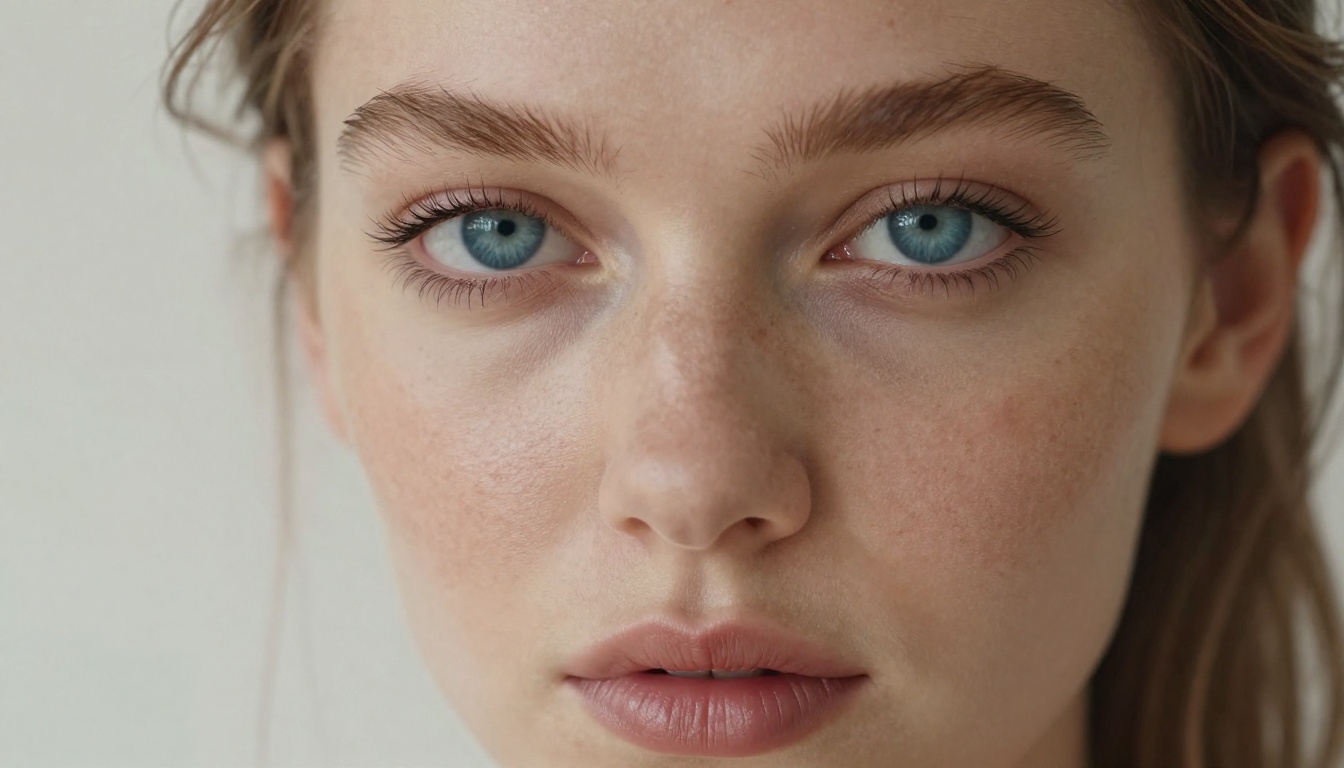
Skin texture fidelity - Pores, micro-hairs, subsurface scattering, and natural imperfections. If skin looks like plastic or rubber, the model has failed.
Lighting coherence - Does the light source make physical sense from every angle? Are shadows anatomically accurate?
Anatomical accuracy - Proportions, joint placement, finger count, body physics under gravity, and weight distribution.
Fabric realism - How does clothing behave? Does it drape, stretch, and interact with the body correctly, or does it float artificially?
Hair and eye detail - Individual strand visibility, natural movement, realistic eye catchlights, and iris texture.
💡 Pro tip: Run the same prompt through three different models and compare skin texture at 100% zoom. The model that wins that comparison is the one worth using for your final renders.
Photorealism vs. Artistic Style
Some users want an image that looks like a photograph. Others want something with a painterly or cinematic quality. These are fundamentally different goals requiring different model choices.
For raw photorealistic AI generation, models trained heavily on photography datasets consistently outperform those trained on mixed art data. The gap becomes obvious in details like skin pores, depth-of-field rendering, and natural color science. For a more stylized aesthetic, models with artistic bias can produce beautiful results, but the "photographic truth" breaks down under scrutiny.
The Models That Actually Deliver
After testing across the major model categories available on platforms with large libraries, these consistently produce the highest-quality photorealistic NSFW outputs in 2027.
Flux 1.1 Pro Ultra
Flux 1.1 Pro Ultra is the current benchmark for high-quality AI image generation in photorealistic applications. Black Forest Labs built this model to prioritize fidelity above everything else, and it shows.
What makes it stand out:
Sub-pixel skin texture rendering with natural pore structure
Extremely accurate prompt adherence, including precise lighting direction
Superb handling of fabric transparency and drape physics
Natural depth of field that mimics real camera optics at specific apertures
Consistent anatomical proportions across different poses
The tradeoff is speed. It takes longer to generate than its sibling Flux Schnell, but the output quality justifies the wait for final renders.
Flux 2 Pro and Flux 2 Max
The second-generation Flux architecture pushed realism even further. Flux 2 Pro improved coherence in complex scenes with multiple subjects and environmental elements, while Flux 2 Max pushed resolution and fine detail to new levels.
For NSFW content specifically, the improvement in hair rendering between Flux 1.x and Flux 2.x is significant. Hair no longer merges into a blob at the edges, and individual strand behavior in different lighting conditions renders correctly.
GPT Image 1.5
GPT Image 1.5 surprised many users with its photorealism capabilities. OpenAI's model excels at facial feature consistency across different poses, natural color science that feels close to real photography, and very clean composition adherence. It handles close-up portrait shots with exceptional quality, making it excellent for detailed face and skin work.
Realistic Vision v5.1
Realistic Vision v5.1 remains one of the most popular choices specifically for photorealistic human subjects. Built on a Stable Diffusion base with heavy fine-tuning on real photography, it handles skin tone diversity and natural body proportions better than many newer models, and it generates consistently at speed.
RealVisXL v3.0 Turbo
RealVisXL v3.0 Turbo built on the SDXL architecture provides an excellent balance of speed and realism. It handles complex lighting scenarios and outdoor natural environments with particular strength, making it a solid option when you need quality at pace.
Imagen 4 Ultra
Google's Imagen 4 Ultra represents a different approach to photorealism. Its color science is exceptional, with natural tonal ranges that feel close to medium-format film photography. The standard Imagen 4 variant delivers more detail at the cost of generation time, making both useful depending on your deadline.
Seedream 4
ByteDance's Seedream 4 is particularly strong in ultra-high-resolution outputs. Its handling of fine fabric textures and natural environments at large canvas sizes is among the best available, and it pairs well with super-resolution upscaling for print-quality work.
Speed vs. Quality Tradeoffs
Not every use case requires the maximum quality model. Knowing when to use a faster option saves significant time without compromising your final output.
When Speed Wins
Rapid iteration on composition: Use Flux Schnell or Stable Diffusion 3.5 Large Turbo to test 10-15 prompt variations quickly. Once the composition is right, switch to a premium model for the final render.
Background and environment testing: Fast models work fine for checking whether a scene layout is interesting.
Batch thumbnail generation: When you need many images for a project and quality is secondary to volume.
When Quality Wins
Final portfolio images: Always use your highest-quality model.
Close-up skin and face detail: Quality matters exponentially more as you zoom in.
Complex lighting setups: Fast models often produce incorrect shadow behavior. Quality models handle this correctly.
💡 Workflow tip: Draft with Flux 2 Dev at half resolution to validate composition and lighting, then switch to Flux 2 Max at full resolution for the final render. This cuts generation cost while maintaining final quality.
How to Use Flux 1.1 Pro Ultra on PicassoIA
PicassoIA gives direct access to Flux 1.1 Pro Ultra without any technical setup. Here is how to get the best results from it.
Step 1: Open the Model Page
Go directly to Flux 1.1 Pro Ultra on PicassoIA. You will see the prompt interface immediately, with no installation or account configuration required beyond signing in.
Step 2: Write a Structured Prompt
The most common mistake users make is writing short, vague prompts. Flux 1.1 Pro Ultra responds extremely well to specificity. Structure your prompt in this order:
Subject: Who or what is in the image, what they are wearing, their pose and expression
Environment: Where they are, background elements, scene setting with specific details
Lighting: Direction, color temperature, quality (hard, soft, diffused), and time of day
Film emulation: RAW, Kodak Portra 400, Fujifilm Pro 400H, or similar
Technical suffix: --ar 16:9 --style raw
Example structure:
A woman in [description] [pose], [environment],
[lighting direction] from [side], shot with [lens] at [aperture],
photorealistic 8K RAW, [film emulation], [texture details]
--ar 16:9 --style raw
Step 3: Set Your Aspect Ratio
For most portrait and glamour work, 16:9 gives the most compositional flexibility. For social-media vertical format, switch to 9:16. The model handles both ratios with consistent quality.
Step 4: Refine Your Lighting Language
If your first result looks flat or the shadows are physically wrong, the issue is almost always your lighting description. Add specific directional language:
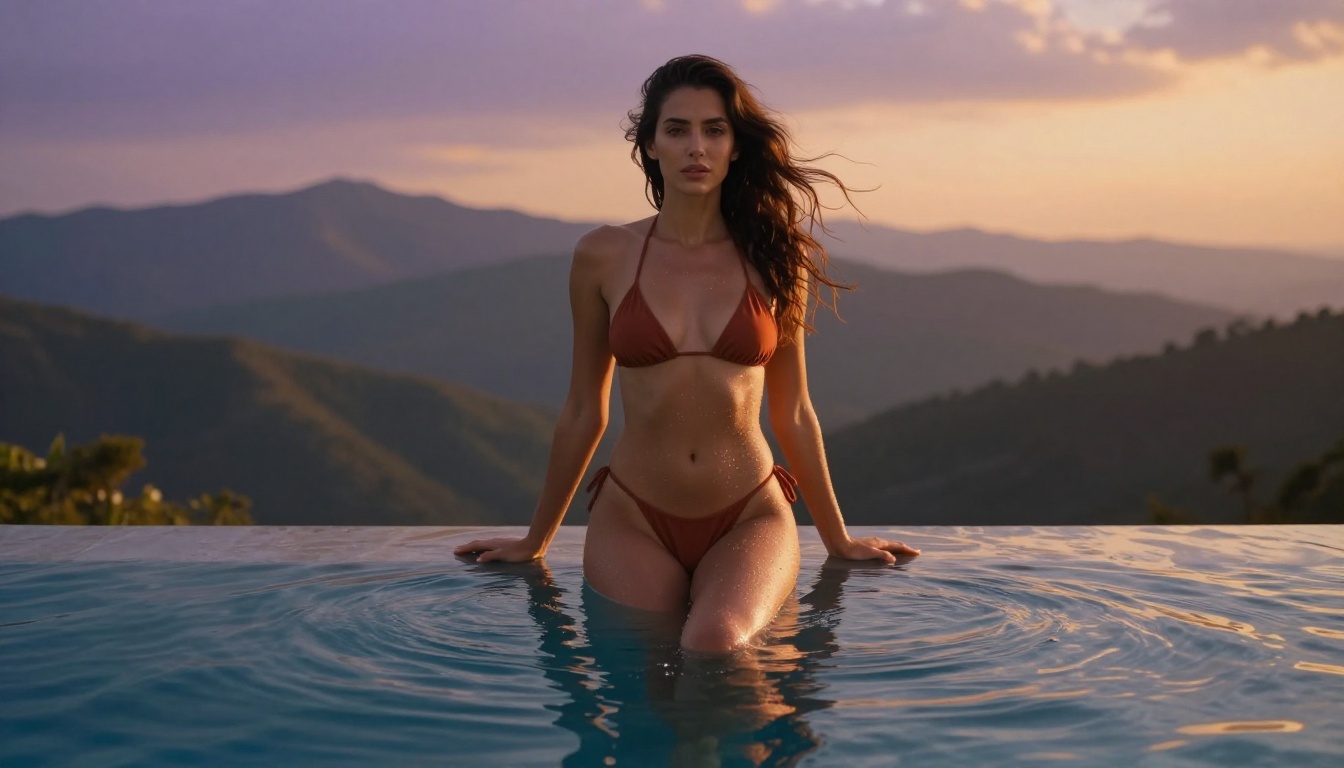
"volumetric morning light from the left at 45 degrees"
"hard afternoon sidelight at 90 degrees from the right"
"diffused overcast light from directly above"
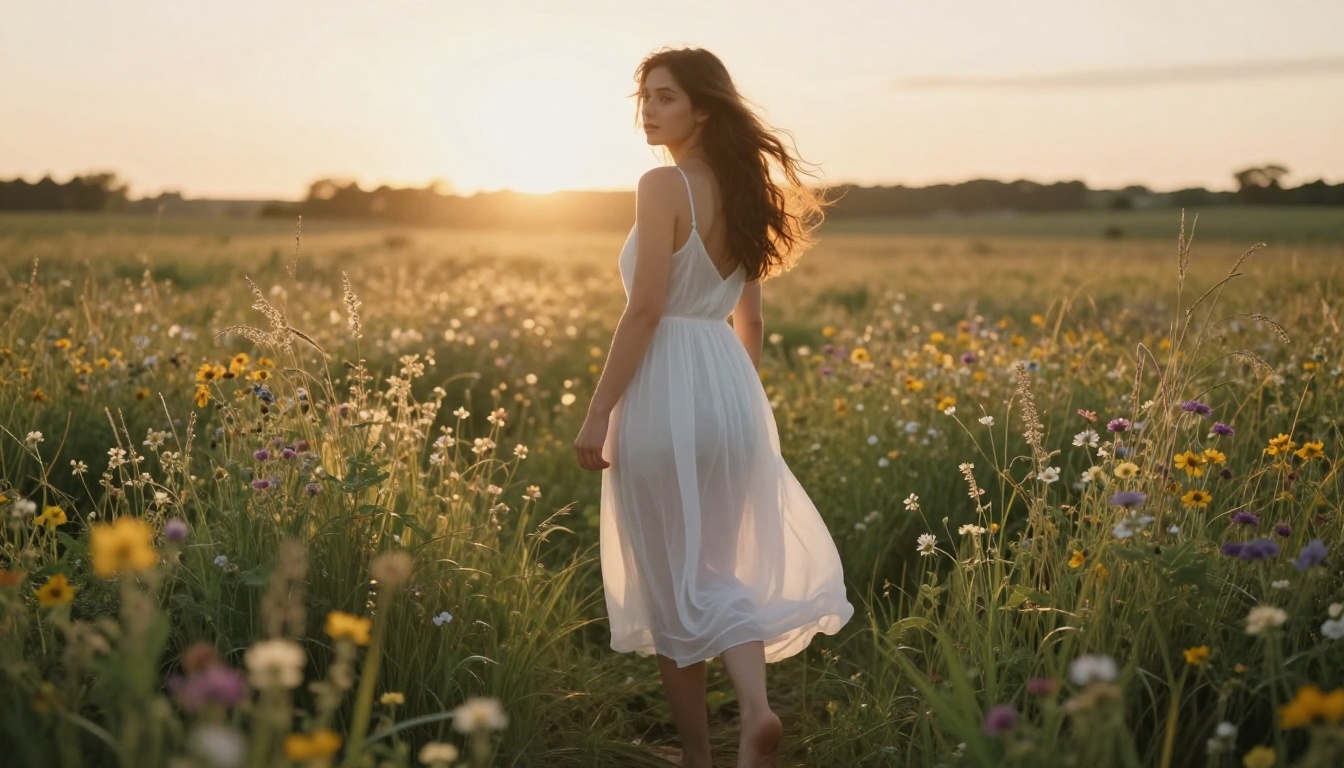
"warm golden hour backlight creating rim light on hair"
Step 5: Upscale with Super Resolution
After generating your image, use the Super Resolution capability to upscale 2x or 4x. This is critical for close-up skin work where micro-detail matters at print sizes. The super-resolution models on PicassoIA specifically preserve skin texture during the resize process, unlike simple bicubic algorithms.
Prompt Engineering for NSFW Quality
The model is only half the equation. A weak prompt fed to Flux 1.1 Pro Ultra will still produce a mediocre result. A precise prompt fed to SDXL can surprise you.
Anatomy of a High-Quality Prompt
Every effective NSFW prompt for photorealistic output shares these elements:
Element
Weak Version
Strong Version
Subject
"a beautiful woman"
"a 28-year-old woman with auburn hair and freckles"
Outfit
"in lingerie"
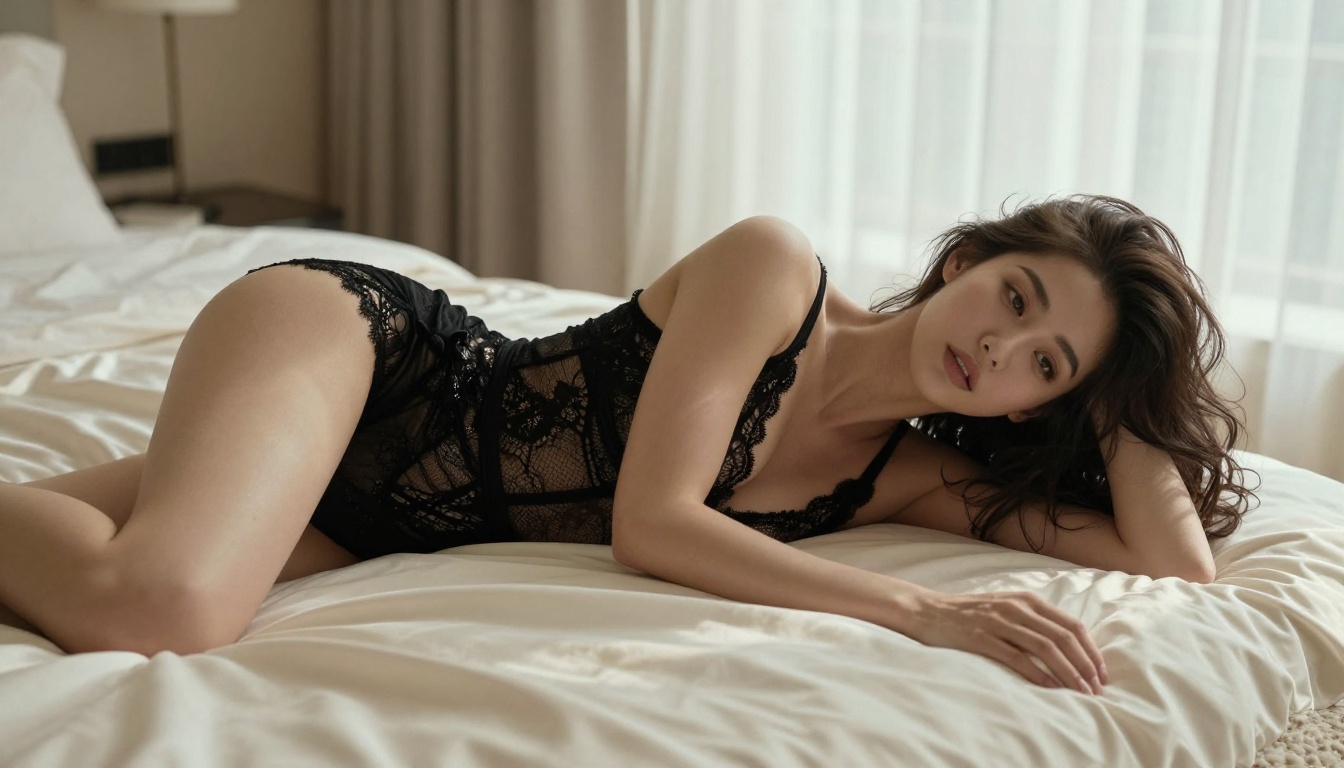
"in a black lace bodysuit with sheer mesh panels"
Pose
"standing"
"leaning against a window frame, one arm raised"
Lighting
"good lighting"
"volumetric morning light from the left at 45 degrees"
Kodak Portra 400, Fujifilm Pro 400H, Agfa Vista 200
3 Mistakes That Kill Quality
1. Conflicting style signals. Combining "RAW photography" with "digital art" or "3D render" confuses the model. Pick one visual language and commit to it throughout the prompt.
2. Ignoring the background. A vague or empty background description makes even the best models produce flat, unconvincing results. Describe the environment specifically, even if it will be blurred by depth of field.
3. Skipping the camera specification. "35mm vs. 85mm" and "f/1.4 vs. f/8" communicate fundamentally different things to models trained on photography data. Always include lens focal length and aperture.
Model Quality Comparison
Here is how the top models compare across the key quality dimensions for NSFW photorealistic generation:
Generating a great base image is the starting point, not the end goal. The real quality gains often come from post-generation editing.
Inpainting for Precision Fixes
Inpainting lets you isolate specific areas of an image and regenerate them while keeping the rest intact. This is invaluable for correcting:
Anatomical errors in hands or fingers
Incorrect fabric behavior in specific zones
Face or hair imperfections from the initial generation
Background elements that do not match the scene's lighting
Use Flux Kontext Pro for text-based inpainting, where you describe what to change in natural language rather than manually masking areas. This makes targeted corrections significantly faster.
Outpainting for Scene Extension
If your composition needs more space, outpainting expands the canvas beyond the original borders. This is useful for converting portrait orientation to landscape, extending backgrounds naturally, or adding environmental context that supports the image's story.
Super Resolution for Print Output
After generating at standard resolution, run your image through a Super Resolution model to upscale 2x or 4x without quality loss. This matters critically when output will be used at large display sizes. The upscaling models on PicassoIA preserve skin texture and fine detail during the resize process, unlike simple bicubic scaling which produces soft, smeared results.
💡 Recommended workflow: Generate at 1024x576 to validate composition and lighting, then upscale to 4096x2304 with super resolution. You get the speed of a lower-resolution generation with the final quality of a native 4K render.
Cloud Platform vs. Local Setup
Having access to great models is one thing. Having them in a usable interface with no setup friction is another entirely.
Running local models requires significant hardware (a high-end GPU with at least 12GB VRAM for SDXL, and 24GB or more for Flux 2 Max), complex installation, and manual model updates. Most users encounter driver issues, out-of-memory errors, or version incompatibilities before generating a single image.
Cloud platforms solve all of this. You get:
Instant access to 90+ models with zero installation
No hardware requirements: runs in any browser
Automatic updates: models are refreshed as new versions release
Consistent performance: no throttling based on local GPU heat or memory limits
Scenario
Recommendation
Testing prompts rapidly, GPU available
Local
Final high-quality renders
Cloud (quality models)
No dedicated GPU
Cloud only
Access to the latest model releases
Cloud
Privacy-critical work
Local
Batch generation at scale
Depends on volume pricing
The quality available from Flux 1.1 Pro Ultra or Flux 2 Max on a cloud platform is significantly higher than what most consumer GPUs produce locally, because these models require hardware configurations that are expensive to own privately.
What Separates Good from Exceptional
After extensive work across every major model category, the difference between AI images that look like AI and ones that look like photography comes down to three things.
Prompt specificity. Vague prompts produce vague results. The more precise your lighting direction, lens choice, fabric description, and environmental detail, the better every model performs. This is the single highest-leverage change most users can make immediately, and it costs nothing.
Model selection for the task. Using Flux Schnell for a final portfolio image is like printing a photograph at 72 DPI. The right model for the right job matters as much as the prompt itself.
Post-processing discipline. Generation is the beginning, not the end. Inpainting to fix problem areas, outpainting to expand composition, and super resolution to upscale for final output are the steps that separate professional workflows from one-click attempts.
💡 The best NSFW AI image generators are not the ones with the most features. They are the ones where you understand the model well enough to reliably produce exactly the output you want, every time.
The practical approach: start with a detailed prompt using the structure from the tutorial section above, pick Flux 1.1 Pro Ultra as your baseline model, run three to five iterations adjusting lighting language between each, then use inpainting and super resolution to refine your best result.
Within a short session, you will have a clear sense of which models suit your specific style preferences and subject matter. The difference between AI images that impress and ones that disappoint is not a mystery. It is precise prompting, the right model, and a clean editing step afterward. All three are available to you right now on PicassoIA.