The moment you type something into an AI image generator and hit enter, you're inside a system that has already decided what you're allowed to see. That decision, made long before your prompt arrived, is the core of what separates NSFW AI from regular AI. It's not just about adult content. It's about architecture, training philosophy, deployment choices, and who gets to define decency in the first place. If you've ever had a prompt refused for reasons that felt arbitrary, or wondered why one platform produces dramatically more realistic human subjects than another, this is the article that explains the actual mechanics.
What "NSFW" Actually Means in AI
The acronym stands for "Not Safe for Work," but in the AI space it covers a wildly inconsistent range of content. One platform's artistic nude is another platform's violation notice. Before comparing systems, you need to know what "NSFW" actually means in practice, because the definition shapes every technical decision downstream.
The Definition Problem
NSFW isn't a technical standard. It's a cultural judgment call made by product teams, legal departments, and investor relations offices. A swimwear brand advertisement, a classical painting of Venus, and explicit adult content all get flagged as "NSFW" by different systems at different thresholds.
Regular AI systems like GPT Image 2 default to the strictest interpretation: if there's any chance a human reviewer would raise an eyebrow, the content gets blocked. This broad-brush approach protects the platform legally but frustrates creators whose work sits in the aesthetic gray zone between "safe" and "explicit."
This creates a frustrating asymmetry that photographers and artists notice immediately. You can prompt a regular AI for a woman in a bikini on a beach and get refused, then generate a photo-realistic war scene with casualties and get approved without question. Violence, fear, and graphic distress often pass filters that bare skin does not. That inconsistency isn't accidental. It reflects the cultural biases of the teams who built the filters.
Where the Line Gets Drawn
Most mainstream AI platforms draw a bright line at any visible nudity, sexually suggestive poses, or content that could be interpreted as romantic or intimate beyond a handshake. NSFW AI platforms push that line significantly further, allowing:
- Artistic nudity: Classical poses, fine art photography style, implied nudity with tasteful framing
- Glamour content: Swimwear, lingerie, suggestive but non-explicit imagery for commercial or personal use
- Mature themes: Romantic scenes, sensual atmospheres, content clearly intended for adult audiences
- Explicit material: Available on platforms specifically designed and age-verified for adult content
The key technical question isn't where the line sits. It's how the system enforces it, and what enforcement costs in terms of output quality.
How Content Filters Work
Both types of AI use content filtering, but the implementation and aggressiveness differ enormously. Understanding the mechanics helps you choose the right tool for your project rather than fighting a system you don't fully see.
The Tech Behind the Block
Regular AI systems layer multiple safety mechanisms on top of one another:
- Prompt-level filtering: Before generation starts, your input text is scanned for flagged terms, concepts, and intent patterns using a classifier trained to detect prohibited content. Keywords related to nudity, sexuality, violence, or harmful topics get blocked outright before a single pixel is rendered.
- Output-level classification: After generation, a second classifier scores the visual output against NSFW categories. Images that score above a threshold never reach you. You see an error. The image existed in computation and was destroyed.
- Embedding space constraints: More sophisticated models are trained to steer generation away from certain regions of their latent space entirely. This makes it structurally, mathematically impossible to generate certain content, not just filtered after the fact, but unreachable by design.
NSFW AI platforms like those powered by Seedream 4.5 or Flux 2 Klein 9B Base LoRA typically remove or disable the first and second layers while keeping basic safety rails for content that is universally prohibited regardless of platform type.
Why Filters Fail (Sometimes)
💡 Tip: Filter failures aren't bugs in most cases. They're the result of a continuous arms race between safety researchers and people trying to circumvent restrictions. Both sides adapt constantly.
Regular AI filters fail when users craft prompts that describe prohibited content using indirect language, artistic references, or clinical terminology. Terms like "artistic," "classical," or references to historical artworks can sometimes bypass keyword detection entirely. A prompt referencing a specific Renaissance painting that happens to include nudity might succeed where a direct request fails.
Meanwhile, NSFW platform filters occasionally over-block because their classifiers can't always distinguish between a medical diagram, a historical document reproduction, and explicit material. The classifiers are statistical systems, not judges. They make mistakes in both directions.
The result: both systems are imperfect, but in opposite directions. Regular AI blocks too much and frustrates creators working in legitimate gray zones. NSFW AI may not block enough without careful configuration and platform-level policies that supplement the model's own limitations.
Training Data: The Root of All Difference
The most significant technical gap between NSFW AI and regular AI isn't the filters sitting on top of the model. It's the data those models were trained on. Filters are removable in principle. Training data shapes the model at its mathematical core, and that's far harder to change.
Regular AI's Curated Dataset
Mainstream AI image models are trained on curated datasets with explicit content systematically removed. LAION-5B, one of the most widely used training datasets for open-source models, originally contained NSFW content across millions of image-text pairs. Most commercial models, however, train on filtered subsets that exclude this material.
This creates models that are technically unaware of how to render certain types of human anatomy in realistic detail. They haven't seen enough examples to develop accurate representations, even if you remove the filter layer. The limitation isn't just the guardrails. It's the actual learned weights, the statistical patterns baked into billions of parameters during training.
This is why "jailbroken" regular AI models, where users attempt to circumvent safety filters through clever prompting, often produce anatomically strange or aesthetically poor results. You can fool the filter, but you can't fake training data the model never received. The output quality gives the game away immediately.
NSFW AI's Expanded Dataset
NSFW-specific models are trained from the ground up on datasets that include the content they're designed to produce. Flux 2 Klein 9B Base LoRA and Flux 2 Klein 4B Base LoRA are built on architectures trained with this broader scope, which is why they produce more realistic and detailed results across a wider range of human subjects, even on content that would pass any safety filter without issue.
The training data difference produces measurable consequences:
| Factor | Regular AI | NSFW AI |
|---|
| Dataset scope | Filtered, curated | Broad, inclusive |
| Anatomical accuracy | Often poor in sensitive areas | High fidelity |
| Artistic range | Limited to "safe" aesthetics | Full visual spectrum |
| Prompt responsiveness | Loses coherence near content limits | Consistent even at extremes |
| Skin texture quality | Generic, smoothed | Detailed, photorealistic |
Output Quality: The Part Nobody Talks About
Once you move past the content policy debate, there's a genuine quality conversation to have. And for creators working with human subjects specifically, the quality gap is not subtle.
Realism and Skin Texture
For photorealistic human subjects, NSFW-trained models frequently outperform their filtered counterparts even on content that would pass any safety filter without triggering a single warning. Because they've been trained on a wider and more diverse range of human photography, including professional glamour, fashion, fine art, and anatomical reference, they've developed a stronger grasp of skin texture, lighting interaction with skin, natural body proportions, and the subtle details that separate a photograph from a rendering.
Wan 2.7 Image Pro delivers extraordinary photorealism at 4K resolution precisely because it hasn't had critical portions of human visual data pruned from its training pipeline. Hunyuan Image 2.1 produces 2K-resolution outputs with remarkable skin detail, pore structure, and lighting response that regular filtered models consistently struggle to match regardless of prompt complexity.
Prompt Responsiveness
💡 Note: Prompt responsiveness measures how accurately and literally a model interprets and executes your written instruction. It's a direct measure of creative control.
Regular AI models reinterpret ambiguous prompts conservatively, steering generation away from anything that might edge toward restricted content. You ask for "a woman in a sheer dress" and you get a fully opaque garment. You ask for "a sultry expression" and you get a neutral face. The model is hedging constantly, prioritizing safety over your creative intent.
NSFW AI models, having no such built-in hedging, interpret prompts more literally and completely. This is both a strength and a significant creative responsibility. You get precisely what you describe, which means your prompt quality and specificity matter enormously. Vague prompts produce vague results. Detailed prompts produce exactly what you intended.

Who Actually Uses NSFW AI
The user base for NSFW AI is broader and more professionally varied than most people assume from the outside. The stereotype of the sole anonymous user doesn't match the actual demographics of these platforms.
Adult Content Creators
The most visible demographic: creators who produce adult content professionally. OnlyFans creators, adult novelists, game developers building mature titles, and adult entertainment studios all use NSFW AI to produce reference images, concept art, promotional materials, and in some cases final publication-ready assets. The productivity shift is significant. What once required expensive photo shoots, model fees, location costs, and post-production budgets can now be roughed out in minutes for client approval before committing any production resources.
Artists and Photographers
Professional photographers and fine art creators use NSFW AI to generate reference imagery that guides lighting, pose, and composition planning for actual shoots. A fashion photographer shooting lingerie campaigns uses AI-generated references to present mood boards to clients without organizing full pre-production shoots that cost thousands of dollars. A portrait artist generates anatomical references without the cost or scheduling complexity of live models. A concept artist producing character designs for a mature video game needs rapid iteration that no human model could sustainably provide.
💡 Remember: In these professional contexts, the NSFW capability serves a functional creative purpose. It's a production planning tool, and the economics of using it are straightforward.
Researchers and Developers
AI researchers studying bias in content generation, developers building content moderation systems, and academic teams analyzing the sociological dimensions of AI-generated imagery all have legitimate professional reasons to access NSFW AI capabilities. Understanding what these systems produce is essential to understanding their impact.

Real Costs: Money, Speed, and Access
The economics of NSFW AI differ from regular AI in ways most users don't consider before they start using these platforms. Budgeting realistically requires understanding where the costs actually sit.
Pricing Compared
| Factor | Regular AI | NSFW AI |
|---|
| Free tier | Common, often generous | Rare, usually trial-only |
| Per-image cost | $0.01 to $0.08 typical | $0.03 to $0.20 typical |
| Platform subscriptions | Freemium widely available | Subscription-first model |
| Model customization | Restricted or unavailable | More openly accessible |
| API access | Standard, well-documented | Often limited or gated |
Regular AI platforms like GPT Image 2 offer free access tiers because the business model is broad consumer adoption at scale. NSFW AI platforms typically serve narrower, more specific audiences and price accordingly.
Platform Availability
This is where the practical friction bites hardest for new users. Regular AI is available through major app stores, browser extensions, and API marketplaces with zero verification beyond an email address. NSFW AI platforms require:
- Age verification on any compliant and legally operating platform
- Terms of service acceptance specifically acknowledging adult content usage policies
- Geographic restrictions in some jurisdictions where this content category is legally complicated
- Payment method limitations where certain processors decline adult content merchants
The friction is real. Some of it is by design as a self-selecting quality filter. Most of it is regulatory and payment processing reality.
Models Worth Knowing Right Now
Understanding specific models on both sides of this divide helps you make better creative decisions instead of choosing by reputation alone.
The Mainstream Tier
GPT Image 2 is currently the gold standard for mainstream image generation and handles text rendering, complex multi-element scene compositions, and product photography with exceptional consistency. Seedream 4.5 generates true 4K images and excels at landscape, architecture, and non-human subjects with photographic precision. Wan 2.7 Image Pro and its sibling Wan 2.7 Image produce stunning high-resolution outputs with exceptional prompt fidelity on a wide range of subjects that don't push toward restricted content.
For professional use cases that stay within safe-for-work boundaries, these models are genuinely excellent and in some categories unmatched.
The Open-Architecture Tier
Flux 2 Klein 9B Base LoRA is one of the most capable open-architecture models available anywhere, trained on a broader dataset that makes it dramatically more responsive across the full range of human subjects and creative scenarios. Flux 2 Klein 4B Base LoRA offers the same architectural approach in a smaller, faster configuration that's well-suited to rapid iteration and prototyping workflows. Hunyuan Image 2.1 brings 2K photorealistic output with exceptional attention to skin detail, fabric texture, and natural lighting response.
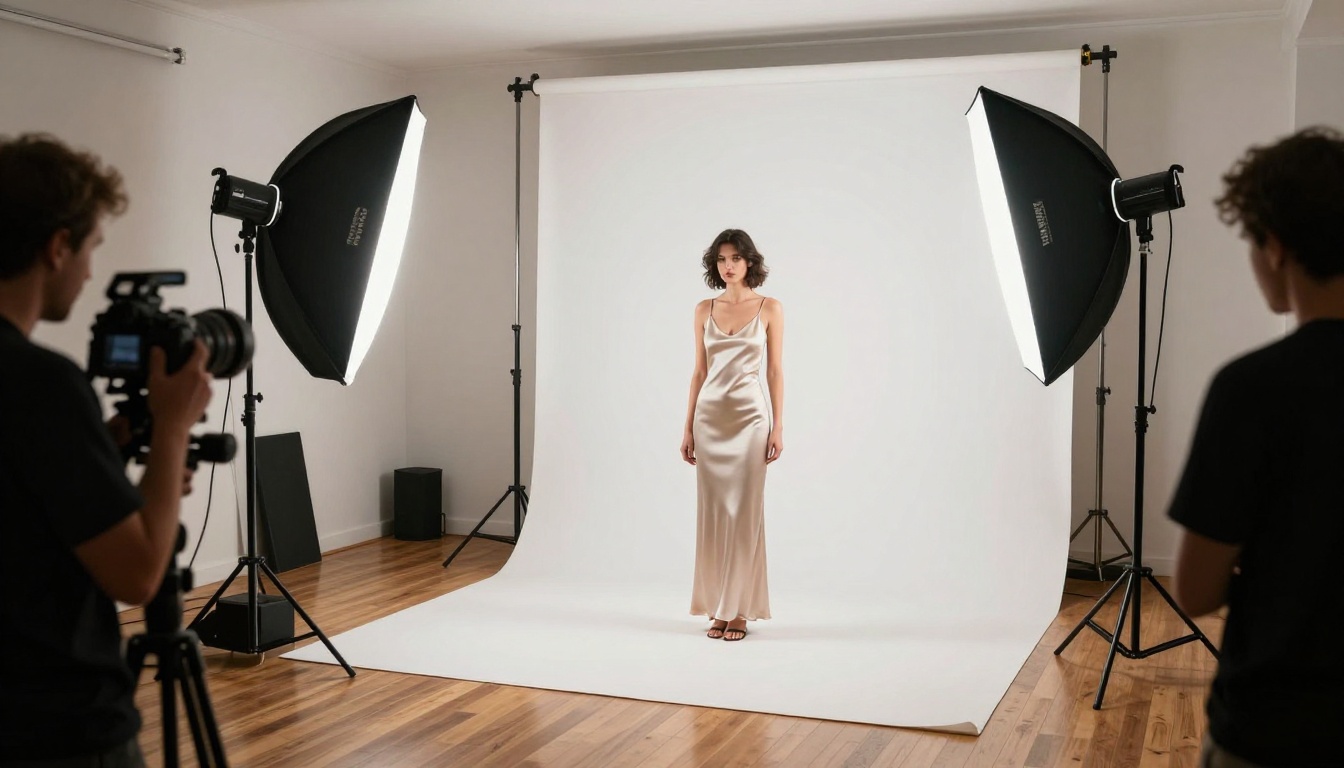
The practical difference in output quality when shooting fashion, glamour, or artistic human subjects is not subtle. Side-by-side comparisons on identical prompts make it immediately visible.
The Real Takeaway
Neither NSFW AI nor regular AI is inherently superior as a category. They serve different creative needs with different technical architectures and different deployment contexts. Choosing between them isn't a moral question. It's a practical one based on what you're actually making.
If your work involves fashion photography, glamour shoots, artistic figure work, or adult content creation, using a regular AI and fighting its safety filters is both inefficient and likely to produce inferior results. The filters aren't just blocking the output. They're symptoms of a model that was never trained to produce that content with fidelity. You'll lose time, get frustrated, and still get mediocre results.
If your work involves product photography, landscape, concept art, architecture, or business graphics, mainstream regular AI models like GPT Image 2 or Seedream 4.5 will match or exceed NSFW-trained models because that's precisely what they were optimized for. Use the right tool for the right job.
The smarter question isn't "which type of AI is better?" It's "which specific model fits this specific project?" That question has a clear answer once you understand the architecture.

Start Creating on PicassoIA Today
PicassoIA brings together the full spectrum of models, from family-safe creative tools to the most capable open-architecture generators currently available. You don't have to choose a lane and stay in it. You can run GPT Image 2 for your product shots, Seedream 4.5 for your landscape work, and Flux 2 Klein 9B Base LoRA for your human-subject photography, all in the same session, all on the same platform.
Try the same portrait prompt across three different models and watch how each one interprets it. The differences in skin texture, lighting response, prompt compliance, and overall photorealism will tell you more about these systems than any explanation could. The output is the argument.
Your prompts have been capable of more than your previous tools allowed. Now you have the tools to match them.


