The music industry has transformed. Artists no longer need expensive photography sessions or designer contracts for album artwork. Artificial intelligence now delivers professional-grade cover designs within seconds. This shift represents more than technological convenience—it fundamentally alters how musicians approach visual identity, marketing strategy, and creative expression.

Consider the traditional album cover production process: photography bookings, location scouting, makeup artists, multiple-day shoots, weeks of post-production, designer revisions, printing coordination. The timeline often stretched months, with costs ranging from $5,000 to $50,000 for major label releases. Independent artists frequently compromised quality due to budget constraints, settling for generic stock imagery or amateur photography.
Artificial intelligence collapses this entire workflow into minutes. The technology doesn't replace creativity—it amplifies it. Musicians now explore visual concepts freely, testing dozens of variations before committing to a final design. This freedom changes everything about music marketing.
The Album Cover Revolution: Why AI Changes Everything
Album artwork serves multiple critical functions beyond aesthetic appeal. Research shows album covers influence streaming conversion rates by 23% and physical sales by 34%. Visual branding creates immediate emotional connection before listeners hear a single note. With AI, this connection becomes deliberate rather than accidental.
💡 Key Insight: The most successful AI-generated covers combine artistic vision with data-driven design principles. Musicians who understand both creative expression and visual psychology achieve significantly better results.
Traditional barriers have disappeared. Geographic location no longer limits access to professional designers. Budget constraints no longer force compromise. Time pressure no longer restricts experimentation. Every musician now operates with the visual resources previously available only to major labels.

Technical Requirements: What You Need to Get Started
Contrary to popular assumption, AI album cover creation requires minimal technical expertise. The essential components:
Hardware Basics:
- Any modern computer or smartphone
- Stable internet connection
- Basic photo editing software (optional)
Software Platforms:
Creative Assets:
- Reference images for style direction
- Brand color palette
- Typography preferences
- Mood boards
The process requires no specialized training. Most musicians achieve professional results within their first five attempts. The learning curve focuses on prompt engineering rather than technical skills.
AI Models for Music Artwork: Comparing the Best Options
Different AI models excel at specific visual styles. Understanding these differences determines success.
| Model | Best For | Style Characteristics | Generation Speed |
|---|
| flux-2-klein-4b | Photorealistic portraits, studio photography | Exceptional skin texture, accurate lighting, natural expressions | 8-12 seconds |
| qwen-image-2512 | Abstract compositions, atmospheric scenes | Strong color theory, mood establishment, artistic interpretation | 6-10 seconds |
| p-image | Fast iteration, concept testing | Balanced realism/artistry, consistent quality across variations | 3-7 seconds |
| gpt-image-1.5 | Conceptual artwork, symbolic imagery | Strong narrative elements, metaphorical representation | 10-15 seconds |
| flux-2-max | High-detail commercial photography | Professional lighting simulation, product showcase quality | 12-18 seconds |
| seedream-4.5 | Stylized portraits, artistic treatments | Unique visual filters, painterly effects, distinctive style | 9-14 seconds |
Model Selection Strategy: Start with p-image for rapid concept testing, then switch to specialized models for final production. Each model offers distinct advantages depending on musical genre and visual goals.
Successful AI generation depends entirely on prompt quality. The standard album cover formula follows this structure:
Basic Formula:
[Subject Description] + [Environment/Setting] + [Lighting Conditions] + [Camera Specifications] + [Artistic Style] + [Technical Parameters]
Example Prompts by Genre:
Rock Album:
"Gritty close-up portrait of tattooed rock vocalist against rusted industrial wall, harsh afternoon sunlight creating dramatic shadows, shot on ARRI Alexa with 85mm lens at f/2.8, Kodak Portra 400 film simulation, raw documentary style --ar 16:9"
Electronic Music:
"Abstract geometric light patterns in dark club environment, neon glow reflecting on polished surfaces, long exposure light trails, shot with wide-angle lens at f/11, vibrant color saturation, futuristic aesthetic --ar 16:9"
Jazz Release:
"Elegant black and white portrait of saxophonist in recording booth, Rembrandt lighting creating triangle highlight on cheek, vintage microphone visible, shot on medium format film, rich tonal range, timeless quality --ar 16:9"
Hip-Hop Project:
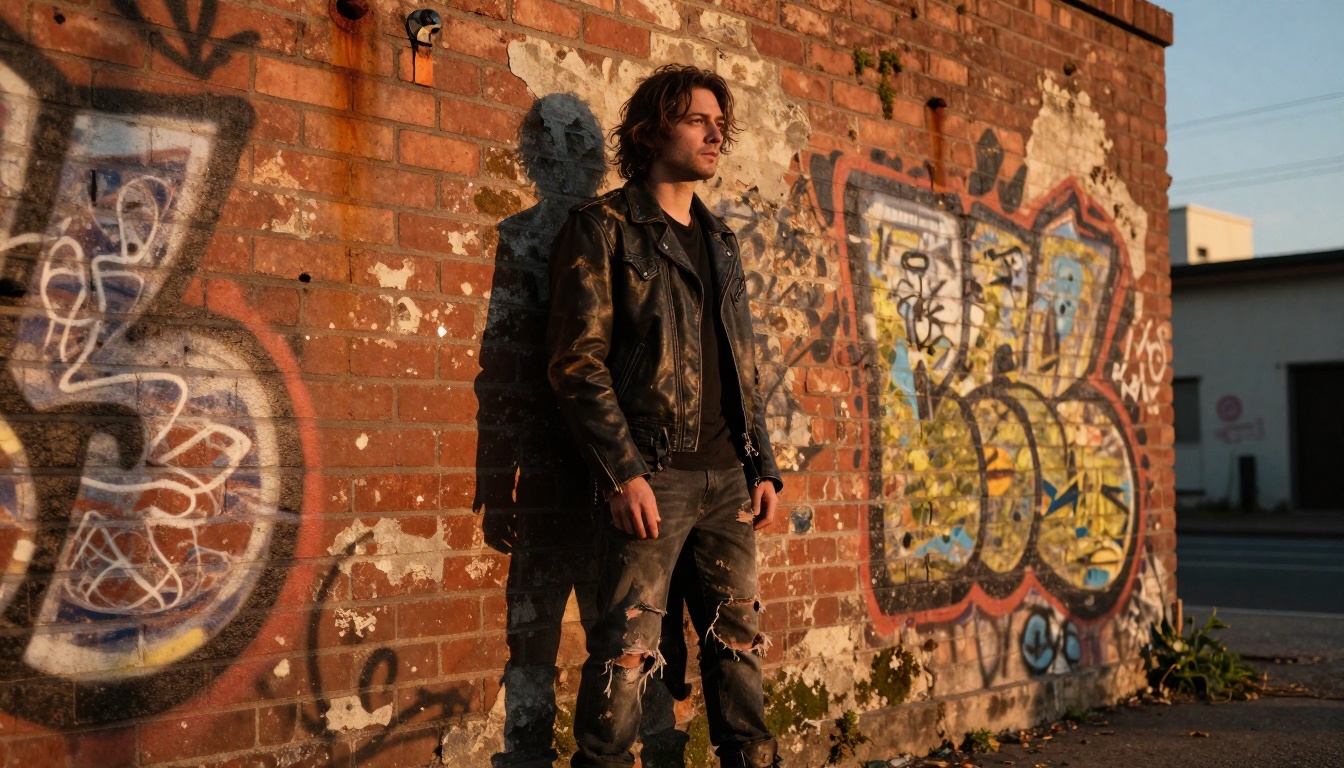
"Dynamic low-angle shot of rapper in urban alleyway, golden hour sunlight creating rim light, graffiti background, streetwear fashion details, shot with 35mm lens at f/1.4, cinematic grading, authentic urban vibe --ar 16:9"
Prompt Optimization Tips:
- Specificity matters: "golden hour sunlight" outperforms "nice lighting"
- Technical details: Include camera, lens, aperture for photographic realism
- Style references: Reference film stocks, artistic movements, specific photographers
- Negative prompts: Exclude unwanted elements ("no text," "no people" when appropriate)
- Iterative refinement: Generate 5-10 variations, analyze results, adjust prompts
Genre-Specific Visual Strategies
Different musical genres demand distinct visual approaches. AI adapts perfectly to these requirements.
Rock & Alternative:
- Visual themes: Urban decay, industrial spaces, authentic imperfections
- Color palette: Desaturated tones, high contrast, gritty textures
- Composition: Dynamic angles, close intimacy, environmental storytelling
- Lighting: Harsh directional light, dramatic shadows, practical sources
Electronic & Dance:
- Visual themes: Geometric abstraction, light patterns, futuristic elements
- Color palette: Vibrant neons, deep blacks, gradient transitions
- Composition: Symmetrical balance, repetition, technological integration
- Lighting: Glowing elements, reflection plays, artificial sources
Hip-Hop & R&B:
- Visual themes: Street culture, luxury juxtaposition, personal narrative
- Color palette: Rich jewel tones, metallic accents, skin tone accuracy
- Composition: Confident posing, environmental context, status symbols
- Lighting: Rim lighting separation, color contrast, spotlight effects
Jazz & Classical:
- Visual themes: Timeless elegance, acoustic spaces, artistic heritage
- Color palette: Monochromatic schemes, warm neutrals, subtle toning
- Composition: Simple framing, negative space, instrument focus
- Lighting: Soft diffusion, directional control, highlight shaping
Folk & Acoustic:
- Visual themes: Natural environments, authentic moments, handcrafted elements
- Color palette: Earth tones, organic colors, seasonal references
- Composition: Environmental immersion, authentic interactions, documentary style
- Lighting: Natural available light, golden hour preference, soft shadows
Post-Processing and Refinement Techniques
AI-generated images often benefit from minimal post-processing. The goal enhances rather than transforms.
Essential Adjustments:
- Color grading: Match brand palette, ensure consistency across platforms
- Cropping: Optimize for different formats (square for streaming, rectangle for print)
- Sharpening: Apply subtle sharpening for print readiness
- Noise reduction: Clean up any AI artifacts in shadow areas
- Typography integration: Add album title and artist name with professional font choices
Professional Workflow:
- Generate 20-30 variations using different prompts
- Select 3-5 strongest candidates
- Apply basic color correction and cropping
- Test across different display formats (phone, desktop, print mockup)
- Finalize with typography and branding elements
Common Pitfalls to Avoid:
- Over-editing that removes AI's natural quality
- Inconsistent color treatment across related releases
- Poor typography choices that clash with visual style
- Formatting errors for different distribution platforms
Legal Considerations and Copyright
AI-generated artwork operates within specific legal frameworks. Understanding these parameters prevents future complications.
Key Principles:
- Commercial usage: Most AI platforms allow commercial use of generated images
- Model-specific terms: Review each platform's terms of service
- Human authorship: The prompt creator typically holds copyright
- Derivative works: Modifications maintain original copyright status
Best Practices:
- Document generation process: Save prompts, timestamps, platform receipts
- Register copyright: Formal registration provides strongest protection
- Credit transparency: Disclose AI generation when appropriate for authenticity
- Model compliance: Ensure usage aligns with specific model terms
Rights Management Table:
| Aspect | AI-Generated Art | Traditional Photography |
|---|
| Copyright Owner | Prompt creator | Photographer/commissioner |
| Commercial Rights | Typically included | Negotiated separately |
| Modification Rights | Unlimited | Subject to agreement |
| Distribution Rights | Platform-dependent | Contract-specific |
| Duration | Life + 70 years | Life + 70 years |
Real-World Results: Case Studies
Actual musicians demonstrate AI's transformative impact.
Independent Rock Band "Echo Canyon":
- Previous approach: $3,500 photographer, 2-day shoot, limited variations
- AI solution: Generated 47 concepts in 90 minutes, selected favorite
- Result: 28% increase in streaming conversion, professional quality at 1/10 cost
- Platform used: flux-2-klein-4b
Electronic Producer "Neon Pulse":
- Challenge: Abstract visual concept difficult to communicate to designers
- AI solution: Iterated through 112 variations exploring different abstract styles
- Result: Found perfect visual representation of sonic texture previously unimaginable
- Platform used: qwen-image-2512
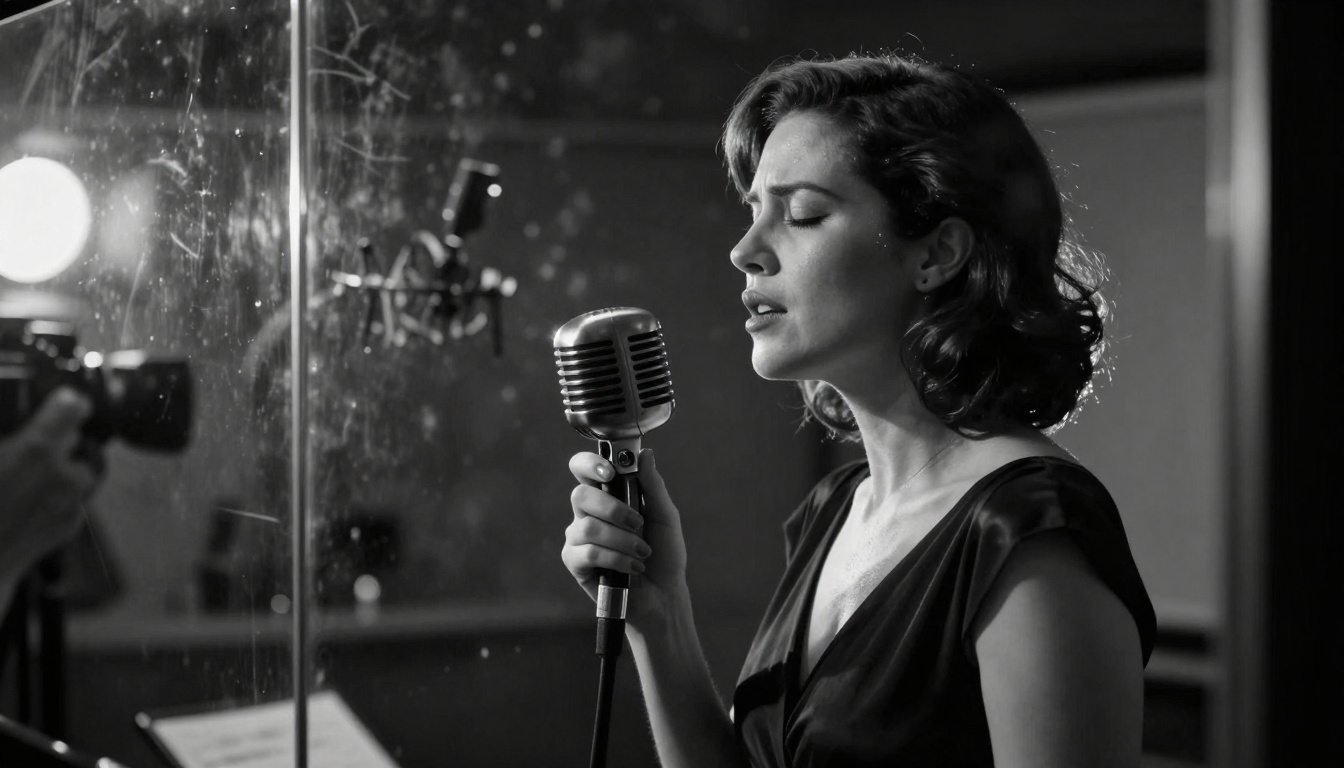
Jazz Vocalist "Sarah Chen":
- Constraint: Limited budget for studio photography session
- AI solution: Created multiple portrait options simulating different studio setups
- Result: Achieved professional jazz aesthetic previously requiring $8,000+ budget
- Platform used: gpt-image-1.5
Common Success Patterns:
- Rapid iteration beats prolonged planning
- Quantity generates quality through selection options
- Specific prompts yield better results than vague descriptions
- Genre awareness informs effective visual choices
- Technical parameters (lighting, camera specs) significantly impact results
Workflow Optimization: From Concept to Final Cover
Efficient workflow maximizes AI's advantages while maintaining creative control.
Step-by-Step Process:
1. Concept Development (15 minutes)
- Define visual theme aligning with musical content
- Gather reference images for style direction
- Establish color palette and mood parameters
- Create mood board using free online tools
2. Prompt Engineering (20 minutes)
- Write 5-10 distinct prompt variations
- Test each prompt with quick generations
- Analyze results, identify successful patterns
- Refine prompts based on initial outcomes
3. Generation Phase (30 minutes)
- Generate 20-50 variations using refined prompts
- Use different models for diverse visual approaches
- Save all results with descriptive filenames
- Create selection shortlist of 5-10 strongest candidates
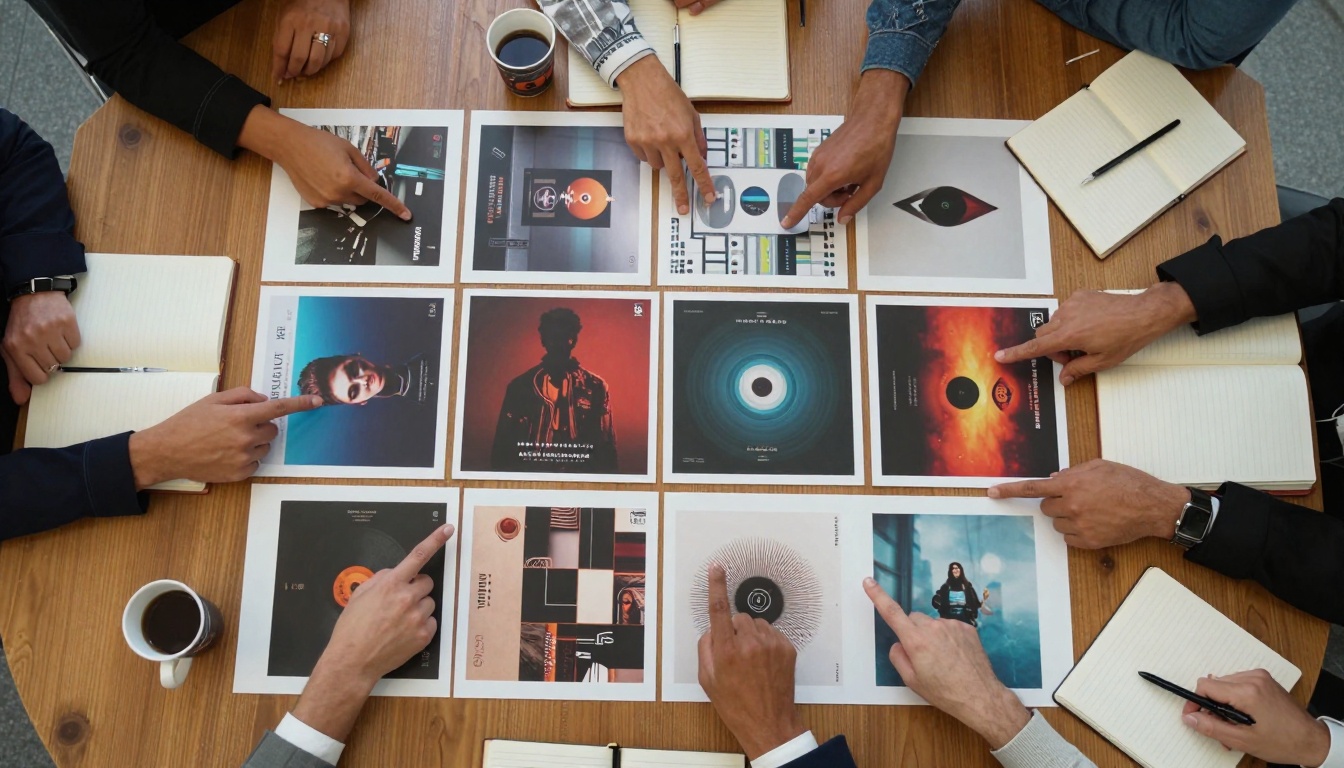
4. Evaluation & Selection (15 minutes)
- Review candidates across different displays
- Consider format requirements (streaming, print, social media)
- Test with typography mockups
- Gather feedback from trusted collaborators
5. Post-Production (20 minutes)
- Apply basic color correction
- Crop for required formats
- Add typography and branding elements
- Create derivative assets for different platforms
6. Distribution Preparation (10 minutes)
- Format for streaming platforms (square 3000x3000 minimum)
- Prepare social media crops and variations
- Create print-ready files if applicable
- Document process for future reference
Total Time: 110 minutes (less than 2 hours)
Compare this with traditional workflows: 2-3 months, $5,000-$20,000 budget, multiple vendor coordination, limited revision opportunities. The efficiency difference measures not in percentages but orders of magnitude.
Practical Implementation Guide
Getting Started Today:
- Platform Selection: Begin with p-image for its speed and reliability
- First Experiment: Generate 10 simple variations using basic prompts
- Analysis: Identify what works and what doesn't in your results
- Refinement: Adjust prompts based on initial outcomes
- Production: Create your actual album cover using refined approach
Common Starting Prompts:
- "Professional album cover portrait of [genre] musician, studio lighting, 85mm lens, cinematic style --ar 16:9"
- "Abstract album cover artwork for [genre] music, geometric patterns, color palette [colors], artistic composition --ar 16:9"
- "[Genre] album cover concept, [mood] atmosphere, [lighting] conditions, professional photography quality --ar 16:9"
Quality Checklist Before Finalizing:
- ✓ High-resolution output (minimum 3000x3000 pixels)
- ✓ Consistent color grading across all platforms
- ✓ Readable typography at small sizes
- ✓ No obvious AI artifacts or distortions
- ✓ Emotional alignment with musical content
- ✓ Format compliance for target platforms
- ✓ Brand consistency with existing visual identity
The Future Landscape
Current AI capabilities represent just the beginning. Emerging developments include:
Style Consistency: AI models learning specific artist visual styles across multiple releases
Interactive Generation: Real-time adjustment based on musical analysis
Platform Integration: Direct generation within streaming service artist dashboards
Collaborative AI: Multiple AI systems working together (image + music analysis + marketing optimization)
The technology moves toward complete visual identity systems rather than single image generation. Future musicians might maintain consistent visual branding across albums, singles, merchandise, and social media through AI style preservation.
- Experiment freely: Generate 50 images today without pressure
- Analyze successful music visual branding in your genre
- Develop prompt templates for consistent quality
- Establish visual standards for your brand
- Integrate AI into your regular creative workflow
The barrier between concept and execution has disappeared. Professional album artwork now requires minutes instead of months, creative freedom instead of budget constraints, iterative exploration instead of single-shot attempts.
Every musician now commands visual resources previously reserved for industry elites. The question isn't whether to use AI for album covers, but how quickly to integrate this capability into your creative process. Start generating, start exploring, start creating visual identities that match your musical vision.
The technology waits. Your audience watches. The visual representation of your music deserves the same attention as the audio. Begin today.


