Qwen Image 2: Free Uncensored Image Generator to Try
Qwen Image 2 is Alibaba's latest multimodal AI model with free, uncensored image generation capabilities. This article breaks down what it produces, how its output stacks up against top alternatives, and the best platforms where you can try it right now without limits or paywalls.
Qwen Image 2 showed up quietly. No massive launch campaign, no viral hype thread, just Alibaba's latest multimodal model posting results that made a lot of people stop scrolling. What sets it apart from the dozens of other free generators? It doesn't flinch. The model handles prompts that most commercial platforms redirect or block outright, which puts it in a specific lane that a lot of creators have been searching for.
This article breaks down exactly what Qwen Image 2 produces, how it compares to the models currently at the top of the quality charts, and where to access it, including on PicassoIA's platform, without paying anything upfront.
What Qwen Image 2 Actually Is
Alibaba's Open Source Vision Model
Qwen Image 2 is part of the Qwen (Qianwen) model family developed by Alibaba's DAMO Academy. While most people know Qwen as a language model, the image generation variants work differently. The model is trained on a wide corpus of image-text pairs, and critically, its training data and output filters reflect fewer Western-market content restrictions compared to models from U.S.-based labs.
The architecture blends a diffusion-based generation pipeline with Qwen's multimodal understanding. The model can interpret nuanced prompts with layered context, multiple subjects, and complex lighting instructions, without collapsing those details into a generic output. This semantic depth is noticeable immediately when you start prompting it seriously.
On PicassoIA, the model is available as qwen-image-2512, a specific fine-tuned checkpoint of the Qwen image generation series. The base qwen-image variant is also on the platform for lighter, faster work.
Why "Uncensored" Is the Real Differentiator
The word "uncensored" carries significant weight in AI image generation. For Qwen Image 2, it primarily refers to content policy scope. Most commercial generators, including Midjourney, DALL-E, and Adobe Firefly, apply strict automated filters that block even mildly suggestive content, certain political imagery, historical depictions with violence, or anything that pattern-matches against their safety classifiers.
Qwen Image 2's filters are more permissive. The practical effect: creative professionals working in fashion, editorial, artistic figure work, and mature storytelling get usable outputs without constant prompt-engineering workarounds. This doesn't mean anything goes. Genuinely illegal content is still blocked. But the model sits clearly on the more permissive end of the spectrum for everything in between.
💡 For NSFW and suggestive creative work: PicassoIA's Seedream 4.5 is the strongest starting point. It handles nuanced prompts with high photorealism and fewer refusals than most alternatives. Pair it with qwen-image-2512 for maximum flexibility across different prompt styles and content types.
Real Output Quality Tests
What It Handles Well
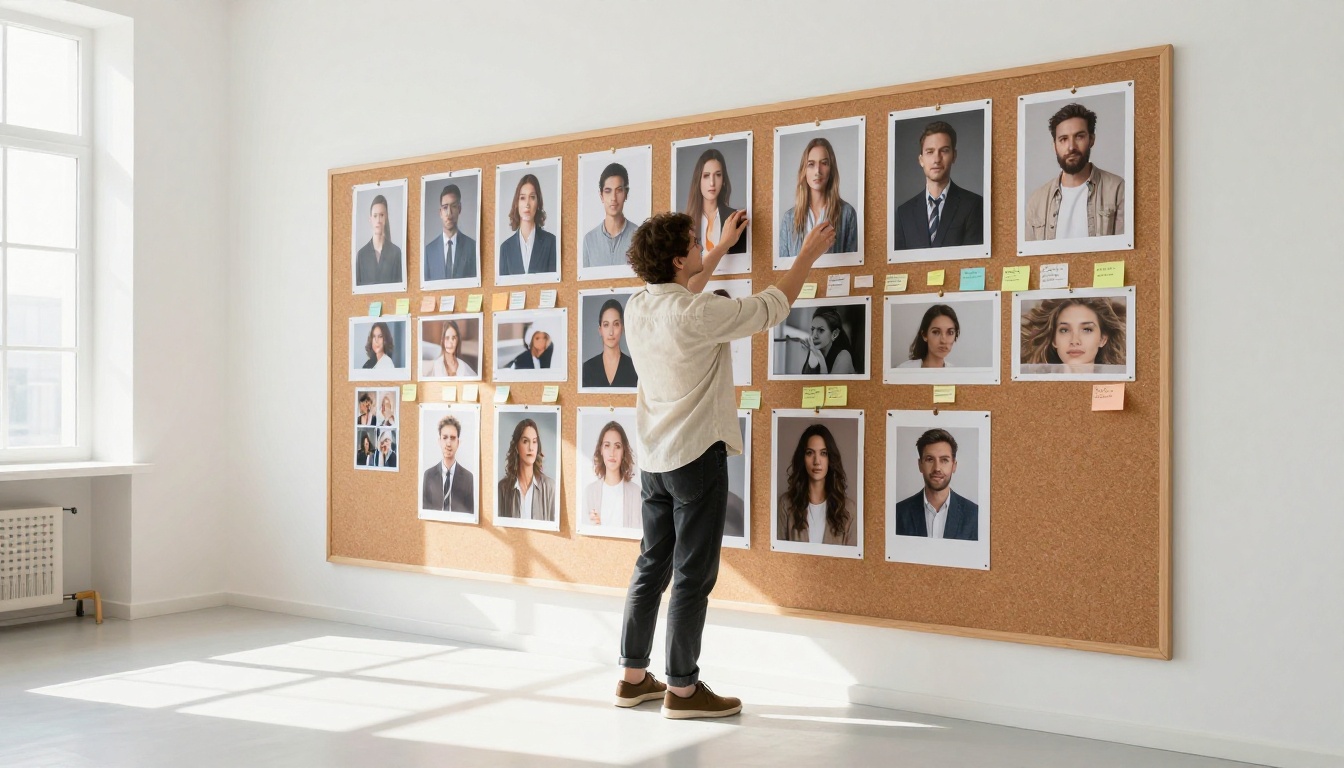
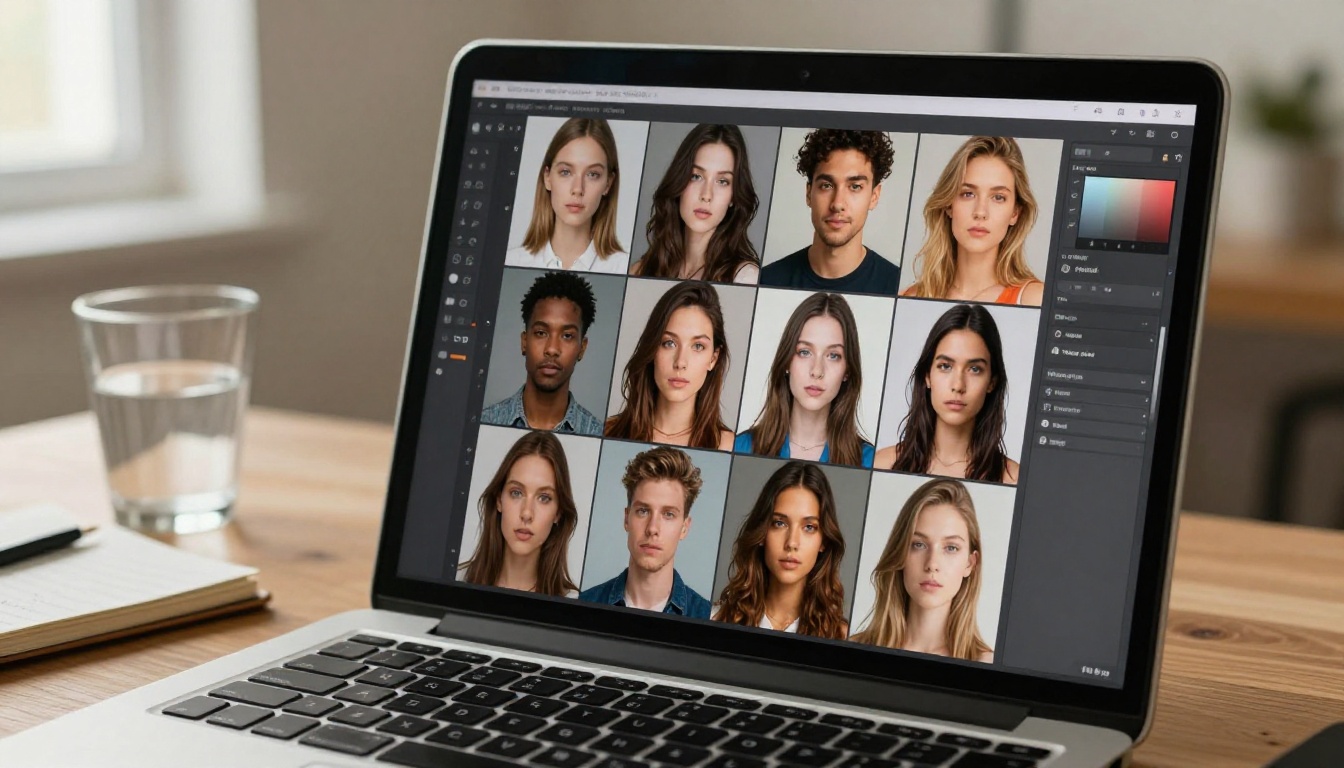
Qwen Image 2 is strongest in portrait generation and scene composition. Complex multi-subject prompts that would require ControlNet scaffolding in older models resolve cleanly. Lighting descriptions translate into actual light directionality in the output, not just a vague brightening of the image. Skin texture renders with realistic surface variation rather than the plastic uniformity that plagues many free models.
For photorealism, the model competes credibly with Stable Diffusion 3.5 Large at similar parameter counts. It handles consistently:
Natural skin tones across a wide range of complexions
Hair texture without the painted look common in older diffusion models
Fabric wrinkles, folds, and material variation
Interior and architectural scenes with correct perspective
Atmospheric conditions like fog, rain, and directional sunlight
For editorial photography prompts, Qwen Image 2 often produces outputs that require minimal post-processing before they're usable as article headers, social media assets, or mood board reference material.
Where Output Falls Short
No free model beats paid premium tiers across the board, and Qwen Image 2 has its gaps.
Hands and extremities remain a challenge. Complex hand poses in foreground positions, especially anything requiring finger individuation or held objects with correct perspective, still produce artifacts. This is a diffusion-architecture-wide problem, not specific to Qwen.
Text rendering is unreliable. If your prompts require legible words in the image, Qwen Image 2 will produce plausible letter shapes that don't resolve into readable text. Use a dedicated text-overlay tool for anything requiring typography in the output.
High-frequency detail at distance drops off. Wide establishing shots with many in-frame subjects or highly textured backgrounds at depth lose coherence faster than models like Flux 2 Max or Flux 2 Pro, which handle global scene consistency more robustly.
How to Access Qwen Image 2 for Free
Direct API and Playground Access
Qwen Image 2 is available through Replicate's API. A free account gives you initial credits, and the model's inference cost per generation is low enough that casual use stays within the free tier for a while. This approach suits developers building automated pipelines or anyone comfortable working with API parameters directly.
Hugging Face also hosts Qwen model variants via Spaces, where you can run inference in the browser without authentication in many cases, though queue times during peak hours can be significant and unpredictable.
Through PicassoIA's Model Library
The lowest-friction access point for non-developers is PicassoIA. The qwen-image-2512 model is available directly in the model collection, and the qwen-image base variant is also accessible for lighter prompting needs.
The platform wraps the model in a clean generation interface without requiring API tokens, provides 16:9 and square aspect ratio presets, and handles queueing logic on the backend. For creators who want to try the model without writing code or managing API credentials, this is the simpler path. Everything runs in one tab.
How to Use qwen-image-2512 on PicassoIA
PicassoIA has qwen-image-2512 in its text-to-image collection, ready to use without any configuration overhead.
Step 2: Type your prompt in the text field. Start specific. Describe the subject, the setting, the lighting, and the mood, in that order.
Step 3: Select your aspect ratio. For standard content, use 16:9. For social-media-first formats, use 1:1 or 9:16.
Step 4: Hit generate and wait. Generation typically takes 15 to 45 seconds depending on server load.
Step 5: If the output isn't quite right, refine the prompt and regenerate. Small changes, like shifting from "sunny" to "volumetric afternoon light from the left," produce noticeably different results.
Step 6: Once you have a strong output, run it through PicassoIA's Super Resolution upscaling tools to sharpen fine details and increase export resolution without regenerating from scratch. This combination, generate with Qwen then upscale, gives you production-quality results at no extra cost per generation.
Prompt Strategies That Work
The model responds well to photography-style language. Prompts that describe a scene the way a photographer would brief a shoot produce better outputs than abstract or conceptual instructions.
Works well:
"A woman in a white dress standing in tall golden wheat at sunset, shot from behind, 85mm f/1.8, Kodak Portra 400"
"Aerial view of a rain-wet city street at night, reflections in puddles, 35mm lens, natural street lighting"
Works less well:
"Create an image that feels like loneliness"
"Abstract representation of digital freedom"
Add photographic parameters: lens focal length, aperture, film stock, time of day, and light direction. These aren't decorative, they encode the model's interpretation of depth, color grade, and contrast.
💡 For output refinement: Use qwen-image-edit-plus-lora to adjust and edit images after your initial generation. It supports LoRA-based style changes that let you push the output further without starting from scratch.
Comparing Qwen Image 2 to Top Alternatives
Different models serve different use cases. Here's a direct comparison of Qwen Image 2 against the most-used alternatives on PicassoIA:
If photorealism is the priority and content restrictions aren't a blocker, Seedream 4.5 from ByteDance sits above Qwen Image 2 on raw output quality for commercial-style photography. Skin rendering, hair detail, and fabric texture are all sharper. The tradeoff is a more conservative content filter that will reject or sanitize prompts that Qwen Image 2 handles without issue.
For beauty, fashion, and lifestyle photography where content restrictions aren't the concern, Seedream 4.5 is the stronger starting point. For anything where content policy is a friction point, Qwen Image 2 is the better pick.
Flux 2 Max for Professional Output
Flux 2 Max from Black Forest Labs is the current benchmark for scene-level photorealism on PicassoIA. Wide shots, architectural interiors, and multi-subject outdoor scenes consistently outperform all other models at this task. Content policy sits between Qwen and Seedream. Generation is slower, and it's not free-tier friendly for heavy use, but the output ceiling is higher.
For production work where quality is the only variable that matters, Flux 2 Pro is also worth testing. It follows detailed instructions with higher precision than any other model in this tier.
Stable Diffusion 3.5 Large for Fine Control
Stable Diffusion 3.5 Large is the open-source option for creators who want fine-grained output control. It accepts LoRA weights, supports ControlNet-style conditioning, and responds well to negative prompting. The learning curve is steeper, but the ceiling for customization is higher than any closed model on the list.
Getting Better Results From Qwen Image 2
Prompt Structure That Works
The structure that consistently produces above-average outputs from Qwen Image 2:
"A young woman with long dark hair sitting cross-legged on a weathered wooden dock, mountain lake stretching behind her in morning mist, soft diffused backlight from the east with warm golden tones, wide-angle 35mm shot from a low angle, natural overcast sky fill light, Kodak Portra 400 grain"
Add specificity in this order:
Subject: who, what, doing what, wearing what
Environment: indoor/outdoor, season, weather, architecture type
Light: time of day, direction from left/right/above/behind, quality (soft/harsh/diffused)
1. Vague subject description. "A beautiful woman in a forest" produces a generic output. "A woman in her mid-thirties with short copper hair, wearing a moss-green wool coat, standing at the edge of an old-growth fir forest in Pacific Northwest rain, facing slightly left" produces something usable.
2. Stacked quality modifiers on a weak prompt. Writing "ultra realistic, hyper detailed, stunning, breathtaking, 8K, masterpiece" at the end of a vague scene description doesn't compensate for the lack of specificity. Those modifiers boost an already-strong prompt; they don't rescue a weak one.
3. Conflicting lighting instructions. Saying "golden hour sunlight" and "overcast diffused light" in the same prompt produces a muddled compromise. Pick one light source and describe it precisely.
💡 For iterating on outputs: Use Flux 2 Dev to refine specific elements of a Qwen-generated concept when you want higher fidelity in a particular area without regenerating the whole image from scratch.
The Free Tier Reality
Free access to Qwen Image 2 is real, but has practical limits. On Replicate, the free tier handles a moderate number of generations before requiring payment. On PicassoIA, qwen-image-2512 sits within the platform's regular generation allowances, which makes it accessible without a credit card for initial testing.
If you're doing serious volume work, you'll hit free-tier ceilings. The practical use cases for free Qwen Image 2 are:
Testing whether the model fits your creative workflow before committing budget
One-off projects with a fixed, low image count
Comparing output quality against your current generator
Quick mood board generation for pitches or client presentations
For recurring professional use, PicassoIA's paid tiers give access to qwen-image-2512 alongside Flux 2 Max, Flux 2 Pro, Seedream 4.5, and Imagen 4 from the same interface, without managing API credentials across multiple platforms.
Use Case
Free Tier Viable?
Recommended Path
Testing, one-off images
Yes
PicassoIA direct
Weekly editorial content
Depends on volume
PicassoIA standard plan
Daily production use
No
PicassoIA pro tier
Developer pipeline integration
Replicate free tier
Replicate API
The visual effects angle is also worth noting: PicassoIA's platform gives you access to 500+ visual effects and post-processing tools alongside generation, meaning you can take a Qwen output, run it through an effects pipeline, and deliver something that looks substantially different from the raw generation, all in one platform.
Try It Now on PicassoIA
Qwen Image 2 earns its place in the toolkit. For creators who've been working around content policy walls in other platforms, the model removes friction in the places that matter most. For quality-first work, pair it with Seedream 4.5 or Flux 2 Max depending on the project scope. For editorial work that needs to move fast, qwen-image-2512 alone is often enough.
PicassoIA puts all of this in one place. The qwen-image-2512 model is ready to use right now alongside more than 90 other text-to-image models, plus video generation, upscaling, face swapping, background removal, and audio tools. No API credential juggling. No separate accounts for every model. No switching tabs between tools.