The artificial intelligence landscape has reached an inflection point where open-source models are challenging the dominance of proprietary systems. Qwen3, developed by Alibaba's research team, represents the pinnacle of free, openly accessible language models, while GPT-5.2 from OpenAI stands as the flagship of commercial AI services. Both models boast impressive capabilities, but the question remains: does paying for premium AI actually deliver meaningfully better results?
This comparison goes beyond surface-level benchmarks to examine real-world performance, practical use cases, and cost considerations that matter to businesses and individual users alike.

Model Architecture and Technical Specifications
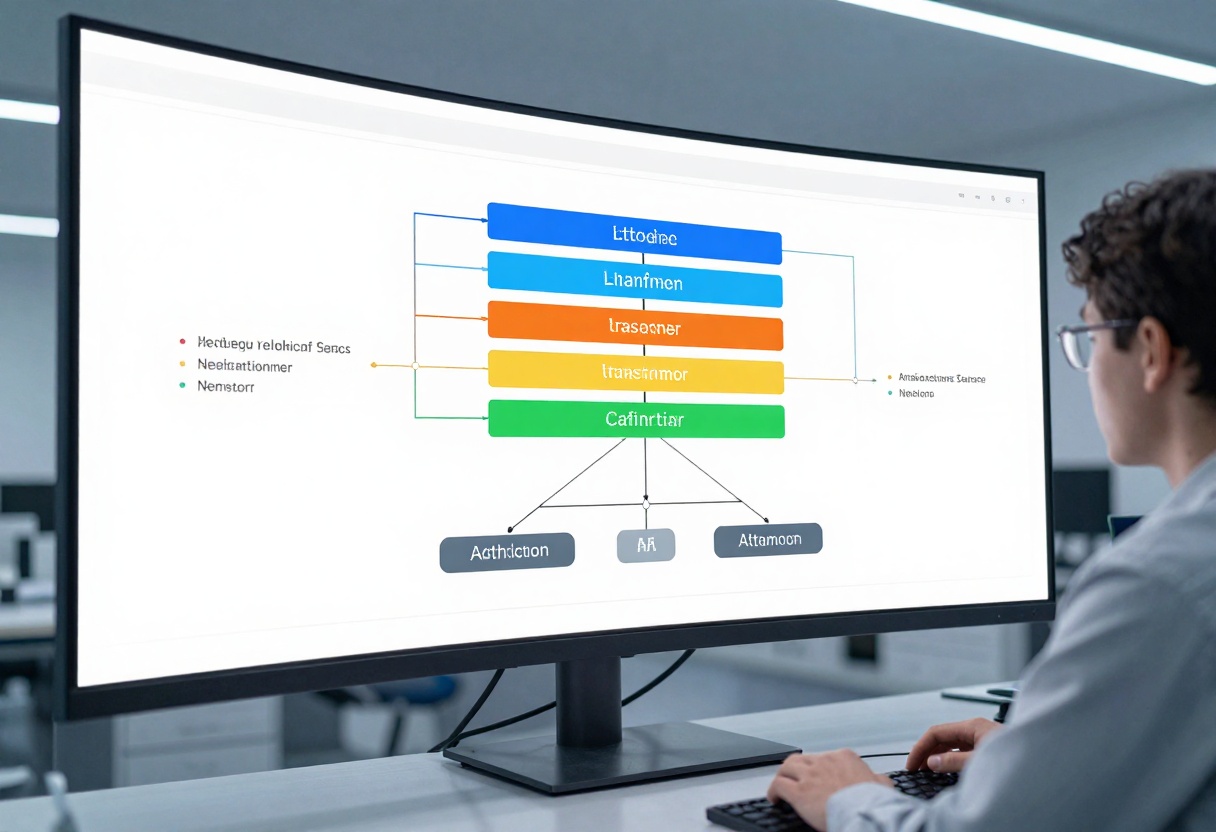
Both models leverage transformer architecture, but their implementations differ significantly. GPT-5.2 builds upon OpenAI's multi-year refinement of the GPT series, incorporating advanced reasoning capabilities and multimodal understanding. The model processes both text and images, making it versatile for diverse applications.
Qwen3, specifically the 235B parameter variant available through PicassoIA, represents a massive open-source language model trained on multilingual data. Despite being freely accessible, it matches commercial models in raw parameter count and demonstrates sophisticated instruction-following capabilities.
The architectural differences become apparent in how each model handles context. GPT-5.2 offers adjustable verbosity levels and variable reasoning effort, allowing users to trade processing time for more thorough analysis. Qwen3 takes a different approach with temperature controls and penalty parameters that fine-tune output creativity and repetition avoidance.
Text Generation Quality Comparison
When evaluating text generation quality, both models produce coherent, contextually appropriate content. However, subtle differences emerge in specific scenarios.
GPT-5.2 excels in:
- Nuanced understanding of complex prompts with multiple constraints
- Maintaining consistent tone and style across lengthy outputs
- Integrating visual information when images are provided
- Adapting verbosity to match user preferences automatically
Qwen3 demonstrates strength in:
- Following explicit instructions with high precision
- Generating creative content with appropriate temperature settings
- Maintaining coherence in technical writing and documentation
- Processing multilingual content with consistent quality
In practical testing, GPT-5.2 tends to produce more polished prose with less editing required, particularly for creative writing and marketing content. Qwen3 performs exceptionally well for structured outputs like reports, summaries, and technical documentation where instruction-following precision matters more than stylistic flair.

Reasoning and Problem-Solving Capabilities
One of GPT-5.2's most significant advantages lies in its configurable reasoning effort parameter. Setting this to "high" or "xhigh" enables the model to dedicate more computational resources to complex problems, often resulting in more accurate solutions for mathematical problems, logical puzzles, and multi-step reasoning tasks.
Qwen3 approaches reasoning differently, relying on its training to handle complex queries without explicit reasoning controls. While it performs admirably on standard reasoning tasks, it lacks the scalable reasoning depth that GPT-5.2 offers for particularly challenging problems.
For everyday reasoning tasks like planning, analysis, and basic problem-solving, both models perform comparably. The gap widens when tackling advanced mathematics, intricate logical deductions, or scenarios requiring extensive chain-of-thought reasoning.

Speed and Efficiency Analysis
Response time directly impacts user experience, especially in interactive applications. GPT-5.2's performance varies based on reasoning effort settings. With default or low reasoning effort, responses arrive quickly. Higher reasoning efforts increase latency but deliver more thorough analysis.
Qwen3 generally provides faster response times for standard queries, with minimal variation between runs. The model's straightforward parameter structure means predictable performance across different use cases.
For applications requiring real-time responses like chatbots or live content generation, Qwen3's consistent speed presents an advantage. For tasks where quality trumps speed, such as research synthesis or complex content creation, GPT-5.2's variable reasoning capability justifies slightly longer wait times.
Cost Considerations and Value Proposition
The cost difference between these models represents their most obvious distinction. Qwen3 runs entirely free on platforms like PicassoIA, making it accessible to anyone regardless of budget. There are no API costs, subscription fees, or usage limits beyond what the hosting platform imposes.
GPT-5.2 operates on a pay-per-use model through OpenAI's API or via subscription plans for higher volume users. While pricing varies, businesses and heavy users can expect meaningful monthly costs, especially when leveraging advanced features like high reasoning effort or multimodal capabilities.
For individual creators, students, and small businesses, Qwen3's zero-cost access provides tremendous value. The performance gap rarely justifies premium pricing for basic content generation, summarization, or standard writing tasks.
Enterprises and professional applications where output quality directly impacts revenue may find GPT-5.2's superior reasoning and polish worth the investment, particularly for customer-facing content, complex analysis, or mission-critical applications.

Use Case Recommendations
Choose Qwen3 when:
- Budget constraints are a primary concern
- Generating high volumes of content regularly
- Creating technical documentation or structured outputs
- Working on multilingual projects
- Learning and experimenting with AI capabilities
- Building applications for markets sensitive to API costs
Choose GPT-5.2 when:
- Output quality directly impacts business outcomes
- Handling multimodal tasks requiring image understanding
- Solving complex reasoning problems requiring deep analysis
- Creating premium creative content with minimal editing
- Needing adjustable verbosity for different audiences
- Working on projects with established AI budgets

Open-Source vs Proprietary Philosophy
Beyond technical capabilities, these models represent different philosophies about AI development and accessibility. Qwen3 embodies the open-source ethos where knowledge and tools should be freely available, fostering innovation through transparency and community collaboration.
GPT-5.2 follows the proprietary model where significant research investment justifies commercial protection and monetization. This approach funds continued development and refinement but creates access barriers for those unable to pay.
Both approaches have merit. Open-source models democratize AI access and enable local deployment for privacy-sensitive applications. Proprietary models concentrate resources to push performance boundaries and provide reliable commercial support.
Your preference may depend as much on philosophical alignment as technical requirements. Some organizations prioritize supporting open-source development, while others require the commercial guarantees that come with paid services.

Integration and Accessibility on PicassoIA
Both models are readily accessible through PicassoIA's unified platform, eliminating integration headaches and providing consistent interfaces regardless of which model you choose. This accessibility levels the playing field, allowing easy A/B testing between models for your specific use cases.
PicassoIA's implementation of both Qwen3 and GPT-5.2 includes intuitive parameter controls, making advanced features accessible even to users without deep technical knowledge. The platform handles authentication, rate limiting, and output formatting, so you can focus on crafting effective prompts rather than managing API complexity.

Making Your Decision
The "free versus paid" debate misframes the actual choice. Both models excel in their domains, serving different needs rather than representing a simple quality hierarchy.
If you're experimenting with AI, building cost-sensitive applications, or generating routine content, Qwen3 delivers exceptional value at zero cost. Its performance satisfies most use cases, and the savings enable AI adoption across more projects.
If your work demands the highest quality outputs, leverages multimodal capabilities, or requires sophisticated reasoning for complex problems, GPT-5.2's premium features justify the cost. The improved quality and versatility often pay for themselves through reduced editing time and better outcomes.
Many users will benefit from a hybrid approach: using Qwen3 for bulk generation and routine tasks while reserving GPT-5.2 for high-stakes content and complex challenges. PicassoIA's unified platform makes this strategy seamless, allowing you to choose the optimal model for each specific task.

How to Get Started with GPT-5.2 on PicassoIA
Ready to experience GPT-5.2's advanced capabilities? Follow these steps to start generating high-quality text outputs on PicassoIA:
Step 1: Access the Model Page
Navigate to the GPT-5.2 model page on PicassoIA. You'll see the model interface with various configuration options.
Step 2: Enter Your Prompt
Type your text generation request in the prompt field. Be specific about what you want the model to create. GPT-5.2 responds well to detailed instructions that outline tone, style, and specific requirements.
Step 3: Configure Verbosity Settings
Choose your desired verbosity level:
- Low: Concise, to-the-point responses
- Medium: Balanced detail and brevity (default)
- High: Extensive, comprehensive outputs
This parameter helps control whether you receive brief answers or lengthy, detailed explanations.
Step 4: Set Reasoning Effort
Adjust the reasoning effort based on task complexity:
- None/Low: Fast responses for simple queries
- Medium: Balanced reasoning for standard tasks
- High/XHigh: Deep analysis for complex problems
Note: Higher reasoning efforts require increased max_completion_tokens to avoid truncated responses.
Step 5: Add Images (Optional)
If your task involves visual analysis, upload images using the image_input parameter. GPT-5.2 can describe, analyze, and answer questions about uploaded images.
Step 6: Configure Advanced Settings
Optionally adjust:
- System Prompt: Define the assistant's behavior and personality
- Max Completion Tokens: Set output length limits
- Messages Array: Use structured conversation format for multi-turn interactions
Step 7: Generate and Review
Click the generate button and wait for GPT-5.2 to process your request. Review the output and adjust parameters if needed for subsequent generations.
How to Get Started with Qwen3 on PicassoIA
Qwen3 offers powerful text generation completely free. Here's how to access it on PicassoIA:
Step 1: Navigate to the Model
Visit the Qwen3 model page to access the interface.
Step 2: Write Your Prompt
Enter your text generation request in the prompt field. Qwen3 excels at following explicit instructions, so clarity in your prompt yields better results.
Step 3: Adjust Temperature
Set the temperature parameter to control output creativity:
- 0.1-0.3: Focused, deterministic outputs for factual content
- 0.4-0.7: Balanced creativity for general use
- 0.8-1.0: Higher creativity for storytelling and brainstorming
Step 4: Configure Output Length
Set max_tokens to define how long the generated text should be. The default is 1024 tokens (roughly 750-800 words), but you can increase this for longer outputs.
Step 5: Fine-Tune with Penalties
Adjust optional parameters:
- Presence Penalty: Encourages discussing new topics (range: 0-1)
- Frequency Penalty: Reduces repetitive phrases (range: 0-1)
- Top P: Controls sampling diversity (default: 1)
Step 6: Generate Your Content
Click generate and watch as Qwen3 produces your requested text. The model typically responds quickly, making it ideal for iterative work.
Step 7: Refine and Iterate
Review the output and adjust parameters based on results. Experiment with different temperature and penalty settings to find optimal configurations for your specific needs.
Final Thoughts
The choice between Qwen3 and GPT-5.2 isn't binary. Both models represent impressive achievements in AI development, each excelling in different scenarios. Qwen3 proves that free, open-source models can deliver professional-grade results, while GPT-5.2 demonstrates the value of continued refinement and advanced feature development.
Your optimal choice depends on your specific requirements, budget constraints, and philosophical preferences. The good news: with both models available through PicassoIA, you can experiment with each to determine which best fits your workflow and needs.
The broader trend is clear: the gap between free and paid AI models continues narrowing. Qwen3's impressive capabilities at zero cost force a reevaluation of whether premium pricing always delivers proportional value. For many users, the answer is increasingly negative, making the open-source option not just viable but preferable.
Ready to experience both models? Visit PicassoIA to start generating content with Qwen3 and GPT-5.2 today. Compare their outputs firsthand and decide which model fits your needs best.


