There is something about typing "you walk into the apartment and find me waiting" into a chat window that feels both thrilling and deeply personal. AI boyfriend roleplay has moved far beyond casual chatbot interactions. People are building emotional worlds, running multi-chapter storylines, and returning to the same characters night after night because the experience delivers something genuinely satisfying. The scenarios that fans request most have a specific texture: they feel grounded, they carry emotional weight, and they hit notes that are difficult to replicate anywhere else.
Below is a breakdown of those scenarios, the LLMs that power them best on PicassoIA, and how to generate photorealistic visuals for every scene using models available on the platform.
Why Roleplay With an AI Boyfriend Works
Before diving into specific scenarios, it is worth understanding why this format has become so popular. AI companions powered by modern large language models are genuinely different from earlier chatbots. They remember context, adapt to emotional tone, and can sustain complex story arcs across long conversations without losing continuity.
Zero Judgment, Full Immersion
The appeal goes beyond novelty. People use AI boyfriend roleplay to process emotions, practice social dynamics, and enjoy creative storytelling in a space that feels private and non-judgmental. The AI never gets tired, never dismisses an idea, and never breaks character to check its phone.
Models like GPT 5 and Claude Opus 4.7 have raised the standard dramatically. They hold a character consistent across dozens of exchanges, respond to subtle emotional shifts, and generate dialogue that feels specific rather than generic.

The Emotional Pull Is Real
Research into parasocial relationships suggests that consistent, responsive characters create genuine emotional attachment. Whether that attachment is "real" in a philosophical sense is a separate discussion. What matters practically is that users report feeling heard, entertained, and creatively stimulated in ways that bring them back repeatedly. The scenarios below are the ones that generate the most repeat sessions.
The Romance Scenarios Everyone Runs
Some scenarios dominate because they tap into universal emotional needs: being chosen, being seen, and experiencing the slow build of connection.
The Slow-Burn Childhood Friends Setup
This is the most requested scenario type by a significant margin. Two people who have known each other for years finally admit what both have been feeling. The tension comes from shared history, inside jokes, and the weight of almost-moments. The AI excels at this format because it can weave in invented memories that feel specific and emotionally resonant.
💡 Tip: Give the AI a backstory before the first message. Tell it you met at age eight, that you shared an umbrella at the school bus stop every rainy Wednesday, and watch how it works those details back in naturally over the course of the conversation.
The Forbidden Attraction
A professor and a student. A boss and a new hire. Two people on opposite sides of a rivalry who should not want each other. These scenarios work because the tension is structural and built into the premise from the first line. Users do not need to manufacture drama; the scenario generates it automatically through constraint.
GPT 5.6 Luna handles these particularly well because of its sensitivity to subtext. A character can say "I think that covers everything for today's meeting" and the model will load that line with exactly the right amount of charged restraint, if you set the emotional tone from the beginning.

The Protective Bad Boy
This scenario has a very specific structure. The character presents as distant, possibly dangerous, and clearly does not let people close. The roleplay centers on being the exception. Every small moment of tenderness from that character carries disproportionate weight because it is rare. Fans describe this as one of the most emotionally satisfying formats because the AI can hold the contrast between cold exterior and genuine care without collapsing into one or the other. It requires a model with enough narrative intelligence to decide when, and how, the walls come down.
The Sweet Nerdy Roommate
On the opposite end, this scenario is about warmth and attentiveness. Someone who leaves notes on the fridge, remembers you mentioned liking a specific tea, and offers help before you ask. The appeal here is not tension but accumulation: small moments of being seen and cared for. Models like Gemini 3.5 Flash can sustain this register for long sessions without the character drifting into something flatter or more generic over time.
Adventure and Fantasy Scenarios
Not all AI boyfriend roleplay is about domestic romance. A significant portion of fans want epic settings, high stakes, and characters who are something more than ordinary.
The Fantasy Kingdom
A world where magic is real and your AI companion is a knight, a court mage, or a prince who has spent too long in political exile. These scenarios let users build elaborate fictional universes collaboratively. The AI can track the lore you establish, remember which noble families are allies and which are threats, and keep the emotional storyline moving alongside the worldbuilding.
💡 Tip: Paste your world's rules at the start of a session as a short paragraph. The more specific the lore, the more textured and consistent the AI's responses become throughout the session.

Claude Opus 4.7 is exceptional in fantasy settings because of its ability to maintain a consistent narrative voice over a long session. It can write in an elevated, slightly archaic register without tipping into parody, which is the central challenge of this scenario type.
The Time-Traveler Reunion
Two people who met in another era, or in another life, who find each other again in the present. The emotional weight comes from the idea that the connection is strong enough to persist across time. This scenario often runs as fragmented memories, present-moment scenes, and the creeping realization that this is not the first time these two people have found each other. Deepseek R1 handles these structurally complex narratives well because of its strong reasoning and long-range contextual tracking.
The Apocalypse Survivor
You are both the only two people left in a specific location. The world has changed. Social convention has dissolved. What matters now is stripped down to essentials. These scenarios move quickly to emotional core because the premise removes everything that usually creates distance between people. The intensity is immediate from the first exchange, and the AI can sustain that compressed emotional register across a long session.
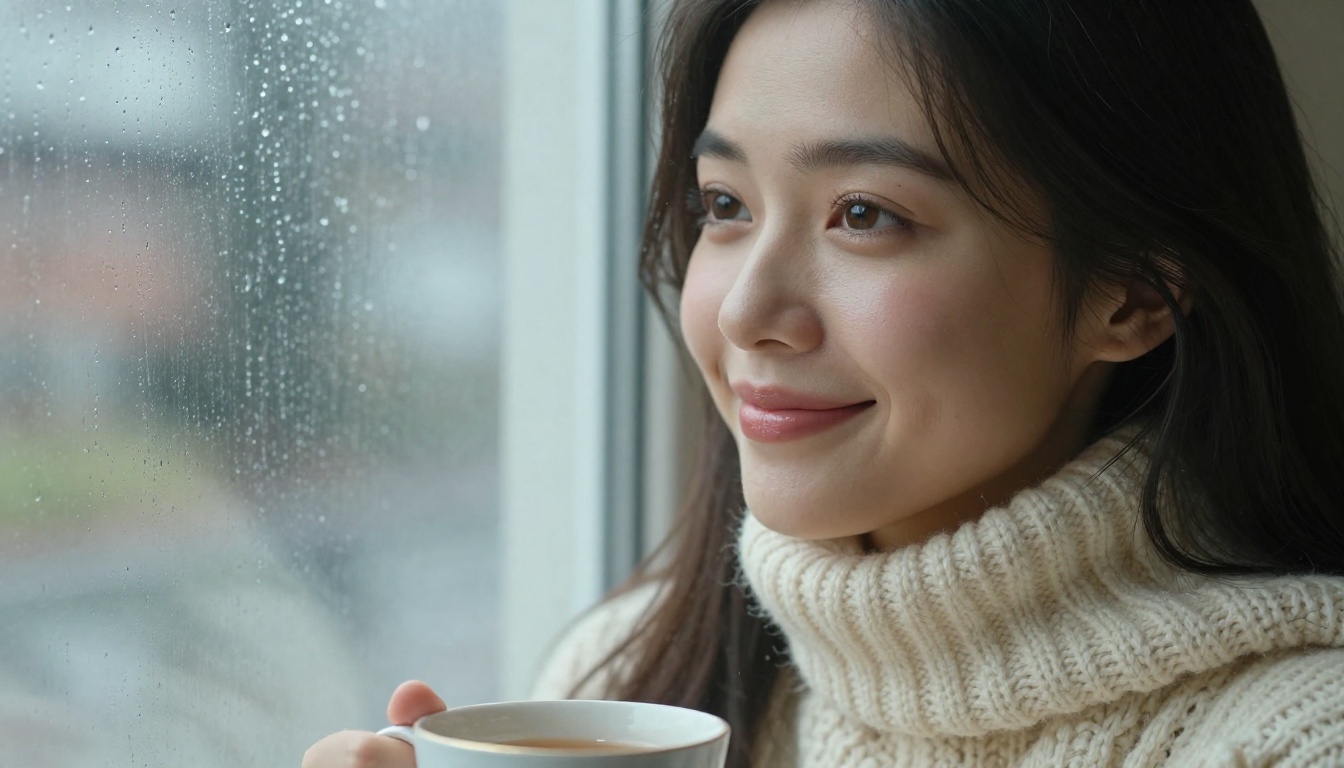
NSFW Scenarios and AI Image Generation
For users who want their roleplay to include suggestive or sensual imagery, AI image generation adds a visual layer that text alone cannot provide. Generating that imagery requires models specifically designed to handle mature creative content without heavy filtering.
Seedream 4.5 Is Where to Start
Seedream 4.5 is the recommended starting point for generating suggestive, atmospheric, and sensual imagery in AI boyfriend roleplay contexts. It produces photorealistic results with strong anatomical accuracy, handles complex lighting situations well, and generates at a speed that lets you iterate quickly across different scene variations.
For someone building a visual companion to their roleplay sessions, that speed is significant. You can generate an image to match a specific moment in the conversation within seconds, then refine the prompt to get the lighting or the emotional register exactly right.
PicassoIA Image Editor Pro
After you have a base image from Seedream 4.5, the PicassoIA Image Editor Pro lets you refine it without limits. Inpainting tools allow you to change specific details while preserving the overall composition. Outpainting expands the frame when you need to see more of the setting. The unlimited generation model means you are not rationing attempts across a session.
💡 Tip: Generate your establishing shot first, then use inpainting to adjust clothing, setting details, or the character's expression to match exactly where the roleplay story has arrived.

Seedream 5 Pro for High-Detail Scenes
Seedream 5 Pro offers improved detail resolution over 4.5, particularly for close-up portraits and complex textures. When you want an image that captures a specific emotional moment from the roleplay in precise detail, this model delivers a noticeably sharper result. Reserve it for the scenes that matter most in your story arc.
| Model | Best For | Speed | Uncensored |
|---|
| Seedream 4.5 | Scene establishing shots, fast iteration | Fast | Yes |
| Seedream 5 Pro | High-detail portraits, critical story moments | Medium | Yes |
| Flux 1.1 Pro | Atmospheric lighting, cinematic scenes | Medium | Yes |
| Flux 2 Dev | Creative compositional work | Medium | Yes |
Using LLMs on PicassoIA for Roleplay
PicassoIA gives you direct access to the most capable conversation models available. Setting one up for an AI boyfriend scenario takes under two minutes, and the results are immediately different from what you get with a generic chatbot interface.
Step-by-Step Setup
1. Choose your model. For emotionally rich, character-consistent roleplay, start with Claude Opus 4.7 or GPT 5. Both handle long-form narrative and character continuity better than smaller models across extended sessions.
2. Write a character brief. Before sending the first message, paste a character description. Include name, personality traits, the specific scenario setting, and one or two personal details that create emotional texture. Example: "You are Marco, a 28-year-old architect who studied abroad. You are quietly confident, warm with people you trust, and have a habit of sketching places you want to take someone someday."
3. Set the scene with a specific moment. Your first message should place both characters in a concrete situation. Not "let's roleplay" but "You are sitting on the edge of my desk, looking at the rain outside the window, when I walk in at 8pm carrying takeout bags."
4. Use memory anchors. When the AI introduces a detail you like, reference it in your next message. This signals to the model that the detail is now part of the established story, and it will build on it consistently going forward.

Getting Better Responses
- Be specific with stage directions. Instead of "he looks at me," write "he turns slowly and his expression shifts when he sees my face."
- Give the AI permission to advance the story. Some models can be overly deferential. Tell it explicitly that it can introduce new plot elements, not just respond to yours.
- Use Kimi K2 Instruct for longer story arcs. Its extended context handling is useful when carrying a storyline across many sessions without losing earlier details.
- Try Llama 4 Maverick Instruct for casual, witty characters. It has a lighter touch that works well for banter-heavy scenarios where playfulness is the primary register.
Building Your Visual Companion
The combination of LLM roleplay and AI image generation creates something genuinely new. You are not reading a story or looking at images in isolation. You are building a world where you can step back at any point and see what a specific scene actually looks like, frozen in photorealistic detail.
Matching Visuals to Your Story Arc
The most effective approach is to generate images at emotionally significant moments rather than continuously throughout a session. The first meeting. A turning point in the story. A quiet scene after something significant has just happened. These anchor images give the whole story a visual memory that text alone cannot provide.

Prompting for Emotional Scenes
When you prompt Seedream 4.5 to visualize a moment from your roleplay, include:
- The emotional register (tense, tender, playful, charged, melancholy)
- Lighting specifics (candlelight, golden hour, late-night bedside lamp, overcast afternoon)
- A physical detail from the scene (a hand on a shoulder, a half-turned face, two cups of coffee on a windowsill)
- A camera angle (close portrait, wide establishing, over-the-shoulder, low-angle looking up)
This specificity is what separates generic AI imagery from something that actually matches the scene you have been building in the conversation.
💡 Tip: Copy the exact line of dialogue from your roleplay session into the image prompt as emotional context. "Scene: he just said 'I never planned for you.' She is standing in the doorway, not sure whether to stay." The model processes this as staging information and adjusts posture, expression, and light accordingly.
The Scenarios Worth Visualizing Most
Some story moments generate particularly strong imagery:
- The confession scene: One character saying what they have been avoiding. Tension visible in posture. Eye contact held or broken at the critical moment.
- The quiet morning after: Domestic, warm, and intimate. Two cups of coffee. Sunlight on rumpled sheets.
- The protective moment: Someone stepping between the character and something threatening. Physical proximity charged with protectiveness.
- The goodbye that might not be goodbye: An airport, a doorway, a final phone call. Physical distance becomes the emotional content.

What Makes the Best AI Boyfriend Scenarios
After working through the most popular formats, a few things consistently separate the roleplay sessions people return to from the ones that fall flat in the first twenty minutes.
Specificity beats scale. A scenario set in a very specific apartment on a Tuesday evening with a particular playlist playing is more emotionally resonant than "we are in a beautiful place." The more specific the setting, the more real the scenario feels throughout the conversation.
Character flaws are load-bearing. An AI boyfriend who is perfect in every direction becomes flat quickly. The most enduring characters have a specific limitation: they struggle to apologize directly, they deflect when something matters, they work too hard and disappear for days at a time. These create the friction that makes reconciliation and small acts of tenderness land with real weight.
Pacing matters more than people expect. Moving too fast burns through the emotional potential of a scenario in a single session. The most satisfying experiences build over time, with small moments of connection accumulating before anything significant happens. Slow is almost always better.

Start Building With PicassoIA
Every scenario in this article is one you can run today on PicassoIA. The LLM models are accessible directly through the platform, and the image generation models, starting with Seedream 4.5, let you give every scene a visual form that matches the story you are building in the chat.
Pick a scenario from this list, write a character brief, set the scene with a specific first message, and generate a visual for that opening moment. The range of models available at picassoia.com/en/all-models means you can match the visual style to the emotional register of any scenario: warm photorealistic portraits for romance, high-contrast atmospheric scenes for darker storylines, or detailed fantasy imagery for worldbuilding arcs.
The combination of a capable LLM and a photorealistic image model is where AI boyfriend roleplay stops feeling like a chatbot interaction and starts feeling like a genuinely personal creative world that is yours to build.


