The content moderation debate in AI image generation is not abstract. It shapes what you can and cannot create, which tools stay relevant, and which get abandoned the moment users hit their first unexplained rejection. Seedance 2.0 and Grok Spicy Mode both occupy a specific corner of this debate: tools with a reputation for being "less restricted" that real-world testing consistently complicates.
This comparison does not rely on marketing copy. It looks at what each platform blocks by default, what unlocking features actually change, how output quality holds up under pressure, and where the ceiling sits for each. If you are evaluating these tools for creative work that sits anywhere near suggestive, mature, or artistic content, you need accurate information rather than hype.
What Seedance 2.0 Actually Restricts

ByteDance's Seedance 2.0 is a video generation model, not an image generator. That distinction matters because its filter system is calibrated for motion content, which carries different risks and different regulatory pressure than static images. Understanding what it actually blocks versus what its reputation suggests requires separating fact from forum speculation.
The Default Wall
Seedance 2.0 applies a hard filter on explicit sexual content, graphic violence, and politically sensitive material. These restrictions are non-negotiable at the API level and apply regardless of subscription tier. The model rejects prompts containing direct sexual terms, nudity requests, and in many cases, even suggestive phrasing when combined with certain keywords.
What surprises most users is that the filter also flags legitimate creative requests. Requests for dramatic scenes, certain cultural representations, and even some swimwear contexts trigger refusals that have nothing to do with explicit content. The system errs significantly on the side of caution.
ByteDance operates under Chinese regulatory frameworks that impose stricter content standards than Western platforms. This is not a temporary policy position. It is baked into the infrastructure at a level that no prompt engineering workaround can consistently override.
Where It Gets Permissive

That said, Seedance 2.0 handles artistic and cinematic content better than its reputation suggests. Scenes with implied intimacy, romantic framing, and stylized violence for film-style storytelling generally pass without issue when the prompt is framed cinematically rather than descriptively.
The model responds well to context. Describing a scene as "a dramatic film still" or "editorial fashion photography" changes how the content moderation layer interprets the same visual content. This is not a bypass. It is how the system distinguishes intent from content at the prompt parsing stage.
Tip: Cinematic framing language consistently performs better with Seedance 2.0 filters. Terms like "film still," "editorial shoot," and "fashion photography" contextualise content in ways the moderation layer treats more leniently.
For video specifically, Seedance 2.0 produces remarkable motion quality when working within its restrictions. The model excels at natural movement, realistic cloth simulation, and facial animation, which makes it genuinely useful for creators whose work does not require mature content.
Grok Spicy Mode Explained
xAI's approach to content moderation is philosophically different. Rather than applying a universal filter, Grok introduced a tiered permission system that lets subscribers access less restricted generation through what was marketed as "Spicy Mode." The reality is more nuanced than the feature name suggests, and understanding what it actually delivers changes how you should think about it as a tool.
What It Is and Who Can Use It

Spicy Mode is available to Grok subscribers on premium tiers, primarily Grok Plus and above. It is not a single toggle that removes all restrictions. It is a content policy adjustment that raises the threshold for what gets flagged as inappropriate. Standard adult content, mature themes, and suggestive visual content become accessible. Explicit pornographic content remains blocked regardless of tier.
The availability matters too. Spicy Mode was initially only available in certain regions and has been rolled back, restricted, or modified at various points. As of early 2026, its availability remains inconsistent depending on platform access point and geographic region.
Note: Spicy Mode in Grok is a subscription feature that requires an active paid plan. Free-tier users hit the same default restrictions as any mainstream AI image generator.
What It Actually Lets Through
Grok's image generation, powered by Aurora (xAI's internal model), handles suggestive content with reasonable quality under Spicy Mode. Swimwear, lingerie-adjacent fashion, implied nudity within artistic contexts, and mature thematic content all pass more consistently than on standard platforms.
The model performs best with photorealistic prompts that include clear artistic intent. Abstract requests or prompts that feel ambiguous tend to produce conservative outputs even with Spicy Mode active. The system is still making content judgments. It is just making them with a wider acceptable range.

What Spicy Mode does not do is give you full creative control over explicit content. Users who approach it expecting no restrictions consistently report disappointment. Those who approach it as "more permissive than ChatGPT" tend to find it genuinely useful for the content register it supports.
Side-by-Side: The Real Results
Rather than abstract descriptions, here is how each platform responds to specific content categories when prompts are crafted with reasonable skill.
Bikinis, Swimwear, and Fashion
| Prompt Type | Seedance 2.0 | Grok Spicy Mode |
|---|
| Standard swimwear | Passes with cinematic framing | Passes reliably |
| Bikini in natural setting | Mixed, context-dependent | Passes reliably |
| Minimal coverage, artistic | Often flagged | Passes in most cases |
| Implied undressing | Usually blocked | Passes with restraint |
| Lingerie editorial | Blocked | Passes with quality output |
Both platforms handle standard swimwear and fashion content without issue. The gap opens at the "minimal coverage" level where Seedance 2.0 starts flagging content that Grok Spicy Mode treats as within bounds.
Artistic Nudity and Implied Content
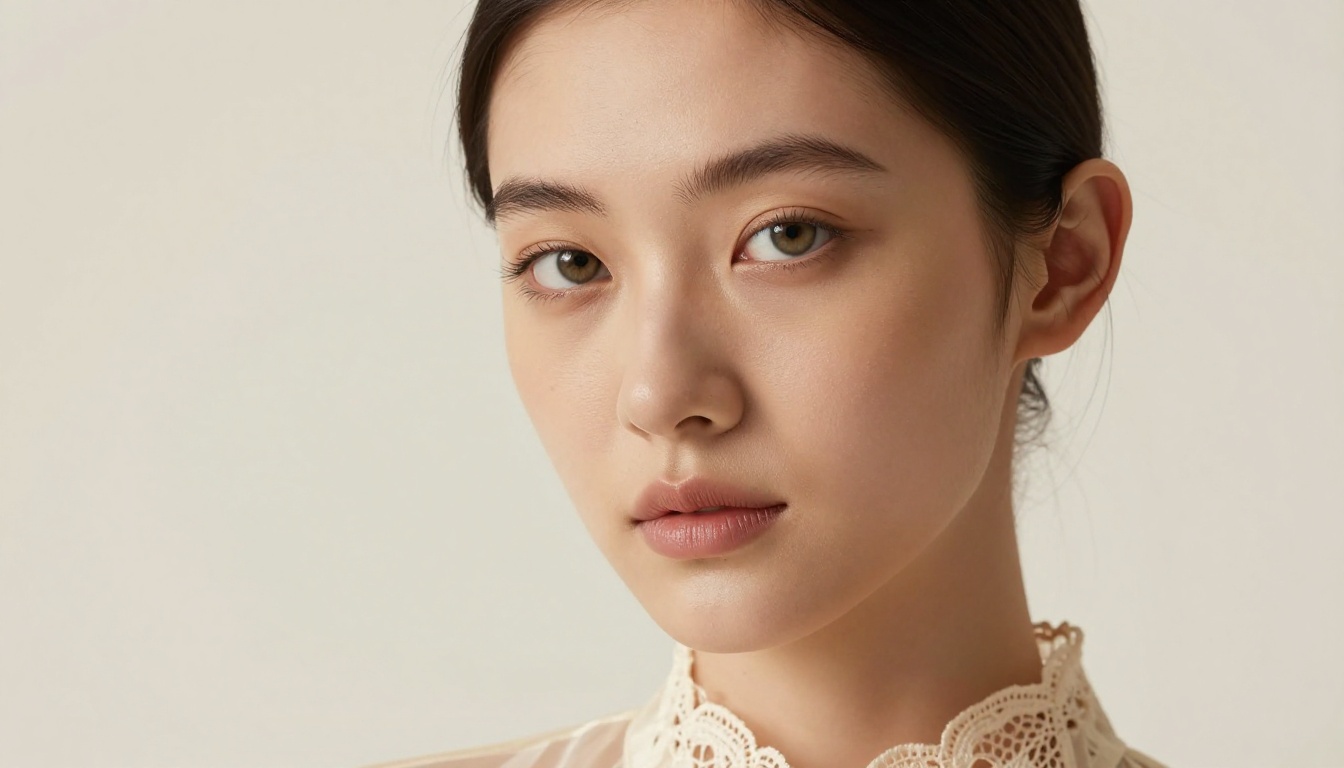
This is where the platforms diverge most clearly. Seedance 2.0 treats any nudity-adjacent prompt as high-risk and applies conservative outputs by default. Even prompts that invoke fine art references (sculpture, classical painting style, figure study) get flagged more often than not.
Grok Spicy Mode handles implied nudity substantially better. Content that would be described as tasteful by gallery or editorial photography standards generally passes. The model produces this content with realistic quality, natural lighting, and appropriate compositional framing when the prompt supports it.
Neither platform produces explicit pornographic content. That ceiling is consistent across both, and it is not something Spicy Mode changes regardless of tier.
Dark Themes and Violence
Seedance 2.0 has significant restrictions on dark thematic content in video contexts. Horror aesthetics, graphic injury, and intense conflict scenes are heavily filtered. As a video model, the concern around motion-based violent content is higher than for static images, and the moderation reflects that.
Grok Spicy Mode is more permissive with dark artistic themes. Dramatic lighting, tense emotional scenarios, and stylized intensity all pass without issue. Graphic gore or realistic violence at high intensity remains blocked.
Tip: For dark thematic content on either platform, framing through a cinematic or fine art reference significantly improves output consistency. Words like "film still," "graphic novel panel," and "dramatic editorial" shift the model's interpretation of intent.

Filter policy aside, output quality is the other half of any practical comparison. A platform can be permissive and still produce mediocre results. Both tools have distinct quality profiles worth understanding before committing time to either.
Realism and Style Accuracy
Grok's Aurora model produces strong photorealistic output. Skin texture, fabric detail, and environmental lighting behave naturalistically. The model has a slight tendency toward idealized aesthetics, particularly in portrait work, but it handles diverse prompting styles with reasonable consistency.
Seedance 2.0, as a video-focused model, applies different quality metrics. Its image frames are exceptional for capturing motion-ready aesthetics but may feel slightly sterile compared to dedicated image generation models. For still outputs, it is competitive but not leading class.
For pure image realism, dedicated text-to-image models consistently outperform both. Flux 1.1 Pro Ultra and Realistic Vision v5.1 produce photographic-grade output that exceeds what either comparison tool achieves for static images, particularly in fine detail and lighting accuracy.
Speed and Availability
Seedance 2.0 operates via API with processing times that reflect its video generation complexity. Still-image requests are faster than video but not instant, and API access requires integration setup that adds friction for casual users.
Grok's image generation is faster for static content but operates within xAI's platform ecosystem, which means subscription gating and platform-specific access. For users outside the subscription structure, availability is effectively limited.
How to Use Grok on PicassoIA

Grok Imagine Image is available directly on PicassoIA, which removes the subscription barrier for accessing xAI's image generation capabilities. Here is how to get the most from it without needing a Grok Plus account.
Step-by-Step Setup
Step 1. Access the model directly
Navigate to the Grok Imagine Image model page on PicassoIA. No xAI account or subscription is required.
Step 2. Write your prompt with clear intent
Aurora responds well to descriptive prompts that include subject, setting, lighting, and mood. Vague single-word prompts produce generic results. A prompt like "woman in silk dress, golden hour light, beach terrace, editorial photography, shallow depth of field" outperforms "woman at the beach" by a wide margin.
Step 3. Specify aspect ratio for your use case
For portrait content, 3:4 tends to produce better facial composition. For environmental or editorial shots, 16:9 captures wider scene detail. Matching your aspect ratio to your intended use case makes a substantial difference in output framing.
Step 4. Iterate with variation
Generate multiple outputs from the same prompt with slight variations in lighting or framing descriptions. Aurora's outputs vary enough between runs that a few iterations before committing to a final image is time well spent.
Tips for Better Results
- Lighting specifics improve everything. Phrases like "soft diffused morning light," "warm golden hour rim lighting," or "studio octabox from upper right" give the model precise direction rather than interpretive latitude.
- Camera references anchor realism. Mentioning specific lenses (85mm f/1.4, 50mm f/1.8) and film stocks (Kodak Portra 400, Fujifilm Velvia) consistently pushes outputs into the photorealistic register.
- Include texture language. Describing fabric texture, skin detail, and surface materials pushes outputs toward high-detail rendering rather than smooth, generic results.
- Keep stylistic direction coherent. Aurora performs better when the visual language of a prompt is internally consistent. Mixing "editorial fashion" with "fantasy" or "watercolor" produces muddled outputs.
The Smarter Alternative for Creators

Both Seedance 2.0 and Grok Spicy Mode operate within platform constraints that, regardless of their permissiveness, still represent someone else's content policy applied to your creative work. For creators who want genuine control over mature and suggestive content without navigating filter thresholds or subscription tiers, a dedicated platform with models built for that purpose is the better path.
Models Built for the Full Creative Range
PicassoIA provides access to a broad selection of image generation models, several calibrated specifically for photorealistic and suggestive content without workarounds.
Realistic Vision v5.1 is purpose-built for photorealistic human subjects with detail-accurate skin, fabric, and environmental rendering. It handles artistic and suggestive content with the kind of quality that editorial photographers expect from post-production results.
Flux 1.1 Pro Ultra from Black Forest Labs sits at the top end of the image quality spectrum. Its resolution capacity and prompt fidelity make it the preferred choice for professional-grade outputs where realism is non-negotiable.
Seedream 4.5 from ByteDance brings the same underlying technology family as Seedance but in a dedicated image generation format, with the flexibility to handle creative content that Seedance's video platform restricts by design.
Flux Dev offers a high-quality balance between speed and output fidelity that works particularly well for iterative creative workflows where you are generating many variations before settling on a final direction.
No Subscriptions, No Gatekeeping
The practical advantage of accessing these models through PicassoIA is the removal of platform-specific barriers. You are not subscribing to Grok Plus to access one feature. You are not navigating ByteDance's API to generate still images from a video model. Each model is available directly, with transparent access and consistent output quality.
This matters for creators who work across different content registers. One project might require conservative editorial output. Another calls for suggestive fashion photography. Switching models based on the creative brief rather than worrying about platform permission levels is a fundamentally more efficient way to work.
Which One Fits Your Workflow
The comparison between Seedance 2.0 and Grok Spicy Mode comes down to what you are actually producing and how much friction you are prepared to absorb in the process.
If You Want Quick Suggestive Output
Grok Spicy Mode is the stronger option between the two for suggestive static image output. Its filter ceiling is higher, its photorealistic quality is solid, and the content it allows covers most of what creators working in glamour, fashion, and suggestive editorial photography need.
The friction is the subscription requirement and the occasional inconsistency in what passes versus gets flagged. It is not a fully predictable system, and that unpredictability has a real cost in creative time when you are working to a brief.
If You Need Video with Artistic Restraint
Seedance 2.0 is the right option if your creative work is primarily video and your content stays within its permission range. Its motion quality is exceptional and its cinematic output for non-explicit content is genuinely impressive. For video production use cases where content restrictions are not a limiting factor, it competes at the top of its category.
For image work, it was not designed as a dedicated image generator, and treating it as one means accepting limitations that were never meant to serve static image use cases. The better path for image generation is a platform built for it.
Start Creating Without the Friction
The real takeaway from this comparison is that filter thresholds are not creative features. They are platform constraints that vary by company policy, regulatory pressure, and subscription tier. Navigating them costs time that goes into testing rather than creating.
PicassoIA gives you direct access to Grok Imagine Image, Seedream 4.5, Realistic Vision v5.1, Flux 1.1 Pro Ultra, and over 90 other text-to-image models in one place. Try the same prompt across different models, find the one that fits your creative vision, and generate without hitting unexplained walls.
If you have been spending time figuring out why your Seedance prompt got blocked or whether your Grok plan tier gives you access to the feature you need, redirect that time to generating instead. The tools are there. The access is immediate.


