The race to build the best AI video generation model in 2027 has produced two genuinely impressive competitors: Seedance 2.0 Mini from ByteDance and HunyuanVideo 2.0 from Tencent. Both target creators who need fast, high-quality AI video output, yet they approach the problem from fundamentally different angles. If you've spent any time comparing them on raw benchmarks alone, you've probably noticed the numbers don't tell the whole story.
This breakdown goes deeper than specs. We look at how each model performs on motion consistency, prompt fidelity, generation speed, and practical accessibility, including what you can expect when running both models through a platform like PicassoIA, where you can test either without a local GPU setup.

What These Two Models Actually Are
Before getting into the numbers, it helps to understand what each model was built to do.
Seedance 2.0 Mini
Seedance 2.0 Mini is ByteDance's efficiency-focused video generation model, designed to deliver strong quality at a fraction of the compute cost of its larger sibling, Seedance 2.0. The "Mini" designation isn't a downgrade in the traditional sense. ByteDance built it specifically for workflows where speed and iteration matter more than maximum fidelity per frame.
The model uses a video diffusion transformer architecture trained on a massive proprietary dataset. One of its defining traits is native audio generation, meaning the video output includes synchronized ambient sound without a separate audio step. For social media creators, this alone removes a significant post-production step.
Characteristics:
- Resolution: Up to 1080p
- Duration: Up to 10 seconds per generation
- Audio: Native synchronized audio included
- Architecture: Video diffusion transformer (distilled)
- Speed: Significantly faster than full Seedance 2.0

HunyuanVideo 2.0
HunyuanVideo from Tencent takes a different philosophy. It's built around a large, high-capacity transformer model that prioritizes visual fidelity and temporal coherence above all else. Where Seedance 2.0 Mini makes tradeoffs for speed, HunyuanVideo 2.0 leans into quality, particularly for longer clips with complex motion.
Tencent released the original HunyuanVideo weights as open source, making it one of the most-studied video models in the research community. The 2.0 iteration builds on that base with improved prompt understanding, better motion dynamics, and stronger scene consistency across frames.
Characteristics:
- Resolution: Up to 720p (native) and 1080p (upscaled)
- Duration: Flexible, typically 5-10 seconds
- Audio: Not native (requires separate processing)
- Architecture: Full video diffusion transformer (larger parameter count)
- Speed: Slower due to larger model size
💡 Worth noting: HunyuanVideo's open-source roots mean it has a large community of fine-tunes and LoRA adaptations available, giving it an edge for niche or specialized applications.

Speed and Output Efficiency
This is where the two models diverge most sharply in day-to-day use.
Generation Time in Practice
Seedance 2.0 Mini was engineered from the ground up for fast inference. On equivalent hardware, it generates a 5-second 720p clip roughly 2 to 3 times faster than HunyuanVideo 2.0. That difference compounds fast when you're iterating on a prompt.
In practical terms:
- A single Seedance 2.0 Mini generation at 720p takes roughly 30-60 seconds on modern cloud infrastructure
- HunyuanVideo 2.0 at equivalent settings takes closer to 90-180 seconds per clip
For projects where you're testing 10 or 20 prompt variations to find the right shot, Seedance 2.0 Mini's speed advantage translates directly into less waiting. For a single hero shot where quality is the only metric, the wait for HunyuanVideo 2.0 becomes more acceptable.
💡 Pro tip: When using Seedance 2.0 Fast on PicassoIA, you can prototype at even higher speed before committing to a final generation with the full Mini model.
Resolution and Clip Length
Both models support up to 1080p, but they reach it through different paths.
| Feature | Seedance 2.0 Mini | HunyuanVideo 2.0 |
|---|
| Native resolution | Up to 1080p | 720p native, 1080p upscaled |
| Max clip duration | 10 seconds | 5-10 seconds |
| Native audio | Yes | No |
| Open-source weights | No | Yes (v1 base) |
| Best for | Speed, social content | Quality, cinematic shots |
Seedance 2.0 Mini's ability to natively generate at 1080p without upscaling is a practical advantage for anyone delivering to YouTube or Instagram Reels, where resolution expectations are high. HunyuanVideo 2.0 at native 720p still holds up well for most use cases, and the quality at that resolution often shows sharper texture detail than Seedance Mini's 1080p output.

Video Quality Side by Side
Speed and specs only matter if the quality holds up. Both models deliver impressive results, but in different ways.
Motion Consistency
Motion consistency is one of the hardest problems in AI video generation. Characters and objects should move fluidly without teleporting, flickering, or changing appearance mid-clip.
Seedance 2.0 Mini handles motion well for its class. Person walking, camera pans, and object movements stay coherent across the full clip duration. Where it occasionally stumbles is in highly detailed motion scenarios: fine hand gestures, facial expressions during speech, and complex crowd scenes. At the Mini scale, some temporal smearing can appear in fast movement.
HunyuanVideo 2.0 is currently one of the strongest available models for temporal consistency. It handles complex motion scenarios with noticeably fewer artifacts. Long-hair movement, water surfaces, fabric dynamics, and facial expressions all hold up better across frames. This is where the larger parameter count pays off in a visible, tangible way.
💡 If motion quality in complex scenes is your primary criterion, HunyuanVideo 2.0 is the stronger performer. For simpler motion scenarios, Seedance 2.0 Mini closes the gap significantly.
Prompt Adherence
Both models take text prompts as primary input, but they interpret them differently.
Seedance 2.0 Mini tends to be quite literal in its prompt interpretation. If you write "a red ball rolling across a wooden floor," you get exactly that, rendered cleanly. The model is strong on concrete subjects and actions. Where it shows limitations is with abstract or mood-based prompts: "melancholic autumn street" requires stylistic interpretation, and Seedance Mini sometimes defaults to generic seasonal imagery rather than the emotional quality the prompt implies.
HunyuanVideo 2.0 shows stronger prompt comprehension for nuanced and abstract inputs. Its training data and larger model capacity give it more room to interpret non-literal instructions. This makes it the better choice for cinematic or artistic prompts where "feeling" matters as much as subject matter.
That said, both models benefit from the same prompt practices:
- Be specific about camera movement (slow dolly in, static wide shot, etc.)
- Describe lighting conditions (golden hour, overcast diffused, harsh noon light)
- State subject action clearly before adding stylistic qualifiers
- Avoid combining too many competing visual ideas in a single prompt

Where Each Model Wins
Seedance 2.0 Mini Best For
- Social media content requiring fast turnaround and 1080p output
- Prototyping and iteration, where you need to test many prompt variations quickly
- Content with synchronized audio, saving post-production steps
- Batch generation workflows where generation cost per clip matters
- Creators without local GPU hardware, since the Mini model runs efficiently on cloud infrastructure
HunyuanVideo 2.0 Best For
- Cinematic or artistic projects where temporal quality per frame is the priority
- Complex motion scenarios, including people in motion, crowd scenes, or physical dynamics
- Research and fine-tuning use cases, leveraging the open-source base weights
- Projects with abstract or mood-driven prompts requiring stylistic interpretation
- Creators who want to build custom workflows on top of the base model
Pricing and Accessibility
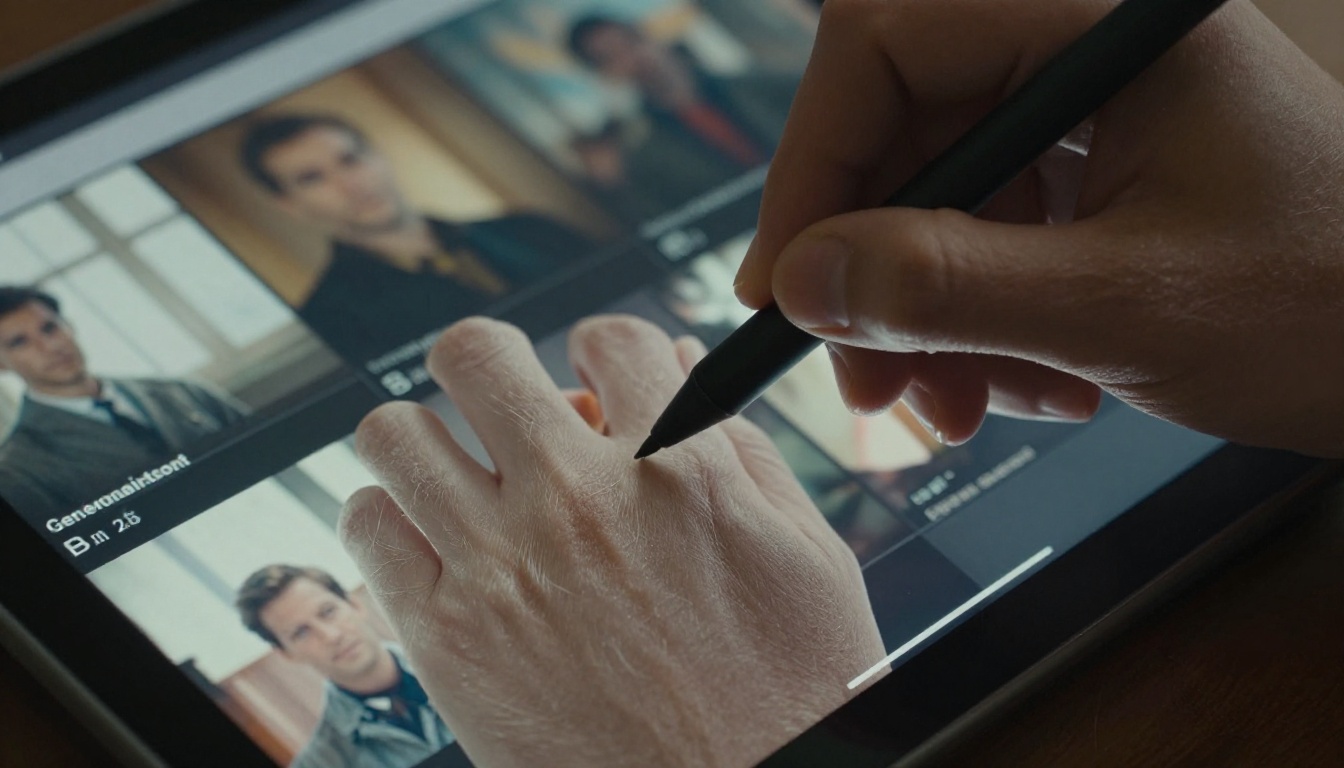
Neither model is free, but accessibility varies significantly depending on where you use them.
Seedance 2.0 Mini is available via ByteDance's API and through several third-party platforms. The per-generation cost at 720p typically runs around $0.04-0.06 per clip, making it one of the more cost-effective video models in this quality tier.
HunyuanVideo 2.0, being derived from open-source foundations, can be self-hosted at zero marginal cost if you have the hardware (expect 24GB or more VRAM requirements for local inference). Via cloud APIs, pricing is similar to or slightly above Seedance 2.0 Mini due to the larger compute footprint.
For most creators, the practical access point for both is a platform like PicassoIA, where both models are available without requiring API credentials, local setup, or infrastructure management.
💡 Cost reality check: At $0.05 per clip, generating 100 test variations costs $5. The speed difference between models matters more economically than the per-clip price for most production workflows.

How to Use Both on PicassoIA
PicassoIA gives you access to both models without any local setup. Here's how to get started with each.
Generating with Seedance 2.0 Mini
- Go to the Seedance 2.0 Mini page on PicassoIA
- Enter your text prompt in the input field. Be specific: describe subject, action, camera movement, and lighting
- Select your desired resolution (720p or 1080p)
- Choose clip duration (up to 10 seconds)
- Click Generate. The model returns the video with native audio synced automatically
- Download or use the result directly within the platform
Prompt tips for Seedance 2.0 Mini:
- Start with the subject and action: "A woman in a blue dress walking through a sunlit park"
- Add camera note: "slow dolly in, shallow depth of field"
- Specify lighting: "warm afternoon light from the left"
- Keep prompts under 120 words for best adherence
Generating with Hunyuan Video
- Open the Hunyuan Video page on PicassoIA
- Write your prompt with more room for stylistic and mood-driven language
- Set resolution to 720p for the highest native quality output
- Generate and wait (expect longer processing time than Mini)
- For audio, use a separate tool like Wan 2.2 S2V to add synchronized audio
- Review the output for motion quality, particularly in complex movement sequences
Prompt tips for HunyuanVideo:
- Lean into mood and atmosphere: "Moody overcast morning, empty cobblestone street, slow pan left"
- Describe motion dynamics: "Fabric billowing in wind, hair moving naturally"
- Trust the model with abstract concepts, it interprets stylistic cues better than smaller models
- Use longer, more descriptive prompts for better results
Other Strong Alternatives
Neither Seedance 2.0 Mini nor HunyuanVideo 2.0 is the only competitive model in this tier. Depending on your workflow, several other models on PicassoIA may serve you better.
For cinematic quality at higher resolution, LTX 2.3 Fast from Lightricks generates native 4K video from text with fast inference times. It's a strong alternative when you need both speed and resolution.
For audio-synced output without the ByteDance ecosystem, Veo 3 Fast from Google produces videos with native audio at competitive quality levels. It handles complex scene descriptions particularly well.
For image-to-video workflows, Wan 2.7 I2V lets you animate an existing image rather than generating from text, which gives you much more precise control over the starting composition and subject appearance.
For ultra-fast iteration, Ray Flash 2 720p from Luma delivers free 720p generation with fast output times, making it a solid choice for rough concept testing before committing to a paid generation.
For controlled character motion, Kling v2.1 excels at image-to-video generation with strong motion fidelity, and is particularly effective at keeping character appearance consistent across frames.
| Model | Speed | Quality | Native Audio | Best Use |
|---|
| Seedance 2.0 Mini | Fast | Very Good | Yes | Social, iteration |
| HunyuanVideo 2.0 | Slower | Excellent | No | Cinematic, art |
| LTX 2.3 Fast | Fast | Excellent | No | 4K production |
| Veo 3 Fast | Medium | Excellent | Yes | Cinematic audio |
| Wan 2.7 I2V | Medium | Very Good | No | Image animation |
| Kling v2.1 | Medium | Very Good | No | Character motion |
Start Creating Your Own Videos
The best way to understand the real difference between Seedance 2.0 Mini and HunyuanVideo 2.0 is to run the same prompt through both and compare the outputs side by side. Specs and benchmarks only go so far, and your specific prompt style, subject matter, and resolution target will determine which model actually fits your workflow.
PicassoIA gives you direct access to both models, along with over 87 other text-to-video options, all in one place without API credentials or local infrastructure. Whether you're building a content pipeline that needs 50 clips a day or crafting a single cinematic shot for a film project, both models are ready when you are.
💡 Where to start: Run your most common prompt through Seedance 2.0 Mini first for speed. If the motion quality or stylistic output doesn't meet your bar, run the same prompt through Hunyuan Video. You'll have your answer within minutes.
The gap between the two models is real but narrower than the spec sheets suggest. In production, the right choice depends almost entirely on whether you value iteration speed or final-frame quality more. Both are genuinely competitive at the top of their respective tiers.
Browse all 87+ text-to-video models at picassoia.com/en/all-models and start generating.