The AI video race just got serious. ByteDance dropped Seedance 2.0 and OpenAI pushed Sora 2 into the spotlight, and if you're trying to figure out which one to actually use for your work, the marketing material won't help you. Real creators need real answers.
Both tools promise cinematic video from a text prompt. Both have impressive demo reels. But they make very different trade-offs in quality, speed, pricing, and the type of content they handle best. This breakdown cuts through the noise and gives you the comparison that matters for your actual workflow.
What Seedance 2.0 Actually Is
ByteDance, the company behind TikTok, has been quietly building one of the most capable video AI stacks in the industry. Seedance 2.0 is their second-generation text-to-video model, representing a significant jump from what came before in every measurable dimension.
The tech powering it
Seedance 2.0 runs on a diffusion transformer architecture extended into the temporal dimension. The model was trained on a vast dataset of video clips with paired text descriptions, teaching it to maintain visual coherence across frames while accurately following prompt instructions.
What separates Seedance 2.0 from its predecessor is dramatically improved temporal consistency: the way objects, lighting, and motion stay stable across a clip's full duration. Earlier versions struggled with flickering details or subjects that morphed mid-clip. Version 2.0 addresses this directly with tighter frame-to-frame correlation during the diffusion process.

Where Seedance 2.0 excels
- Naturalistic motion: Human subjects move with convincing weight and physical flow
- Scene diversity: Handles outdoor landscapes, urban environments, and close-up product content equally well
- Prompt adherence: Strong at following multi-element prompts without dropping secondary details
- Generation speed: Notably faster than comparable quality outputs from competing tools
- Everyday realism: Documentary-style accuracy for people, food, travel, and lifestyle content
The model excels on content that prioritizes photorealistic naturalism. It's less polished on highly abstract or fantastical scenarios where Sora 2 tends to pull ahead.
What Sora 2 Actually Is
OpenAI's original Sora was one of the most discussed AI releases in recent memory. The first version impressed with its visual storytelling ability, but real-world access was restricted. Sora 2 changes that with broader availability, refined output quality, and a more mature production pipeline.

OpenAI's video approach
Sora 2 uses a diffusion-based video synthesis architecture built on OpenAI's spatial and temporal reasoning research. Rather than treating video as many images stitched together, it models the entire temporal sequence holistically. That's why it produces clips with more intentional camera movement, better scene composition, and a stronger sense of visual narrative.
The model is particularly strong at:
- Cinematic storytelling: Camera angles, depth of field behavior, lens distortion
- Abstract and fantastical scenes: Surreal environments executed with visual polish
- Subject consistency: Maintaining character appearance across longer clip durations
- Smooth camera movement: Pans, dolly shots, and transitions feel professionally executed
Sora 2 Pro extends these capabilities further with higher resolution output and longer video durations, making it the right choice for broadcast-quality production work.
Where Sora 2 struggles
Pricing is the immediate barrier. Per-second generation costs for Sora 2 are among the highest in the current market. For high-volume creators running dozens of clips per day, the cost accumulates fast. There's also an occasional "too perfect" quality to outputs that can feel slightly unnatural for casual or raw-aesthetic content where a grittier look is preferred.
Head-to-Head: Video Quality
Both models produce genuinely impressive output, but they have distinct visual personalities that suit different use cases.

Realism and texture detail
| Feature | Seedance 2.0 | Sora 2 |
|---|
| Skin texture realism | Excellent | Very good |
| Natural environment detail | Outstanding | Very good |
| Urban and architectural scenes | Very good | Outstanding |
| Lighting accuracy | Excellent | Excellent |
| Micro-detail preservation | Good | Excellent |
| Abstract and surreal content | Good | Outstanding |
Seedance 2.0 wins on raw naturalistic realism for everyday subjects. If you're generating content about people, nature, food, travel, or lifestyle, it handles texture and lighting with a documentary-style accuracy that's hard to beat at this price point.
Sora 2 wins on composed, cinematic content. When your prompt describes a specific camera move, a complex emotional scene, or a richly layered environment, Sora 2's deep understanding of visual language gives it a decisive edge.
Motion consistency
Temporal consistency, how stable and coherent the video looks from frame to frame, is one of the hardest problems in AI video generation. Both models have improved substantially, but they take different approaches.
Seedance 2.0 uses aggressive temporal anchoring that keeps frames tightly correlated. This works brilliantly for realistic motion but can produce a subtle "smoothing" effect that occasionally reduces spontaneity in action content.
Sora 2 allows more variation between frames, making motion feel more organic and cinematic. On very long clips, this flexibility can occasionally introduce subtle inconsistencies that the tighter Seedance approach avoids.
💡 For clips under 8 seconds, both models perform at essentially equivalent consistency levels. Differences become more pronounced at 10+ second durations under complex motion conditions.
Prompt Accuracy Compared
How precisely does each model do what you actually tell it?

Following complex instructions
Both models are significantly better at prompt following than the previous generation of text-to-video tools. But they interpret instructions differently.
Seedance 2.0 takes prompts quite literally. "A woman walking through a forest in morning light" produces exactly that, executed cleanly and realistically. This precision is excellent for production work where control matters more than creative interpretation.
Sora 2 applies more creative judgment. The same prompt might yield a slightly more dramatic composition, a wider angle, or a more cinematic color grade than specified. This works well for creative projects where you want the model to fill in visual storytelling gaps, but requires more explicit negative prompts when strict control is needed.
Character and object control
Complex scenes with multiple subjects and specific spatial relationships are where many AI video models break down. Both Seedance 2.0 and Sora 2 handle single-subject scenes with high reliability. Multi-subject scenes are more demanding for both, though Sora 2 shows a marginal advantage in maintaining consistent character positioning across longer clips.
Speed, Length, and Output Options
Practical workflow considerations matter as much as output quality in a real production environment.

Generation time
Average generation times vary with resolution, clip length, and server load. General benchmarks based on current performance:
| Model | 5-second clip | 10-second clip |
|---|
| Seedance 2.0 | ~45-90 seconds | ~90-180 seconds |
| Sora 2 | ~60-120 seconds | ~120-240 seconds |
Seedance 2.0 holds a meaningful speed advantage here. For creators producing high-volume content pipelines, this translates directly into more output per hour without sacrificing quality at standard tiers.
Video duration and resolution
Both models support clips from 4 to 16 seconds at standard tiers. Sora 2 Pro extends into longer durations with high-resolution output suited for professional production. For most social content and marketing use cases, 5-10 seconds covers the vast majority of actual needs.
Supported resolutions:
- Seedance 2.0: 720p to 1080p standard, 4K on select tiers
- Sora 2: 720p to 1080p standard, higher resolutions via the Pro tier
Pricing Reality Check
This is often the actual deciding factor for teams and independent creators managing real budgets.
| Factor | Seedance 2.0 | Sora 2 |
|---|
| Entry price per clip | Lower | Higher |
| API availability | Yes | Yes, limited |
| Free tier access | Limited credits | Via ChatGPT Plus |
| Volume discounts | Available | Available |
| Pro tier | Available | Sora 2 Pro available |
| Best value tier | Standard | Standard |
For budget-conscious creators and small teams, Seedance 2.0 delivers more output per dollar with strong quality across most content types. For premium production work where maximum quality on specific hero pieces justifies the premium, Sora 2 and Sora 2 Pro earn that cost difference.
💡 Running 50-100 clips per week? The pricing difference between Seedance 2.0 and Sora 2 at that volume becomes significant. Build that into your tool selection before you're mid-production and locked into a workflow.
Which One Should You Use?
The honest answer depends entirely on what you're making and how you're making it.
For content creators and marketers
Choose Seedance 2.0 if:
- You produce high-volume social or marketing content
- Your topics are lifestyle, travel, food, nature, or everyday people
- Speed and cost efficiency matter more than cinematic polish
- You need precise control over what gets generated
- You're building an automated content pipeline via API
Choose Sora 2 if:
- You need maximum cinematic quality on specific showcase pieces
- Your content involves complex environments or artistic composition
- Creative interpretation is a feature, not a liability, for your work
- Budget constraints are less of a priority for the project
For filmmakers and storytellers
Both models can produce impressive short-film quality footage. But Sora 2's understanding of visual language gives it a decisive edge for narrative work. Camera behavior, lighting mood, and scene composition all feel more intentionally filmic when the output is for storytelling rather than information delivery.
Seedance 2.0 is the stronger tool for documentary-style work, product videos, and any content where naturalistic realism and production speed matter more than cinematic drama.
Other AI Video Models Worth Testing
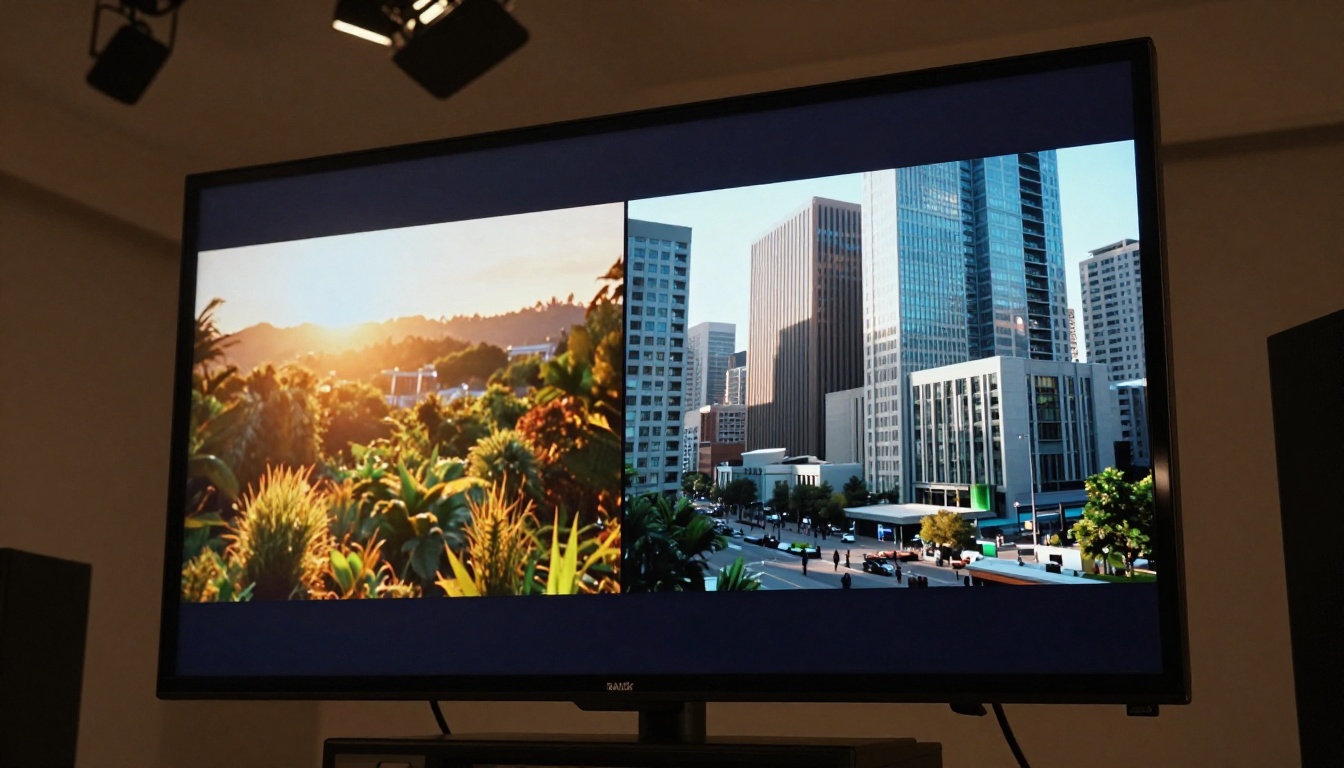
These two aren't the only strong options available right now. Depending on your specific content type, these models may outperform both for your use case.
- Kling v3: Exceptional motion control with the ability to transfer movement patterns from reference clips, ideal for dance, sports, and action content
- LTX-2.3-Pro: Audio-synchronized video generation outstanding for music videos and any content where visuals should respond directly to sound
- Veo 3: Google's entry into high-quality video AI with strong results on photorealistic environments and architectural content
- Hailuo 2.3: Fast image-to-video conversion with impressive results for animating still photographs with convincing motion
- Gen-4.5 by Runway: Consistent quality for cinematic post-production workflows and video editing integration
- PixVerse v5.6: A reliable text-to-video option with solid output quality across diverse content types
- WAN 2.6: Open-source-level quality results at accessible pricing, strong for high-volume iterative workflows
- P-Video: Versatile text, image, and audio-to-video generation with good speed-to-quality balance

Each of these models has a distinct output personality and excels in different scenarios. Testing them side by side with your actual content type is the fastest way to find your preferred tool, and faster than reading any number of comparison articles.
Start Generating AI Video Now
You don't need to commit to one model. The most effective workflow right now is testing multiple models with the same prompt and selecting the best output for your specific content. That's how professional AI content studios operate at scale.
You can access Seedance 1.5 Pro, Seedance 1 Pro, Seedance 1 Pro Fast, Sora 2, Sora 2 Pro, Kling v3, and over 80 other text-to-video models through a single platform. No API juggling, no separate accounts, no complicated setup.
The same prompt run across Seedance, Sora 2, and LTX-2.3-Pro will tell you more in five minutes than any comparison article. Pick your topic, write a solid prompt, and run it. The quality difference becomes immediately obvious when you're looking at your specific content type rather than generic demo footage.
The best AI video maker is whichever model you've tested with your own prompts, on your own content, and found works for what you're actually building.


