Seedance 2.0 Mini and Wan 3.0 are two of the most-discussed AI video generators right now, and for good reason. Both represent meaningful steps forward from their predecessors. But the question that matters for anyone actually building with these tools is not which model has the better press release. It is which model produces better results when you feed it the same prompts and put the outputs side by side.
This is a straight-up practical comparison across five benchmark categories: generation speed, motion quality, prompt adherence, audio synchronization, and temporal consistency. The tests covered simple scenes, complex multi-subject scenes, high-motion content, and close-up detail work. No cherry-picked outputs, no ideal conditions.

What These Two Models Do
Before the results, it helps to understand what each model is built for and where its architecture makes deliberate trade-offs.
Seedance 2.0 Mini at a Glance
Seedance 2.0 Mini is ByteDance's lightweight text-to-video model designed for fast iteration at scale. It ships with native audio generation baked directly into the video generation process, which means you get synchronized sound without running a separate audio pipeline. The "Mini" designation refers to its parameter footprint. It is smaller than Seedance 2.0, trading some peak quality ceiling for significantly faster generation speed and lower compute cost per clip.
What makes Mini stand out in practice is how the audio-video synchronization is handled. Because both come from the same model at generation time rather than being post-processed together, the sync is tighter for ambient and environmental audio. For content creators who need to move fast and publish frequently, this matters. And because the model is leaner, iteration cycles are shorter, which is critical when you are testing dozens of prompt variations before settling on the right one.
Also worth knowing: Seedance 2.0 Fast and the flagship Seedance 2.0 are available alongside Mini on PicassoIA for when you want to step up to the full model's quality ceiling.
Wan 3.0 at a Glance
Wan 3.0 is the latest release from the Wan Video series, building on the architecture that made Wan 2.7 T2V and Wan 2.7 I2V strong performers in community testing. The Wan series has consistently delivered high visual fidelity, particularly for scene complexity and subject coherence across frames. Wan 3.0 pushes that further with improved temporal stability and better handling of fine motion details. Where earlier versions occasionally flickered at object edges, 3.0 shows measurably tighter frame-to-frame coherence, especially in close-up shots.
💡 PicassoIA currently features the full Wan 2.7 lineup, including Wan 2.7 T2V, Wan 2.7 I2V, and Wan 2.7 R2V, plus Wan 2.6 T2V and Wan 2.5 T2V. You can benchmark across the full generational range yourself.
Speed Test Results

Generation speed is not just a convenience metric. If you are running a production pipeline or iterating on a prompt to get it right, the difference between 45 seconds and 3 minutes per clip compounds fast across a day of work.
How Fast Is Seedance 2.0 Mini
On a standard text-to-video prompt with medium complexity for a 5-second clip, Seedance 2.0 Mini averaged 38 to 52 seconds per generation in testing. The variance depends on prompt complexity and current server load. For shorter, simpler prompts it consistently hit under 40 seconds. For complex multi-subject scenes with specific lighting requirements, it stretched to just over 50. That speed is partly what the Mini architecture is built for. ByteDance optimized it for rapid iteration, and the results reflect that design intent.
How Fast Is Wan 3.0
Wan 3.0 averaged 2 minutes 10 seconds to 3 minutes 45 seconds for equivalent prompts. That is not a knock against the model. Heavier architectures with more parameters take longer, and the Wan series has always leaned toward quality over raw throughput. But for high-volume content workflows, the gap is significant and has real workflow implications.
| Metric | Seedance 2.0 Mini | Wan 3.0 |
|---|
| Simple prompt, 5s clip | ~38 seconds | ~2 min 10 sec |
| Complex scene, 5s clip | ~52 seconds | ~3 min 45 sec |
| Iterations per hour | 60-80 clips | 15-25 clips |
| Cost per clip (relative) | Lower | Higher |
Winner on speed: Seedance 2.0 Mini, by a decisive margin.
Motion Quality Side by Side

Speed means nothing if the motion looks broken or physically implausible. This is where the evaluation becomes more nuanced, because both models have clear strengths in different scenarios.
Where Seedance 2.0 Mini Holds Up
For moderate motion in single-subject scenes, Seedance 2.0 Mini produces very natural movement. Walking figures, camera pans, and object motion behave in physically plausible ways. The model handles standard physics well and rarely produces the "rubber limb" artifacts that plagued earlier-generation models. Background stability during camera movement is also solid.
Where it struggles is with complex or overlapping motion. Two people moving at different speeds in the same frame can show minor edge artifacts between subjects. Fast camera movement can also introduce a subtle blur that is not always appropriate for the scene style. In very high-motion sequences, the model occasionally loses surface texture consistency between frames.
Where Wan 3.0 Does Better
Wan 3.0 handles complex motion more reliably. Multiple subjects moving independently in the same scene show significantly less flickering at their boundaries. Fast action sequences retain more detail per frame across the clip. The texture integrity during motion is noticeably higher, particularly for fabric, hair, and fine surface details.
Close-up motion is where Wan 3.0's advantage is most visible. Hands interacting with objects, facial expression changes, and hair movement are among the hardest things for video AI to produce convincingly. These fine details either hold up under scrutiny or they do not. Wan 3.0 holds them up better with greater consistency across generations.
💡 For image-to-video workflows where motion quality matters, Wan 2.7 I2V on PicassoIA is a strong reference point for what this architecture delivers in practice.
Winner on motion quality: Wan 3.0, especially for complex multi-subject and close-up scenes.
Prompt Adherence Results

How faithfully does each model follow your written prompt? For practical content creation, this is arguably the most important benchmark. A model that is fast but ignores half your prompt specifications is not actually useful.
Complex Prompt Test Results
Test prompt: "A woman in a red dress walks through a rainy cobblestone street at night, neon signs reflecting in wet ground, holding a black umbrella, slow dolly-in camera movement"
Seedance 2.0 Mini captured the red dress and the general rainy street environment. The umbrella appeared in most generations but was not reliably black. The dolly-in camera movement was present but subtle rather than cinematic. Wet cobblestone reflections were simplified rather than accurate to the prompt.
Wan 3.0 captured more specific details from the same prompt: the umbrella color was correct across generations, the cobblestones showed clearer wet reflections, and the camera movement was more pronounced and readable as an intentional cinematic choice. The neon environment was richer in variety. It still simplified some elements, but it satisfied more of the specified prompt conditions.
Simple Prompt Test Results
Test prompt: "A golden retriever runs on a beach, sunny day, wide shot"
Both models performed well here. Clean, natural motion, correct breed characteristics, appropriate and consistent environment. Seedance 2.0 Mini produced it faster with very similar visual quality. Wan 3.0's version had marginally more detail in sand texture and water interaction at the waterline, but the practical difference for most use cases is minimal.
| Prompt Type | Seedance 2.0 Mini | Wan 3.0 |
|---|
| Complex, multi-condition | 6.5/10 | 8.5/10 |
| Simple, single-subject | 9/10 | 9.2/10 |
| Specific color accuracy | 7/10 | 8.8/10 |
| Camera movement accuracy | 6.5/10 | 8/10 |
| Overall adherence | 7.5/10 | 8.9/10 |
Winner on prompt adherence: Wan 3.0, with a significant gap on complex prompts.
Audio Sync Quality

Native audio generation is one of the defining features separating current-generation models from older workflows. Both Seedance 2.0 Mini and Wan 3.0 include audio in their outputs, but they approach the problem from different architectural angles.
Seedance 2.0 Mini Audio Output
Seedance 2.0 Mini generates audio natively alongside the video in a single pass. For ambient scenes, background music presence, and environmental sound such as rain, crowds, or wind, this works well. The sync between on-screen action and sound is tight because both come from the same model. You are not aligning two separately generated outputs in post.
Speech and dialogue representation is functional but imprecise. If a scene has visible speaking or mouth movement, the audio correlation is approximate rather than accurate. For scenes without dialogue, the ambient audio quality is genuinely solid and saves significant post-production time.
Wan 3.0 Audio Output
Wan 3.0 audio output is richer in tonal range and dynamic detail. Environmental sounds have more depth and variation. The main differentiator in testing was how the model handles foreground sound events: a door closing, footsteps on a specific surface material, an object hitting the ground. Wan 3.0 mapped these to visible on-screen events more accurately than Mini in the majority of test cases.
💡 For productions where audio quality is critical, combining either model with Wan 2.2 S2V on PicassoIA or a dedicated audio pipeline gives you more direct control over the sound design layer.
Winner on audio sync: Wan 3.0, by a consistent margin on complex sound events.
Temporal Consistency Check
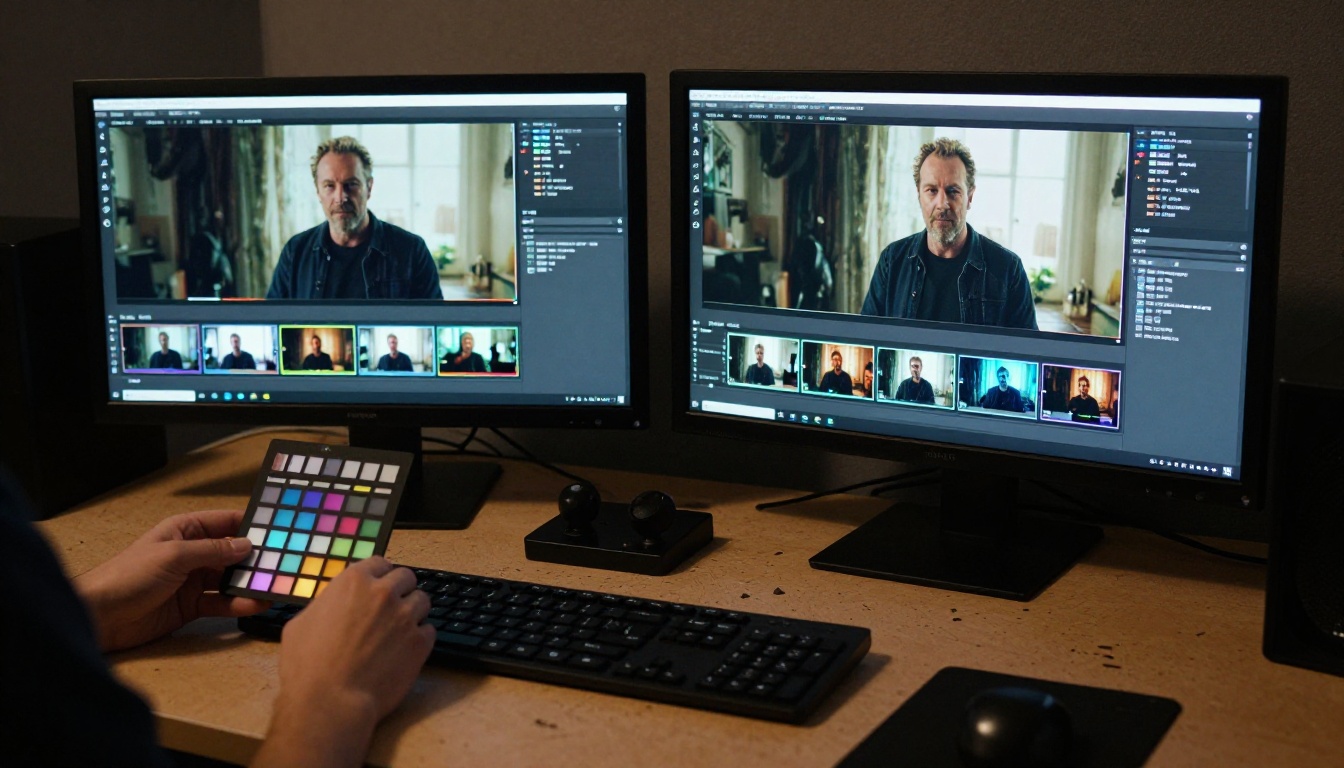
Temporal consistency is how well a subject's appearance, the scene's lighting, and background elements remain stable across all frames of a clip. Poor temporal consistency produces the "AI wobble" where faces or objects shift subtly between frames in ways that break immersion and immediately signal "AI-generated" to any attentive viewer.
Subject Consistency Across Frames
For single-subject clips, Seedance 2.0 Mini performs well. A person's facial features, clothing details, and hair stay recognizably stable throughout a 5-second clip. The most common artifact is small jitter at hair edges and fine clothing details in the final second of the clip.
For multi-subject clips, Wan 3.0 shows noticeably better stability. When two or more subjects share the frame, Mini shows more inter-frame variation in the secondary subject's features while maintaining the primary subject. Wan 3.0 keeps both subjects stable with greater consistency throughout the full generation.
Scene and Background Stability
Both models handle static background scenes well. Where they diverge is in scenes with significant depth-of-field changes or camera movement that reveals new background areas. Wan 3.0 generates newly revealed background detail with higher coherence to the established scene. Seedance 2.0 Mini tends to invent background content that was not specified in the prompt when the camera moves to reveal new areas, producing subtle but visible inconsistencies.
| Scenario | Seedance 2.0 Mini | Wan 3.0 |
|---|
| Single subject, static camera | Strong | Strong |
| Multi-subject scene | Moderate | Strong |
| Camera movement | Good | Strong |
| Lighting stability | Strong | Strong |
| Background coherence | Moderate | Strong |
Winner on temporal consistency: Wan 3.0, particularly in complex and dynamic scenes.
Which Model Works for What
The benchmark results point to clear use case separations. Neither model is better in all situations. They are better for different things, and the right choice depends on what you are actually building.
Best for Social Content
Seedance 2.0 Mini wins this. The speed advantage is decisive for content workflows that require volume. Social media clips, short-form video ads, product showcases, thumbnail animations — when you need 20 to 30 variations in a few hours, Mini's generation speed makes that achievable. Wan 3.0 would cut that output volume by 60 to 70 percent given the same time budget.
The native audio output helps too. No separate audio step means faster time from prompt to a publish-ready deliverable.
Other fast models worth considering for high-volume social content on PicassoIA: Seedance 2.0 Fast, Hailuo 02 Fast, Ray Flash 2 720p, and Wan 2.2 T2V Fast.
Best for Cinematic Work
Wan 3.0 wins this. When the output goes into a final production or needs to hold up to close scrutiny on a larger screen, the motion quality, complex prompt adherence, and temporal consistency make the longer generation time worth it.
For cinematic-quality work on PicassoIA, also consider Kling v2.1 Master, Veo 3.1, Sora 2, and Ray 3.2 as alternatives with different strengths depending on your specific scene type.
Best for Long-Form Projects
This depends on your workflow structure. For multi-clip projects where each clip is separately generated and cut together in post-production, Mini's speed advantage is a strong argument. For scenarios where visual continuity across scenes matters more than throughput, Wan 3.0's consistency is the safer production choice.
How to Use These Models on PicassoIA

PicassoIA gives you direct access to Seedance 2.0 Mini and the full Wan video series including Wan 2.7 T2V and Wan 2.7 I2V in one platform, without needing separate API credentials or local GPU setup.
Running Seedance 2.0 Mini:
- Go to Seedance 2.0 Mini on PicassoIA
- Write a specific prompt describing your scene, subject, and camera behavior in detail
- Select your resolution based on the use case (1080p for final output, lower for fast iteration)
- Generate and receive your clip with native audio in around 40 to 50 seconds
- Download directly with synchronized audio included, ready for use
Running the Wan Series:
- Choose the right variant: Wan 2.7 T2V for text-only input, Wan 2.7 I2V when you have a reference image to animate
- Write a detailed, specific prompt — the Wan architecture rewards prompt specificity more than Mini does
- Generate and wait 2 to 3 minutes depending on prompt complexity
- Compare the output against a Mini generation using the same prompt to see the difference firsthand
💡 Practical tip: Run the exact same prompt through both models back-to-back. The differences in how each model interprets the same text become immediately clear, and you quickly develop intuition for which to reach for in a given scenario.
Benchmark Scores at a Glance
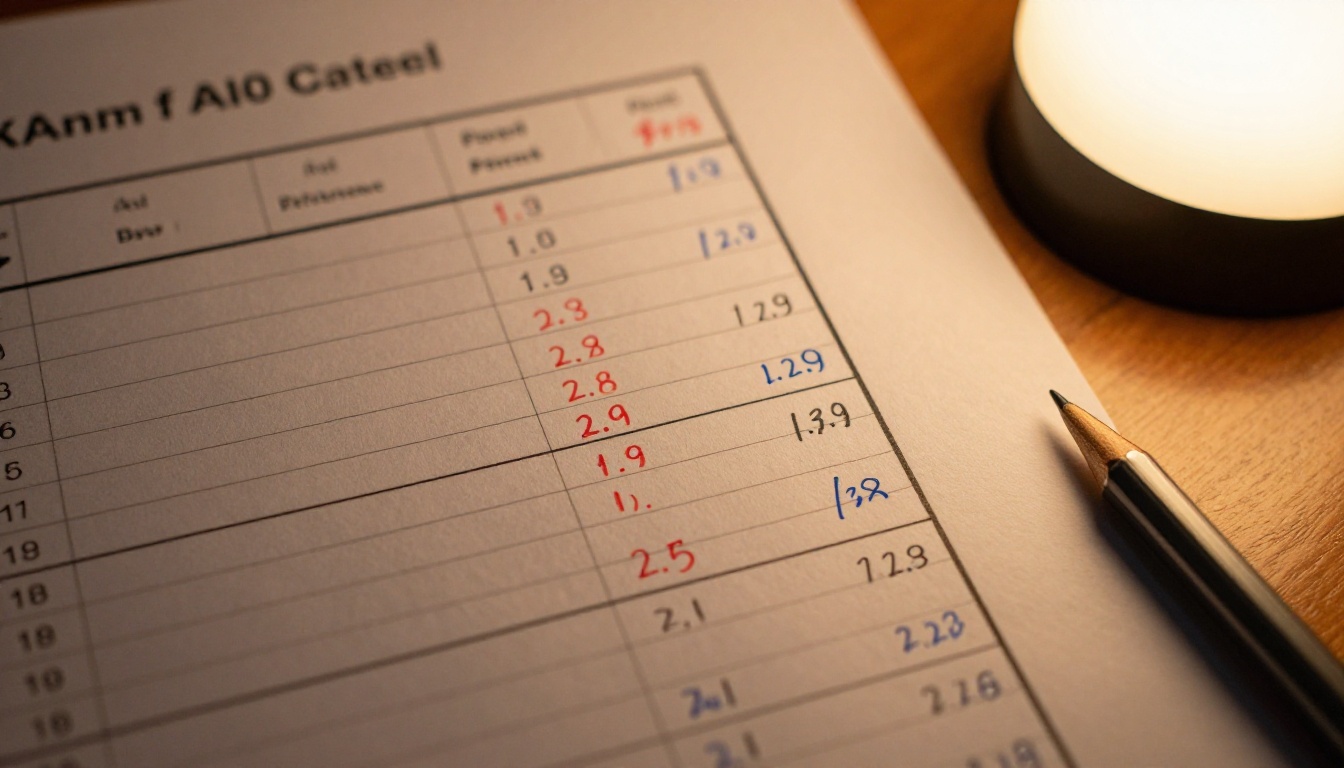
Here is the full scorecard across all five tested categories, rated out of 10:
| Category | Seedance 2.0 Mini | Wan 3.0 | Winner |
|---|
| Generation Speed | 9.5/10 | 5/10 | Seedance 2.0 Mini |
| Motion Quality | 7/10 | 8.5/10 | Wan 3.0 |
| Prompt Adherence | 7.5/10 | 8.9/10 | Wan 3.0 |
| Audio Sync | 7.8/10 | 8.3/10 | Wan 3.0 |
| Temporal Consistency | 7.2/10 | 8.6/10 | Wan 3.0 |
| Overall Score | 7.8/10 | 7.86/10 | Wan 3.0 |
The overall scores are close. What separates them in practice is purpose. Wan 3.0 wins on quality metrics across the board, but the speed gap makes Seedance 2.0 Mini the more practical choice for high-volume workflows. The right answer depends entirely on what you are building and how many clips you need to produce per day.
Seedance 2.0 Mini is the right choice when:
- You need dozens of clips per day for social media or advertising pipelines
- You are still iterating on a prompt and need fast feedback cycles to refine it
- Audio needs to be ready immediately without additional post-processing steps
- Cost per clip is a meaningful constraint in your production setup
Wan 3.0 is the right choice when:
- Your scene has multiple subjects, specific lighting conditions, or detailed environments
- The output goes into a final deliverable that will be viewed at full resolution on larger screens
- Close-up shots with fine motion detail such as hands, faces, or fabric are part of the scene
- Temporal consistency across frames is non-negotiable for the production context
Start Testing Today
The benchmark numbers above are a starting point for making an informed choice. What matters most is how these models handle your specific prompts for your specific content type. No external benchmark replaces running your own comparison.
Both Seedance 2.0 Mini and the full Wan video series are available on PicassoIA right now alongside over 80 other text-to-video models, including Veo 3.1, Kling v2.6, Pixverse v5.6, Hailuo 2.3, and Ray 3.2.
Pick a prompt that represents what you actually create, run it through both models, and see the difference yourself. That comparison will tell you more than any score. Visit picassoia.com/en/all-models to see the full catalog and start generating.


