Seedream 5.0 arrived without fanfare, but anyone who has actually tested it knows what separates it from the rest of the field: it generates radically different visual styles without collapsing into generic AI aesthetics. You ask for a photorealistic portrait and you get skin texture, visible pores, and natural lighting that looks like a camera actually captured it. You ask for a rain-soaked Tokyo street at night and you get wet asphalt reflections, film grain, and motion blur in the raindrops. This is not a one-trick model. It handles the full spectrum of photography-adjacent visual styles consistently, and that range is precisely what makes it worth talking about.
Why Style Range Actually Matters
Most text-to-image models are secretly specialists. They were tuned on a specific aesthetic, and anything outside that sweet spot shows the cracks. Some are phenomenal at portraits but fall apart on architecture. Others nail landscapes but produce waxy, plastic-looking human skin. Seedream 5.0 breaks that pattern in a way that matters for anyone who needs a reliable AI image tool across multiple creative contexts.
The training approach behind it
ByteDance built Seedream 5.0 on a dataset calibrated across a much broader range of photographic and artistic styles than previous versions. The result is a model where the latent space connections between portrait photography, architectural interior, and wildlife photography are structurally sound rather than retrofitted. That technical choice shows up in every output: coherent lighting physics, accurate perspective, and material texture that behaves the way light actually dictates.
What "any style" actually means in practice
The phrase any style is not marketing shorthand here. Tested across eight distinct visual genres, including close-up portrait photography, sweeping landscape photography, fashion editorial, architectural interiors, food photography, street photography, wildlife, and glamour, the model delivers results that hold up to scrutiny in each category. That breadth is what this article documents with actual generated outputs.

Portrait Photography: Where Realism Gets Tested
Portraits are the hardest style for any AI model to get right. Human faces are deeply encoded in how we perceive images, and the slightest uncanny valley effect collapses the illusion instantly. Seedream 5.0 passes the portrait test in a way that very few models manage.
Skin texture and natural lighting
The model correctly renders visible pores, natural skin variation, fine hairs on the face and arms, and the subtle warmth that occurs when morning light touches skin from a 45-degree angle. More importantly, it does not smooth everything into a perfect high-beauty retouched finish unless you explicitly ask for it. The default output feels raw and photographic, not polished and digital. This distinction is critical for anyone producing content that needs to feel real.
Shallow depth and lens simulation
Seedream 5.0 responds accurately to lens specification in prompts. Specifying "85mm f/1.2" produces extreme shallow depth of field with background gradients that behave like real glass. The bokeh circles are soft and naturally distributed, not the uniform, slightly artificial rings that appear in models with weaker optical simulation. For portrait and beauty work, this difference is immediately visible.
💡 Tip: Describe your light source direction explicitly. "Volumetric morning light from the left at 45 degrees" produces different, more precise results than simply writing "natural light." Seedream 5.0 rewards specificity.
What to expect from the prompt
For portraits, include: subject description, lighting angle and quality, background environment, lens specification, film stock, and mood. The more specific each element, the closer the output aligns with your creative intention. "Diffused overcast light" and "direct afternoon sun from behind" produce completely different outputs even with identical subjects.
Landscape Photography: Depth and Atmosphere
Landscape generation requires the model to handle atmospheric perspective, which is the gradual desaturation and lightening of distant elements. It requires accurate vegetation rendering at different scales, cloud behavior, and the way water reflects its environment. Seedream 5.0 handles all of these with a competence that exceeds most contemporary models.
Ground-level composition and foreground detail
When prompted with a low camera angle, the model correctly prioritizes foreground sharpness and renders individual elements like heather flowers, dew drops, and rock texture with macro-level precision. The transition from sharp foreground to atmospheric background is smooth and physically plausible. Most models lose coherence when asked to hold detail across a large depth range. Seedream 5.0 does not.

Film stock simulation in landscape work
Specifying film stocks like Kodak Ektar 100 or Kodak Portra 400 in landscape prompts produces genuine shifts in color science, not just a tint overlay. Ektar simulation results in cooler greens and richer saturated yellows. Portra simulation produces warmer mid-tones and compressed highlights. This level of color science specificity is a feature that creative professionals working on editorial or commercial projects will put to immediate use.
💡 Tip: For landscape generation, specify weather conditions and time of day together. "Morning haze breaking at golden hour" and "flat overcast light at midday" produce fundamentally different atmospheric results. Combining both with a film stock produces highly specific, repeatable aesthetics.
Fashion and Glamour
Fashion photography requires convincing fabric behavior, accurate color representation, and environmental context that supports the clothing's mood. Seedream 5.0 performs strongly across this entire category, particularly on natural fabrics like silk, linen, and cotton, where it correctly simulates how light interacts with weave structure and drape.
Fabric texture and material behavior
Silk rendered by Seedream 5.0 exhibits the characteristic sheen variation and drape that defines the material. Linen shows the slight irregularity and visible wrinkling of real woven fabric. The model does not default to a generic smooth fabric rendering that flattens all textiles into the same visual output. This specificity matters for fashion content where material authenticity is the entire point.

Glamour and beauty photography
For glamour content, Seedream 5.0 produces results that are attractive, naturally lit, and aesthetically grounded without requiring NSFW prompting. A model reclining in a white bikini top by the Mediterranean sea, rendered with afternoon light from the left, looks like a genuine editorial photograph rather than an AI-generated approximation. The skin tones are accurate, the light behavior is correct, and the environmental depth adds context without competing with the subject.

The key to compelling glamour output in Seedream 5.0 is anchoring the subject in a real, specific environment. Generic studio backgrounds produce generic results. A specific coastal villa terrace with terracotta pots and climbing geraniums produces the kind of environmental specificity that makes the subject feel genuinely present in a real place.
Architecture and Interiors
Architectural photography demands accurate linear perspective, correct light behavior through apertures, and convincing material rendering across stone, wood, glass, and metal. These are technically demanding requirements that expose weaknesses in less sophisticated models.
Perspective accuracy and convergence lines
Seedream 5.0 correctly handles vanishing point convergence in interior architecture. A cathedral shot from the nave toward the apse produces accurately converging columns and ceiling vaults that align with the implied optical geometry of a wide-angle lens. There is no warping or distortion beyond what would naturally occur with the specified lens. This is not a trivial achievement and it directly affects the perceived realism of architectural outputs.
Volumetric light in interior spaces
Light shafts through windows, a visually demanding element that requires modeling both the light source and the particulate matter in the air, are rendered convincingly. The beams have appropriate width, falloff, and scatter. Dust particles in the beams are implied through soft diffusion rather than explicitly drawn as individual dots, which is the correct visual behavior for natural light in a large interior space.

Street Photography and Documentary
Street photography is one of the more revealing tests for any AI image model because the style demands a specific set of aesthetic values: the appearance of a real, unstaged moment, correct ambient light behavior in complex urban environments, and convincing human presence within a scene.
Rain, reflections, and wet surfaces
Wet urban surfaces are technically complex because they require the model to generate a convincing reflection map of the environment above. Seedream 5.0 correctly maps store sign colors and traffic lights into wet asphalt as distorted, elongated streaks. The reflections are not mirror-perfect, which would look artificial. They carry the slight blur and motion distortion that rain-wet surfaces actually produce.
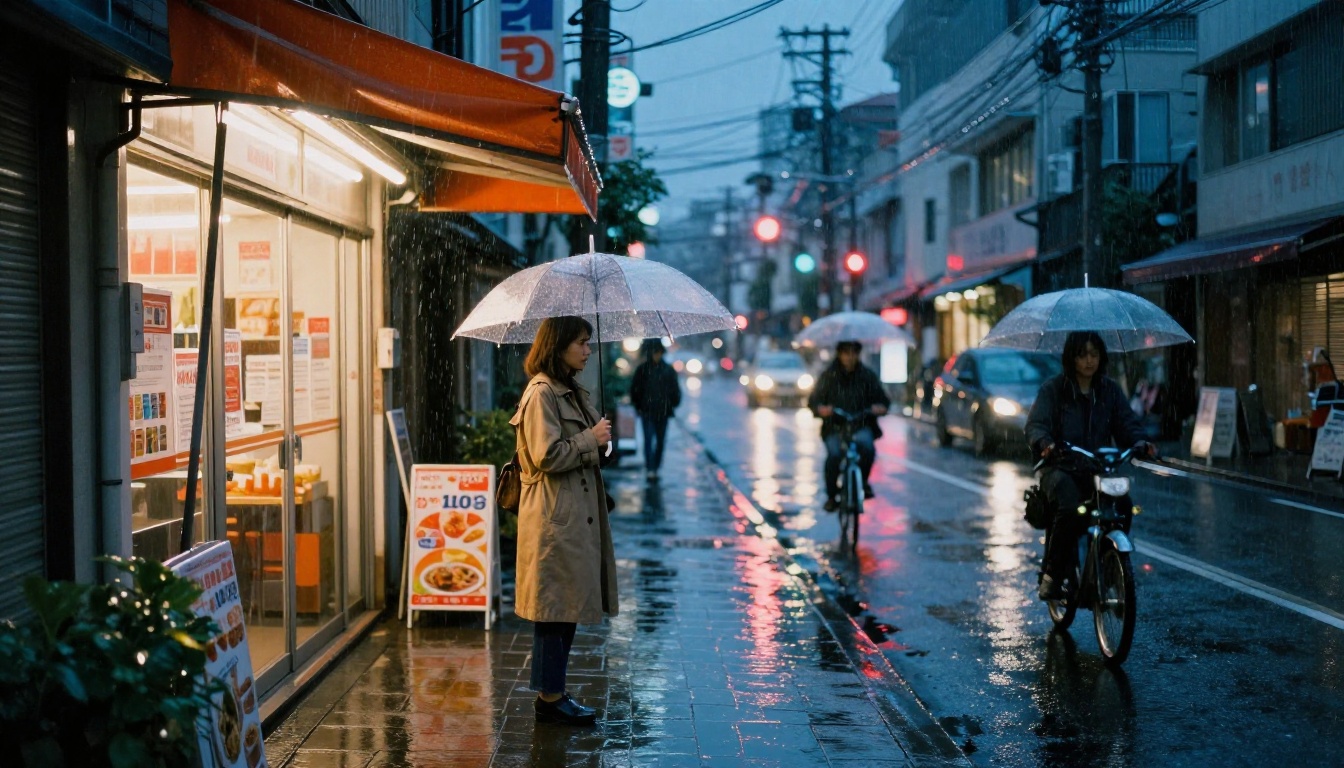
Mixed artificial light and night rendering
Night street photography requires accurate color rendering of mixed artificial light sources including warm incandescent, cool fluorescent, and colored signage, without the scene becoming visually chaotic. Seedream 5.0's film stock simulation is particularly effective here. Fujifilm Provia simulation produces high-contrast, slightly cool shadow rendering that makes night street photography feel cinematic and intentional rather than noisy and uncontrolled.
Wildlife Photography
Wildlife photography places the most demanding technical requirements on lens simulation and subject texture rendering. Fur, feathers, and wet animal surfaces are notoriously difficult for AI models because they involve micro-detail elements that must cohere visually across the entire frame.
Fur texture and anatomical accuracy
The model's Bengal tiger output demonstrates the level of capability here clearly. Individual fur striping is accurate to actual tiger anatomy. Wet fur clumping at the water line is correctly rendered with the way wet fur actually groups and loses the fluffy texture of dry coat. The amber eye reflection has the correct structure for feline eye anatomy. None of these are automatic. They reflect a model trained on genuinely high-quality wildlife photography data.
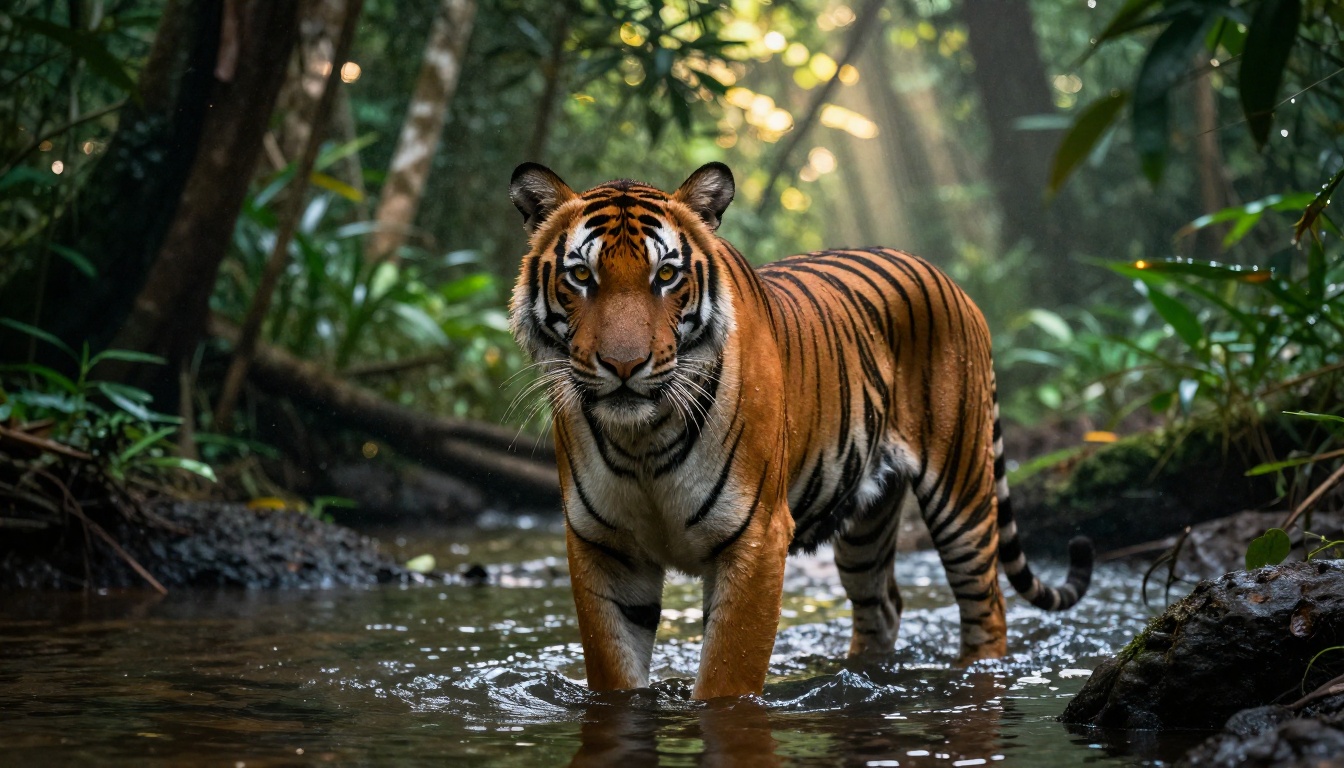
💡 Tip: For wildlife prompts, specify the eye anatomy directly. "Amber feline eyes with vertical slit pupils reflecting forest light" produces more accurate results than "yellow eyes." Seedream 5.0 responds well to precise anatomical and optical descriptions in all subject categories.
How to Use Seedream on PicassoIA
Seedream 5 Lite is available directly on PicassoIA alongside the previous generation Seedream 4.5, Seedream 4, and Seedream 3 models. The workflow requires no technical setup and produces results in seconds.
Step-by-step workflow
- Go to the Seedream 5 Lite model page on PicassoIA.
- Enter your prompt in the text field. Include subject, environment, lighting conditions, and camera specifications.
- Set your aspect ratio. For editorial and landscape use, 16:9 produces cinematic compositions. For portrait work, 4:3 or 3:4 works better.
- Run the generation. Results appear in seconds.
- Refine the prompt based on what you see. One or two iterations typically produce publication-ready output.
Prompt structure that consistently works
The most effective prompt structure for Seedream 5.0 follows this pattern:
[Subject + action or pose] + [Environment details] + [Lighting conditions] + [Camera angle and lens] + [Film stock or texture] + [Atmosphere]
For example: "A young woman in a white linen shirt standing near a sunlit doorway, exposed brick wall behind, soft diffused morning light from the left, 85mm f/1.8, Kodak Portra 400 film grain, warm intimate atmosphere"
This structure consistently produces results that align with the intended visual language. Each element contributes a distinct instruction set to the model's generation process, and Seedream 5.0 uses all of them rather than prioritizing only the subject.
How it compares to other top models
The comparison illustrates Seedream 5.0's unusual breadth. Most models have identifiable weak categories. Seedream's cross-genre consistency is what sets it apart for users who work across multiple visual contexts within the same project or platform.
Food Photography and Product Styling
Food photography is worth testing separately because it requires the model to handle organic textures, steam behavior, wet surfaces, and carefully composed prop arrangements simultaneously. Seedream 5.0 handles all of these without the artificial quality that marks AI-generated food imagery in lesser models.
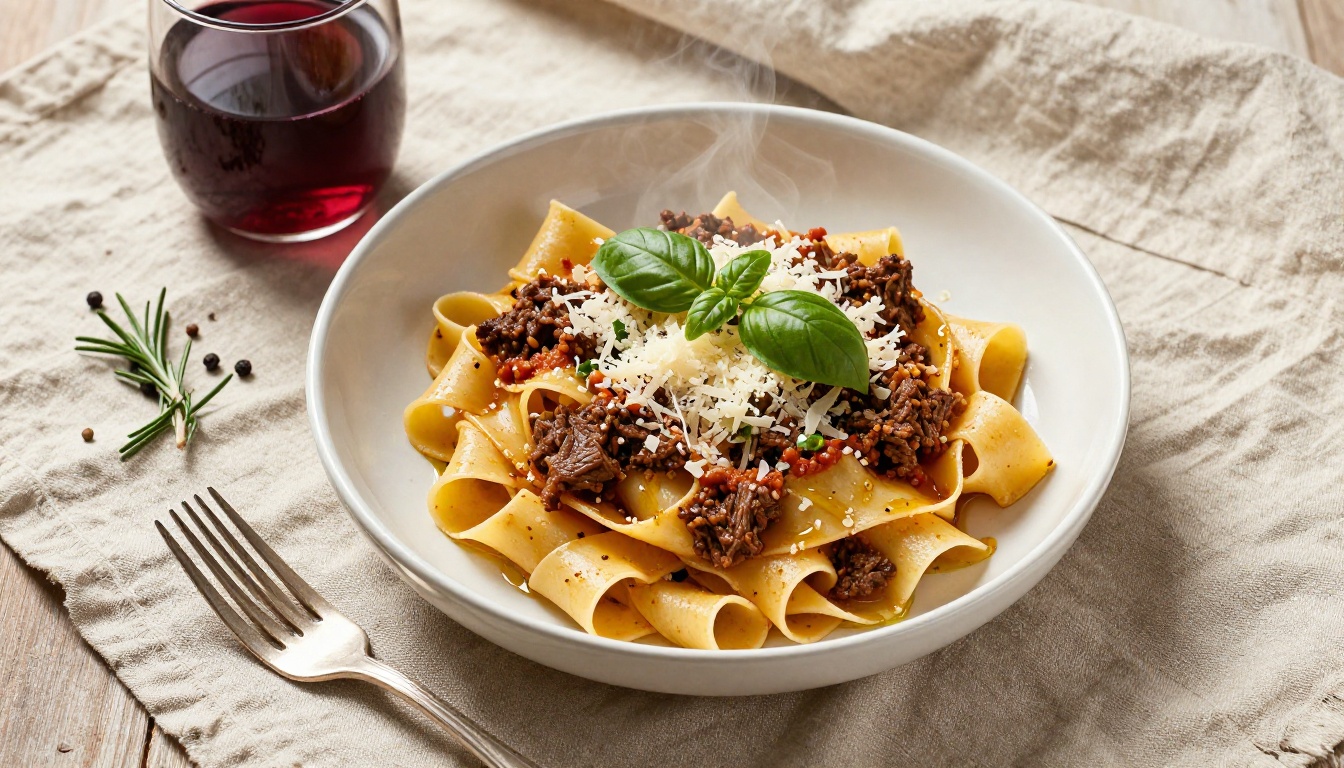
The steam rising from a hot pasta dish is rendered with correct visual behavior: it disperses upward and dissipates rather than hanging in a static cloud. The oil-based sauce has the correct reflective properties for its surface. The linen tablecloth texture shows the visible weave and slight natural wrinkling of real fabric rather than a smooth, printed-looking surface. These small details are the difference between food photography that makes you hungry and food photography that looks obviously generated.
For food prompts, the most important elements to specify are:
- Light source and angle: Overhead diffused versus side window light produces dramatically different results.
- Steam and condensation: Mentioning these explicitly prompts the model to generate them accurately.
- Surface material: Specify worn linen, matte ceramic, polished wood. Generic "table" produces generic results.
- Film stock: Kodak Ektar 100 produces the richest, most saturated food colors. Portra 400 gives a warmer, more editorial feel.
The Creative Workflow: Analog Meets AI
For art directors, content creators, and commercial photographers who use AI as part of their production workflow, Seedream 5.0 opens a specific kind of creative space. The model's cross-genre reliability means that a single tool can cover concept development, mood boarding, and final asset creation across a project that spans multiple visual styles.
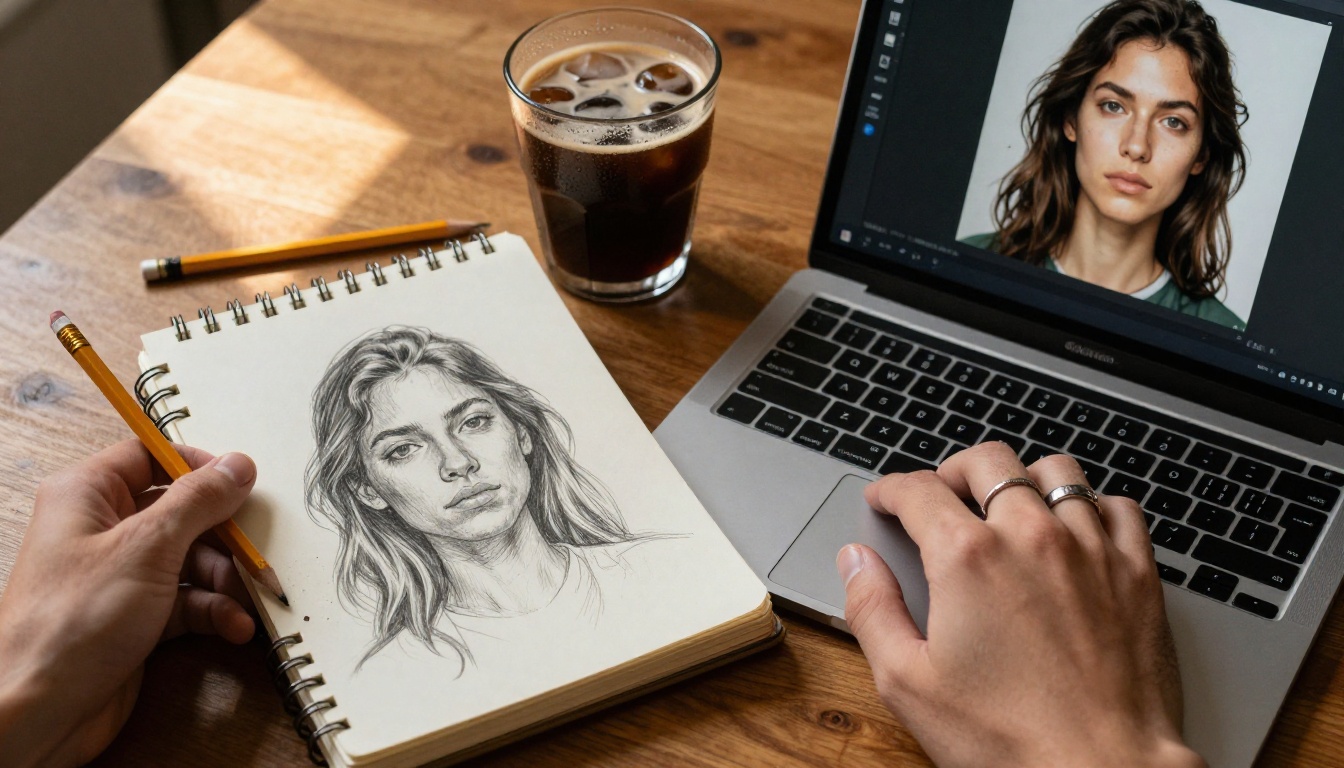
The juxtaposition of traditional sketching and AI image generation captures the actual workflow that many creators now use. Seedream 5.0 sits naturally in that hybrid space because it does not demand you sacrifice photographic quality for stylistic breadth. You can use it to generate a rough concept visual from a loose text description, then iterate that same prompt with increased specificity until the output is ready for actual use in a project.
This is the real value of cross-genre consistency. A model that is strong in one visual category and weak in others forces you to maintain separate tools and separate workflows for different creative needs. Seedream 5.0 reduces that complexity.
Start Creating Your Own
PicassoIA makes all of this directly accessible without any installation or technical setup. Whether you are building a portrait series, producing landscape art for a publication, creating fashion content for a brand, or experimenting with wildlife photography prompts, Seedream 5 Lite is available to use right now.
Start with a specific style you want to test, build a detailed prompt using the structure outlined above, and iterate from there. The model rewards precision in prompting. The more specific your light source, lens, environment description, and film stock, the closer the output aligns with what you are actually imagining.
For users who want to compare outputs or work with different aesthetics, PicassoIA also offers Flux 2 Pro, Imagen 4, Seedream 4.5, Realistic Vision v5.1, and Flux 1.1 Pro Ultra alongside Seedream 5 Lite. Running the same prompt across multiple models is one of the most effective ways to understand what each one does differently. With over 91 text-to-image models available on the platform, you have enough range to find the right tool for any specific visual goal, and Seedream 5.0 is consistently one of the strongest starting points across nearly all of them.


