Two of the most talked-about text-to-image models right now are ByteDance's Seedream 5.0 and Google's Nano Banana 2. Both promise high-quality visuals, fast generation, and strong prompt adherence, but they take very different approaches to getting there. If you've been wondering which one actually delivers, this breakdown cuts through the marketing and puts both models through their paces across quality, speed, and real creative workflows.
What Makes Seedream 5.0 Different
ByteDance's Flagship Image Model
Seedream 5.0 is ByteDance's most ambitious text-to-image release to date. Built on a diffusion transformer architecture, it was trained on a massive multilingual dataset, which gives it a notable edge when handling non-English prompts and culturally specific visual styles. Where earlier versions like Seedream 4.5 and Seedream 4 had occasional struggles with fine anatomical details, 5.0 introduces significant improvements in hand rendering, facial symmetry, and fabric texture generation.

The model operates at up to 2K native resolution, and its training pipeline incorporates aesthetic filtering that prioritizes compositional balance, natural lighting, and color harmony. That means you tend to get visually pleasing results even with simpler prompts. It also excels at text rendering within images, a notoriously weak point for most diffusion-based models.
Where Seedream 5.0 Shines
Seedream 5.0 performs exceptionally well in these scenarios:
- Portrait and fashion photography: Skin texture, clothing drape, and hair detail are rendered with remarkable realism
- Landscape and architectural scenes: Long-range depth of field and atmospheric haze are handled naturally
- Text in images: The multilingual training gives it better-than-average in-image text rendering
- Artistic consistency: Maintaining a unified visual style across multiple generations is noticeably more reliable
💡 Pro Tip: Seedream 5.0 responds particularly well to photography-inspired prompts. Add descriptors like "Kodak Portra 400", "85mm f/1.8", or "shot on film" to push photorealism further.
One area where it consistently outperforms older models is compositional logic, meaning the spatial relationship between objects in a scene makes intuitive visual sense. A person standing in front of a building actually looks like they're in front of it, with correct scale and perspective.
Nano Banana 2 at a Glance
Google's Lightweight Speed Machine
Nano Banana 2 is Google's answer to the demand for fast, accessible text-to-image generation. Part of the broader Imagen research family, Nano Banana 2 is specifically optimized for speed without catastrophic sacrifices on quality. It's the successor to the original Nano Banana, and it shows a meaningful jump in coherence and detail over its predecessor.

The core design philosophy here is efficiency. Nano Banana 2 uses a smaller parameter count compared to flagship models like Imagen 4 or Imagen 4 Ultra, which means faster inference times and lower compute requirements. Google's distillation techniques keep visual quality surprisingly high given the compressed model size.
Nano Banana 2's Real Strengths
Where Nano Banana 2 actually excels:
- Raw generation speed: Consistently produces results in a fraction of the time of heavier models
- Concept clarity: Broad prompts with simple subjects are handled cleanly and confidently
- Color vibrancy: Google's training data skews toward colorful, well-lit scenes, producing punchy output
- Iteration speed: When you need to run 20 variations of a concept quickly, this model is the tool
💡 Worth noting: Nano Banana 2 sits alongside Nano Banana Pro for those who want more refined outputs. Pro trades some speed for noticeably better detail and coherence.
Image Quality Face-Off
Photorealism and Detail Rendering
This is where the two models diverge most clearly. Seedream 5.0 produces images that feel more photographically grounded. Fine-grain detail in surfaces, believable skin tones with subsurface scattering, and accurate material properties, including glass, metal, and fabric, all look convincingly real.

Nano Banana 2, by contrast, leans toward clean and polished rather than photographic and raw. Results often look great at first glance but break down slightly under scrutiny: hair strands can appear clumped rather than individual, and reflective surfaces sometimes lack the complex micro-reflections you'd see in real photography.
For social media thumbnails, blog header images, or rapid concept visualization, Nano Banana 2's output is more than adequate. For campaigns requiring photorealistic fidelity or close inspection, Seedream 5.0 has the clear edge.
| Criteria | Seedream 5.0 | Nano Banana 2 |
|---|
| Photorealism | ★★★★★ | ★★★★☆ |
| Skin and texture detail | ★★★★★ | ★★★☆☆ |
| Color vibrancy | ★★★★☆ | ★★★★★ |
| Background coherence | ★★★★★ | ★★★★☆ |
| Lighting accuracy | ★★★★★ | ★★★★☆ |
How They Handle Complex Prompts
Both models follow prompts well, but their interpretation styles differ. Seedream 5.0 tends to take prompts more literally, which is ideal when you have a detailed creative brief. Describe a woman in a red silk dress on a rainy Parisian street at night and that's what you get, with cobblestones slick with reflected lamplight and the silk shimmering appropriately.

Nano Banana 2 takes a slightly more interpretive approach. It fills in gaps creatively, which can be a strength or a weakness depending on your workflow. Short, punchy prompts often yield surprisingly good results because the model is comfortable making aesthetic decisions on its own. Highly specific prompts sometimes see elements simplified or reinterpreted rather than followed precisely.
💡 Prompt strategy: With Seedream 5.0, go long and detailed. With Nano Banana 2, go short and directional. Both strategies maximize what each model does best.
Speed, Cost and Accessibility
Generation Time in Practice
The speed gap is real and measurable. In typical conditions:
- Nano Banana 2: 3 to 8 seconds per image at standard resolution
- Seedream 5.0: 10 to 25 seconds per image depending on resolution and complexity
That difference matters enormously in iterative workflows. Testing 50 prompt variations with Nano Banana 2 takes roughly as long as testing 15 to 20 with Seedream 5.0.

For time-sensitive projects, live client sessions, or A/B testing at scale, Nano Banana 2's speed is a legitimate competitive advantage that no amount of quality-chasing can offset.
Which One Costs Less to Run
Nano Banana 2 wins on cost efficiency. Its smaller model size means it consumes fewer compute resources per generation. When running hundreds of images through a pipeline, those savings accumulate significantly. Seedream 5.0 commands a higher compute cost that reflects its output quality, though the gap has narrowed compared to earlier high-end models.
| Factor | Seedream 5.0 | Nano Banana 2 |
|---|
| Avg. generation time | 10-25s | 3-8s |
| Relative cost per image | Higher | Lower |
| Batch workflow suitability | Moderate | High |
| Single hero image quality | Excellent | Good |
Use Cases for Each Model
When Seedream 5.0 Is the Right Call
Choose Seedream 5.0 when the output quality directly affects the final deliverable:
- Editorial photography: Magazine covers, feature article headers, campaign visuals
- Product marketing: Lifestyle photography mockups, packaging renders
- Portfolio pieces: When you want a reference-quality output that stands on its own
- Multilingual projects: If your prompts contain non-English text or culturally specific visual references

The model's attention to lighting physics, material textures, and spatial coherence makes it the stronger choice whenever a human eye is going to spend more than a few seconds examining the image.
When Nano Banana 2 Makes More Sense
Nano Banana 2 earns its place in workflows built around speed and volume:
- Rapid ideation: Visualizing multiple creative directions quickly without committing to one
- Social media content pipelines: High-volume image production for feeds and stories
- Storyboarding and mood boards: When you need 30 rough visual concepts in an afternoon
- Prototyping UX assets: Placeholder images, background fills, abstract textures
💡 The sweet spot: Many professional workflows use both. Nano Banana 2 for ideation and direction-finding, Seedream 5.0 for final execution.
How to Use Both on PicassoIA
PicassoIA hosts both models and makes switching between them seamless. No local installation, no API setup, just immediate access through the browser.

Using Seedream 5 Lite on PicassoIA
Seedream 5 Lite is the available Seedream 5-series model on PicassoIA. Here's how to get the best from it:
- Open the model page and enter your text prompt in the input field
- Set your aspect ratio to 16:9 for cinematic scenes, 1:1 for portraits
- Write detailed prompts: Include camera lens, lighting direction, time of day, and material descriptions
- Use photography references: Phrases like "shot on Kodak Portra 400" or "Canon EOS 5D Mark IV" push realism significantly
- Iterate with small variations: Change one element at a time, such as lighting, angle, or subject distance, to converge on your ideal image
Sample prompt for Seedream 5 Lite:
A professional female architect in a white linen blazer standing in a modern open-plan office, soft diffused daylight from floor-to-ceiling windows on the left, visible skin texture and hair detail, 85mm f/1.8 lens, Kodak Portra 400 film grain, photorealistic RAW photography
Running Nano Banana 2 on PicassoIA
Nano Banana 2 on PicassoIA is built for speed. To maximize results:
- Keep prompts concise: 20 to 40 words often outperform 200-word descriptions with this model
- Lead with the subject: Put the most important visual element at the start of the prompt
- Use mood descriptors: Words like "vibrant", "golden hour", "dramatic shadow", or "airy" guide the model's aesthetic choices effectively
- Run variations fast: Generate 5 to 10 versions of a concept before committing to a direction
- Try Nano Banana Pro for outputs that need more refinement without switching to a heavier model
Sample prompt for Nano Banana 2:
Vibrant street food market at sunset, colorful stalls, warm golden light, photorealistic
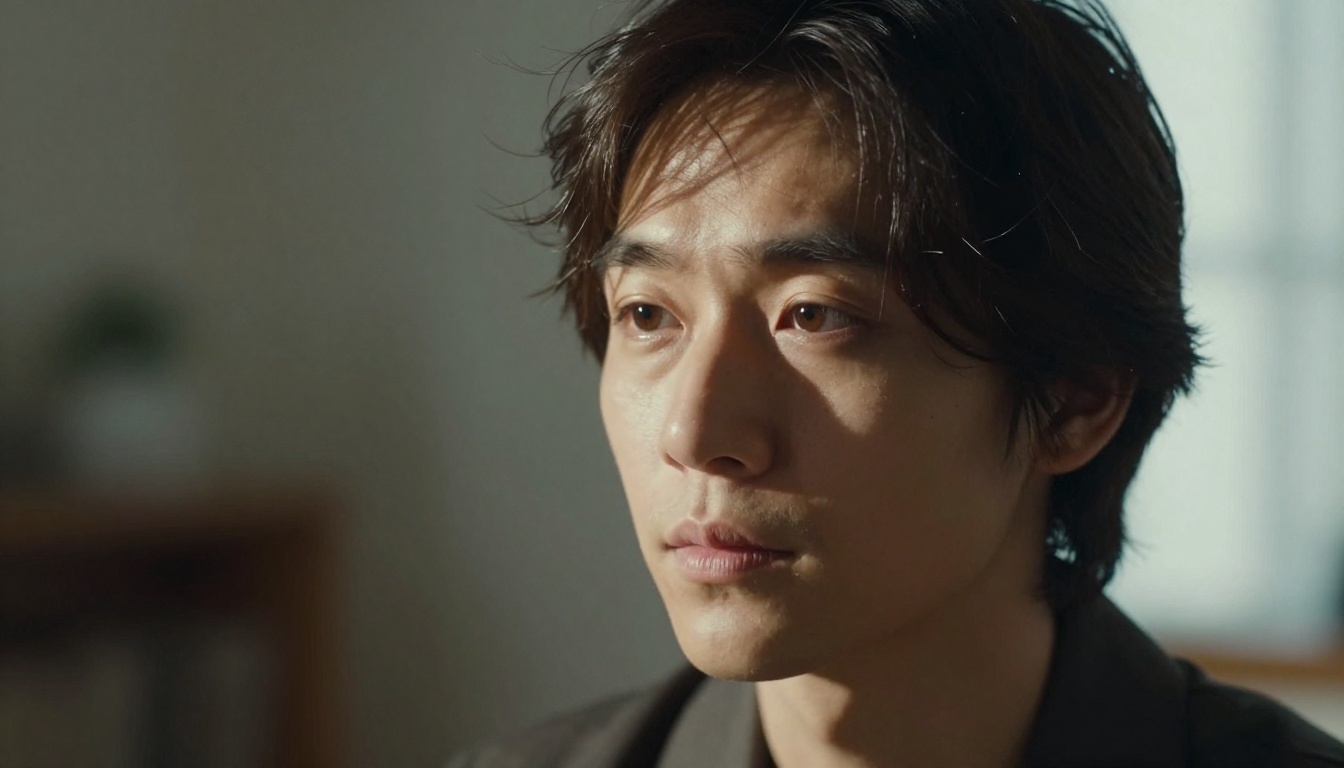
Both models fit naturally into a broader creative stack. If you need to push quality even further after generation, PicassoIA also hosts Flux 2 Pro and GPT Image 1.5 for benchmarks where only the absolute best output will do.
Full Comparison at a Glance
| Feature | Seedream 5.0 | Nano Banana 2 |
|---|
| Developer | ByteDance | Google |
| Primary strength | Photorealism, detail | Speed, volume |
| Prompt style | Detailed, specific | Short, directional |
| Generation speed | 10-25 seconds | 3-8 seconds |
| Best for | Final deliverables | Ideation, iteration |
| Multilingual support | Strong | Moderate |
| Relative cost | Higher | Lower |
| Available on PicassoIA | Yes, Seedream 5 Lite | Yes |
Pick Your Weapon

If you had to choose one, the answer depends entirely on what you're building. Seedream 5.0 wins on pure image quality. Its photorealistic output, complex lighting, and fine material detail make it the right model whenever the image itself is the deliverable. Nano Banana 2 wins on workflow efficiency. Its speed and accessibility make it the better tool for rapid iteration, content pipelines, and situations where volume matters more than perfection in every pixel.
The better question might be: why choose at all? PicassoIA gives you immediate access to both models without any setup overhead. Run your initial ideas through Nano Banana 2 at speed, identify the creative direction that works, then take that concept to Seedream 5 Lite for a production-quality finish. That two-stage workflow is how serious creators get both efficiency and quality without compromise.
There are also adjacent tools worth having in your stack. If you need to upscale and sharpen any generated image, PicassoIA's super resolution models work seamlessly with outputs from both. For removing backgrounds from generated subjects, the background removal tools save significant post-processing time and deliver clean, production-ready cutouts.
The models are there. The platform is ready. Go create something worth looking at.


