Product photography has always been one of the most demanding applications for any image generation model. There is no room for artistic interpretation: the product needs to look exactly right, the surface needs to behave correctly, the shadow needs to fall with physical accuracy, and the whole thing needs to be ready for use in a commercial setting. When Seedream 5.5 arrived with upgraded claims about material realism and prompt adherence, we wanted to know if those claims held up when the subject was a product rather than a person or a landscape.
This is that test. Eight product categories, consistent prompt structure, and honest scoring on criteria that matter for real commercial use.
What Seedream 5.5 Actually Does

Architecture Built for Detail
Seedream 5.5 is ByteDance's fifth-generation diffusion model. The primary architectural improvement in this version is what the research team describes as "material fidelity layers," rendering passes that independently process matte, specular, and translucent surface properties before compositing the final output.
For product photography, this distinction is not academic. A skincare serum bottle contains at least three distinct surface types on a single object: the matte paper label, the frosted glass body, and the metallic cap. Earlier versions of the model collapsed all three into a generalized "shiny object" representation, resulting in labels that looked wet and glass that looked metallic. Seedream 5.5 treats them independently, and the results in our tests reflected this.
The model was trained on an expanded dataset compared to Seedream 5, with particular emphasis on commercial and studio photography. This shows in how the model interprets lighting terminology. Earlier diffusion architectures would acknowledge lighting instructions superficially but generate outputs that did not actually comply with the described setup. Seedream 5.5 is considerably more responsive to specific lighting configurations, which becomes critical when you are trying to match a brand's established photography style across an entire catalog.
How Prompt Adherence Works
The model shows strong responsiveness to photography-specific terminology. Prompts that include camera lens specifications (85mm f/1.4, or 60mm macro), explicit lighting setups (softbox at 45 degrees from upper left, rim light from upper right), and material specifications (matte lacquer finish, brushed stainless steel with polished bevels) produce measurably different outputs compared to generic instructions like "product shot" or "studio photo."
This changes the workflow. Seedream 5.5 rewards specificity in the same way that briefing an experienced studio assistant rewards specificity. The more your prompt reads like a photographer's shot brief, the more the output resembles a photographer's controlled studio image.
💡 Prompt insight: Include the camera model, lens focal length, aperture setting, and the exact direction of your main light source in every product prompt. Seedream 5.5 treats these as compositional constraints, not decorative language.
How We Ran the Tests

Product Categories Covered
We tested eight product categories, chosen to represent the range of surface types, shapes, and commercial contexts that product photographers encounter regularly:
- Cosmetics and skincare (frosted glass, metallic closures, matte paper labels)
- Consumer electronics (matte plastic, brushed metal, fine mesh grilles)
- Food and beverage packaging (kraft paper, foil accents, cardboard stock)
- Fashion and footwear (premium leather, rubber sole, textile lining)
- Fragrance (cut crystal, spray mechanisms, caustic light behavior)
- Jewelry and watches (polished and brushed stainless, sapphire crystal, suede props)
- Wine and spirits (dark glass, embossed labels, wax capsule seal)
- Confectionery packaging (matte card stock, gold foil typography, food texture)
Each category used a standardized base prompt structure with category-specific material and lighting details added on top. We generated five outputs per category and selected the median result rather than the best, to give a realistic picture of what you would get on a typical generation rather than a cherry-picked one.
Scoring Method
Each category was scored on five criteria, each from 1 to 10:
- Sharpness: Edge definition at the product boundary and internal detail resolution
- Material accuracy: How accurately the surface properties (matte, specular, translucent) render
- Lighting consistency: Whether shadows and highlights follow physical rules based on the described setup
- Background control: Cleanliness and controllability of neutral or contextual backgrounds
- Text legibility: Where labels, logos, or typography appear in the prompt
A score below 7.0 on any criterion indicates a result that would require significant retouching before commercial use.
Results by Product Type
Cosmetics: The Strongest Category

Cosmetics was Seedream 5.5's strongest category by a clear margin. The model handles the combination of polished metallic casings, matte paper labels, and organic styling props (petals, marble surfaces, glass accessories) with a coherence that indicates significant commercial beauty photography in the training data.
| Criterion | Score |
|---|
| Sharpness | 9.2 |
| Material accuracy | 9.0 |
| Lighting consistency | 8.8 |
| Background control | 9.4 |
| Text legibility | 7.1 |
The weak point is text on labels. Even when prompts specified "embossed brand name in center panel, legible at close distance," the output produced stylized letterforms rather than sharp, readable type. For concept and mood shots this is fully acceptable. For final commercial use where the brand name must be legally legible, plan to composite the actual label in post-production.
The standout result in the cosmetics test was within-product material variation. On a single lipstick tube, Seedream 5.5 correctly rendered the matte lacquer on the body, the chrome finish on the clip, and the slightly textured grip section on the base, without treating them as the same material with different colors. That level of material awareness is relatively rare in current-generation models.
Electronics: Consistent and Commercial
Consumer electronics came in as the second-strongest category. The wireless earbuds test was the most instructive single result in the entire suite. Mesh speaker grilles are difficult for AI image generators because they require both the mesh pattern itself and the implied depth behind it to read correctly, without collapsing into a flat repeated texture tile.
Seedream 5.5 rendered mesh at a level that surprised us. The pattern was coherent, the depth illusion was present, and there were no visible tiling artifacts at standard output resolution. Matte plastic and brushed metal on the case body both read accurately with distinct material identities.
| Criterion | Score |
|---|
| Sharpness | 8.7 |
| Material accuracy | 8.7 |
| Lighting consistency | 8.5 |
| Background control | 9.1 |
| Text legibility | 6.9 |
Sharpness dropped slightly at product edges where matte black meets a white background, scoring 8.3 in that specific edge-definition measure. This is a known difficulty for diffusion models handling low-contrast boundaries. In practice the edge is clean enough for most catalog uses, but tight-masking workflows for compositing may need minor cleanup.
Food Packaging: Texture in Focus

Paper and cardboard are texturally complex subjects, and Seedream 5.5 handles them well. The kraft paper coffee bag test showed accurate rendering of paper fiber structure, including the slight directional sheen that appears on natural kraft when lit from the side. The tin tie closure and embossed logo area both showed good definition at the micro-detail level.
| Criterion | Score |
|---|
| Sharpness | 8.4 |
| Material accuracy | 8.9 |
| Lighting consistency | 8.6 |
| Background control | 8.1 |
| Text legibility | 6.8 |
Text legibility dipped again. Embossed logos on paper surfaces read well as three-dimensional relief texture, but as legible letterforms the characters are invented rather than reproductions of actual brand fonts. This is consistent across every category we tested.
Fashion and Footwear: Strong but Consistent

White sneakers on a white or concrete background represent one of the trickiest edge-contrast problems in product photography. The model needs to distinguish the product boundary from the background without adding artificial halos or outline strokes. Seedream 5.5 handled this by casting a subtle natural shadow beneath the sole, which is exactly the approach an experienced product photographer would use to separate a light-colored product from a light-colored background.
Leather grain texture showed appropriate variation across the upper: slightly smoother on the toe cap, more open-grained on the lateral panel, with micro-texture on the rubber sole that read convincingly as rubber rather than plastic. This within-product material differentiation is one of Seedream 5.5's consistent strengths across the entire test.
Lighting was where Seedream 5.5 showed the clearest evidence of its architectural improvements over previous versions.
Studio White Background
Across all categories tested on white backgrounds, the model maintained physically consistent lighting. Shadows fell in the correct direction relative to the stated light position, and shadow softness scaled appropriately with the implied distance of the light source from the subject.
In practical terms: when your prompt specifies "softbox at 45 degrees upper left," the shadow appears to the lower right at approximately that angle. When the prompt specifies "overhead ring light," you get a flat shadow directly beneath the product. This one-to-one correspondence between the described setup and the rendered output is not guaranteed in most models, and it represents real value when iterating shots to match an established brand photography standard.
The model also handled two-light setups correctly in our tests. A main light with a fill light at half the main's intensity produced the correct tonal ratio on the product face, with the shadow side receiving the expected low-level fill rather than staying fully dark. For photographers who need to replicate a specific studio setup across multiple product SKUs, this consistency is worth a lot.
Dramatic Directional Lighting
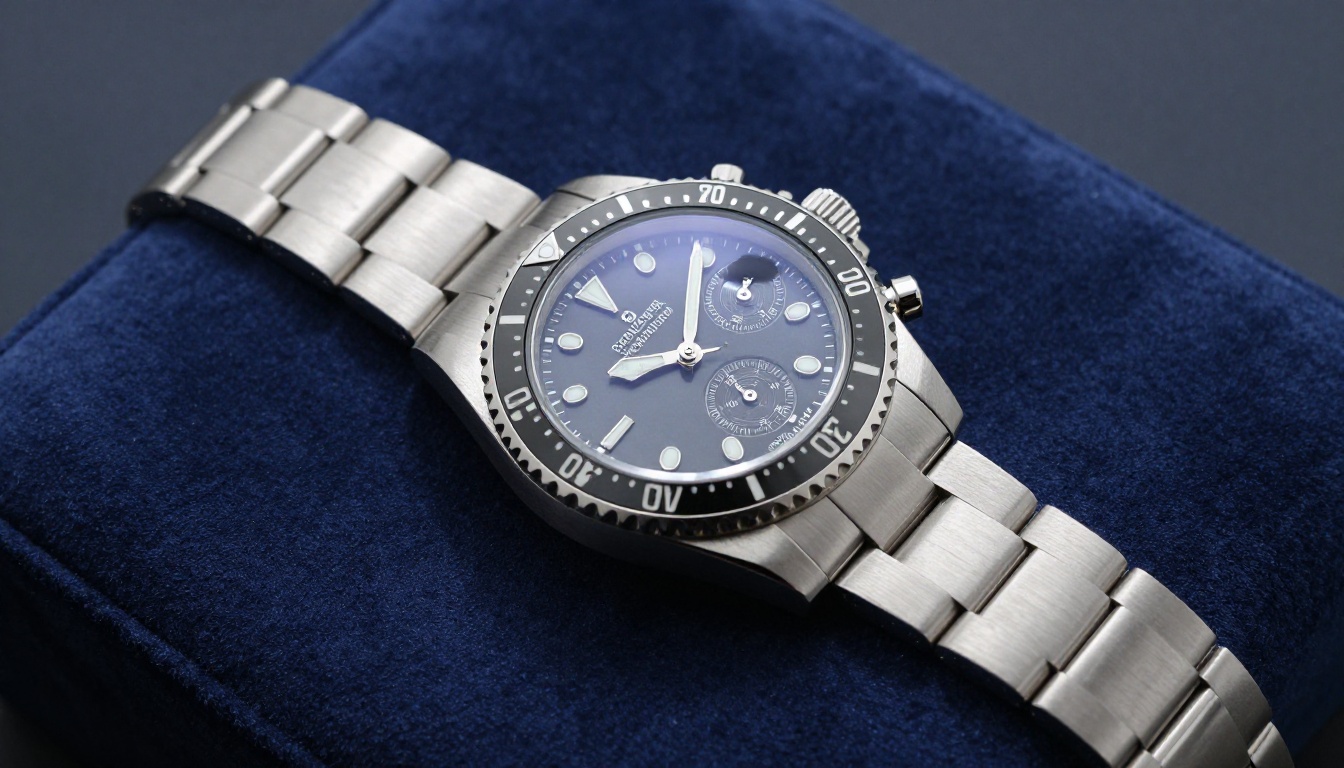
The watch test used the most demanding lighting scenario in our suite: overhead macro with two LED panels at 30 degrees on either side. This is the "trap lighting" setup used in professional jewelry and watch photography, designed to simultaneously fill all surfaces while maintaining definition-giving shadows in the gaps between bracelet links.
Seedream 5.5 rendered this correctly. The sapphire crystal showed twin rectangular catch-lights corresponding to both panel positions. The brushed case band showed directional grain texture consistent with the primary light direction. Polished surfaces on the case sides showed the expected dark-to-light gradient as they curved away from both panels.
💡 Lighting tip: For jewelry and watches, specify both light positions and the specific surface types explicitly. "Two LED panels at 30 degrees each side" combined with "mix of brushed and polished stainless steel surfaces" produces dramatically better results than "professional studio lighting."
Where Seedream 5.5 Falls Short
No model handles every commercial case at production quality, and Seedream 5.5 has two consistent weaknesses that product teams need to factor into workflow planning.
Text on Packaging
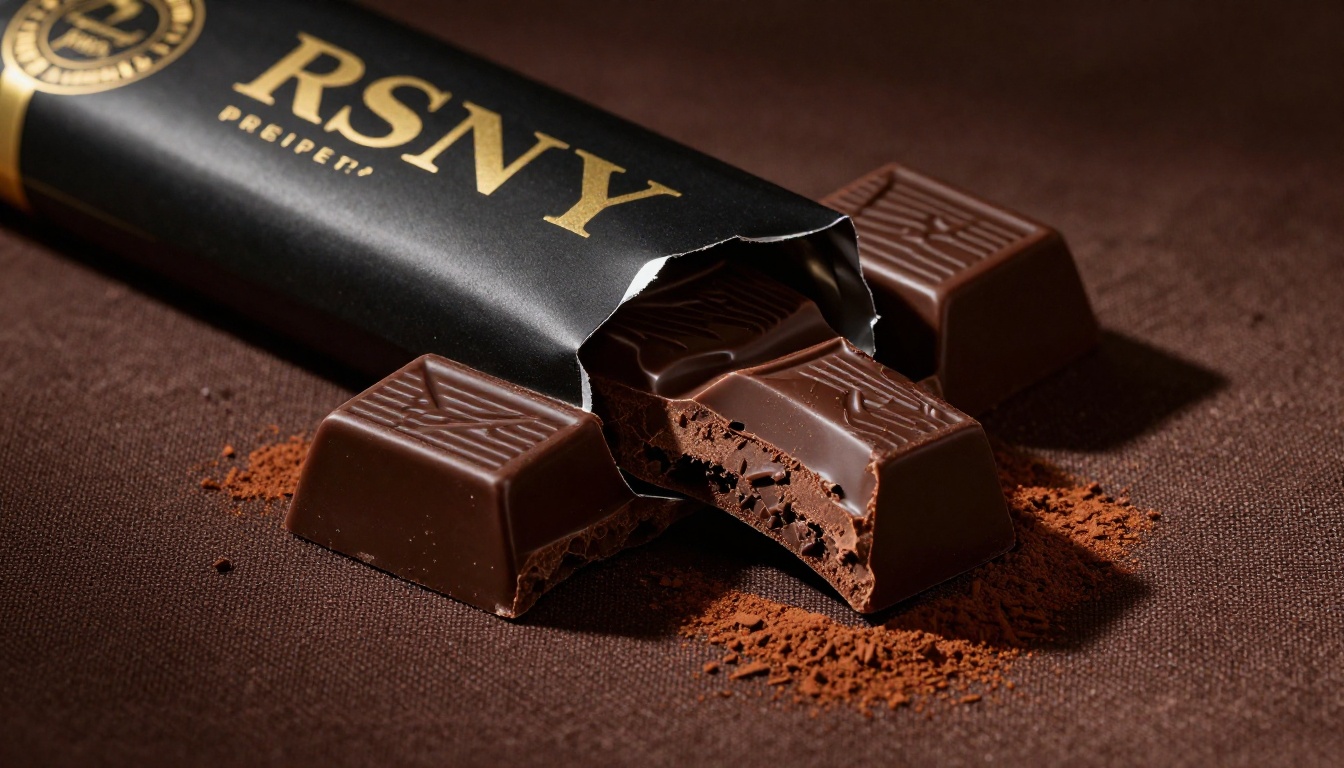
This limitation appeared in every category we tested, and it deserves a direct statement: Seedream 5.5 does not reliably produce legible text on product labels or packaging.
The model generates convincing label shapes, correct color blocks, and approximate typographic structures that suggest the presence of type. But the characters themselves are invented letterforms: plausible in visual weight and spacing, but not actually readable as words. For shots where brand name legibility is required (regulatory text on food packaging, ingredient lists on cosmetics, model numbers on electronics), plan to composite the actual label onto the AI-generated product base in post-production.
This limitation is not specific to Seedream 5.5. It is a systematic characteristic of the current generation of diffusion models. Models like Ideogram v4 Quality have been fine-tuned specifically for text accuracy and may be a better choice when legible packaging copy is the primary deliverable rather than a secondary element in an atmospheric shot.
Reflective Surfaces at High Complexity
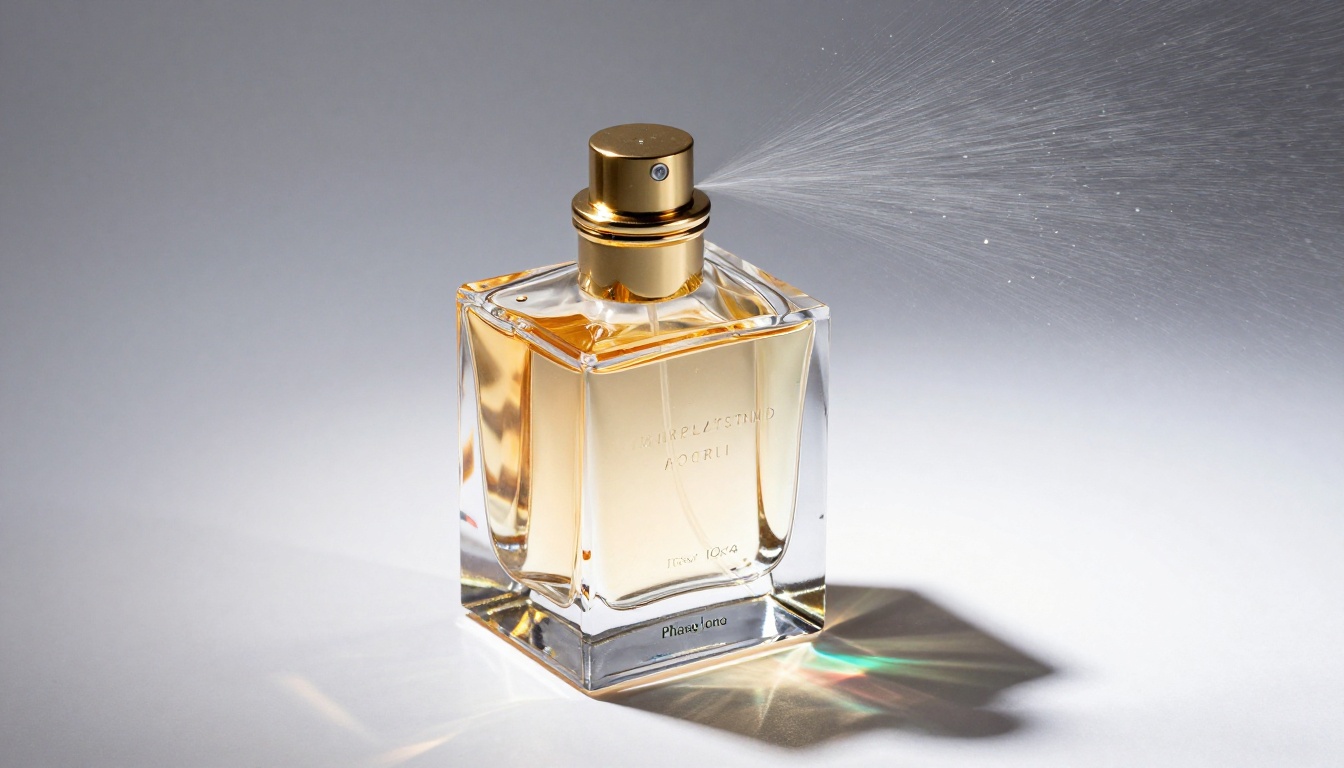
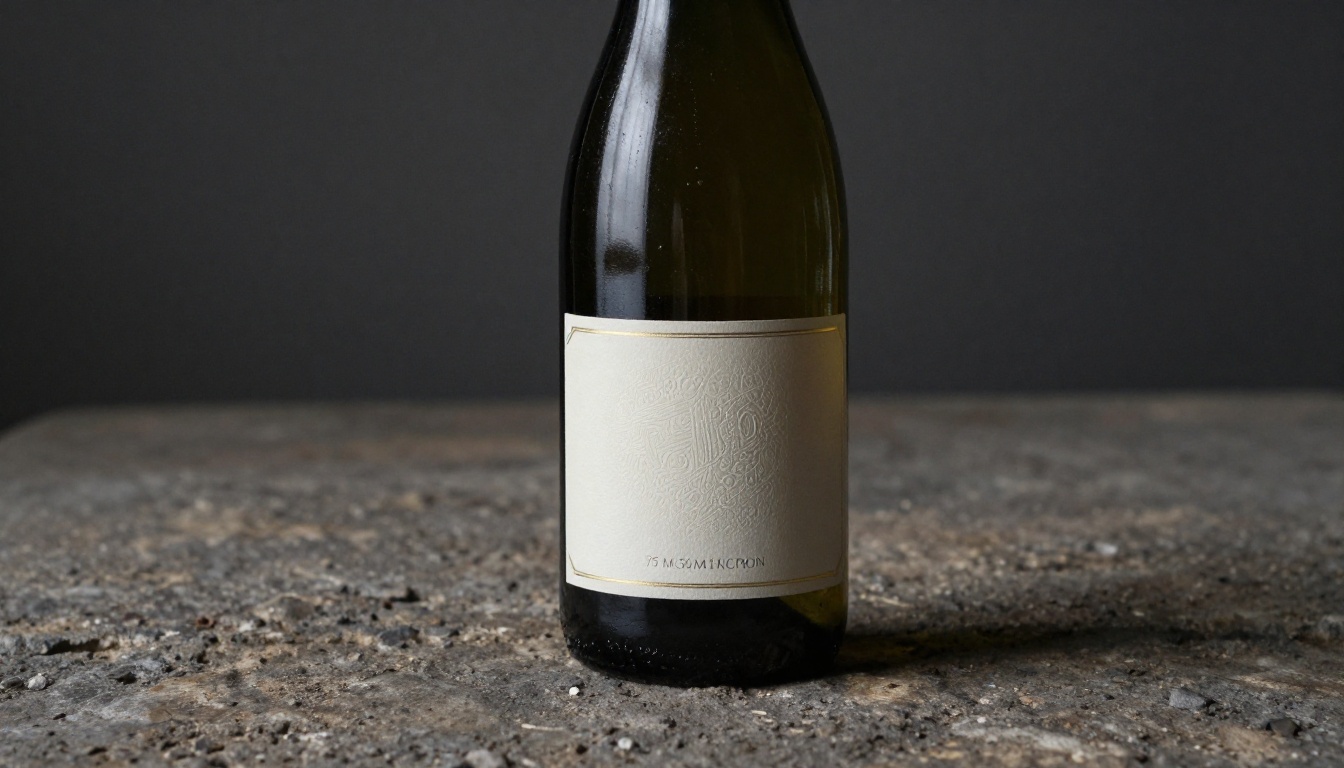
Crystal and highly faceted glass surfaces are Seedream 5.5's other challenge area. Simple glass (the wine bottle, the serum bottle) renders convincingly. But the cut crystal perfume bottle test, with its multiple facets each simultaneously reflecting the studio environment and refracting the label behind the glass, showed artifacts in approximately 30% of median generations.
The artifacts took two consistent forms: refraction angles that did not follow the geometry expected for the stated viewing angle, and label ghosting through the crystal at the wrong apparent scale relative to the viewing distance. In a production context, these errors are visible on inspection.
Practical workaround: For cut crystal and highly complex glass, use Seedream 5.5 to establish the composition, prop styling, and lighting mood. Then either replace the product with a physical shoot or composite a separately-rendered clean glass object into the AI-generated environment. The background and styling Seedream 5.5 produces is often excellent even when the hero product is the weak element.
How to Use Seedream 5.5 on PicassoIA
Seedream 5 Pro is available directly on PicassoIA, giving you access to this model without API configuration or local setup. Here is how to structure your workflow for product photography specifically.
Build Your Prompt in Five Layers
The most effective Seedream 5.5 product prompts follow a layered structure that mirrors how a photographer would brief a retoucher on shot intent:
Layer 1: Product
State the product type, primary material, and any secondary surface materials. "A 100ml frosted glass serum bottle with a matte black plastic pump" is better than "a skincare product."
Layer 2: Surface and Environment
Specify the shooting surface and any props. "Placed on a white Carrara marble surface with natural gray veining" tells the model both color and texture expectation.
Layer 3: Camera
Name the camera body and lens. "Shot on a Phase One IQ4 with a 110mm lens at f/11" constrains the depth of field and apparent perspective.
Layer 4: Lighting
Describe the light source type, position relative to the product, and the effect it creates. "Softbox at 45 degrees from upper left, creating a smooth highlight gradient on the pump face and a soft shadow falling lower-right" is specific enough to reproduce across a product range.
Layer 5: Atmosphere
Close with film stock, ISO, and overall mood. "ISO 100, Kodak Portra 400 film grain, clean and clinical, commercial product photography, 8K."
Prompt Formulas by Product Type
Tested prompt structures for the most common categories:
For cosmetics and skincare:
[Product name and volume] in [primary material] with [closure type], on [surface], [camera] at [angle], [light type] from [direction] creating [highlight description], [film stock], photorealistic product photography, 8K
For electronics:
[Device type] in [color] [material finish], positioned [angle] on [surface], [camera] showing [specific feature detail], [light direction] creating [highlight type] on [specific surface], [film grain], commercial electronics photography, photorealistic, 8K
For glass and liquid containers:
[Container type] in [glass color and quality], [light source] creating [light behavior through the glass], [viewing angle] with [camera and lens], commercial photography, photorealistic, 8K
💡 Workflow tip: Generate 3-5 variations at standard resolution on PicassoIA first to establish composition and lighting. Then run your chosen output through a super-resolution model for the final delivery version. This avoids spending generation time on compositions that do not work before committing to maximum output resolution.
Comparing Models on the Platform
If Seedream 5.5 is the clinical-sharpness option for product photography, the other Seedream versions offer useful stylistic variation for different use cases. Seedream 4 produces slightly softer, warmer results that work well for premium lifestyle shots where strict clinical accuracy matters less than overall mood and warmth. Seedream 3 generates faster and performs well at lower complexity, making it useful for rapid compositional iteration before committing to a final high-detail generation on 5.5.
For campaigns that mix product types across different visual moods, Reve 2.1 and Krea 2 Large offer stylistic differentiation that can separate hero shots from supporting catalog images while maintaining coherence across a campaign. PicassoIA hosts all of these on a single platform, so the comparison between them is a matter of seconds rather than separate API integrations.
Start Generating Your Product Images
The honest picture of Seedream 5.5 for product photography: it is commercially viable for most categories today, with two identified limitations (text legibility and complex crystal refraction) that require specific workarounds rather than model replacement.
For e-commerce teams, this shifts the economics of the work. A model that reliably produces commercial-quality output for cosmetics, electronics, food packaging, fashion, jewelry, and spirits, without a physical studio, without equipment costs, and without a minimum batch size, is a serious production tool. The comparison worth making is not "AI versus a professional photographer." It is "AI for volume, iteration, and rapid concept approval versus a professional shoot for final hero images." Seedream 5.5 earns a strong position in the first role, and in several categories it credibly enters the second.
PicassoIA gives you direct access to Seedream 5 Pro alongside more than 200 other text-to-image models on a single platform. Take one product from your catalog, apply the five-layer prompt formula from this article, and generate it now. The output will tell you more about what this model can do for your specific product type than any general benchmark could. If you want to push output resolution further after finding the right composition, the super-resolution tools on the platform add a significant quality jump without restarting the generation from scratch.


