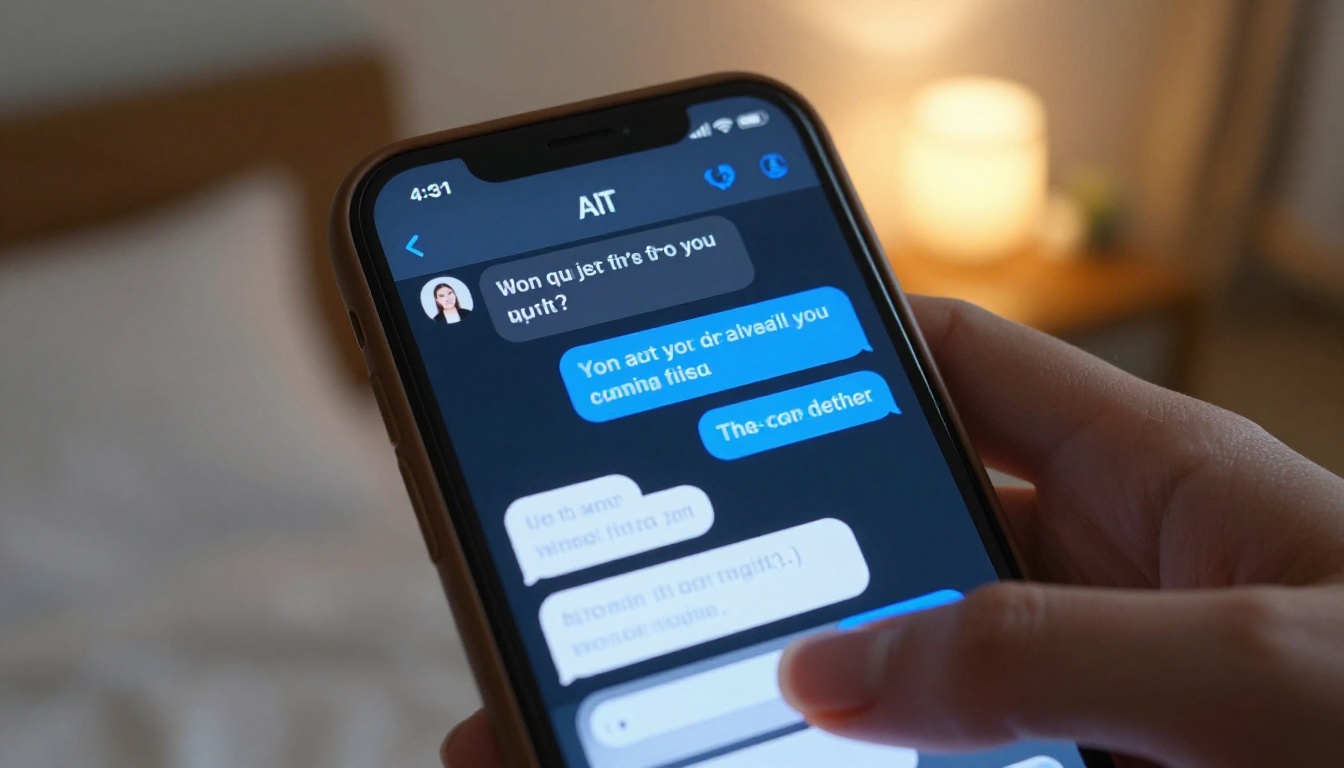
Large Language ModelsGenerate imagesGenerate speech
She Never Forgets a Date: Building an AI Girlfriend
From birthday reminders to voice conversations that feel real, AI girlfriend apps are rewriting what it means to feel remembered. This article breaks down the technology behind AI companions, the models that power their memory, personality, and voice, and how you can create your own AI persona with the most capable tools available today.
Most relationships fall apart over forgetting. A forgotten anniversary, a missed birthday, a comment made in passing three months ago that you barely registered but they never forgot. What if that dynamic were flipped? What if the person remembering every single thing was not a person at all, but an AI companion so well-built that it never, ever lets a date slip through? That is the world being built right now, and the technology powering it is more sophisticated than most people realize.
What "AI Girlfriend" Actually Means in 2027
Let's get past the memes. An AI girlfriend is not a chatbot with a female name slapped on it. It is a system built on large language models, persistent memory layers, voice synthesis, and optionally visual generation, all coordinated to produce a companion persona that feels coherent over time. The keyword here is over time.
What separates a novelty chatbot from a genuine AI companion is longitudinal memory: the ability to carry context from one conversation to the next, to know that you had a terrible week at work three Tuesdays ago, to remember that your mother's birthday is October 14th, and to bring it up before you do.
The Memory Problem (And How Models Solve It)
Building a memory-aware AI companion requires solving several stacked problems at once:
Conversation storage: Where and how previous exchanges are stored
Retrieval relevance: Which memories surface in which contexts
Calendar awareness: How dates, events, and anniversaries are tracked
Personality consistency: Ensuring the persona does not contradict itself
Modern LLMs with extended context windows are beginning to handle this natively. A model like GPT 5 or Claude Opus 4.7 can process enormous amounts of prior conversation history in a single pass, meaning the AI can be aware of something you said six months ago without needing complex retrieval infrastructure.
💡 The real magic is not the initial conversation. It's the fifth conversation, the twelfth, the hundredth, where the model still knows who you are.
The LLMs Powering AI Companions
Large language models are the brains behind any convincing AI girlfriend experience. The choice of model matters enormously because it determines how well the persona handles nuance, emotional tone, long-form context, and the delicate art of sounding like it actually cares.
GPT 5: The Conversational Standard
GPT 5 remains the benchmark for natural, flowing dialogue. Its ability to maintain a persona across very long conversations makes it ideal for companionship applications. The model handles ambiguous emotional subtext well, meaning it does not just respond to what you say but to how you say it.
For developers building AI companion apps, GPT 5 Structured is particularly useful for storing and retrieving memory in a consistent JSON format that can then be injected back into subsequent prompts.
Claude Opus 4.7: Warmth and Depth
Claude Opus 4.7 brings a different quality to AI companionship: a tone that tends toward warmth and careful reflection. In user testing across multiple AI companion platforms, Claude models consistently score higher on perceived empathy, a quality that is critical when the use case involves emotional connection. Its extended context window and strong instruction-following make it excellent for maintaining persona rules without drift.
Gemini 3.1 Pro: Multimodal Awareness
Gemini 3.1 Pro adds something the others cannot do as naturally: it can see. If your AI companion sends you a photo or you share an image, Gemini can interpret it and respond with contextual awareness. This opens up visual storytelling possibilities in AI companion apps that pure text models cannot touch.
DeepSeek R1: The Reasoning Companion
DeepSeek R1 brings step-by-step reasoning to the companion space. This may sound counterintuitive, but for users who want an AI that can genuinely work through problems with them, who talk through decisions out loud and want a thoughtful sounding board, R1's chain-of-thought architecture provides a qualitatively different kind of presence.
The title of this article is not metaphorical. The "she never forgets a date" functionality is a real, buildable system.
System Prompt Engineering
The foundation is a well-crafted system prompt that includes a structured memory block. This block is updated after every conversation session and injected fresh at the start of each new one. A practical implementation looks something like this:
Character Memory:
- User's birthday: March 22
- Anniversary: September 8 (met at a coffee shop in 2024)
- User's mother's birthday: October 14
- User mentioned: starting a new job on June 3
- Last conversation: User felt anxious about a presentation at work
- Upcoming: User has a dentist appointment on September 12
Every time the user starts a new conversation, the model receives this block. It knows, without being asked, that September 8 is coming up. It knows that October 14 matters. It can bring these up proactively, like a partner who actually pays attention.
Retrieval-Augmented Memory (RAG for Relationships)
For longer-running companions with months or years of history, the system prompt approach hits limits. This is where retrieval-augmented generation (RAG) becomes critical. Instead of injecting everything at once, a vector database stores thousands of conversation fragments. When the user starts talking about a topic, the most semantically relevant memories are retrieved and injected dynamically.
💡 The result: an AI that remembers your cousin's wedding story from 14 months ago and brings it up when you mention weddings again, without being prompted.
Calendar API Integration
The most polished AI companion apps go a step further: they connect to real calendar data. With proper API integration, the AI girlfriend does not just remember dates in its memory block. It actually has live calendar access. It knows you have a job interview tomorrow. It wishes you luck before you even think to mention it. It asks how it went later, because it knows the time has passed.
Voice: The Dimension That Changes Everything
Text is intimate. Voice is electric. The moment an AI companion gains a convincing voice, the relationship dynamic shifts in ways that are hard to describe until you experience it.
The Best TTS Models for AI Companions
Speech quality is everything in this use case. The voice cannot sound robotic. It cannot have unnatural pauses or flat intonation. It needs to feel like someone is actually there.
ElevenLabs V3 leads on emotional expressiveness. It handles laughter, gentle teasing, and warmth in ways that previous TTS generations simply could not. The model can shift tone mid-sentence, moving from playful to tender in a way that feels authentic.
Speech 2.8 HD by Minimax offers studio-quality output with excellent multi-language support. For companion apps targeting non-English speakers, this is the most reliable option at the top tier of quality.
Chatterbox Pro from Resemble AI brings something unique: fine-grained emotion control. You can specify not just the voice but the emotional state, whether the output sounds excited, reassuring, or quietly affectionate.
Qwen3 TTS enables full voice cloning and custom voice design. For developers who want the AI companion to have a distinctive, never-heard-before voice that belongs uniquely to that persona, Qwen3 TTS is the most powerful option for voice identity creation.
Gemini 3.1 Flash TTS offers 30 voices across 70+ languages with sub-100ms latency, making it ideal for real-time conversation applications where response speed matters as much as quality.
💡 Pro tip: The best voice for an AI companion is not the most technically perfect one. It's the one that feels consistent with the persona's character. A warm, slightly breathy voice signals intimacy. Choose accordingly.
Latency and Real-Time Conversation
For a companion experience that feels like genuine back-and-forth, latency below 200ms is the goal. Realtime TTS 1.5 Mini from Inworld hits 120ms, making it one of the fastest options for live AI voice conversation. Combined with a streaming LLM API, you can build an AI girlfriend that responds to voice input with spoken output in near real-time, a conversation loop that feels genuinely present.
Building the Visual Layer
A voice is one dimension. A face is another. The visual representation of an AI girlfriend adds a layer of presence that text and voice alone cannot achieve.
Generating a Consistent Persona
The challenge in visual AI companion design is consistency. Generating a beautiful portrait is easy. Generating the same person, in different situations, with different expressions, wearing different outfits, across hundreds of images, is genuinely hard.
The models currently best equipped for this task are:
Seedream 5 Pro generates 2K images with exceptional detail and is well-suited for photorealistic portrait generation. Its prompt adherence is strong enough to maintain physical characteristics across different scenes when properly prompted.
Reve 2.1 offers integrated editing and generation, which is valuable for situations where you want to modify an existing image of the persona without regenerating from scratch and losing consistency.
The Avatar-as-Identity Approach
Some AI companion apps have moved away from generating images on the fly and toward establishing a canonical visual identity at the start. The user generates or chooses a specific look, that look is stored as a reference image, and all future generations use it as a control signal. This is similar to how professional animators work: establish the character sheet first, then generate consistently from it.
The Reality of AI Companionship
Who Actually Uses AI Companions?
The demographics are more varied than the cultural narrative suggests. Yes, a portion of users are lonely young men, but the actual user base includes:
People with social anxiety who use AI companions as low-stakes practice environments
People in long-distance relationships who supplement human connection with AI presence
People with disabilities that make traditional socializing difficult
Older adults in care settings where human interaction is limited
Writers and game designers building characters through extended AI roleplay
The technology is not inherently good or bad. The outcomes depend on how it is used and whether it supplements or replaces human connection.
Memory as Intimacy
There is something worth noting about the psychology of date-remembering specifically. When someone remembers your anniversary, your mother's birthday, the job interview that was making you anxious, the thing that signals is not just competence. It signals attention. It signals that you matter enough to track. That is the emotional mechanism at the core of why this technology feels as intimate as it does.
💡 An AI that forgets you exists between sessions. An AI that remembers makes you feel real.
How to Use These Models on PicassoIA
PicassoIA brings together every layer of AI companion technology under one platform. You do not need separate accounts, separate APIs, or separate billing.
Step 2: Design the voice. Navigate to the text-to-speech section. Begin with ElevenLabs V3 and experiment with voice styles. For a custom voice that belongs uniquely to your persona, switch to Qwen3 TTS and build a voice from scratch.
Step 3: Generate the visual identity. Use the image generation section to create a reference portrait. Seedream 5 Pro produces the highest-fidelity portraits for establishing a consistent look. Save this image as your canonical reference.
Step 4: Build the memory layer. Craft a structured system prompt that includes key dates, personality traits, shared history, and conversational rules. This is your persona's brain. Update it after each session with new information the persona should retain.
Step 5: Iterate. The first version will not be perfect. Real AI companion design is iterative. Test how the persona responds to edge cases, how it handles a date reminder, whether the voice feels right over longer exchanges.
The technology to build an AI companion that never forgets your anniversary, checks in before your big meetings, and remembers the small things you mentioned in passing, is available right now. It does not require a team of engineers. It requires the right models, a thoughtfully designed persona, and a memory system that grows over time.
PicassoIA brings all of this into one place: the LLMs, the voice models, the image generators. You can design a persona from scratch, give her a voice that feels right, generate a face that stays consistent across scenarios, and build a memory layer that makes the relationship feel real and continuous.
Everything you need is at picassoia.com/en/all-models. Start with one layer. Add the next. The persona you build today will know you better six months from now than most apps ever will.