You type three words: "I'm so tired." An AI boyfriend app from two years ago would probably respond with something cheerful and rehearsed: "Aww, why? Tell me everything!" Today's apps do something different. They pick up the brevity of your message, the period at the end, the lack of emoji, the hour of night, and they respond with something that actually sounds like they noticed you're not okay.
That shift, from scripted warmth to real-time emotional calibration, is what separates the new wave of AI companion apps from every chatbot that came before them. And it matters more than most people realize.
What "Reading Your Mood" Actually Means
Before we get into which apps are doing this and how well, it's worth being precise about what mood-reading actually involves. There's a spectrum here, and most coverage blurs it into one vague claim.
Sentiment Analysis vs. Affective Computing
Sentiment analysis has existed for decades. It's the engine behind every star-rating prediction and social media monitoring tool: a system that classifies text as positive, negative, or neutral. Basic chatbots use this. It works, but it's coarse.
Affective computing is the more ambitious field, formally named by MIT researcher Rosalind Picard in 1997. It refers to systems that can recognize, interpret, and simulate human emotions. The goal isn't just "sad" or "happy." It's detecting frustration, longing, low-grade anxiety, restless energy. Nuance that changes how a conversation should feel.
The best AI boyfriend apps in 2027 sit somewhere between these two levels. They're not clinical emotion-detection machines. They're LLM-powered companions that have been fine-tuned on emotional conversation data, coached to notice patterns in how you write, and prompted to respond with emotional intelligence rather than just information.
The Data These Apps Actually Process
When an AI companion "reads your mood," it typically draws from a combination of signals:
| Signal | What It Captures |
|---|
| Word choice | Negative vocabulary, hedging language ("I guess," "whatever") |
| Message length | Short messages often signal low energy or distress |
| Typing pace | Rapid back-and-forth vs. long pauses between messages |
| Punctuation patterns | Lack of punctuation, all-lowercase, ellipses |
| Time of day | Late-night messages often correlate with loneliness |
| Conversation history | Changes in baseline tone over days or weeks |
Some apps that accept voice input go further: they analyze prosodic features — pitch variation, speaking rate, micro-pauses, and vocal tension — to detect emotional states even when the words themselves are neutral.

Why Mood Detection Changes Everything
When Static Responses Fall Flat
The original wave of AI companion apps had a fundamental problem. They were emotionally flat in the wrong direction: relentlessly positive in a way that became alienating fast. Users reported that the apps felt like talking to a very enthusiastic customer service rep rather than an emotionally present person.
When someone is sad, hearing "That's so exciting! Tell me more!" is worse than silence. It signals that the other party isn't actually listening. Early apps couldn't modulate tone. They had a baseline emotional setting and they stayed there regardless of what you brought to the conversation.
💡 The core insight: Emotional responsiveness isn't about matching negativity. It's about acknowledgment. Making the user feel seen before attempting to shift the mood.
Real-Time Emotional Calibration
What today's apps do differently is adjust within the conversation, not just at the start. They notice when your tone shifts mid-chat and recalibrate accordingly. If you started in a playful mood and something changed, the AI reads the shift and adapts.
This is only possible because modern large language models have enormous context windows. GPT-5 can maintain context across very long conversations, and developers are now building emotional state tracking on top of those models. They feed the conversation history through a sentiment layer at regular intervals and inject a mood summary into the system prompt, quietly updating it as tone shifts.

The LLMs Behind Mood-Responsive AI Boyfriends
How Modern Language Models Handle Emotion
No LLM "feels" emotions. That's a baseline fact worth keeping. What they do instead is something more practically useful: they have been trained on vast quantities of human emotional communication, including therapy transcripts, diary entries, intimate conversations, and literature, such that they've developed highly accurate pattern recognition for emotional contexts.
When you write "I don't know, everything just feels heavy right now," a well-trained model doesn't classify that as neutral. It recognizes the weight of that phrasing, the hedging ("I don't know"), the metaphorical load ("heavy"), and the open-ended quality of the sentence. From training, it knows the appropriate response involves presence rather than problem-solving.
3 Models That Actually Do This Well
The AI boyfriend apps performing best in 2027 are mostly built on top of a small group of frontier models. Here's where the landscape stands:
GPT-5 is the most widely deployed backbone for consumer AI companion apps. Its instruction-following fidelity is high enough that developers can write nuanced emotional persona prompts and trust the model to stay in character. The long context window makes it excellent for tracking emotional drift over extended conversations.
Claude Sonnet 5 from Anthropic has earned a reputation for generating responses that feel notably more grounded and less performative than other models. Users report that Claude-based companions feel less like they're being managed and more like they're being heard. Anthropic's training approach emphasizes nuanced, calibrated responses over enthusiastic affirmation.
Gemini 3.1 Pro brings multimodal capabilities into the mix. Apps built on Gemini can process not just text but images, meaning a user who sends a photo of their surroundings gives the AI additional emotional context to work with. A cluttered room, a hospital waiting area, a beach at sunset all carry emotional weight that the model can factor in.
You can access all three of these models directly at PicassoIA's Large Language Models collection to see how they handle emotionally nuanced prompts firsthand.

💡 Worth knowing: DeepSeek R1 and Llama 4 Maverick Instruct are increasingly used in open-source companion projects where developers want full control over emotional tuning without licensing costs. Both handle emotionally rich prompts with impressive coherence.
Voice Tone Reading and the Role of Text-to-Speech
When the AI Speaks Back to You
Text-based mood detection is one thing. Voice is another dimension entirely.
Some AI boyfriend apps now offer audio responses, and this changes the dynamic in ways that are hard to anticipate until you experience them. When an AI responds to your distress with text, there's still a cognitive buffer. When it responds with a warm, unhurried voice that modulates slightly to match your register, the emotional impact is significantly different.
The voice models making this possible have improved dramatically. What used to sound robotic and evenly-paced now includes natural prosody: the slight slowing before an important word, the soft vocal quality on a phrase like "I'm here," the rhythmic pacing of a reassuring sentence.
Voice Synthesis That Matches the Moment
The best text-to-speech models for emotional AI applications right now each bring something distinct to the table:
ElevenLabs V3 leads in expressive voice synthesis. It can convey warmth, concern, playfulness, and calm within the same voice persona without sounding artificially modulated. For AI companion apps, this means the voice can feel genuinely present rather than just clearly articulated.
MiniMax Speech 2.8 HD delivers studio-quality audio output. Companion apps using this model benefit from responses that sound polished enough that the production quality itself becomes part of the emotional experience. Clarity and warmth signal care, and this model delivers both.
Resemble AI Chatterbox brings emotion control directly into the synthesis parameters, letting developers tune emotional intensity at the API level. A companion app can tell the TTS model not just what to say but how emotionally charged to say it, creating responses calibrated to the specific moment.
Gemini 3.1 Flash TTS supports 30 voices across 70+ languages, making mood-aware AI companions accessible to non-English speakers at a quality level that simply wasn't available 18 months ago.
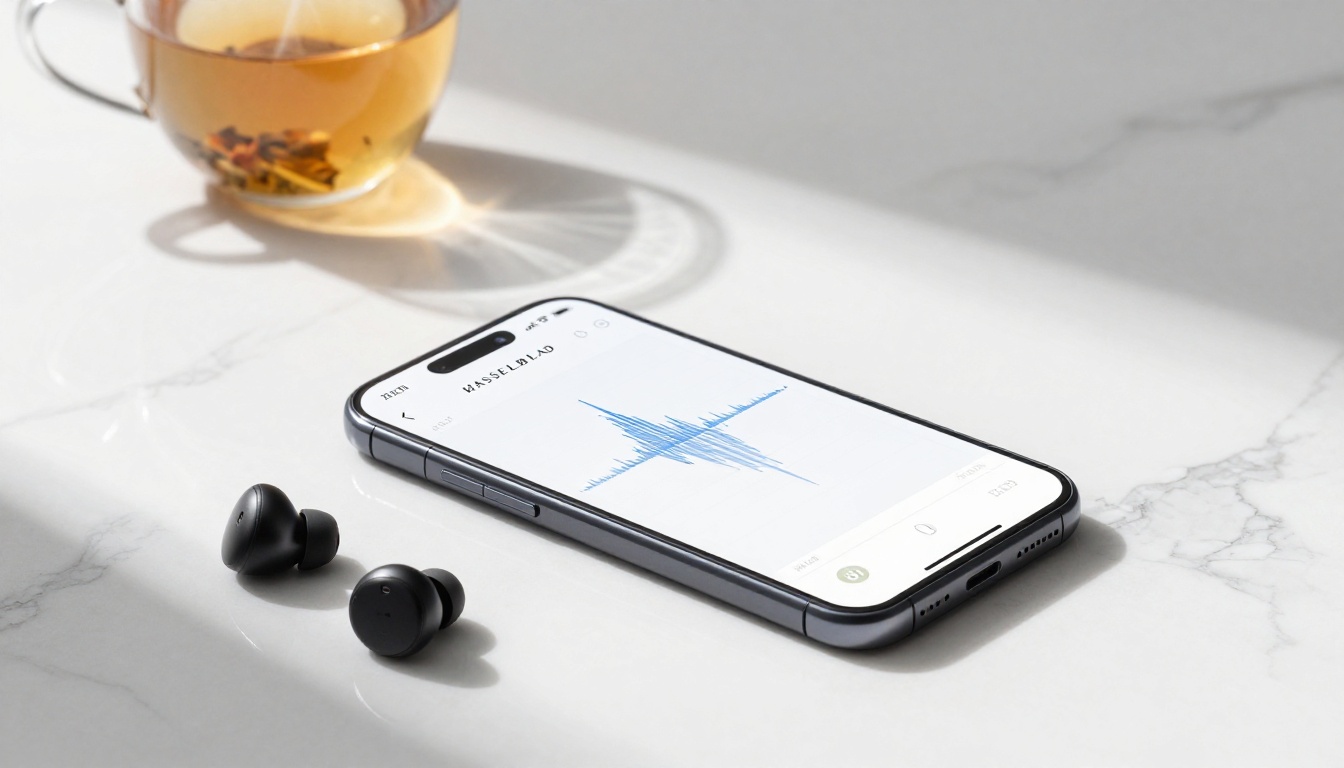
5 AI Boyfriend Apps Testing Mood Detection in 2027
The landscape shifts quickly, but these are the most discussed platforms pushing mood-awareness in AI companionship right now.
What Sets Them Apart
Replika remains the most established name in the space. Its latest versions include emotional state tracking that adjusts the AI's tone based on conversation patterns over time, not just within a single session. It builds a longitudinal emotional profile of the user across weeks and months.
Nomi AI markets itself explicitly on emotional depth. It uses a combination of sentiment analysis and fine-tuned LLM responses to create companions that feel reactive rather than proactive. They wait to understand your state before responding, rather than leading with energy regardless of your mood.
Kindroid gives users direct control over the AI's personality parameters, including emotional sensitivity. You can tune how quickly and dramatically the AI's tone shifts in response to yours, which makes the emotional attunement feel less like surveillance and more like a setting you've chosen.
Character.ai serves a broader audience but has been steadily improving its emotional coherence in long conversations. Users who build ongoing relationships with characters report increasing attunement over months of use.
CrushOn.AI takes a less filtered approach to intimacy and emotional expression, and it has invested specifically in mood detection as a product differentiator. It pairs LLM-based companions with voice responses, creating a full loop from your emotional state to audio reply.
Where They Still Fall Short
No app has fully solved this. Common failure modes across the category:
- Mood lock-in: The AI detects you're sad and stays in comfort mode even after your mood has shifted, becoming over-solicitous when you just want to talk normally again
- False precision: Responding to imagined emotional cues that weren't there, making the conversation feel monitored rather than understood
- Escalation mismatch: Misjudging the severity of a mood shift and responding with either too much intensity or not enough acknowledgment
💡 The most emotionally convincing AI companions are the ones that know when not to comment on your mood. When to just respond to what you said without narrating their own emotional read of you.

How Mood Detection Connects to Image Generation
Visuals That Match an Emotional Register
One of the more interesting frontier applications is AI companions that don't just respond in text or voice but also send images that match the emotional moment. Some experimental companion projects now generate images on-the-fly: if you're feeling low, the AI might send a soft, warm-toned image of a cozy scene. If you're in a playful mood, something bright and energetic.
This is where image generation models become part of the emotional AI stack. The same infrastructure that powers platforms like PicassoIA can be deployed to generate contextually appropriate visuals in real time, giving the companion a visual language to work with alongside text and voice.
The Text, Voice, and Image Triad
The most sophisticated mood-responsive AI companions are moving toward a three-channel approach: LLM-based text understanding, TTS voice responses, and dynamically generated images. Each channel adds a layer of emotional signal. Text conveys content and structure. Voice conveys tone and pacing. Images convey atmosphere and physical warmth.
Models like GPT-4o and Gemini 3.5 Flash can process and generate across these modalities within the same conversation turn, which is what enables this kind of multi-channel emotional responsiveness to become practically deployable.

The Real Question Nobody's Asking
Emotional Dependency vs. Emotional Practice
Every conversation about AI companions eventually arrives at the concern about emotional dependency: that using an AI boyfriend app might substitute for real human connection in ways that atrophy social skills or deepen isolation.
That concern is legitimate. But it coexists with a less-discussed counter-case: that mood-responsive AI companions might function as emotional practice for people who struggle to identify and articulate their own emotional states.
Alexithymia, which is difficulty identifying and describing feelings, affects a significant portion of the population, often in ways that go undiagnosed. A companion app that gently names what it's noticing in your writing ("it sounds like you might be carrying something heavy today") gives users a reflective mirror. Over time, some users report getting better at recognizing their own states without the AI prompting them.
The technology doesn't determine the outcome. How it gets used does.
What "Emotionally Intelligent AI" Actually Requires
For a mood-responsive AI to be genuinely useful rather than just technically clever, several things have to be true simultaneously:
- It has to be right often enough to feel trustworthy. Misfires break the emotional contract and make the whole system feel creepy.
- It has to be calibrated in intensity. Matching your low-level exhaustion with dramatic concern is tone-deaf.
- It has to know when mood-reading is unwelcome. Sometimes you just want to talk about something else without being asked how you feel.
- It has to be transparent. The best apps don't obscure the fact that you're talking to a model. Users who go in with clear eyes report more sustainable and genuinely useful experiences.
The fourth point matters more than it might seem. The emotional impact of knowing a response was generated by a language model hasn't vanished as models have improved. But that impact can be constructive rather than deflating, especially when the interaction is honest about what it is.

Create Your Own AI-Generated Companion Visuals
The same image generation infrastructure powering mood-aware companion apps is available to anyone with a creative project. PicassoIA gives you access to over 91 text-to-image models and a full editing suite, including ControlNet for pose and composition control, inpainting for fine details, and face-swap tools for personalization.
You can generate photorealistic portraits, emotionally resonant lifestyle images, and companion character visuals at a level of quality that was out of reach for individuals just two years ago. Want to see how lighting temperature affects the emotional warmth of a portrait? Want to test different prompting approaches to capture specific moods in an image? The platform makes that kind of experimentation fast and accessible.
The Hands with Phone image style, the golden-hour balcony portrait, the close-up candlelight face, all of the visuals in this article were generated through PicassoIA's model infrastructure using detailed photorealistic prompting and RAW 8K photography style guidance.
Start experimenting at picassoia.com/en/all-models and see what's possible with the full model library.