If you've been searching for a Sora 2 Pro NSFW video maker with no filter, you're not alone. Millions of creators hit the same wall every day: they open the most hyped AI video tool on the internet, type an adult prompt, and get an error. What actually happens inside Sora 2 Pro's content restrictions, where real uncensored AI video creation lives, and how to build a full NSFW video production pipeline using tools that don't block you at every step, that's what this article is about.
What Sora 2 Pro Actually Does
Sora 2 Pro is OpenAI's flagship video generation model. The output quality is genuinely impressive: smooth motion, realistic textures, coherent 5-20 second clips with cinematic visual fidelity. But it ships with one of the strictest content policies in the AI space. Any nudity, sexual content, or suggestive material gets blocked before the model ever starts generating.
This isn't a setting you can toggle off. The filter sits at the API level, not in the interface. No matter where you access Sora 2 Pro, whether through ChatGPT, the direct API, or any third-party wrapper claiming "no filter access," the same restrictions apply. The "no filter Sora" tools circulating online are either fake screenshots, short-lived jailbreak attempts that get patched within days, or simply misrepresented products capitalizing on search traffic.
The Real Filter Stack
OpenAI uses a multi-layer approach to content filtering. Prompt classification happens at input, a moderation layer runs during generation, and post-generation safety checks scan the output before it reaches you. Adult content triggers rejection at stage one. Even prompts with suggestive language but no explicit content are frequently flagged and refused.
The model itself was never trained on explicit material. So even if you could theoretically route around the safety layer, the underlying model has no capability to produce what you're looking for. This isn't suppressed ability, it's genuinely absent ability. The model was architecturally never designed for it.
Why People Keep Searching for Sora NSFW Alternatives
The demand for uncensored AI video isn't going away. Content creators, independent artists, adult entertainment producers, and OnlyFans professionals all have real, legitimate needs for creative tools that don't pre-screen their prompts. The platforms that meet this demand operate entirely outside OpenAI's ecosystem, with different model architectures, different training datasets, and different content policies written by different people.
The good news: the alternatives in 2027 are genuinely capable. The motion quality, photorealism, and overall output have caught up to the mainstream tools in most measurable ways.
The uncensored AI video space in 2027 is more developed than most people realize. The tools that actually work are built on open-weight models or privately trained architectures, hosted on infrastructure that isn't subject to corporate content policy enforcement, and accessible without the kind of moderation overhead that defines tools like Sora.
The workflow that produces the best results for most creators isn't direct text-to-video. It's an image-first pipeline: generate a high-quality NSFW image using a model that doesn't block adult content, refine it until it's exactly right, then convert that image to video. This two-step process gives you precise control over appearance, composition, and lighting before any motion is added.
💡 The image-to-video pipeline gives you dramatically better results than direct text-to-video for adult content. You control the first frame precisely, which determines the quality of everything that follows.
What to Look For in an Uncensored AI Platform
Not all platforms are equal. The factors that actually matter for NSFW video production:
| Feature | Why It Matters |
|---|
| Uncensored model access | No content filtering blocking adult themes |
| Unlimited generations | No daily cap cutting off your workflow mid-session |
| Image-to-video pipeline | Convert NSFW still images directly to motion clips |
| Model variety | Multiple quality and style options for different looks |
| Private prompt processing | Your inputs aren't routed through external moderation |
| Upscaling tools | Get from 480p generation to 4K distribution quality |
| Audio addition | Complete the final product without leaving the platform |
PicassoIA operates exactly this way. The platform hosts models with adult content capabilities, processes generations without external moderation, and offers unlimited generation tiers so you're not watching a credit counter while you work.
Starting With NSFW Images
Before any video gets made, you need a strong source image. Video generation quality is almost entirely a function of the source frame quality. A blurry, anatomically inconsistent, or poorly composed source image produces a blurry, inconsistent video. The time you invest in getting the image right pays back exponentially in the video stage.

Seedream 4.5 for NSFW Content
For adult content image generation on PicassoIA, Seedream 4.5 is currently the strongest model available. Developed by ByteDance, it produces photorealistic human figures with accurate anatomy, consistent skin tones across the frame, and natural lighting that holds up when converted to video.
What makes Seedream 4.5 stand out specifically for NSFW work:
- Anatomical accuracy: Realistic proportions, no merged or distorted body parts
- Lighting realism: Skin interacts with light in a physically plausible way
- Prompt adherence: Complex descriptions with specific poses, outfits, and environments are followed closely
- Resolution output: High-resolution base output compatible with further upscaling
- Generation speed: Outputs complete in under 20 seconds for most prompts
💡 For best results with Seedream 4.5, describe your subject's outfit, pose, environment, and lighting all in the same prompt. "Woman in red silk dress, sitting on edge of bed, soft morning window light from left" beats "attractive woman" by a margin that's not even close.
One important note: do not use Seedream 5 Lite for NSFW content. That model applies content filtering for adult themes and will block or water down your prompts. Seedream 4.5 is the version to use for unrestricted generation on PicassoIA.
PicassoIA Image Editor Pro for Unlimited Generations
PicassoIA Image Editor Pro is worth highlighting separately from other models. This is the platform's own model, built for high-volume creative work. It offers unlimited generations with no daily cap, making it the right choice when you're producing content at scale.
Key advantages for NSFW production:
- Unlimited generations: No credit drain or daily reset frustration
- Inpainting: Fix specific areas without regenerating the full image from scratch
- Outpainting: Extend your composition beyond the original frame edges
- Style control: Photorealistic output optimized for human subjects
- NSFW capable: No content filter blocking adult themes
For creators who need volume, whether you're producing dozens of source images for a batch video project or iterating on prompt variations until you hit exactly the right look, Image Editor Pro removes the ceiling entirely. You can run PicassoIA Image alongside it to compare outputs before committing to a visual style for a larger project.
Prompt Patterns That Consistently Work
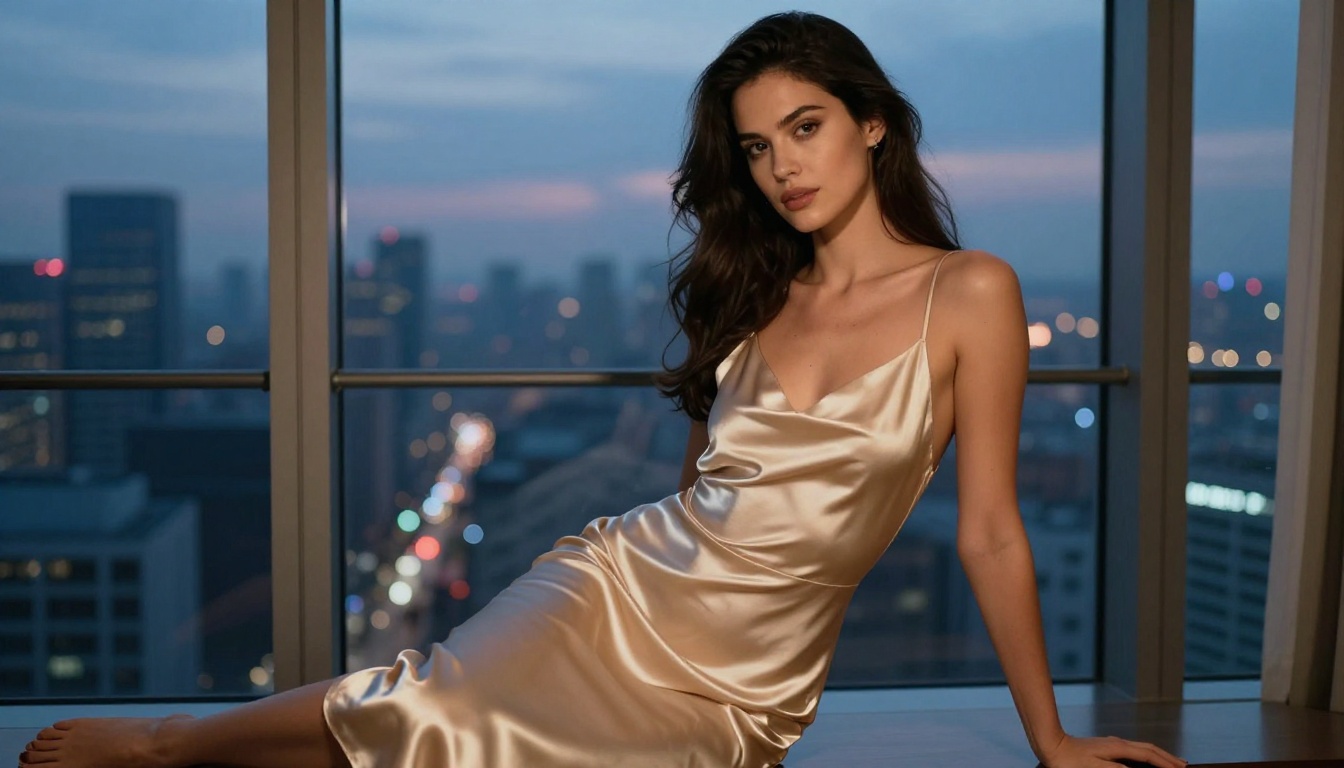
The gap between a mediocre AI image and a genuinely impressive one almost always comes down to prompt specificity. The patterns that produce the best results for photorealistic NSFW content:
Camera and lens:
Specify the lens used: "85mm f/1.4 prime lens," "135mm f/2.0 telephoto," "50mm f/1.8." This single addition dramatically shifts the realism of the output.
Film stock:
Name a specific film stock: "Kodak Portra 400 film grain," "Fuji Velvia 50," "Ilford HP5 push processed." Models respond to these with distinct color and texture treatments.
Lighting direction:
"Volumetric morning light from the left window," "single key light at 45 degrees from camera right," "backlit by setting sun creating rim light." Lighting specificity produces the most cinematic results.
Skin texture:
"Realistic pore detail, natural skin texture, subtle warmth" tells the model to render skin photorealistically rather than in the smoothed-out way that signals AI generation immediately.
Converting Images to NSFW Videos
With a solid source image, the video conversion step brings the content to life. PicassoIA's image-to-video pipeline uses your static image as the first frame and generates realistic motion from that starting point.

How to Write Effective Motion Prompts
The motion prompt you write for image-to-video works differently from a static image prompt. Instead of describing what the scene looks like, you're describing what changes over 5 seconds.
Motion prompts that work:
- "Hair moves gently in a light breeze, subject shifts weight slightly, slow camera push-in toward face"
- "Fabric drapes and settles naturally, subject turns head toward camera, warm light flickers softly"
- "Subject breathes naturally, chest rises and falls, camera performs a slow clockwise orbit at constant distance"
Motion prompts that don't work:
- "Sexy," "beautiful," "make it move" (too vague for the model to follow)
- Multiple conflicting actions in the same clip
- Actions requiring scene changes or character teleportation
💡 Think of the motion prompt as a 5-second shot description for a cinematographer, not a general description of what you want. Specific camera movements and specific body motions produce far better results than general aesthetic requests.
Editing NSFW Videos After Generation
Raw AI video clips almost always need post-processing. PicassoIA's video editing suite handles this without requiring you to export to desktop software.
The most useful tools for NSFW video work specifically:
Wan 2.7 Videoedit: Text-based video editing. Type what you want changed and the model rewrites that section. Best for fixing visual inconsistencies in an otherwise good clip without regenerating from scratch.
Kling o1: Another text-driven rewriting tool with strong style consistency across edits. Good when you're making multiple passes on the same clip and need the visual treatment to stay stable.
LTX 2 Retake: Targets specific sections of a video for localized rewriting. If one moment in your 5-second clip doesn't look right, Retake fixes that segment without touching the rest of the clip.
Lucy Edit 2: Real-time video editing with text instructions. The fastest iteration loop for making style adjustments across a clip.
Gen 4 Aleph by Runway: Strong for restyling clips with a different visual treatment while keeping the underlying motion intact. Use this when the action is good but the aesthetic isn't quite right.
Upscaling to 4K for Distribution
AI-generated video at 480p looks acceptable on mobile but falls apart on any larger screen. For content you're distributing, selling, or posting to platforms with quality expectations, 4K is the standard.
Crystal Video Upscaler: Specialized in recovering fine detail during upscaling. Skin texture, hair strands, and fabric weave all benefit from its processing. Reach for this when the source video has good motion but needs sharper visual detail.
Video Upscale by Topaz Labs: Topaz Labs' model, widely considered the industry standard for video upscaling. Handles noise reduction and sharpening simultaneously. Outputs at 4K and supports 120fps output for ultra-smooth playback.
Upscale v1 by Runway: 4K upscaling with a focus on motion smoothness over maximum sharpness. Better choice for clips with fast motion where motion artifacts are the bigger concern.
💡 Always edit first, then upscale. Running a clip through Kling o1 or Wan 2.7 first and then upscaling to 4K gives cleaner results than upscaling first and then trying to edit at high resolution.
Adding Audio to NSFW Video
A silent video clip is half a finished product. PicassoIA's audio tools add realistic sound without requiring you to leave the platform or open separate audio software.
Video To SFX v1.5: Analyzes your video visually and automatically generates synchronized sound effects matched to what's happening on screen. Rustling fabric when clothing moves, ambient room tone, natural breath rhythms, it reads the visual content and creates audio that fits what's actually in the clip.
MMAudio: Generates original background music tracks based on the mood and pacing of your video. Describe the vibe you want and it produces a track that sits under the action without competing with it.
Video Audio Merge: If you already have audio you want to use, whether your own music or licensed tracks, this tool handles replacing or layering existing soundtracks cleanly.
Building a NSFW Video Production Pipeline
Putting all of this together into a repeatable workflow:
The Full Production Stack
| Step | Tool | Estimated Time |
|---|
| Generate source images (batch) | Seedream 4.5 or Image Editor Pro | 10-20s per image |
| Refine with inpainting | PicassoIA Image Editor Pro | 10-20s per fix |
| Convert best images to video | Image-to-video pipeline | 60-120s per clip |
| Edit problem sections | Wan 2.7 Videoedit or Kling o1 | 30-60s per pass |
| Upscale to 4K | Crystal Video Upscaler or Topaz | 60-180s per clip |
| Add audio | Video To SFX v1.5 or MMAudio | 30-60s per clip |
| Export final clip | Ready for distribution | Instant |
Total time per finished 4K clip with audio: roughly 6-10 minutes from blank prompt. That's one person, no crew, no set, no equipment.
Working Smarter With Batch Generation
One of the biggest mistakes new AI video creators make is generating one image, converting it immediately, seeing it doesn't work, and repeating. This is the slowest possible workflow.
The faster approach: Generate 15-20 source images in one session. Spend 5 minutes selecting the best 3-5. Convert only those to video. Your conversion success rate goes from 30-40% to 70-80% because you're only animating pre-selected winners, not random outputs.
Save what works: When a prompt produces a great image, save the exact text. Prompt sensitivity means small changes can shift results dramatically. A working prompt from today will usually produce similar results with the same model for months.
Use inpainting for small fixes: If 90% of an image is exactly right but one detail is off, fix that detail with PicassoIA Image Editor Pro's inpainting tool. Full regeneration to fix one small problem is the most inefficient thing you can do in this workflow.
Common Mistakes Worth Avoiding
Skipping the image stage: Direct text-to-NSFW-video is possible but consistently less accurate than image-first pipelines. The extra 20 seconds for a source image saves multiple retries at the video stage.
Ignoring aspect ratio: Your source image aspect ratio determines your video aspect ratio. Generate source images in 16:9 for landscape video or 9:16 for vertical content from the start. Cropping after the fact always hurts quality.
Over-editing with multiple passes: Running a clip through three different editing tools in sequence compounds artifacts. Fix the biggest problem first, check if the result is good enough, and only run a second tool if it's genuinely needed.
Upscaling before editing: The editing models work better on native-resolution input. Upscaled artifacts from 4K processing interact badly with text-based video rewriting models. Always edit at the generation resolution, then upscale once at the end.
Create Your Own Now on PicassoIA
The search for a Sora 2 Pro NSFW video maker with no filter ends with a clear answer: Sora 2 Pro is not the tool for this work, and no filter override for it actually exists. The tools that work for uncensored AI video production operate on different infrastructure, use different models, and have been built specifically for creators who need unrestricted access.

PicassoIA brings the full stack together in one place. Start with Seedream 4.5 or PicassoIA Image Editor Pro for your source images, convert your best frames to video, polish with Wan 2.7 Videoedit or Kling o1, upscale to 4K with Crystal Video Upscaler, and finish with audio using Video To SFX v1.5.
Every tool in this stack is live and available now. Browse the full model catalog at picassoia.com/en/all-models and pick your starting point.


