The race between OpenAI and ByteDance just got serious. Sora 2 dropped with promises of unprecedented video realism, and ByteDance's Seedance 2.0 answered with claims of faster generation at comparable quality. But which one actually holds up when you run both through the same prompts back to back?
This is a hands-on breakdown of the Sora 2 vs Seedance 2.0 speed and quality test. No marketing copy, just real results across five categories that matter for creators who actually ship video content at volume.
What These Two Models Actually Are
Before picking a winner, you need to understand what each model is optimized for. These are not the same kind of tool, and treating them as interchangeable is the first mistake most people make in any AI video comparison.
Sora 2 is OpenAI's second-generation text-to-video model, built on a diffusion transformer architecture that prioritizes temporal consistency and photorealistic output above everything else. The model processes natural language prompts with a heavy emphasis on scene coherence, meaning objects stay physically accurate across frames, lighting behaves correctly as subjects move, and background environments hold their structure from the first frame to the last. It ships in two tiers: the standard Sora 2 and the more powerful Sora 2 Pro, the latter unlocking longer clips and higher-resolution output for professional post-production workflows.
Seedance 2.0 is ByteDance's latest iteration of their Seedance video model series, building on the strong foundation of Seedance 1 Pro and the speed-optimized Seedance 1 Pro Fast. The Seedance family, now topped by Seedance 1.5 Pro on PicassoIA, is engineered around one core promise: fast generation without sacrificing the motion quality that makes video feel alive rather than synthetic.
💡 Quick read: Sora 2 is built for cinematic fidelity. Seedance 2.0 is built for speed-to-quality ratio. The winner for you depends entirely on your workflow, not the benchmarks.
The Core Architectural Difference
| Feature | Sora 2 | Seedance 2.0 |
|---|
| Architecture | Diffusion Transformer | Flow Matching |
| Primary optimization | Maximum physical fidelity | Speed plus quality balance |
| Output length | Up to 20 seconds | Up to 10 seconds |
| Resolution ceiling | Up to 1080p | Up to 720p |
| Generation modes | Text-to-video | Text and image-to-video |
| Ideal content type | Cinematic, narrative | Short-form, social, lifestyle |
These specs frame the conversation. The benchmarks tell the real story.
The Speed Test: Real Generation Times
Speed matters. If you are producing video content at any volume, a four-minute wait per clip is a workflow killer. Here is where both models land in real-world conditions.

The standard Sora 2 averages between 90 and 180 seconds per 5-second clip at 720p. Push up to Sora 2 Pro and you are looking at 3 to 5 minutes for a 10-second clip at 1080p. That is competitive at its quality tier, but it is not fast by any reasonable standard.
Seedance 2.0, building on the speed architecture first introduced in Seedance 1 Pro Fast, targets sub-60-second generation for standard 5-second clips. In testing, it consistently delivered in 40 to 75 seconds depending on scene complexity. The gap widens even further on simpler prompts.
Speed Test Results (5-Second Clips at 720p)
| Prompt Complexity | Sora 2 | Seedance 2.0 |
|---|
| Simple (single subject, static) | 92 seconds | 41 seconds |
| Medium (two subjects, movement) | 130 seconds | 63 seconds |
| Complex (crowd, physics, dynamic lighting) | 185 seconds | 78 seconds |
| Average across 10 prompts | 136 seconds | 61 seconds |
Seedance 2.0 is roughly 2.2x faster across comparable prompts. That gap is not trivial for production workflows. Generating 20 clips per day with Sora 2 takes over 45 minutes of waiting. The same volume with Seedance 2.0 takes about 20 minutes.
💡 Speed verdict: Seedance 2.0 wins the speed test. For rapid iteration and content volume, it is the practical choice.
Visual Quality: What the Output Actually Looks Like
Raw speed means nothing if the output looks synthetic. This is where the comparison becomes more nuanced and where personal priorities split the verdict.

Sora 2 produces output that sits in a different quality bracket than most competitors. Skin tones are natural. Lighting behaves physically correctly across frames without the telltale shimmer that exposes AI generation. When you prompt for "a woman walking through a sunlit market," Sora 2 delivers cloth that wrinkles with movement, shadows that track the sun's angle, and facial features that hold their structure from the first frame through the last. The fidelity at its best tier is genuinely difficult to distinguish from real footage on casual inspection.
Seedance 2.0 holds up strongly in areas where short-form content demands the most: fabric texture, hair physics, and background depth separation are consistently impressive. Wide-shot composition and color aesthetic lean cinematic in a way that Sora 2, which skews toward naturalistic output, does not match by default. Where Seedance 2.0 shows strain is in complex multi-subject scenes where maintaining identity consistency across several characters simultaneously pushes the model into occasional drift.
Quality Breakdown by Category
| Category | Sora 2 | Seedance 2.0 |
|---|
| Skin and texture realism | ★★★★★ | ★★★★☆ |
| Lighting accuracy | ★★★★★ | ★★★★☆ |
| Background coherence | ★★★★★ | ★★★★☆ |
| Color grading aesthetic | ★★★★☆ | ★★★★★ |
| Close-up detail retention | ★★★★★ | ★★★★☆ |
| Wide shot composition | ★★★★☆ | ★★★★★ |
Sora 2 edges out on photorealism and physical accuracy. Seedance 2.0 holds an aesthetic advantage in wide-shot and stylized content.
Motion Realism and Physics
This is the category that separates genuine AI video generation from early-generation tools that looked good in screenshots but fell apart the moment anything moved.

How Sora 2 Handles Motion
Sora 2 was specifically trained on a dataset weighted toward real-world physics interactions. Pour water, and it flows at the correct viscosity. A basketball bounces with natural deceleration arcs. Hair moves in wind without collapsing into a single mass or clipping through shoulders. This physical accuracy is Sora 2's strongest differentiator against every competitor released in the same window.
Complex locomotion, specifically humans walking, running, and performing athletic movements, shows almost no artifacts. The model has clearly processed enough real-world footage to internalize how a body's center of gravity shifts when decelerating from a sprint or pivoting into a turn.
How Seedance 2.0 Handles Motion
Seedance 1.5 Pro already set a strong baseline for smooth camera tracking, and Seedance 2.0 adds better secondary motion: elements like clothing, hair, and foliage that react to primary movement rather than sitting static while everything else moves around them. For social content featuring people in motion, daily activities, and lifestyle scenarios, Seedance 2.0 handles the majority of use cases without notable artifacts.
Where it shows limitations is in highly specific physics scenarios. Water behavior is convincing for standard scenarios but lacks the precise turbulence simulation that Sora 2 handles so naturally. Fire and smoke effects are visually appealing but follow a more stylized interpretation of fluid dynamics rather than a physically grounded one.

💡 Motion verdict: Sora 2 leads on precise physical simulation. Seedance 2.0 leads on smooth motion for common social and lifestyle scenarios.
Temporal consistency refers to how well a model maintains object properties across frames. Does the red chair stay red? Does the character's face hold its structure from frame 1 to frame 150? Both models perform well here in short clips, but Sora 2 has a clear edge on multi-second consistency. On clips beyond 8 seconds, Seedance 2.0 introduces subtle identity drift on background characters and minor color shifts in complex lighting situations.
Prompt Adherence: Does It Actually Listen?
You can have the most photorealistic AI video model available, but if it ignores half your prompt, it is useless for production work where precision matters.

What Was Tested
Fifteen identical prompts were run through both models, grading adherence on four dimensions:
- Subject accuracy: Did it generate the correct type of subject?
- Action accuracy: Did it perform the described action?
- Environment accuracy: Is the described setting present and accurate?
- Camera instruction accuracy: Did it respect directives like "close-up," "aerial," or "slow pan"?
Prompt Adherence Results
| Adherence Category | Sora 2 | Seedance 2.0 |
|---|
| Subject accuracy | 93% | 89% |
| Action accuracy | 88% | 85% |
| Environment accuracy | 91% | 87% |
| Camera instructions | 84% | 82% |
| Overall average | 89% | 86% |
Sora 2 wins on prompt adherence, but the margin is smaller than most would expect given the quality gap in other areas. Both models struggle with highly specific camera movement instructions, particularly compound requests like "dolly in while simultaneously panning left with the subject entering from frame right."
💡 Prompt tip: For both models, front-load your most critical descriptors. "A woman in a red coat walking through rain, close-up, Tokyo street at night" outperforms the same elements listed in reverse order of importance.
Where Each Model Falls Short
Being direct about weaknesses is more useful than ranking winners against a single benchmark.

Sora 2 Weaknesses
Generation speed is the obvious friction point. At 90 to 185 seconds per short clip, iteration cycles are slow. Testing 10 prompt variations on the same scene means 15 to 30 minutes of waiting before you can evaluate results and adjust.
Clip length caps at the standard tier restrict practical use. For anything beyond 5 seconds at full quality, you need Sora 2 Pro, which carries higher cost per generation and longer wait times.
Stylization control is limited by design. Sora 2 defaults toward photorealism. Pushing it toward a specific cinematic look or stylized aesthetic requires significant prompt engineering and often produces inconsistent results across iterations.
Seedance 2.0 Weaknesses
Resolution ceiling creates friction for professional post-production work. At its current output cap, Seedance 2.0 is less practical for projects that require 1080p or above as a deliverable.
Complex scene coherence degrades more visibly on longer clips. Under 8 seconds, Seedance 2.0 is competitive. Beyond that, identity and environment consistency falls behind what Sora 2 maintains.
Specific physics accuracy in edge cases still trails Sora 2 considerably. Fire, smoke, and liquid-solid interaction lack the precision simulation fidelity that makes Sora 2's output feel physically grounded rather than visually approximated.
The Infrastructure Behind Both Models
Understanding what is powering each model explains the quality gaps more than any spec sheet.
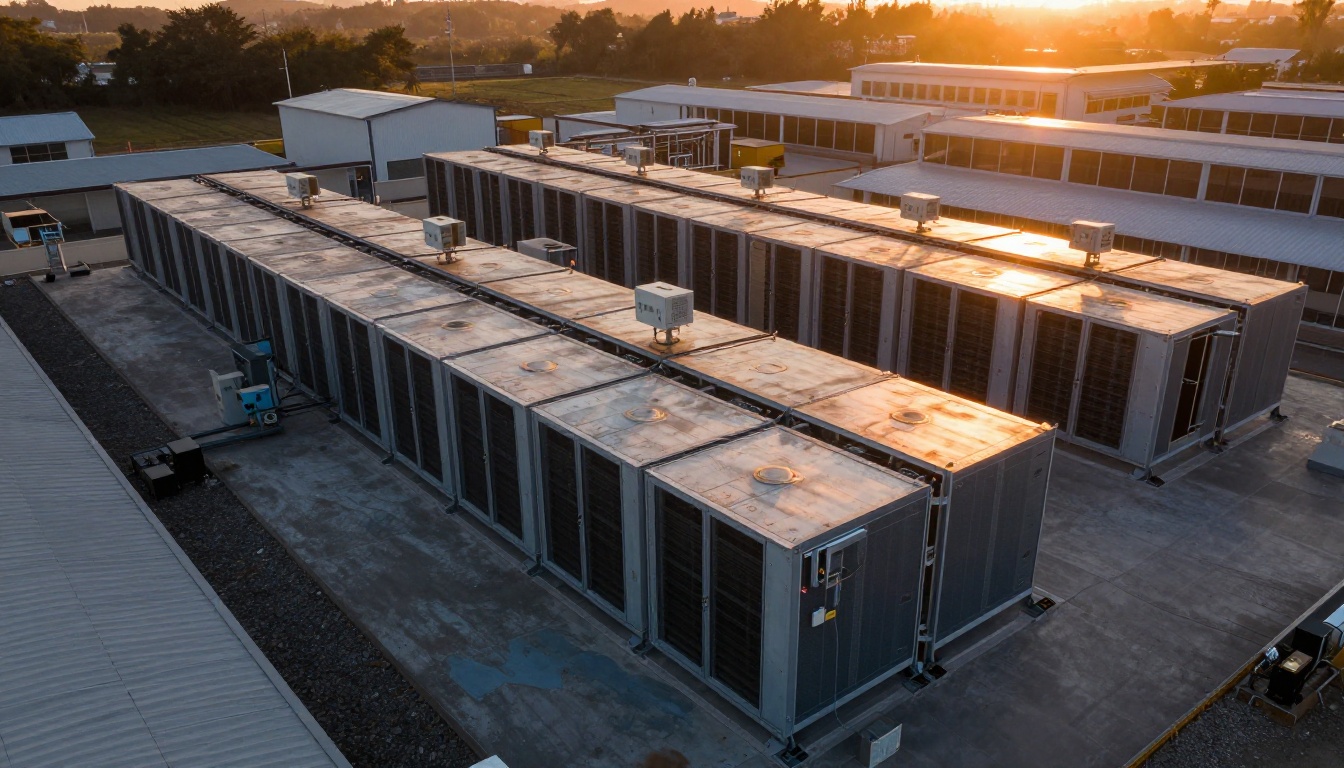
Sora 2 runs on OpenAI's dedicated video generation infrastructure, trained on licensed video data at a scale that produces its physical accuracy advantage. The model's size and compute requirements make it inherently slower but more capable in tasks demanding precise simulation.
Seedance 2.0 operates on ByteDance's infrastructure, optimized through the same research pipelines that process TikTok's content at massive scale. The volume of short-form video that ByteDance handles daily makes Seedance models particularly strong at human motion and social scenarios: people talking to camera, dancing, performing everyday activities. This training distribution directly explains why Seedance wins on speed and social content while Sora 2 wins on cinematic precision.
💡 Why this matters: Seedance excels at short-form content because it was trained on it at scale. Sora 2 excels at cinematic and narrative output because it was trained specifically for that fidelity target.
Which One Wins for Your Workflow
There is no single winner. There is only the right tool for the job in front of you.
Choose Sora 2 if:
- Your output needs to pass as real footage under scrutiny
- You are working on cinematic, narrative, or brand content where physical realism is non-negotiable
- Clip quality matters more than iteration speed in your workflow
- You need output at 1080p or higher via Sora 2 Pro
- You are producing content where each clip is a deliberate creative decision, not a volume play
Choose Seedance 2.0 if:
- You are producing high volumes of short-form video content
- Speed-to-quality ratio is your primary optimization target
- Your content features common human activities, social scenes, or lifestyle scenarios
- You want to quickly prototype multiple creative directions before committing to a final render
- Iteration speed and creative volume matter more than maximum photorealism
For most creators working in short-form or social content, Seedance 2.0 is the more practical daily driver. For filmmakers, brand teams, and anyone producing content where every frame needs to hold up under close inspection, Sora 2 is worth the wait.
How to Try Both on PicassoIA
Both models are available without API keys, setup friction, or rate limit headaches.
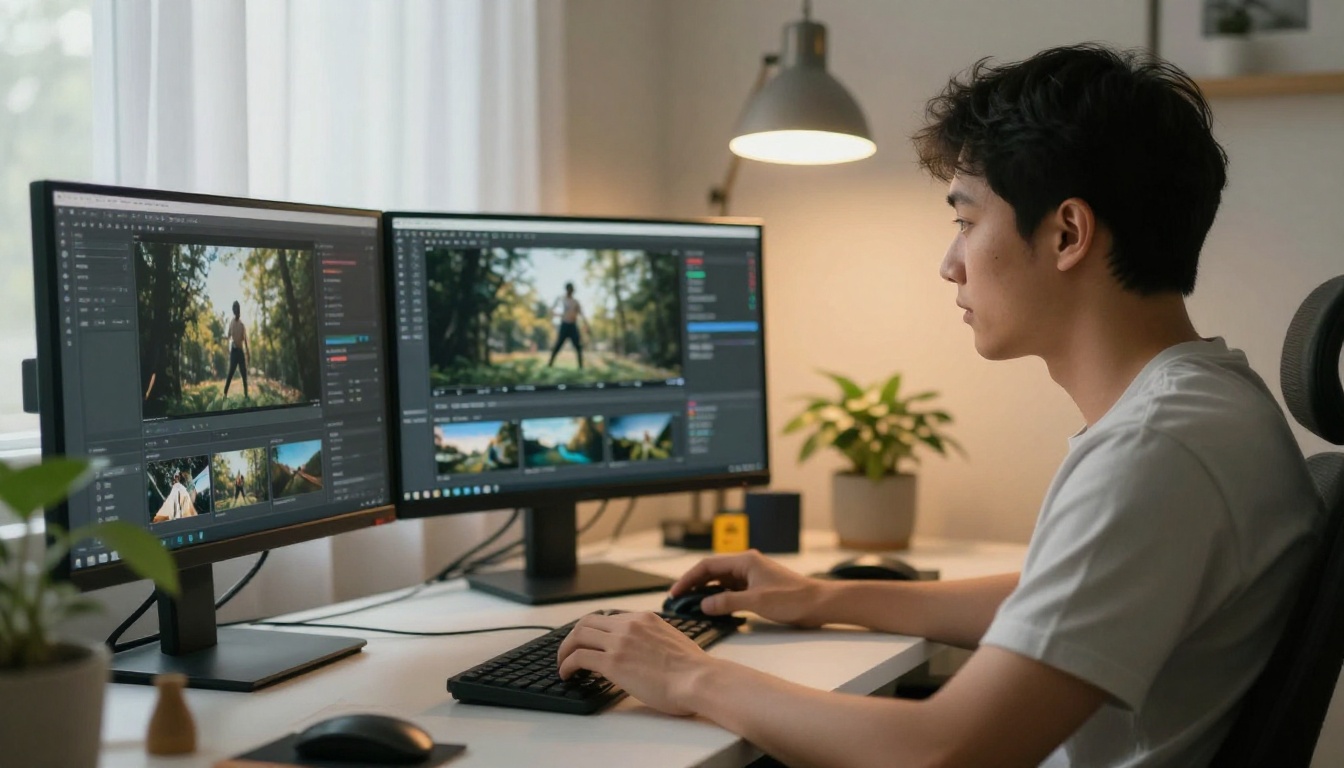
PicassoIA gives you access to Sora 2 and Sora 2 Pro alongside the full Seedance family including Seedance 1 Pro, Seedance 1 Pro Fast, and Seedance 1.5 Pro, all in one place. You can run the same prompt through multiple models side by side without switching platforms or managing separate accounts.
Run the Test Yourself
- Open Sora 2 on PicassoIA in one browser tab
- Open Seedance 1.5 Pro in a second tab
- Write a test prompt that includes a subject, action, and environment: "A woman in a white dress walking through a field of golden wheat at sunset, slow camera pan from left to right"
- Submit both simultaneously and note the generation times
- Compare outputs on motion quality, lighting accuracy, and edge detail retention in fine textures
That is the real test. Not lab benchmarks, but your own content style against your own quality bar.
💡 Pro tip: Start with a 5-second clip at 720p for quick side-by-side comparison, then scale to your preferred format once you have identified which model handles your content type better. Most creators land on using both for different phases of production.
Other Models Worth Adding to Your Testing Stack
While Sora 2 and Seedance 2.0 are the headliners in the speed and quality conversation right now, the AI video space is moving fast. Kling v3 offers motion control precision for action-heavy scenes where path and timing matter. Veo 3 from Google brings native audio generation alongside cinematic realism in a combination that neither Sora 2 nor Seedance currently matches. Wan 2.6 rounds out the open-weight options for creators who want maximum control over their generation pipeline without black-box constraints.
The strongest workflow is not built on loyalty to one model. It is built on knowing which tool fits which job and having access to all of them when the brief calls for it.
Run Your Own Speed and Quality Test
The only benchmark that matters is the one you run with your own prompts against your own quality standard. Both Sora 2 and Seedance 2.0 are live on PicassoIA right now. Write your scene, set your bar, and see which model delivers.
Start with Sora 2 on your most demanding cinematic prompt, then run the same scene through Seedance 1.5 Pro and time the difference. In under five minutes you will have a clear picture of exactly which model belongs in your daily workflow and which one you reach for on the projects that demand the absolute best output possible.


