Picking between Soulfun and OurDream isn't straightforward. Both platforms have carved out serious audiences in the adult AI companion space, and both make bold claims about roleplay freedom, image quality, and character depth. But they're built very differently under the hood, and the platform that works for someone who wants a cinematic NSFW fantasy experience might completely frustrate someone who just wants a casual, text-first digital companion. This comparison cuts through the marketing and tells you exactly what each app does well and where it falls flat.
What These Apps Actually Are
Soulfun's Core Proposition
Soulfun positions itself as an emotionally-driven AI companion platform with a heavy focus on narrative roleplay. You pick or build a character, assign them a personality matrix, and engage through chat-based interactions that lean toward florid, romantic prose rather than clipped transactional responses. The AI driving conversations has improved substantially over several platform updates, producing writing with actual emotional texture.
The platform supports voice messaging in premium tiers, which adds a layer of intimacy that pure text exchanges can't match. When it works, the voice synthesis feels surprisingly personal. When it doesn't, robotic phoneme transitions break the illusion fast.
Image generation in Soulfun is integrated but gated. Free users get a limited daily batch; paying subscribers unlock more generations per day, with the highest tier offering what the platform calls "unrestricted" outputs. In practice, "unrestricted" still has invisible guardrails that trigger without warning, leaving some requests silently sanitized with no explanation.
OurDream's Approach
OurDream leans harder into the visual companion angle. The interface is gallery-first: you scroll through generated character images and then engage in conversation with whoever catches your eye. It feels closer to browsing a dating app than opening a chat client, which makes the initial hook considerably stronger for many users.
The AI backbone driving OurDream conversations is snappier and handles shorter, punchier exchanges better than Soulfun's more literary style. If you want quick, spontaneous interaction without crafting elaborate scenario setups, OurDream responds more naturally to casual prompts.
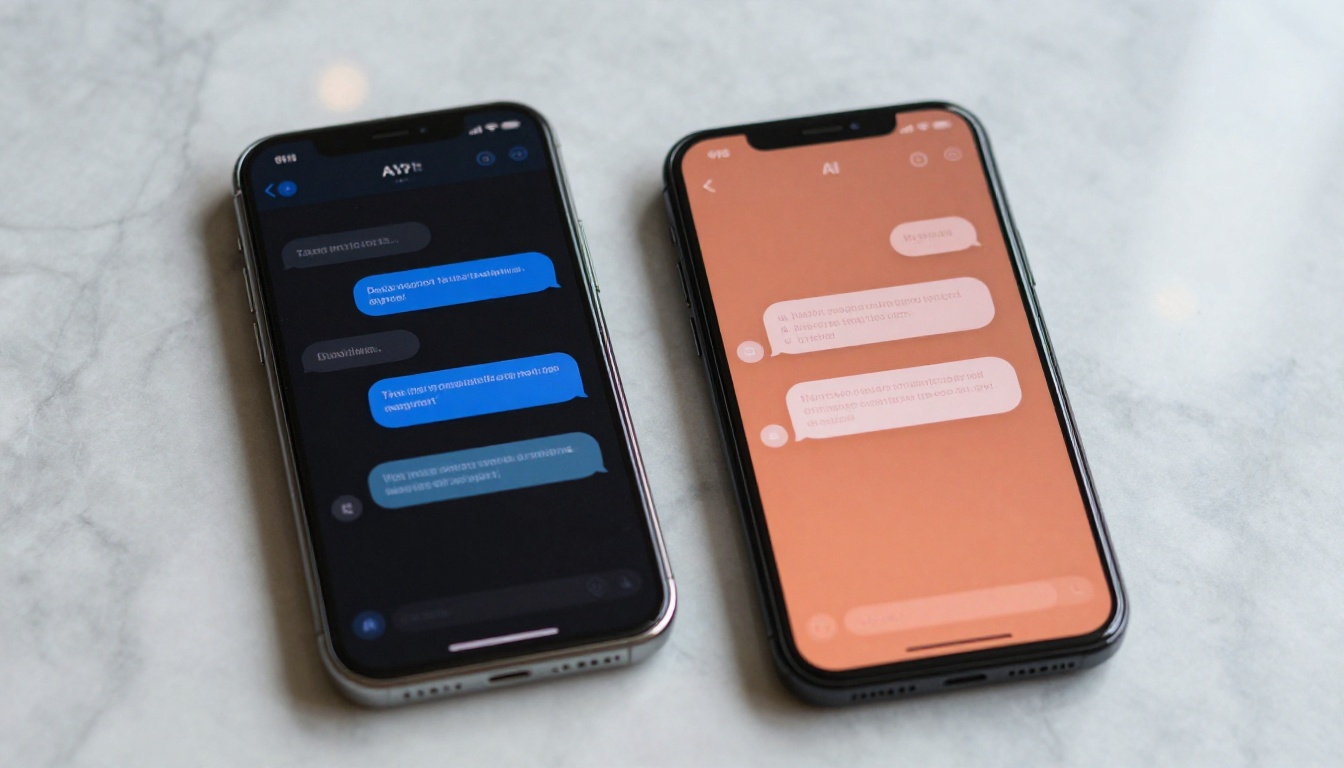
Where OurDream consistently outperforms its competitor is image output quantity. Premium subscribers get substantially more generations per session, and the visual quality on photorealistic outputs is noticeably sharp. The platform uses a combination of models tuned for portrait and full-body outputs, and results hold up at close inspection without the telltale softness of cheap AI upscaling.
Image Quality Side by Side
This is where the comparison gets genuinely interesting. Both apps offer AI-generated visuals of companions, but the underlying model quality creates a meaningful gap that becomes obvious once you've used both.
What Soulfun Produces
Soulfun's image outputs tend toward a stylized softness that flatters certain aesthetics but loses critical detail in others. Skin texture often looks slightly waxed at higher resolutions. Facial consistency across multiple generations of the same character is hit-and-miss: recognizably similar but rarely identical, which breaks immersion when you're trying to build a persistent visual companion identity.
The lighting choices in Soulfun's generations default to flat, studio-style illumination. It's serviceable but lacks the cinematic depth you'd get from a purpose-built image model with proper directional lighting baked into the prompt pipeline.
What OurDream Produces
OurDream outputs hit harder visually. Skin rendering has more natural texture variation, lighting shows actual directionality, and face consistency between generations of the same character is noticeably more stable across a session. The platform appears to be running something close to a fine-tuned Flux Dev variant under the hood, and it shows in edge detail and shadow rendering.

💡 Worth noting: If image quality is your primary criterion, OurDream has a genuine visual edge over Soulfun. But if you want truly unrestricted generation with full model transparency and no hidden guardrails, neither platform can match running Seedream 4.5 directly on PicassoIA, where you control every parameter.
Roleplay and Conversation Depth
Soulfun's Narrative Strength
Soulfun pulls ahead here by a significant margin. The platform clearly invested in prompt engineering and system instructions that push the AI toward more creative, emotionally resonant outputs. Characters exhibit consistent personality quirks across long sessions, reference earlier conversation details without being prompted, and the dialogue doesn't reset to generic pleasantries after every few exchanges.
The AI backbone powering Soulfun's chat appears to be a fine-tuned version of one of the larger open models, specifically tuned for relationship simulation and emotional range. It handles emotional complexity better than most competitor apps. When you describe a scenario with multiple layers of tension or subtext, the AI parses it intelligently instead of defaulting to the most surface-level interpretation.
The frustration comes from inconsistent content filtering. Certain topics or phrasings trigger a soft refusal phrased as a character response, leaving users confused about whether the character is in-character declining or the system is blocking. This lack of transparency erodes trust over extended sessions.
OurDream's Conversational Style

OurDream prioritizes responsiveness over depth. Exchanges feel faster, more spontaneous, and more like casual chatting than reading a collaborative novel. For users who prefer that energy, it's a clear win. The character memory is shallower though: the AI forgets details from the beginning of long sessions, and personality consistency degrades noticeably after an hour of active conversation.
Both platforms are using large language models under the hood, and neither publishes which models power their backends. If conversation quality is what you actually need, running a model like GPT 5, Claude Opus 4.7, or Gemini 3 Pro via PicassoIA gives you far more control over personality, tone, and memory than either closed companion app.
Pricing: What You Actually Pay
| Feature | Soulfun Free | Soulfun Premium | OurDream Free | OurDream Premium |
|---|
| Daily image generations | 5 | 50-100 | 3 | 80-150 |
| Voice messages | No | Yes | No | Yes (limited) |
| NSFW content | Restricted | Unlocked | Very restricted | Partially unlocked |
| Character memory depth | Shallow | Deep | Shallow | Medium |
| Custom character creation | Limited | Full | Yes | Full |
| Monthly cost (approx.) | Free | $15-25 | Free | $12-20 |
Both platforms run tiered subscription models with the same structural problem: the most compelling features are locked behind their highest tiers. The free versions are previews designed to hook you, not functional products.
Soulfun's premium tier costs slightly more but delivers deeper roleplay quality and better character consistency across long sessions. OurDream's premium tier is more competitively priced and offers more images per day, making it the better value if visuals are your priority.
💡 On cost per generation: Both platforms are significantly more expensive per image than running generation models directly. Seedream 5 Pro on PicassoIA gives you studio-quality NSFW-capable outputs at a fraction of what these apps charge per image, with zero hidden guardrails.
Privacy and Data Policies
This section matters more than most users stop to consider. Both Soulfun and OurDream operate in an industry with thin regulatory oversight around adult content and personal data handling, and the policies reflect that.
What Soulfun Says
Soulfun's privacy policy states that conversation logs are retained for "service improvement" purposes with no clear deletion timeline. The policy is deliberately vague on whether interaction data is used for model training. A data deletion request process exists, but anecdotal reports suggest it takes weeks and isn't always confirmed with any receipt or verification.
What OurDream Says
OurDream's policy is similarly imprecise. They state that "interaction data" may be shared with third-party processors for infrastructure and analytics purposes. For conversations that include explicit roleplay content, the implications of this vague language are uncomfortable at best.
The honest summary: if privacy is a genuine concern, neither platform gives you satisfying guarantees about where your conversations end up. Running your own sessions through open-source models or via a privacy-respecting API interface gives you far more control over what stays local.
The Models Behind the Magic
What neither platform tells you openly is that the image and conversation quality you experience depends entirely on the underlying AI models. Both apps are wrappers around foundation models, and the wrappers add cost while reducing transparency and control.
For image generation, companion platforms like these typically run on variants of:
For conversation, fine-tuned versions of:
For voice synthesis, models like Speech 2.8 HD by MiniMax deliver the natural intonation these apps try to replicate, with ElevenLabs v3 adding expressive emotional range.

Who Each App Is Really For
Pick Soulfun If...
- You want deep, narrative-driven roleplay and can tolerate slower response times
- Character consistency and emotional authenticity matter more than image volume
- You're willing to pay a premium for a more literary conversation experience
- Voice interaction is central to your digital companion experience
Pick OurDream If...
- Visual output quality and image quantity are your primary priorities
- You prefer fast, casual conversation dynamics over immersive prose
- Budget matters and you want the most generations per dollar
- The gallery-browse approach to finding characters appeals to you
Pick Neither If...
You want full creative control, no hidden content guardrails, transparent pricing, and real data privacy. Both platforms are polished consumer products built on top of AI technology that's fully accessible through open model interfaces with far fewer restrictions.

Voice Features: The Underrated Differentiator
Both apps offer some form of AI voice output, and this feature significantly changes the emotional texture of interactions in ways that text alone can't replicate. Soulfun's voice integration is more polished in premium tiers, with character-matched voice profiles that stay consistent with the personality type you've selected.
OurDream's voice feature feels more bolted-on by comparison. It generates audio from text responses but the voice profiles don't differentiate strongly between character archetypes, making a reserved, introverted persona sound similar to a bold, assertive one. The emotional differentiation that makes voice feel personal is largely absent.
The underlying technology driving good AI voice synthesis has reached a level where the best models are indistinguishable from real human speech in short bursts. Chatterbox Pro offers emotion-controlled voice synthesis with precise affective range, Speech 2.8 HD provides studio-quality output across multiple languages, and ElevenLabs v3 remains the benchmark for expressive voice generation. When companion apps implement these models well, they add genuine emotional resonance to the experience. When they implement them poorly, you notice immediately.
Create Your Own NSFW AI Visuals at PicassoIA
If this comparison has one clear takeaway, it's that the best results come from working directly with the underlying AI models rather than through a companion app wrapper that adds cost, restrictions, and opacity.
PicassoIA gives you direct access to the most capable image generation models available, with no hidden guardrails and no per-generation limits tied to opaque subscription structures. For NSFW image creation, the recommended starting point is Seedream 4.5, which delivers exceptional photorealistic outputs with accurate anatomical rendering and natural cinematic lighting. For maximum quality on your best prompts, step up to Seedream 5 Pro.
The PicassoIA Image Editor Pro takes it further with unlimited generation capacity plus inpainting, outpainting, and object replacement tools so you can refine and iterate rather than accepting the first output you receive.
For even wider aesthetic variety, Flux 1.1 Pro Ultra, Flux Kontext Pro, and Flux 2 Pro each bring their own distinct rendering signature within the same interface, giving you real model diversity without switching platforms.
For conversation, you're not limited to whatever fine-tuned variant a companion app decided to deploy this month. GPT 5, Claude Opus 4.7, Deepseek R1, and Gemini 3 Pro are all available directly, giving you access to the best reasoning and dialogue models without the companion app premium.
For voice, Chatterbox Pro, ElevenLabs v3, and the full MiniMax Speech 2.8 HD suite are available with no artificial session limits.
The full model catalog is at picassoia.com/en/all-models. Start there and you'll quickly see how much these companion apps are charging you for access to technology you could be using directly.

The Verdict
Soulfun wins on conversation depth and narrative roleplay quality. OurDream wins on image output volume and visual sharpness at a lower entry price. Neither platform wins on transparency, data privacy, or cost-per-output compared to working with the source models directly.
If you're choosing between the two, let your priority decide: deep narrative immersion points to Soulfun, visual-first experience with more generations per dollar points to OurDream.
If you're willing to go one step further and work directly with the models powering this entire industry, the results at PicassoIA beat both apps at a fraction of the total cost, with full creative control and no invisible filters standing between your vision and the output.


