If you've been scrolling through AI companion apps lately, two names keep showing up in the same breath: SpicyChat and Ani. Both promise something closer to a real conversation, both lean into personality and emotional warmth, and both have built devoted user bases arguing passionately about which one sounds more authentic. The question isn't just about chat quality anymore. It's about voice, tone, timing, and whether the AI on the other end of your screen actually sounds like it means what it says. Picking between them isn't obvious, and the answer depends entirely on what "real" means to you.

What SpicyChat Actually Offers
SpicyChat launched as a character-based companion platform built around roleplay and persona customization. The appeal is straightforward: pick a character or build your own, then start talking. The platform built its reputation on flexibility, letting users define the personality, backstory, and speaking style of their companion with a level of granularity most apps don't bother with. This has made it the go-to choice for users who want something specific rather than something generic.
The Conversation Model Behind It
SpicyChat runs on large language model backends, primarily leveraging instruction-tuned models capable of maintaining context over extended conversations. The actual LLM powering your chat session can vary depending on subscription tier. The higher tiers typically route to more capable models, which directly impacts how natural and coherent the responses feel over time.
For anyone curious about how these models differ technically, tools like GPT 5 and Claude Sonnet 5 represent the current upper tier of conversational realism, and they are the kinds of backends that set the ceiling for what companion apps can achieve. When SpicyChat accesses models at this level, conversations feel genuinely intelligent rather than pattern-matched.
Voice and Speech Features
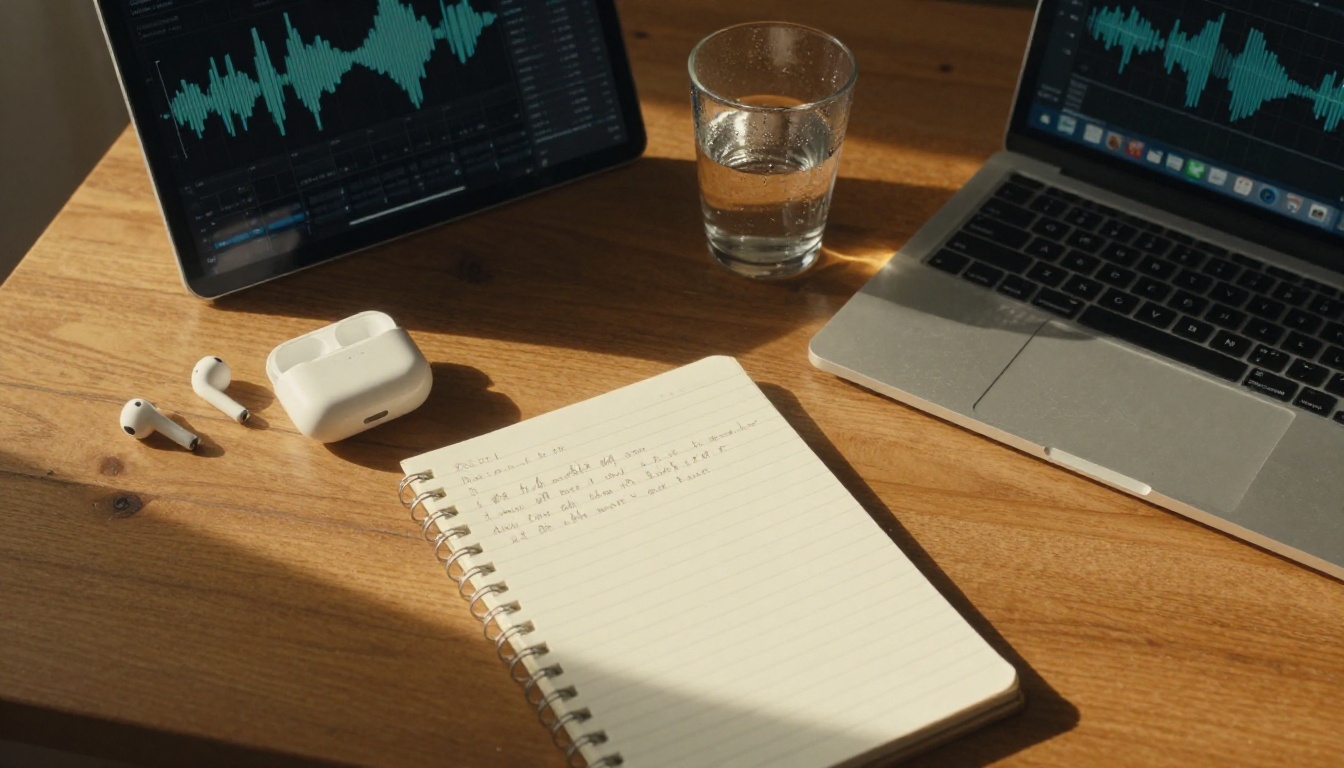
SpicyChat's text-to-speech implementation is functional but not its strongest feature. It supports voice output through third-party integrations, and the results can feel mechanical depending on the voice profile selected. The platform doesn't natively prioritize voice realism at the same level it does character depth. Users who specifically configure voice settings and select higher-quality voice models report noticeably better results, but that configuration burden falls on the user.
The fundamental limitation is that most companion apps treat TTS as an add-on rather than a core feature. When the voice layer feels bolted on, it breaks the illusion of naturalness regardless of how good the underlying chat model is. SpicyChat falls into this category more often than not.
What Ani Brings to the Table
Ani takes a different approach. Where SpicyChat leans into customization and roleplay depth, Ani focuses on a polished, out-of-the-box experience with tighter integration between the conversational model and audio output. It was designed from the start with voice as a first-class feature, not an afterthought, and that design decision shows up immediately the first time you hear it speak.
Ani's Core Technology
Ani's conversational layer is built around emotional responsiveness. The system tracks sentiment across a conversation and adjusts the tone and phrasing of responses accordingly. This creates a feedback loop where the AI companion doesn't just answer your questions but reflects the emotional temperature of the exchange. When you're curious, Ani sounds curious back. When you're tired, the responses slow down and soften in ways that feel attentive rather than algorithmic.
💡 Worth knowing: Emotional mirroring is one of the most technically challenging aspects of AI companion design. It requires real-time sentiment analysis layered on top of the generation model, and it significantly increases compute overhead. The apps that do it well are investing in infrastructure most users never see.
How Ani Handles Voice
Ani invests more directly in voice quality. The platform uses higher-fidelity TTS models and, in some configurations, near-realtime voice synthesis that reduces the perceptible gap between text generation and audio output. This tighter coupling is what most users respond to when they say Ani "sounds more real." It's not just the words, it's the rhythm, the slight variations in pacing, the way a sentence ends with just enough drop in pitch to feel like a human trailing off in thought rather than a system completing a string.

Head-to-Head: Sound Quality Compared
Here's where things get concrete. Setting aside features and philosophy, what does the actual audio output of these two platforms sound like when you put them side by side?
| Feature | SpicyChat | Ani |
|---|
| Voice fidelity | Variable (tier-dependent) | High by default |
| Emotional tone matching | Limited | Strong |
| Latency, text to audio | 1.5 to 3 seconds | Under 1 second in fast modes |
| Voice customization | Moderate | Moderate |
| Multilingual support | Limited | Broader |
| Native TTS integration | Third-party | Native |
| Personality consistency | Very strong | Moderate |
| Setup required | High | Low |
Naturalness of Responses
The word "natural" is doing a lot of work in this comparison. At the text level, both platforms are capable of generating responses that read as believable human writing. The difference emerges in the audio layer. SpicyChat's voice output can sound slightly robotic in quieter, more intimate conversational moments, where the absence of natural micro-variations in human speech becomes obvious.
Ani handles those quieter moments better. The pitch modulation and pacing feel less like a synthesized reading and more like something spoken by a person who is actually thinking while talking. It's a subtle difference, but for users who spend hours with these companions, subtle differences accumulate into something that either sustains or shatters immersion.
Emotional Range and Tone
SpicyChat's strength is in character consistency. Your companion will stay in character through difficult conversational twists, maintaining personality coherence that Ani occasionally sacrifices for emotional responsiveness. Ani sometimes overadjusts, mirroring your mood so aggressively that the companion loses its distinct personality and starts to feel more like a reflection of you than a separate presence.
💡 The real question: Do you want a companion with a stable personality that sounds somewhat synthetic, or one that sounds more natural but sometimes feels like it's performing your emotions back at you rather than having its own reactions?
Where the Gap Shows Up
Response Latency
Latency is the silent problem with AI companion immersion. Any pause longer than about 800 milliseconds between your message and the companion's response breaks the conversational illusion. SpicyChat's higher-tier plans reduce this gap significantly, but the free and lower-cost tiers can feel noticeably sluggish, particularly during voice output where the delay between text completion and audio playback adds another layer of wait.
Ani's architecture prioritizes low-latency responses as a design principle. The platform sacrifices some depth of reasoning for speed, which means Ani occasionally gives responses that are emotionally well-paced but conversationally shallow. SpicyChat on higher tiers can give you both depth and reasonable speed, but the cost difference is real.
Personality Consistency
This is where SpicyChat genuinely outperforms Ani across the board. If you've spent time carefully configuring a companion character, SpicyChat will hold that configuration reliably across a long session. The companion remembers its backstory, its speech patterns, its stated preferences, and its characteristic ways of reacting to things. Ani's companions feel more generic over extended use, as the emotional mirroring system subtly homogenizes the personality toward whatever the user seems to want.
For users who care about roleplay immersion, this matters significantly. A companion that becomes a mirror eventually stops feeling like a separate presence. SpicyChat's companions maintain their "otherness" more effectively, which is why serious roleplay users tend to prefer it despite the voice quality tradeoff.

How to Generate Realistic AI Speech Yourself
Both SpicyChat and Ani ultimately rely on the same underlying technology stack that is now openly accessible to anyone who wants to build or experiment with AI voice generation. The best text-to-speech models available today produce output that rivals, and in some cases surpasses, what either companion platform delivers natively.
Best TTS Models on PicassoIA
PicassoIA gives you direct access to the most capable voice synthesis models currently available, without the intermediary layer of a companion app constraining your options. Each model has distinct strengths depending on what aspect of "realistic" you're prioritizing.
ElevenLabs V3 is currently one of the top performers for emotional expressiveness and naturalness. It handles nuanced emotional delivery better than most alternatives, with particular strength in intimate, conversational registers where the absence of robotic artifact matters most. If you want a voice that sounds like someone who actually cares about what they're saying, this is the starting point.
MiniMax Speech 2.8 HD produces studio-quality output with a warmth in the mid-range frequencies that makes voices sound present rather than distant. It closes the gap between "this sounds like a recording" and "this sounds like someone in the room." The HD tier specifically nails the kind of warm, conversational presence that companion apps are chasing.
Inworld Realtime TTS 2 is purpose-built for the natural-language AI companion use case. It's optimized for low latency without sacrificing voice quality, which is exactly the technical tension that makes companion app voice output so difficult to get right. When latency is your primary concern, this is the model to reach for.
Google Gemini 3.1 Flash TTS covers 30 voices across 70 languages, making it the right pick for multilingual companion use cases where Ani's broader language support is often cited as an advantage. It performs well across language boundaries without the drop in naturalness you get from models trained predominantly on English.
Resemble AI Chatterbox adds emotional control parameters to voice cloning, so you can take a voice sample and explicitly dial up warmth, playfulness, or gravity depending on the conversational context. This is closer to what a well-designed companion app should offer as standard, but which most don't.

Which Model to Pick
The choice depends on what aspect of "sounds real" you're optimizing for:
You can pair these TTS models with a capable LLM from PicassoIA's catalog to build your own companion pipeline. Models like Deepseek v3.1 and Gemini 3.5 Flash offer strong conversational coherence at competitive latency, which is exactly the combination companion apps are trying to achieve with their proprietary stacks.

Real Use Cases Worth Knowing
For Roleplay and Immersion
If deep roleplay and character consistency are your priority, SpicyChat has the edge. The platform's character configuration system is more granular, and the underlying LLM connections on premium tiers are strong enough to maintain complex personas across multi-hour sessions. The voice isn't always perfect, but the character stays intact through long, complicated exchanges where Ani would have drifted.
The tradeoff is that SpicyChat's more customizable architecture means a steeper setup curve. Getting a companion to sound exactly right requires deliberate configuration. You'll spend real time before the first great conversation.
For Daily Conversations
For users who want an AI companion for regular emotional check-ins, casual conversation, or a consistent presence during daily routines, Ani's lower friction and tighter default voice quality makes it more immediately satisfying. You don't need to configure anything to get something that sounds better than average.
Ani also handles transitions between topics more fluidly, which matters in casual daily conversation where you're not staying in a defined roleplay scenario. SpicyChat's character-lock works against you in those moments because the companion tries to pull every topic back through its defined persona, which can feel restrictive when you just want to talk freely.
| Use Case | Better Choice | Why |
|---|
| Deep character roleplay | SpicyChat | More granular persona config |
| Daily casual chat | Ani | Lower friction, better defaults |
| Voice immersion priority | Ani | Tighter TTS integration |
| Long-session consistency | SpicyChat | Stronger character memory |
| Multilingual use | Ani | Broader language support |
| Budget-conscious start | SpicyChat free tier | More features at entry cost |

💡 Bottom line: Neither platform wins outright. SpicyChat sounds better when you've configured it properly. Ani sounds better the moment you open it. The real gap is setup cost versus default quality.
The LLM Layer Matters More Than You Think
Both platforms are ultimately wrappers around large language models, and the quality of that underlying model is what determines how "real" the companion sounds at a conversational level before audio is even involved. A voice that sounds natural but says something generic or slightly off still breaks immersion. Voice quality and conversational quality are separate problems, and solving one without the other gets you halfway there at best.
The top-tier LLMs currently powering the most realistic conversational AI experiences include GPT 5, Claude Opus 4.7, and Grok 4. These models handle nuanced tonal cues, callback references across a long conversation, and the emotional subtext that makes an exchange feel like it has continuity and depth. They're also the models that competitor companion apps are racing to integrate at higher tiers.
For users who want to experience these models directly, without them being filtered through a companion app's constraints or gated behind subscription tiers, PicassoIA provides access to all of them alongside the voice synthesis tools needed to build an end-to-end audio conversation system at whatever quality level you want.

Hear the Difference on PicassoIA
The honest takeaway from comparing SpicyChat and Ani is that both are optimizing toward the same target: an AI presence that sounds convincingly human, maintains emotional coherence, and keeps you engaged across a conversation. Neither has fully solved it, which is why the debate continues in every forum and comment section where AI companions come up.
What PicassoIA offers is something different: direct access to the individual components that both platforms are built from, without the tradeoffs each app makes in combining them. You pick your LLM, pick your TTS model, control latency, emotional range, and voice characteristics independently. For anyone who has felt like companion apps get 80% of the way to what they want and then stop short, that remaining gap is exactly where PicassoIA's model catalog becomes relevant.
Start with ElevenLabs V3 for voice, pair it with GPT 5 or Claude 4 Sonnet for conversation, and you'll hear immediately what "sounds more real" means when you control both layers yourself. The full catalog is at picassoia.com/en/all-models, and the ceiling is higher than what either SpicyChat or Ani is showing you right now.


