Choosing between Suno v5 and Loudly VEGA-2 depends on one thing: what kind of music creator you are. Both platforms occupy the AI music generation space, but they approach the problem from completely different angles, and understanding those differences can save you hours of trial and error. This is not a race to a single winner. It is a map of which tool belongs in which workflow.

Suno v5 is built for people who want a song. Type a prompt, describe a mood, add some lyrics, and you get back something that sounds like a real artist recorded it in a proper studio. VEGA-2 from Loudly takes the opposite angle: it is built for content creators who need royalty-free background music that fits a specific moment, genre, or brand tone, with the ability to edit individual stems after generation.
These are not competing for the same user in the same way two pop artists compete for the same chart position. They are more like a recording studio and a production music library, except both can technically be called "AI music generators." That framing matters because the hype cycle tends to lump them together, which leads to disappointment on both sides when people realize the tool they chose does not do what they actually needed.
💡 Quick framing: Suno v5 is an AI artist creating original songs. Loudly VEGA-2 is an AI music director composing modular, licensable tracks for production use.
Before picking either one for your workflow, it helps to know exactly what each tool does well, where each hits a ceiling, and what the audio actually sounds like when you push them hard.
What Suno v5 Actually Does
Suno has built its reputation on a single remarkable capability: generating music that sounds like it was made by a human vocalist performing over a real band. Version 5 pushes this further than any previous release.

The Vocals Problem, Solved
The single biggest upgrade in v5 is vocal coherence over full song duration. Earlier versions struggled with what longtime users called "word salad vocals," where a verse would start coherently and gradually dissolve into phonetic approximations of singing in the second or third verse. Suno v5 holds the lyrical thread across two to four minutes of audio without that collapse.
Vocal timbre is also more consistent in v5. In v4, a male baritone voice might drift toward tenor in the chorus. That drift is substantially reduced now, though not entirely absent on complex multi-section tracks with dramatic dynamic shifts. On standard verse-chorus structures, the voice lands and stays.
What actually improved in v5:
- Verse-to-chorus lyrical continuity across full track length
- Consistent vocal register even through key modulations
- Better pitch stability on long sustained notes
- Reduced "AI shimmer" artifact on consonant-heavy syllables
The result is that Suno v5 outputs pass a casual listener test. People who do not know the track is AI-generated often do not suspect it. That is a meaningful threshold that v3 and v4 did not reliably cross.
Prompt Flexibility in v5
Suno v5 accepts multi-paragraph text prompts with genre descriptors, mood cues, instrument specifications, and custom lyrics sections. You can write the actual lyrics you want, or let the model generate them from a thematic description. You can specify tempo in BPM, request a particular vocal tone, and even describe the production style of the reference track you want the output to resemble.
This gives Suno v5 a real creative range that makes it genuinely useful for musicians who want a finished demo, content creators who want a signature sound, and brands who want a jingle that feels human without commissioning a songwriter.
The catch is that Suno v5 remains a black box at the instrumentation level. You describe what you want, and the model interprets. There is no way to say "pull up the acoustic guitar stem and reduce the drum kit" the way you would in a traditional DAW. The output is one mixed audio file, and if one element is wrong, your only option is to re-generate and hope.
Where Suno v5 Falls Short
Three consistent limitations follow Suno v5 across professional user reports:
- No stem separation on output: One mixed file, no editing access to individual instruments.
- Commercial licensing complexity: Free tier tracks are personal use only. Paid tiers unlock commercial rights, but sync licensing and broadcast use cases require reading the terms carefully and often require the highest-tier subscription.
- Regeneration inconsistency: The same prompt rarely produces the same result twice. Creatively this is interesting. Professionally it is frustrating when you need to match a reference output or continue a series.
What Loudly VEGA-2 Brings
Loudly is a fundamentally different product. Where Suno is trying to be an AI artist, VEGA-2 is trying to be an AI music director who understands your production brief and delivers something you can actually use in a post-production chain.

Genre Intelligence
VEGA-2 uses a training corpus focused on professionally recorded, genre-tagged music. Its genre classification is more granular than Suno's broader descriptors. Instead of "pop" as a category, VEGA-2 accepts "indie pop with a UK influence, mid-tempo, guitar-forward, for a fashion brand campaign" as a structured brief.
This specificity pays off for content professionals. A social media team working on a skincare brand gets background music that sits precisely in the reference aesthetic they want, without negotiating with a stock music database or managing per-license fees on every use.
VEGA-2 genre strengths:
- Corporate and brand-ready ambient tracks
- Electronic subgenres: lo-fi, chillwave, minimal techno
- Cinematic underscore for documentary and narrative content
- Acoustic and organic textures for wellness and lifestyle content
- Upbeat commercial pop for advertising without the vocal complexity
Stem Control and Editing
VEGA-2's biggest practical differentiator is stem export. After generation, users can download individual stems: percussion, bass, melodic elements, and atmosphere layers separately. This makes VEGA-2 music genuinely workable in a professional post-production context.
If a director wants the music slightly less rhythmically dominant under dialogue, they can pull down the percussion stem in their editing timeline. If a podcast host wants the intro music to swell and then drop behind narration, they can automate the bass and melody independently. Suno cannot support either of these workflows.
💡 Pro tip for video editors: Stem access is what separates a stock music tool from a production-ready one. It saves multiple rounds of revision cycles when the brief changes mid-project.
VEGA-2 Weaknesses
VEGA-2's architecture is not built for lead vocals. If you need a song with a strong vocal performance and intelligible lyrics, VEGA-2 is not the right tool. It can generate music with vocal-texture layers and harmonics as atmosphere, but not structured verse-chorus-bridge songs with a real singer delivering a coherent performance.
It also lacks the spontaneous creative quality of Suno. VEGA-2 is predictable, which is its professional strength, but sometimes predictable means generic. Generic prompts produce serviceable but unremarkable results. The more specialized your brief, the better VEGA-2 performs relative to its competition.
Head-to-Head: The Real Differences

| Feature | Suno v5 | Loudly VEGA-2 |
|---|
| Full song with vocals | Yes, strong | No |
| Stem export | No | Yes |
| Genre control precision | Moderate | High |
| Custom lyrics | Yes | No |
| Commercial licensing | Paid tier required | Built into platform |
| Max track length | Up to 4 minutes | Varies by plan |
| Prompt style | Open text description | Structured selectors plus text |
| Regeneration consistency | Low | Moderate |
| Instrumental-only mode | Yes | Yes (default) |
| Watermark on free tier | Yes | Yes |
The table confirms what the feature descriptions suggest: these tools serve different production scenarios. The "AI music comparison" framing creates a false competition that neither platform wins cleanly, because they are solving different problems.
Audio Quality Breakdown
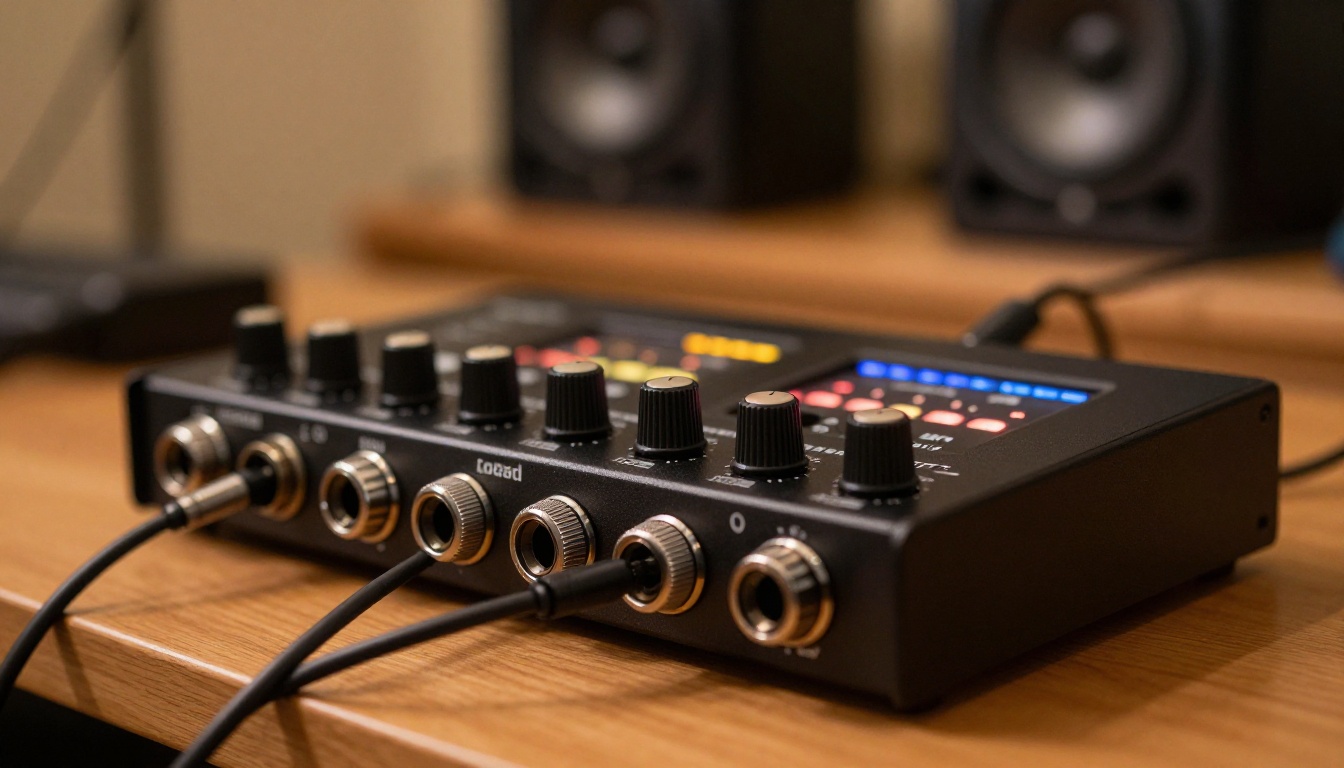
The real test of any AI music generator is not the feature list. It is what the audio actually sounds like on professional monitors at reference listening volume.
Suno v5 Sound Profile
Suno v5 outputs MP3 files on standard plans, with higher quality WAV available on paid tiers. The frequency balance is radio-ready by default: controlled low-end, clear mid-range, and a slight high-frequency presence boost that makes tracks feel energetic on consumer earbuds and Bluetooth speakers. That tuning is deliberate and it works for the majority of pop, hip-hop, and electronic music use cases.
It works less well for acoustic and classical genres, where the presence boost can feel unnatural against organic instrument textures. An acoustic guitar recording should have warmth and natural room ambience. Suno v5's processing chain can make acoustic instruments sound slightly over-produced for that genre context.
The most persistent remaining artifact in Suno v5 output is what audio professionals sometimes call "AI sheen": a slight plastic quality on sustained reverb tails and room ambience that separates it from a real recording. It is subtle enough to miss on consumer headphones but noticeable in a professional monitoring environment. On most social media and streaming platforms, it is below perceptual threshold for casual listeners.
VEGA-2 Sound Profile
VEGA-2 outputs are cleaner in the sense of having less frequency curve shaping applied by default. The model delivers audio closer to a flat frequency response, which is preferable for production use because editors can apply their own EQ, compression, and spatial processing in post without fighting against pre-baked decisions.
The tradeoff is that flat can sound lifeless at first listen. Suno v5 tracks often feel more immediately exciting and emotionally engaging without any post-processing. VEGA-2 tracks require more active production effort to reach the same emotional punch, but they reward that effort with more flexibility and a cleaner final result when processed well.
💡 Practical rule: If you are dropping music directly into a video without any post-production, Suno v5 sounds better out of the box. If you are running audio through a proper mixing chain with EQ and compression, VEGA-2 gives you a better starting point.
Pricing and Access
Both platforms operate on tiered subscription models that follow the same basic pattern: free tier with limitations, paid tiers that unlock commercial rights and higher output quality.

Suno v5 tier structure:
- Free: Daily generation credits reset, personal use only, watermarked in some contexts
- Pro: Expanded monthly credits, commercial use rights, priority queue
- Premier: Maximum credits, highest audio quality, stem access on some outputs
Loudly VEGA-2 tier structure:
- Free: Limited monthly tracks, watermarked exports
- Creator: Monthly track allowance, stem access, commercial use
- Business: High-volume generation, sync licensing, API access
One significant distinction is how commercial licensing is structured. Loudly builds it into paid tiers from the start with clear terms. There is less legal ambiguity for agencies and production companies. Suno's licensing terms have improved with each version, but broadcast and sync licensing cases still require reading the fine print carefully, and the terms have changed between versions in ways that caught some early users off guard.
For independent creators making YouTube content or social clips, both platforms are affordable relative to stock music licensing at scale. For agencies running at production volume, Loudly's licensing model creates fewer risk scenarios.
The honest answer is that many professionals end up with accounts on both platforms, using each where it performs best rather than forcing one tool into every job.

Solo Creators and Podcasters
If you make content alone and need music that works emotionally without spending much time on it, Suno v5 is the faster path. Write a prompt, get a song, use it. The vocal quality makes Suno outputs feel more alive and personally expressive. For podcast intros, social clips, short-form video, and ambient episode underscoring where you want something that sounds like a real artist performed it, Suno v5 is the stronger choice.
Solo creators also benefit from Suno v5's lyric generation. Writing the actual lyrics and getting them performed convincingly is something no other AI music platform does as reliably at this price point.
Commercial and Brand Use
If you work with brands, advertising agencies, or professional video production, VEGA-2 is the safer and more professional choice. Stem control means you can adapt the music to the edit without re-generating. Built-in commercial licensing reduces legal exposure. Genre precision means fewer revision cycles when a client brief changes.
Advertising agencies that have incorporated VEGA-2 into production workflows consistently report faster music approval cycles because the output is predictable enough to brief against in advance, and the stems allow fine-tuning without going back to the generator for a new version.
The Missing Piece: Speech Generation
Neither Suno v5 nor Loudly VEGA-2 handles speech generation for narration, voiceovers, or podcast hosts. If your audio content workflow also involves spoken voice content, you need a separate tool. This is one area where an integrated platform that offers both music generation and text-to-speech in one place becomes significantly more valuable than managing multiple single-purpose subscriptions.
AI Music Options on PicassoIA
PicassoIA offers a strong roster of AI music generation and speech models that cover the gaps both Suno and VEGA-2 leave open, all from one platform.
Full Songs with Minimax Music 2.6
Minimax Music 2.6 is one of the most capable full-song generators on the platform. It handles structured songs with vocals, multi-section arrangements, and custom lyric input, performing at a level that competes directly with Suno v5 for song-creation tasks. Minimax Music 2.5 performs especially well with emotional pop, R&B, and cinematic ballads.
For orchestral, acoustic, and classical-adjacent arrangements, Google's Lyria 3 Pro is a strong choice. It brings a noticeably different tonal character from the Minimax models, leaning toward natural instrument textures and dynamic range. Lyria 3 is the more accessible version of the same architecture, and Lyria 2 remains a solid choice for production workflows that use it as a consistent reference baseline.
ElevenLabs Music on PicassoIA rounds out the song-generation options with strong emotional responsiveness to text prompts, particularly for indie rock, acoustic pop, and singer-songwriter styles. For ambient loops, electronic textures, and atmospheric soundscapes that serve background and brand use cases closer to VEGA-2's output profile, Stability AI Stable Audio 2.5 is the model to reach for. It handles long-form generative audio with exceptional consistency.
Minimax Music 01 and Minimax Music 1.5 round out the roster for users who want to experiment across different model generations or compare outputs across the same prompt.
Generate Speech for Your Tracks
Where neither Suno nor VEGA-2 goes, PicassoIA's text-to-speech models extend the workflow. ElevenLabs V3 delivers natural-sounding narration with genuine emotional range and multilingual support, making it a strong pairing with any of the AI music generation models for podcast production, advertisement voiceovers, and documentary narration.
For high-volume voiceover production, Minimax Speech 2.8 HD provides studio-quality audio at production speed, and Google Gemini 3.1 Flash TTS covers 70 plus languages across 30 distinct voices, which is particularly valuable for international content production. Qwen3 TTS adds voice cloning for creators who want a consistent branded voice identity across all their content.
💡 Workflow tip: Pair Minimax Music 2.6 for your song or background track with ElevenLabs V3 for narration, and you have a complete AI-generated audio production without switching platforms or managing multiple subscriptions.
Start Making Music Now
Suno v5 and Loudly VEGA-2 both represent real progress in what AI music generation can do. Suno wins on vocal performance and song-level creativity. VEGA-2 wins on stem control, licensing clarity, and production-chain compatibility. Neither one is the right tool for every job.
PicassoIA brings a wider range of AI music generation and speech models into one place, from Google Lyria and ElevenLabs through to the Minimax Music series and Stable Audio 2.5. Whether you want a full song with a vocal performance, a clean orchestral backdrop, an atmospheric electronic loop, or a professional voiceover to sit alongside your music, the tools are all there to experiment with without committing to multiple platform subscriptions.
Pick a genre, write a prompt, and try it yourself at picassoia.com/en/all-models. The difference between AI music in 2024 and 2025 is significant enough that it is worth spending twenty minutes just running comparisons across models to hear what the current generation of tools actually sounds like.


