OpenAI's GPT Image 1.5 arrived with serious fanfare. Fast generation, excellent prompt adherence, and arguably the best text-rendering of any AI image model on the market. But for creators working in adult or mature content spaces, the real question was never about text rendering. It was simple: does it actually work for 18+ portrait requests?
The short answer is: not reliably. Not even close.
This article breaks down exactly what happens when you push GPT Image 1.5 with adult portrait prompts, where its content filters fire, how inconsistent the results are, and what alternatives genuinely deliver when you need photorealistic, uncensored portrait work done.
What GPT Image 1.5 Actually Does
The model behind the product
GPT Image 1.5 is OpenAI's current flagship image generation model, powering both the ChatGPT Images feature and the Images API. It builds on the architecture of DALL-E 3 but with substantially improved instruction following, dramatically better text rendering, and more coherent multi-object compositions.
For commercial and creative work, it's genuinely impressive. Product mockups, architectural visualizations, editorial illustrations, marketing materials. The model handles these with a fidelity that was hard to achieve even six months ago.
But GPT Image 1.5 ships with OpenAI's content policy baked into every generation, and that policy draws a hard line on explicit content. Not a soft line. Not a configurable line. A hard, non-negotiable wall.
How the filtering works
GPT Image 1.5 runs both pre-generation and post-generation content checks. Your prompt gets evaluated before the model generates anything. If the classifier flags the input, you receive an error and no image. If somehow a borderline prompt slips through to generation, the output gets checked against OpenAI's safety classifiers before it reaches you.
The result is a two-layer system that's aggressive enough to catch things most creators wouldn't consider problematic. It's not just explicit content that gets blocked.
💡 Worth knowing: Even API access (with OpenAI's gpt-image-1 endpoint) does not unlock adult content for most users. The content policy applies regardless of interface. Enterprise tiers can request policy modifications, but this is restricted to specific approved use cases and requires explicit approval from OpenAI.
What Actually Gets Blocked
The obvious rejections
At the explicit end, GPT Image 1.5 blocks everything. Nudity, sexual content, anything that reads as pornographic in the prompt. These hit the pre-generation classifier almost instantly, returning an error before any GPU cycles get burned.
This part isn't controversial. Most major platforms maintain this policy.
The frustrating middle ground
Here's where it gets genuinely annoying for portrait creators. GPT Image 1.5's classifier is not subtle. It regularly blocks:
- Bikini and swimwear prompts that include "skin" or "body" language
- Lingerie photography requests, even when framed as commercial fashion
- Intimate portrait setups with soft lighting and bedroom environments
- Boudoir photography terminology
- Prompts referencing "sensual" expressions or poses, even when nothing explicit is described
The frustrating part isn't the blocking itself. It's the inconsistency. The same prompt, submitted twice within minutes, can produce completely different outcomes. One submission gets a detailed image. The next gets a policy refusal.
This isn't a bug. It's how probabilistic classifiers behave at the edge of their decision boundary. But for a creator trying to build a workflow around the model, edge-case inconsistency is effectively a broken feature.
What actually passes
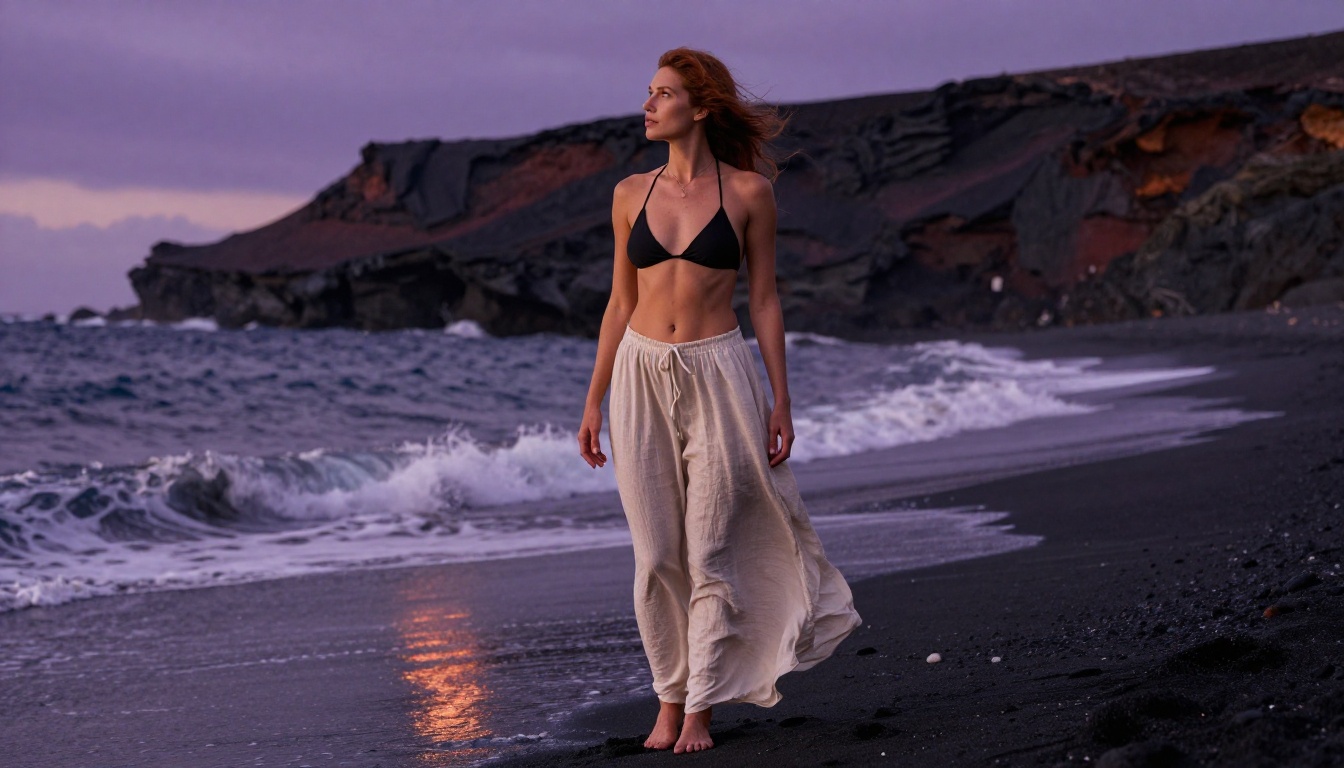
GPT Image 1.5 does handle certain categories of suggestive content. Beach and swimwear photography with clean descriptive language typically works. Fashion editorials with crop tops, shorts, or backless dresses. Abstract or artistic nude references in clearly artistic or historical contexts occasionally pass.
The general pattern: framing matters more than content. "Commercial swimwear campaign photography, model in blue bikini, ocean background" behaves differently than "woman in bikini, beach, body visible." The former sounds professional. The latter triggers pattern matches in the classifier.
But this creates a workflow that feels like negotiating with an algorithm, because that's exactly what it is.
The Inconsistency Problem
Why it happens
Content classifiers in AI image models are trained on labeled datasets where human annotators mark content as acceptable or not. The boundaries of those categories are inherently fuzzy, and classifiers trained on them inherit that fuzziness.
At the center of a category (clearly explicit vs. clearly safe), classifiers perform consistently. At the edges, confidence scores drop below threshold, and small differences in how a prompt is tokenized can flip the outcome.
OpenAI's classifier seems to be particularly sensitive to several trigger terms and semantic patterns. Combinations involving "bedroom," "nightgown," "lace," "bare," and similar words correlate strongly with refusals even in non-sexual contexts.
The practical impact on creators
For creators who work in legitimate adult content production, adult education, mature fiction illustration, or fashion photography with skin-forward aesthetics, this creates a real problem.
The workflow cost isn't just the blocked generations. It's the time spent reverse-engineering what language the classifier will accept, the mental overhead of self-censoring prompts, and the unpredictability that makes GPT Image 1.5 unreliable as a production tool for this category of work.
💡 Bottom line: If adult portrait work is a meaningful part of your workflow, building on GPT Image 1.5 means building on an unreliable foundation. The filter will shift as OpenAI adjusts the model, and there's no transparency about what changed or when.
Best AI Models for 18+ Portraits
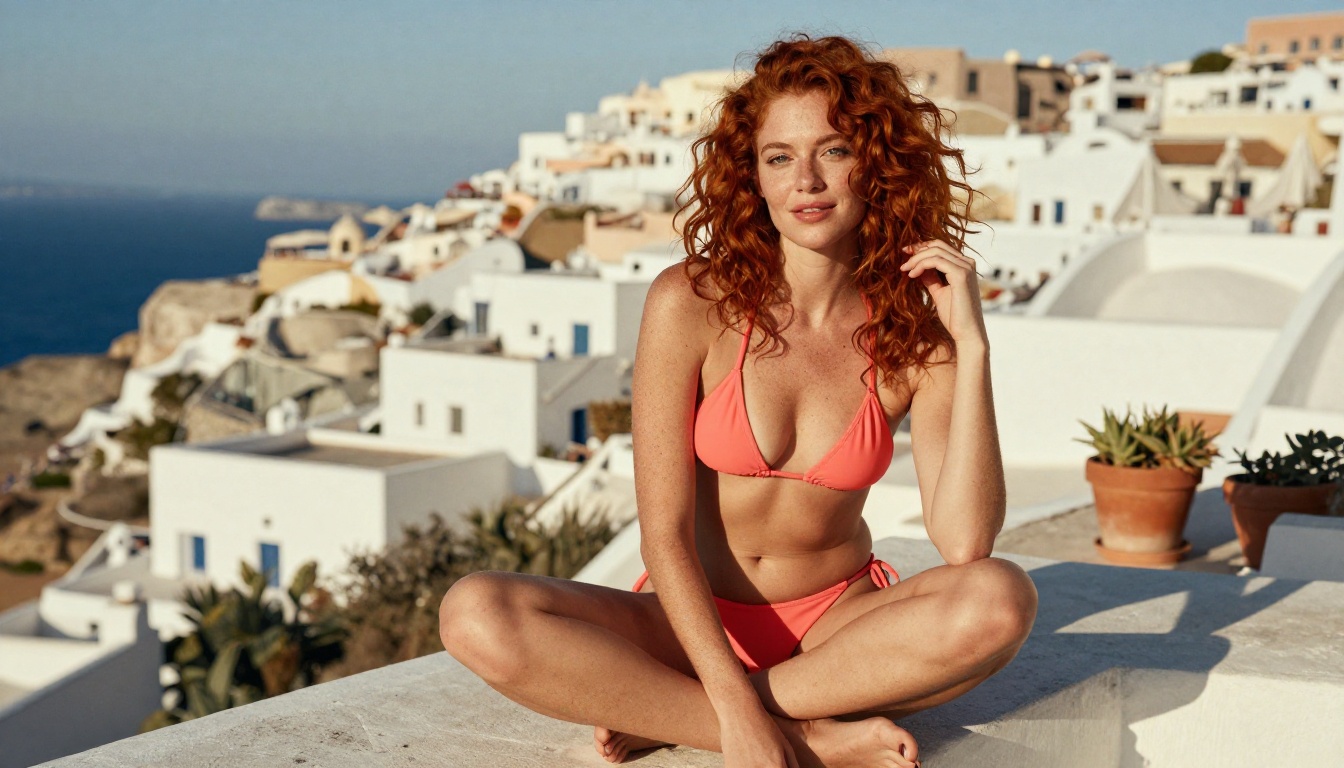
The landscape of AI image generation has matured significantly. Multiple models now exist that handle adult portrait work with high realism and no content restrictions. These are the ones that actually work.
Seedream 4.5 — the top pick right now
Seedream 4.5 from ByteDance is the strongest all-around option for NSFW portrait generation. It accepts explicit prompts, generates with outstanding photorealism, and returns results in under 3 seconds. For portrait work specifically, it handles skin texture, lighting, and facial detail at a level that matches or exceeds GPT Image 1.5 for safe-for-work content.
Critically, it also supports image editing, so you can use an existing photo as a reference and modify it with a text prompt. This makes it valuable not just for generating from scratch but for iterating on a concept.
Specs:
- Generation time: under 3 seconds
- NSFW: supported
- Input: text + optional image reference
- Editing: yes
⚠️ Important: The newer Seedream 5 Lite does NOT support NSFW content. Only Seedream 4.5 accepts adult content prompts.
PicassoIA Image Editor Pro — unlimited generations
PicassoIA Image Editor Pro takes a different approach. It's an image-to-image model, meaning you supply a reference image and transform it with a text prompt. Where it absolutely stands apart is in cost.
With Elite or Infinite plans, generations are unlimited. You can run 1,000 NSFW portrait variations without any additional cost. Compare that to generating 1,000 images on something like Nano Banana 2, which would run approximately $100 in generation credits. On PicassoIA Image Editor Pro, those 1,000 images are included.
Results land in under 1 second. There's a 3-generation free trial with no credit card required. For volume creators producing adult content at scale, this model changes the economics entirely.
The full NSFW model lineup
Beyond the top two, several other models on PicassoIA deliver strong results for adult portrait work:
| Model | Type | Speed | NSFW | Best For |
|---|
| Seedream 4.5 | Text-to-Image + Edit | Under 3s | Yes | Realistic portraits from scratch |
| PicassoIA Image Editor Pro | Image-to-Image | Under 1s | Yes | Unlimited volume, cost-effective |
| Qwen Image 2 | Text-to-Image + Edit | Fast | Yes | Open source realism, detailed skin |
| Grok Imagine Image | Image-to-Image | Fast | Yes | Bikini/swimwear transformations |
| Recraft V4 | Text-to-Image | Fast | Yes | Ultra-realistic text-to-image |
| P-Image | Text-to-Image | Under 1s | Yes | Speed-priority NSFW generation |
All of these models are available at picassoia.com/en/all-models without content restrictions.
How to Use Seedream 4.5 on PicassoIA
PicassoIA hosts Seedream 4.5 with its full capabilities intact. Here's how to start generating photorealistic adult portraits right now.
Step 1: Access the model
Go to Seedream 4.5 on PicassoIA. A free trial is available with no credit card required.
Step 2: Write an effective prompt
For portrait work, structure your prompt with these elements:
- Subject description: physical features, hair, eye color, ethnicity
- Outfit or state of dress: be specific (bikini, lingerie, partially clothed, etc.)
- Pose and expression: standing, seated, looking at camera, candid
- Environment: beach, bedroom, studio, outdoors
- Lighting: golden hour, soft window light, studio lighting
- Camera specifications: 85mm f/1.8, depth of field, film stock
Example prompt: Beautiful brunette woman wearing a white lace bralette, seated on cream silk sheets, soft morning window light from left, relaxed candid expression, Kodak Portra 400 film grain, 85mm f/1.4, skin texture detail, photorealistic
Step 3: Iterate rapidly
Seedream 4.5 generates in under 3 seconds. Run multiple variations of the same prompt with small adjustments. Change lighting, pose, or background to build a diverse set. A full photoshoot concept can be executed in minutes.
Step 4: Combine with PicassoIA Image Editor Pro
Once you have a base image you like, pass it to PicassoIA Image Editor Pro for variations. Because Image Editor Pro is unlimited on Elite and Infinite plans, you can iterate without burning credits. Change the outfit, lighting, background, or pose of an existing generated image with simple text instructions.
💡 Pro tip: Use Seedream 4.5 for the initial high-quality generation, then use Image Editor Pro for unlimited variation work. You get the best of both models without accumulating large credit costs.
GPT Image 1.5 vs. PicassoIA Models
Here's an honest comparison for portrait creators evaluating which platform fits their workflow:
| Criteria | GPT Image 1.5 | Seedream 4.5 | Image Editor Pro |
|---|
| NSFW support | No | Yes | Yes |
| Consistency | Inconsistent at edges | Consistent | Consistent |
| Speed | 15-30 seconds | Under 3 seconds | Under 1 second |
| Portrait realism | Excellent | Excellent | Very good |
| Skin texture detail | Very good | Excellent | Good |
| Cost per 1,000 images | ~$40-80 | ~$10-20 | Free (unlimited plan) |
| Image editing | Limited | Yes | Yes (core feature) |
| API access | Yes | Yes | Yes |
| Content policy | Unpredictable | Stable | Stable |
For creators who mix safe-for-work and adult content in their workflow, using both platforms makes sense. GPT Image 1.5 for product work, illustrations, and safe editorial content. Seedream 4.5 or Image Editor Pro for adult portrait work where you need reliability without policy negotiation.
Why Content Freedom Matters for Creators
There's a real argument that OpenAI's conservative approach to content policy makes GPT Image 1.5 inappropriate as a production tool for an entire category of legitimate creative work. Adult content creation, whether for fiction illustration, photography inspiration, mature storytelling, or adult entertainment production, is legal work carried out by millions of creators worldwide.
The platforms that treat adult creators as legitimate users have a meaningful advantage. Seedream 4.5, Qwen Image 2, Grok Imagine Image, Recraft V4, and P-Image all handle adult portrait prompts without refusals, inconsistency, or the anxiety of building on a platform that might silently change its policy and break your workflow overnight.
P-Image deserves a specific mention: it generates NSFW images in under 1 second. For creators who need speed above all else, it's hard to beat.
For video generation of adult content, the ecosystem extends further. P-Video turns text, images, or audio into video clips at up to 1080p with the safety filter disabled by default. Grok Imagine Video generates up to 15-second clips with no watermarks. And PicassoIA Video delivers unlimited video generation from text prompts at up to 720p.
Try It Without the Restrictions
GPT Image 1.5 is a remarkable model for the work it's built to do. But portrait creators working in adult content categories need tools that actually work for them, consistently, at production scale, without negotiating with a content classifier on every generation.
The models available on PicassoIA, starting with Seedream 4.5 and backed by PicassoIA Image Editor Pro for unlimited volume generation, represent the current state of the art for creators in this space. Fast, reliable, uncensored, and built for real production workflows.
See all available models, including the full NSFW lineup, at picassoia.com/en/all-models.
There's a free trial with no credit card required. Try a prompt that GPT Image 1.5 refuses and see what actually comes back.


