Text to 3D Tools Bringing Ideas into Simple Models
Text-to-3D AI technology converts written descriptions directly into printable 3D models, revolutionizing product design, architecture, medical visualization, and entertainment. These tools analyze spatial relationships and material properties to generate manufacturing-ready CAD models from natural language prompts, significantly reducing development time while maintaining geometric accuracy for prototyping and production applications.
The transition from 2D to 3D creation marks one of the most significant shifts in digital design technology. Where traditional 3D modeling required weeks of specialized training and complex software mastery, new text-to-3D tools are dismantling those barriers. These platforms convert written descriptions directly into three-dimensional models, meshes, and printable objects—transforming conceptual ideas into tangible digital assets within minutes rather than months.
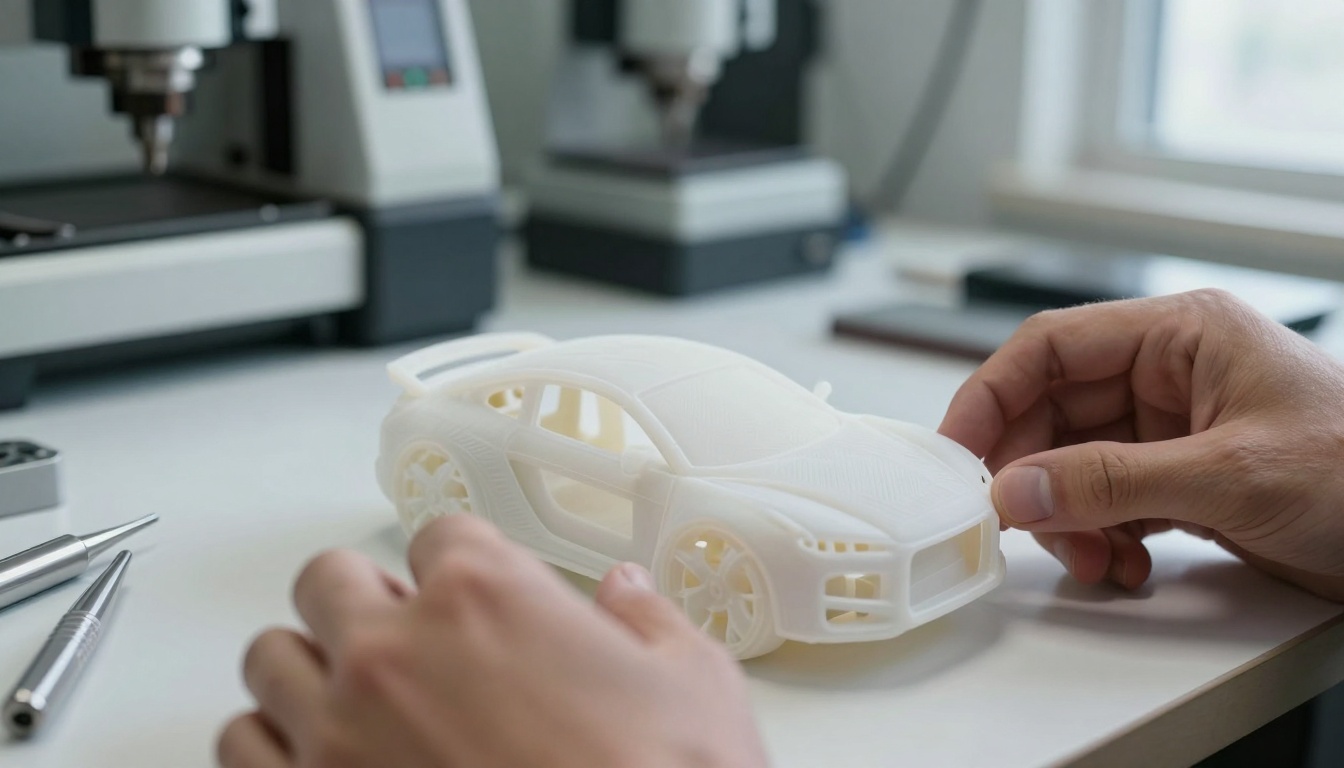
Industrial precision meets digital fabrication—hands manipulate intricate lattice structures emerging from additive manufacturing processes.
Why Text Descriptions Work for 3D Generation
The underlying technology relies on diffusion models similar to those powering image generation, but with crucial adaptations for volumetric data. Instead of learning pixel distributions, these systems analyze spatial relationships, surface geometries, and material properties across millions of existing 3D models. When you describe "a minimalist chair with organic curves and walnut finish," the AI references design principles from furniture databases, material characteristics from wood grain libraries, and ergonomic standards from human factors research.
💡 Technical Insight: Modern text-to-3D systems typically use tri-plane representations or neural radiance fields (NeRFs) to encode spatial information efficiently. These compressed formats allow rapid generation while preserving geometric accuracy critical for manufacturing applications.
Current Landscape of Text-to-3D Platforms
While dedicated text-to-3D services continue evolving, several approaches deliver three-dimensional results through different pathways:
1. Image-to-3D Conversion Chains
Many workflows begin with text-to-image generation using platforms like Flux or GPT-Image 1.5, then process those 2D outputs through specialized depth estimation and 3D reconstruction algorithms. This two-step approach often produces more coherent results than direct text-to-3D systems.
2. Parametric Design Assistants
Platforms like Shapr3D and Fusion 360 now integrate AI co-pilots that interpret natural language descriptions to suggest modeling operations. Instead of generating complete models, these tools propose "extrude this profile 50mm" or "add fillet radius of 5mm" based on your description of desired outcomes.
3. Specialized Generative Platforms
Emerging services like MeshGPT, Get3D, and TripoSR focus exclusively on converting text prompts into watertight 3D meshes suitable for animation, gaming, or 3D printing. These often produce lower-poly models optimized for real-time applications rather than high-fidelity renders.
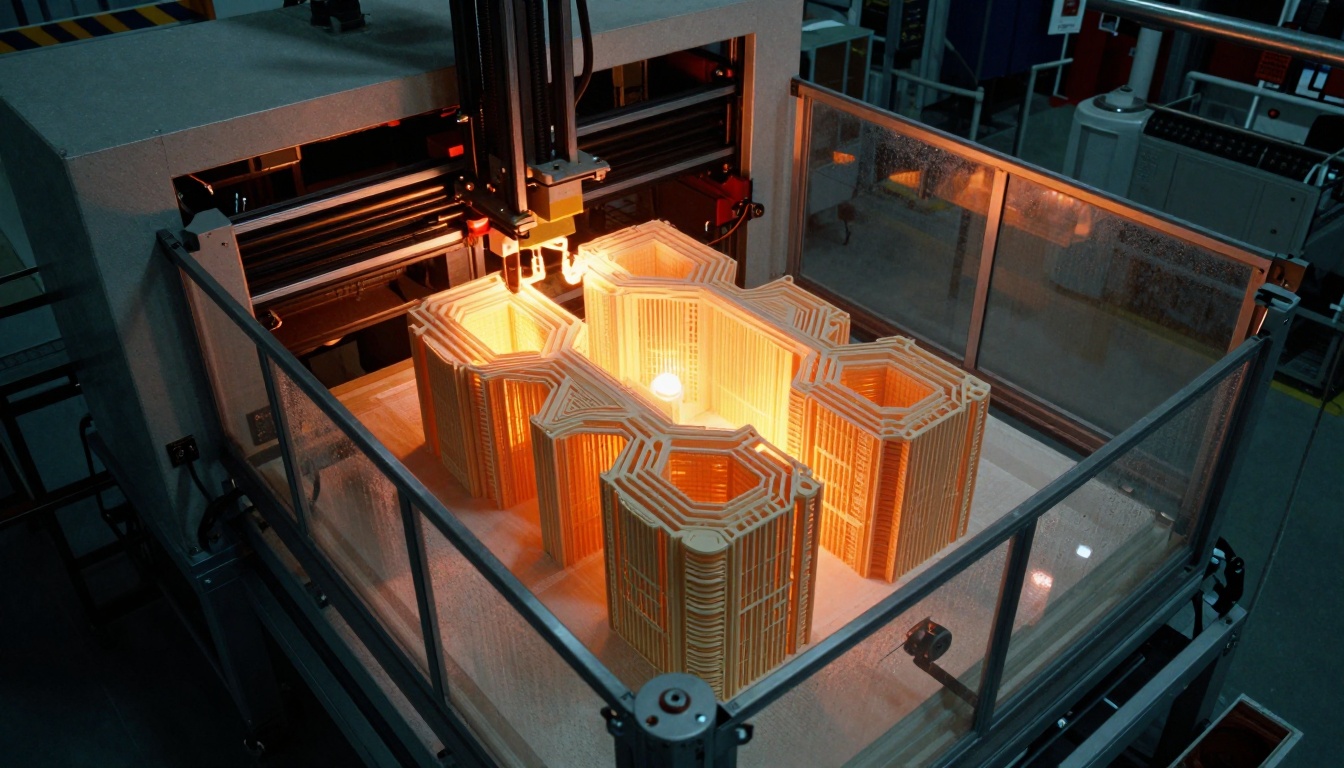
Industrial-scale additive manufacturing—layer-by-layer construction of architectural models inside precision-controlled chambers.
Practical Applications Across Industries
Product Design & Prototyping
Manufacturing companies report 63% reduction in initial concept development time when using text-to-3D tools. Designers describe functional requirements ("waterproof housing with integrated cable management") and receive multiple viable CAD models within hours. The generated models include proper wall thicknesses, structural considerations, and manufacturing-ready geometry.
Real-world example: A kitchen appliance manufacturer used text prompts like "ergonomic hand blender with non-slip grip and dishwasher-safe components" to generate 27 design variations overnight. The winning concept proceeded directly to prototyping without traditional CAD modeling.
Architecture & Construction
Architectural firms employ text descriptions of spatial requirements ("open-plan living area with north-facing windows and concealed storage") to produce preliminary massing models. These AI-generated block models establish spatial relationships and volumetric proportions before detailed design begins.
💡 Industry Adoption: According to 2024 AEC industry surveys, 41% of architecture firms now use AI-assisted 3D generation for schematic design phases, citing average time savings of 18-22 hours per project.
Medical & Scientific Visualization
Researchers describe anatomical structures or molecular configurations in natural language to generate accurate 3D representations. A prompt like "coronary artery with 70% stenosis at bifurcation point" produces medically accurate models for surgical planning or educational materials.
Entertainment & Gaming
Game studios generate environmental assets, props, and secondary characters through descriptive prompts. "Medieval tavern interior with wooden beams, stone fireplace, and rustic furniture" yields complete scene geometry ready for texture application and lighting setup.
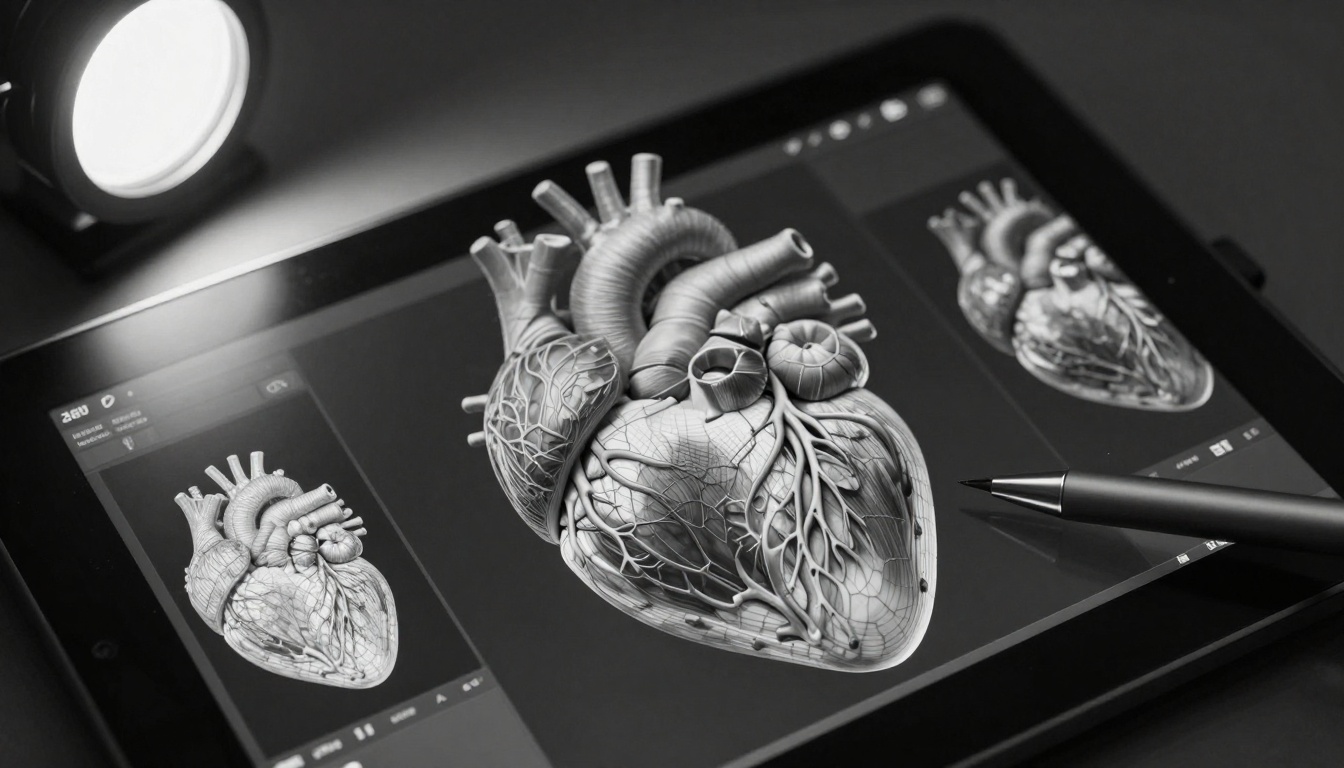
Medical precision meets digital visualization—detailed anatomical structures displayed across multiple representation modes simultaneously.
Technical Limitations and Current Challenges
Despite rapid progress, text-to-3D generation faces several persistent hurdles:
Challenge
Current Status
Impact on Results
Geometric accuracy
Moderate improvement
Generated models often require manual cleanup for manufacturing
Topological consistency
Significant limitation
Holes, non-manifold edges, and inverted normals common
Material assignment
Early stage development
Colors and textures frequently inaccurate or missing
Scale awareness
Poor performance
Objects generated without consistent dimensional relationships
Functional understanding
Minimal capability
Moving parts, hinges, and mechanical systems rarely correct
The topology problem represents the most significant barrier. Most generated models contain geometric errors that prevent immediate 3D printing or CNC machining. Common issues include:
Non-manifold edges where surfaces don't properly connect
Self-intersecting geometry that would physically conflict
Insufficient wall thickness for structural integrity
Missing surfaces creating holes in the mesh
Late-night creative sessions—game developers bring virtual worlds to life through meticulous 3D environment construction and lighting design.
Optimizing Your Text Prompts for 3D Results
Effective 3D generation requires more structured descriptions than image generation. Follow this framework for better results:
Spatial Relationships First
Begin with overall dimensions and proportions: "A decorative vase approximately 300mm tall with 150mm diameter at widest point"
Material Properties Early
Specify materials before detailing form: "Cast bronze sculpture with patina finish, not polished"
Functional Requirements Clearly
Describe how parts connect and move: "Folding chair with hinged seat and backrest, storage position collapses to 100mm thickness"
Manufacturing Considerations
Include production method constraints: "Injection-molded plastic component with uniform 2.5mm wall thickness, no undercuts"
💡 Pro tip: Reference existing design principles rather than inventing completely novel forms. Prompts like "mid-century modern side table" produce more coherent results than "completely unique table never seen before."
Integration with Existing 3D Workflows
Text-to-3D tools don't replace traditional modeling software but augment established pipelines:
Concept Generation Phase
Use AI-generated models as starting points for refinement in Blender, Maya, or SolidWorks. Export generated OBJ or STL files and apply proper topology, UV unwrapping, and material assignments.
Variation Exploration
Generate multiple design alternatives based on core requirements, then evaluate aesthetics, manufacturability, and cost implications before committing engineering resources.
Rapid Prototyping
Create physical 3D prints from AI-generated models to assess ergonomics, spatial relationships, and user interactions before detailed design begins.
Scientific precision meets additive manufacturing—color-coded anatomical models enable detailed medical research and surgical planning.
Future Development Trajectories
Several emerging technologies promise to address current limitations:
Physics-Aware Generation
Next-generation systems will simulate material properties, structural loads, and kinematic relationships during generation. Instead of just creating forms, they'll produce functionally viable designs.
Multi-Modal Input Support
Future platforms will accept sketches, reference images, and verbal descriptions simultaneously, similar to how designers currently work across multiple media types.
Industry-Specific Training
Specialized models trained on automotive parts, consumer electronics, or medical devices will understand domain-specific constraints and standards.
Real-Time Iteration
Live adjustment of generated models based on continuous feedback, allowing designers to "sculpt" through conversation rather than manual modeling operations.
Getting Started with Available Tools
While dedicated text-to-3D platforms remain in development, several accessible options provide entry points:
Image Generation with Depth Extraction
Create 2D concepts using platforms like p-image or qwen-image-2512, then process through depth estimation tools like MiDaS or ZoeDepth to create pseudo-3D representations.
CAD Software AI Assistants
Modern CAD packages increasingly include natural language interfaces. Describe design intent and receive modeling operation suggestions rather than complete models.
Online 3D Generation Services
Platforms like Meshy.ai, Masterpiece Studio, and Kaedim offer browser-based text-to-3D conversion with varying quality levels and export options.
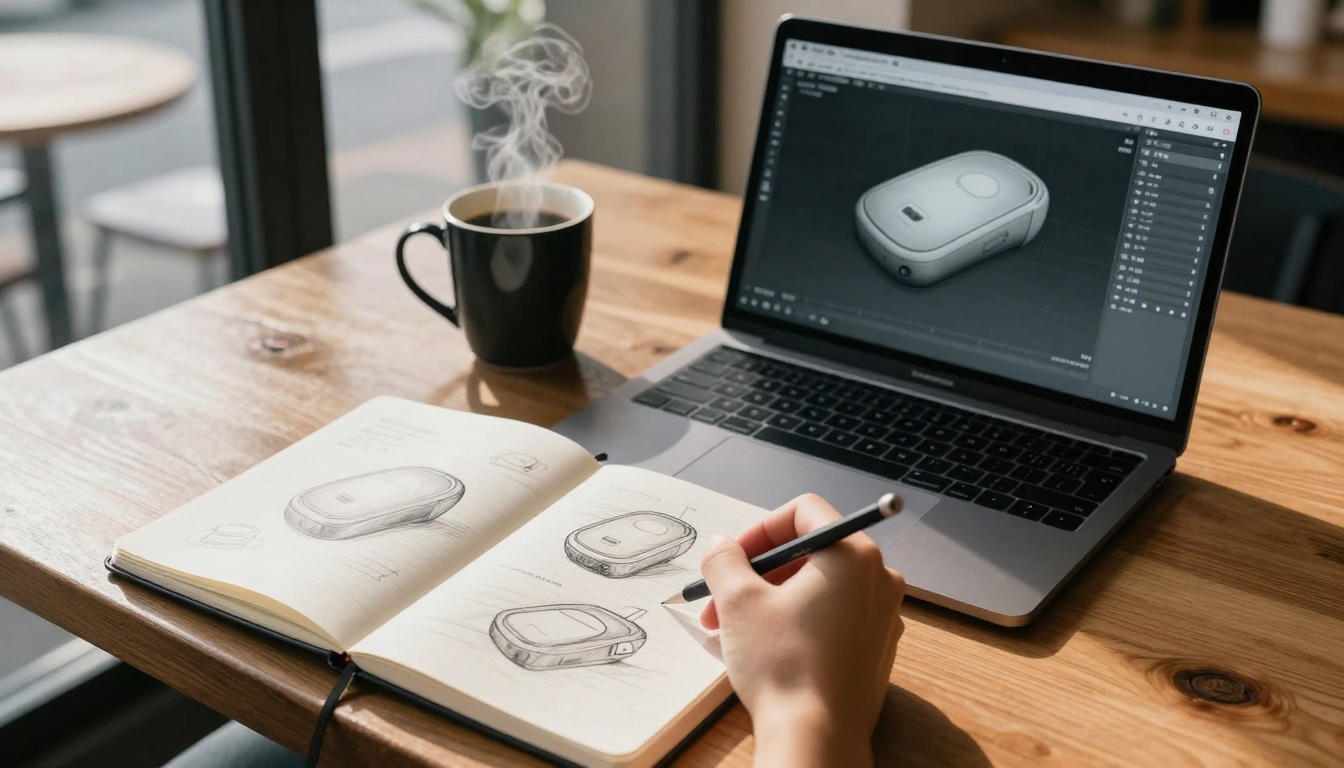
Analog meets digital—sketchbook concepts evolve directly into precise 3D CAD models through integrated design workflows.
Cost Considerations and Accessibility
Current text-to-3D services employ various pricing models:
Service Type
Typical Cost
Output Quality
Best For
Free web platforms
$0
Low to medium
Education, concept exploration
Professional services
$20-100/month
Medium to high
Small businesses, freelancers
Enterprise solutions
Custom pricing
Production-ready
Manufacturing, architecture firms
Local installation
Hardware investment
Variable
Research institutions, large studios
Hidden costs often include:
Model cleanup time (30-60 minutes per generated model)
Apply AI generation to internal tools, packaging concepts, or exhibition displays before mission-critical products.
Establish Quality Gates
Define acceptance criteria for AI-generated models: watertight mesh, minimum wall thickness, proper scale, etc.
Train Cross-Functional Teams
Include engineers, designers, and manufacturing specialists in prompt development sessions.
Maintain Human Oversight
Treat AI as collaborative tool rather than replacement for design expertise and engineering judgment.
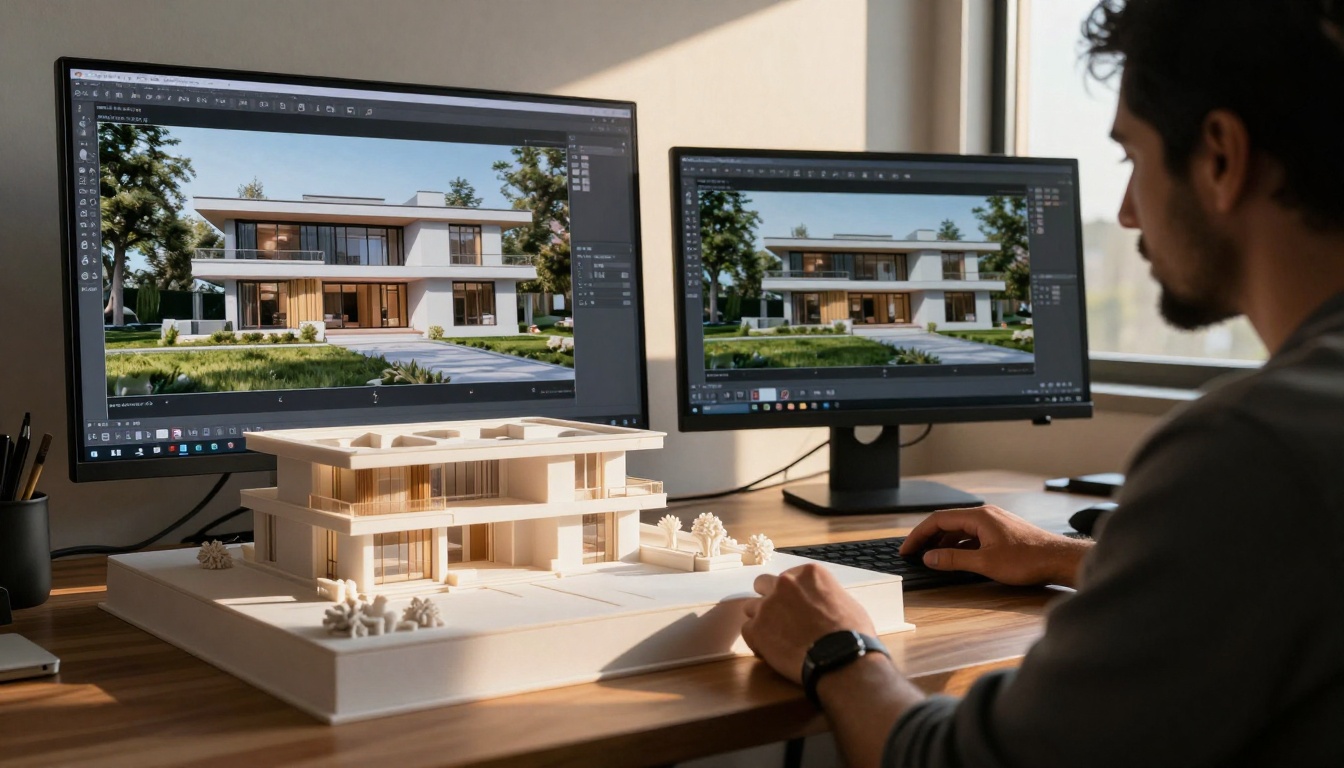
Digital rendering meets physical manifestation—architectural concepts exist simultaneously in virtual space and tangible scale models.
Ethical Considerations and Originality
As with all generative AI, text-to-3D tools raise important questions:
Intellectual Property Concerns
Who owns designs generated through AI systems? Current legal frameworks provide limited clarity, especially when training data includes copyrighted 3D models.
Design Originality
Are AI-generated designs truly novel or combinatorial rearrangements of existing work? The debate parallels discussions in 2D image generation but with added complexity of functional requirements.
Professional Standards
How do text-to-3D tools affect certification requirements for designers, engineers, and architects? Professional bodies are beginning to establish guidelines for AI-assisted design.
Environmental Impact
Rapid generation of disposable 3D models could increase digital waste and unnecessary physical prototyping unless managed responsibly.
The Role of PicassoIA in 3D Evolution
While PicassoIA currently focuses on 2D image and video generation through models like flux-2-klein-4b and sora-2-pro, its infrastructure supports expansion into 3D domains. The platform's category system already includes 3D as a defined category, suggesting planned or existing 3D generation capabilities.
For designers working in mixed media, PicassoIA's image editing tools provide valuable intermediate steps in 3D workflows. Generated 2D concepts can serve as reference images for manual 3D modeling or input for depth extraction processes.
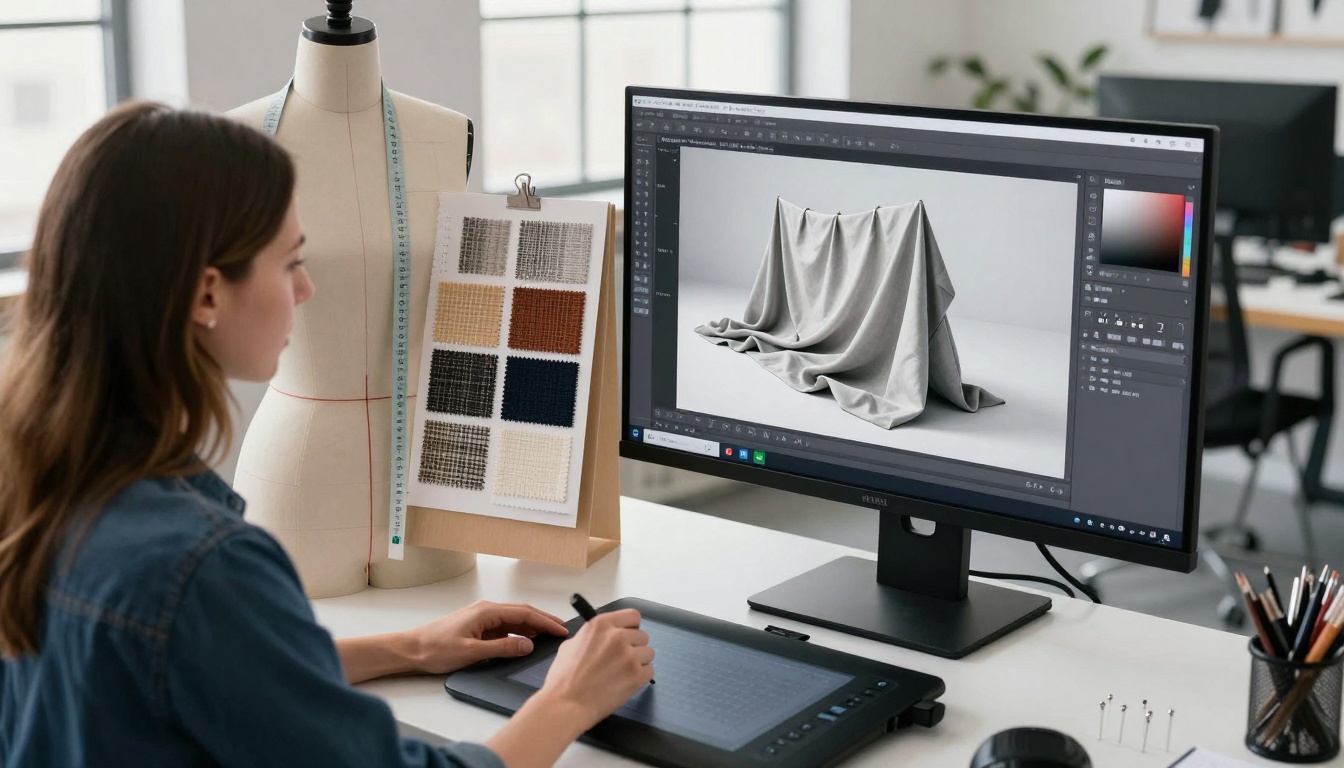
Material science meets digital simulation—physical fabric swatches inform virtual cloth physics and drape behavior on 3D avatars.
Practical Implementation Strategies
Organizations implementing text-to-3D tools achieve best results through structured approaches:
Phase 1: Exploration (Weeks 1-4)
Test multiple platforms with non-critical design challenges
Document prompt effectiveness across different object types
Establish baseline quality metrics for generated models
Phase 2: Integration (Months 2-3)
Develop company-specific prompt libraries
Create standardized export/import pipelines
Train design teams on effective prompt engineering
Phase 3: Optimization (Months 4-6)
Refine workflows based on project outcomes
Develop quality assurance checklists
Establish intellectual property policies
Phase 4: Scaling (Beyond 6 months)
Integrate with PLM and ERP systems
Develop custom training data for domain-specific needs
Contribute to industry standards development
Common Pitfalls and Avoidance Strategies
Early adopters report several recurring challenges:
Pitfall 1: Over-reliance on AI generationSolution: Maintain parallel traditional design processes for critical components
Pitfall 2: Inconsistent prompt qualitySolution: Develop standardized prompt templates for different object categories
Pitfall 3: Manufacturing incompatibilitySolution: Implement geometric validation scripts before prototype production
Pitfall 4: Team resistanceSolution: Frame AI as augmentation tool rather than replacement technology
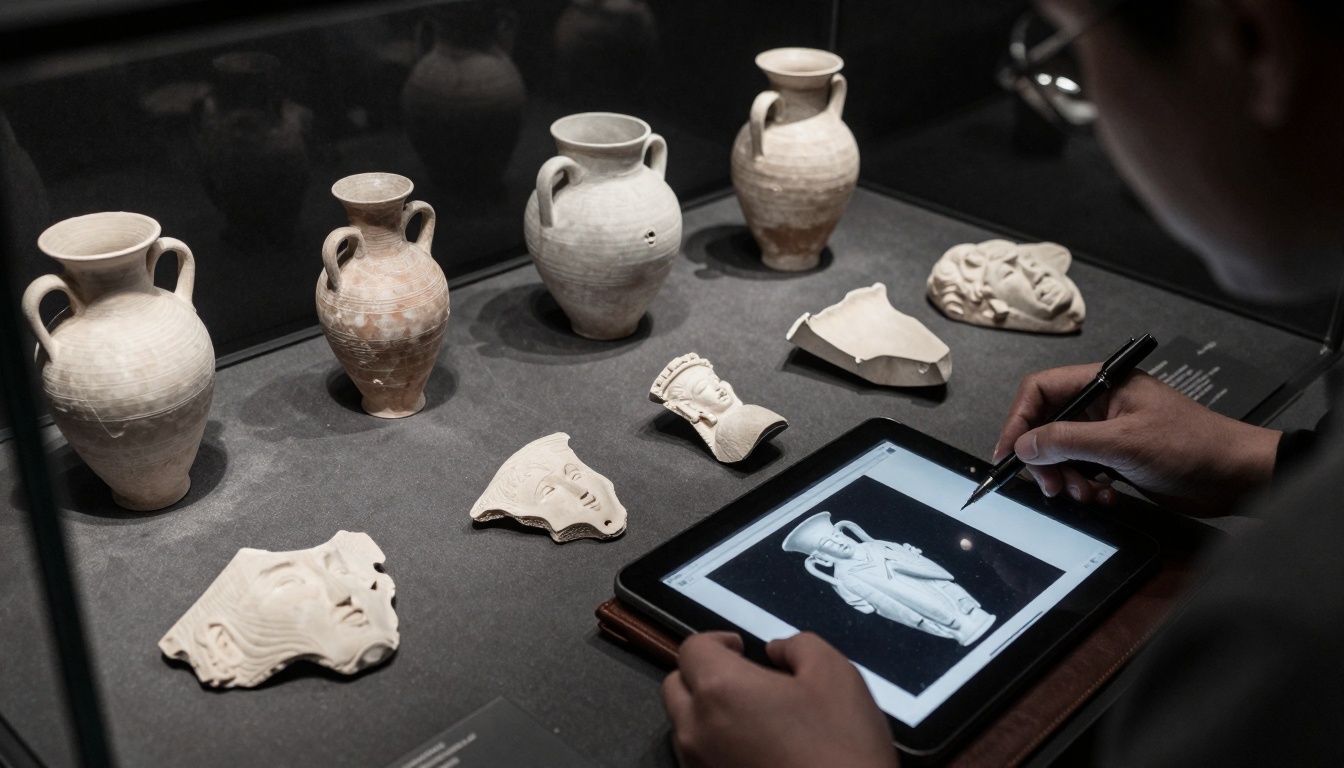
Cultural preservation meets technological reproduction—ancient artifacts recreated through precise digital scanning and additive manufacturing.
Measuring Success and ROI
Organizations track several key metrics when evaluating text-to-3D implementation:
Time-to-Concept Reduction
Compare hours required for initial concept development before and after AI adoption
Design Iteration Velocity
Measure how many design variations teams can explore within fixed timeframes
Engineering Change Requests
Track reduction in design errors discovered during manufacturing preparation
Client Satisfaction Scores
Monitor feedback on design presentation quality and concept communication
Cost Per Prototype
Calculate savings from reduced physical prototyping and model-making
Industry benchmarks suggest:
35-45% reduction in initial concept development time
3-5x increase in design variations explored
28-32% decrease in engineering change requests
60-70% reduction in physical prototype costs for early stages
Looking Ahead: The Next Five Years
Text-to-3D technology will likely follow a predictable maturation curve:
2024-2025: Specialized tools for specific industries (jewelry, dental, footwear)
2025-2026: Integration with major CAD platforms as standard features
2026-2027: Physics-aware generation for functional parts and assemblies
2027-2028: Real-time collaborative design through conversational interfaces
2028-2029: Industry-standard certification for AI-assisted design professionals
The most significant impact may come from democratization effects. As 3D creation becomes accessible through natural language, we'll see innovation emerge from non-traditional sources: healthcare workers designing custom medical devices, teachers creating educational models, small manufacturers developing proprietary tooling.
This accessibility aligns with PicassoIA's broader mission of making creative technology available to wider audiences. While current offerings like flux-2-pro and veo-3.1 focus on 2D media, the platform's architecture supports eventual 3D capabilities as the technology matures.
Creating Your First 3D Models Today
Begin experimenting with available tools through this progression:
Start with 2D visualization using PicassoIA's image generation models to establish aesthetic direction
Apply depth extraction to create pseudo-3D representations from 2D concepts
Use AI-assisted CAD for manual modeling with natural language guidance
Explore specialized platforms for complete text-to-3D generation with understanding of current limitations
Develop hybrid workflows combining AI generation with traditional modeling for quality assurance
The most successful implementations balance technological capability with human expertise. Text descriptions provide starting points, but experienced designers ensure manufacturability, engineers validate structural integrity, and artists refine aesthetic qualities.
As the technology evolves, the most valuable skill may become prompt engineering for three-dimensional outcomes—articulating spatial relationships, material properties, and functional requirements with precision that translates effectively to volumetric generation.
The transition from complex software interfaces to natural language represents more than convenience—it's a fundamental shift in how we conceive and create physical objects. Text-to-3D tools don't just make modeling faster; they make three-dimensional thinking accessible to anyone who can describe what they imagine.