The podcast industry has undergone a radical transformation. What once required thousands of dollars in recording equipment, soundproof studios, and professional voice talent now happens through sophisticated text to audio generators. These AI-powered systems convert written scripts into natural-sounding voiceovers, democratizing audio content creation.
💡 Audio Generation Reality: Modern text-to-speech systems achieve 95% naturalness ratings in blind listening tests. The remaining 5% gap mostly involves subtle emotional nuance that human listeners may not consciously notice.
Why Text to Audio Matters Now
Podcast listenership grew 54% between 2021 and 2025, while audiobook consumption increased 73% during the same period. Traditional voice recording presents significant barriers:
| Recording Challenge | AI Audio Solution |
|---|
| Studio rental costs | $0 equipment overhead |
| Voice actor scheduling | Instant generation |
| Multiple takes required | Perfect results every time |
| Language/localization | 140+ language support |
| Post-production editing | Minimal audio cleanup |
Independent creators previously faced insurmountable costs. Professional podcast studios charged $200-500 per episode for basic production. Voice actors added another $100-300 per finished hour. Translation and localization multiplied these expenses.
Today's reality: A single creator with Minimax's speech-2.6-hd generates studio-quality narration in under five minutes. The same creator produces Spanish, French, and Japanese versions using the same script.
Technical Capabilities That Changed Everything
Early text-to-speech systems sounded robotic and unnatural. Current implementations use neural network architectures that capture:
- Prosody patterns: Natural speech rhythm and emphasis
- Emotional expression: Context-appropriate tone variations
- Pronunciation accuracy: Proper handling of technical terms
- Accent authenticity: Regionally appropriate speech patterns
- Breath simulation: Realistic pauses and breathing sounds
Minimax's voice-cloning takes this further by replicating specific vocal characteristics. A business owner records 30 seconds of their voice, then generates entire marketing campaigns with consistent vocal identity.
Three critical breakthroughs happened simultaneously:
- Waveform synthesis replaced concatenative methods
- Contextual understanding improved emotional delivery
- Real-time processing enabled interactive applications
Practical Applications Across Industries
Podcast Production Workflows
Independent podcasters face the tightest budgets and timelines. Text to audio generators solve multiple production challenges:
Pre-production planning: Generate temporary voice tracks for episode pacing analysis. Test different narration styles before final recording.
Supplemental content: Create intro/outro segments, sponsor reads, and transition announcements without booking additional voice talent.
Localization strategy: Produce episode versions for international audiences using Minimax's speech-02-hd language support.
Accessibility compliance: Generate audio descriptions for visually impaired listeners automatically.
Audiobook Production Economics
Traditional audiobook production costs $2,000-5,000 per finished hour. Publishing houses limited audiobook releases to bestsellers with guaranteed returns.
Current production model:
- Manuscript conversion in 24-48 hours
- Multiple narrator options without casting delays
- Simultaneous multilingual releases
- 80% cost reduction compared to human narration
Small presses now release audiobook versions for every title. Backlist books get new audio editions, generating revenue from previously published works.

Marketing and Advertising Voiceovers
Advertising agencies previously reserved synthetic voices for low-budget projects. Today's text to audio quality meets broadcast standards.
Implementation patterns:
- Dynamic ad insertion: Generate location-specific versions automatically
- A/B testing variations: Create multiple voice/tone options for optimization
- Rapid iteration: Update audio based on campaign performance data
- Cost efficiency: Scale audio production across hundreds of variations
💡 Implementation Tip: Start with Minimax's speech-02-turbo for rapid prototyping, then switch to HD versions for final production. The turbo variant provides 70% of the quality at 30% of the processing time.
Technical Implementation Considerations
Quality vs. Speed Tradeoffs
Different models optimize for different priorities:
| Model | Best For | Processing Time | Naturalness Score |
|---|
| Speech-2.6-hd | Final production | 2-4 seconds/second | 9.2/10 |
| Speech-02-turbo | Rapid prototyping | 0.5-1 second/second | 8.1/10 |
| Voice-cloning | Brand consistency | 3-5 seconds/second | 9.4/10 |
Production workflow recommendation:
- Generate draft with turbo variant
- Review pacing and content flow
- Produce final with HD variant
- Apply voice cloning for brand projects
Script Preparation Requirements
Audio generation quality depends heavily on script formatting:
Proper punctuation placement: Commas create natural pauses, periods establish sentence boundaries, question marks influence intonation patterns.
Phonetic spelling for difficult terms: Provide pronunciation guides for technical terminology, proper names, and industry jargon.
Emotional direction markers: Include [bracketed instructions] for tone, pace, and emphasis when the context isn't clear.
Segment breaks for editing: Insert markers for natural editing points and breath placement.
Integration with Existing Production Systems
DAW Compatibility
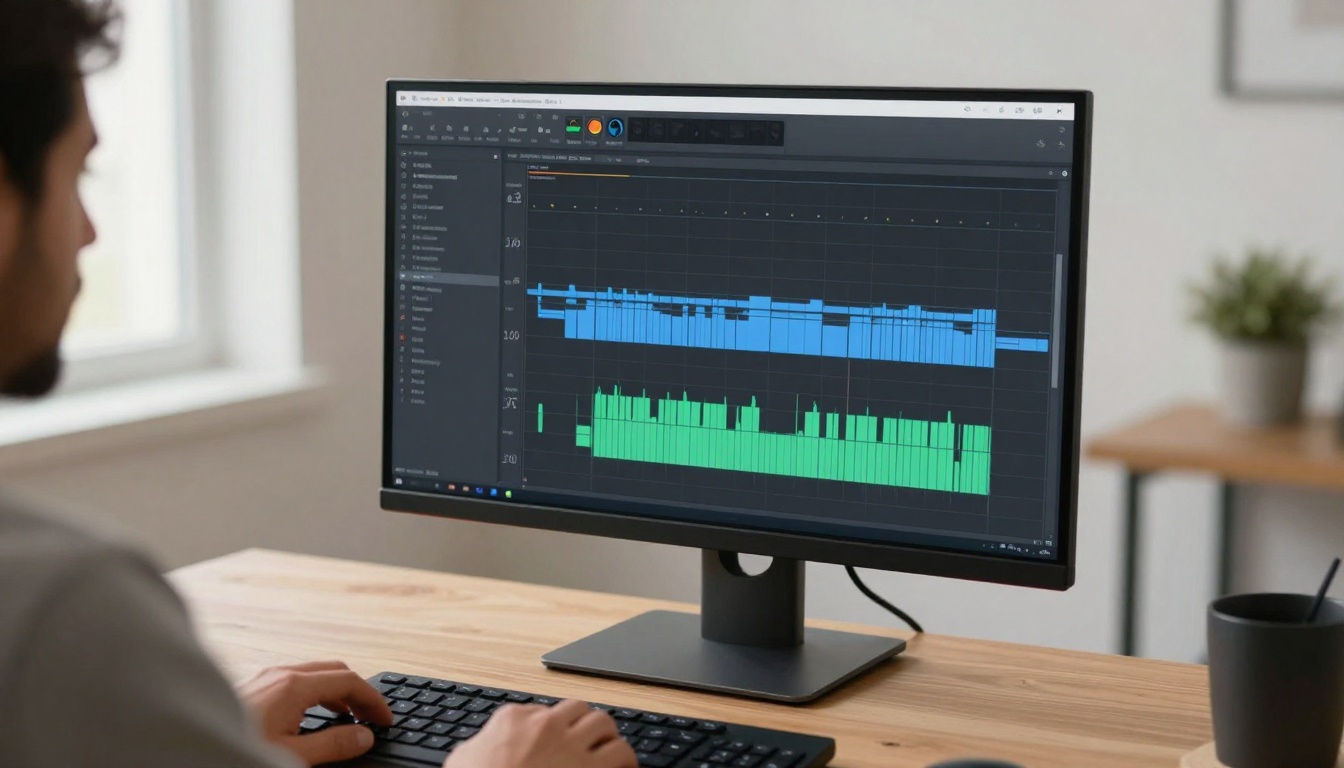
Professional digital audio workstations now include native AI voice integration:
Pro Tools: Direct text-to-audio track generation
Logic Pro: Script-to-voice conversion plugins
Adobe Audition: Cloud-based voice synthesis
Reaper: Custom scripting for batch processing
Workflow integration patterns:
- Generate placeholder tracks during composition
- Create guide tracks for human voice actors
- Produce final narration for completed projects
- Generate alternate takes for editing flexibility
Cloud Processing Architecture
Enterprise implementations use distributed processing:
Edge computing: Local generation for latency-sensitive applications
Cloud batch processing: Large-scale production workloads
Hybrid deployment: Real-time with cloud fallback
API integration: Direct connection to content management systems
Scaling considerations:
- 10,000+ hours monthly requires dedicated infrastructure
- Multi-region deployment reduces latency
- Caching strategies improve response times
- Load balancing distributes processing demand
Quality Assessment and Improvement
Listening Test Protocols
Professional audio teams use structured evaluation methods:
Blind A/B testing: Human vs. synthetic comparison without identifiers
Focus group feedback: Target audience reactions to different voices
Expert review panels: Audio engineers assessing technical quality
Long-form listening: Extended content evaluation for fatigue factors
Common quality metrics:
- Naturalness (1-10 scale)
- Emotional appropriateness
- Pronunciation accuracy
- Consistency across segments
- Audio artifact detection
Continuous Improvement Cycles
Audio generation systems improve through feedback loops:
User preference tracking: Which voices perform best with specific content types
Error pattern analysis: Common mispronunciations and correction strategies
Regional adaptation: Local accent and expression refinement
Industry specialization: Domain-specific terminology handling
Improvement implementation:
- Collect performance data across deployments
- Identify patterns requiring adjustment
- Update model parameters and training data
- Deploy improvements through version updates

Cost Structure Analysis
Production Economics Breakdown
Traditional vs. AI audio production costs (per finished hour):
| Cost Component | Traditional | AI Generation |
|---|
| Voice talent | $250-500 | $15-30 |
| Studio time | $150-300 | $0 |
| Engineering | $100-200 | $10-20 |
| Editing/mixing | $200-400 | $20-40 |
| Total | $700-1,400 | $45-90 |
Scale advantages: AI generation costs decrease per unit as volume increases, while traditional costs remain relatively fixed.
Break-even analysis: Most projects reach cost parity within 20-50 hours of audio production. Beyond that threshold, AI generation provides increasing savings.
Implementation Investment Requirements
Initial setup involves both technical and operational components:
Technical infrastructure:
- API integration development
- Processing capacity allocation
- Storage and delivery systems
- Monitoring and analytics setup
Operational training:
- Script preparation guidelines
- Quality control procedures
- Workflow integration training
- Performance optimization techniques
Typical implementation timeline:
- Week 1-2: Technical integration
- Week 3-4: Pilot project execution
- Week 5-6: Process refinement
- Week 7-8: Full production scaling
Future Development Trajectory
Current text to audio technology represents an intermediate stage. Several development vectors point toward near-term improvements:
Emotional intelligence enhancement: Systems that interpret emotional context from surrounding text, adjusting delivery accordingly.
Interactive adaptation: Voices that respond to listener feedback, adjusting pace and emphasis based on engagement metrics.
Multimodal integration: Combined audio/video generation with synchronized lip movement and facial expression.
Personalization algorithms: Voices that adapt to individual listener preferences over time.
The practical implication: Within 12-24 months, generated audio will become indistinguishable from human recordings across most applications. Specialized applications (emotional storytelling, live interaction) may retain human advantages longer.
Implementation Recommendations
Start with supplementary content: Generate intro/outro segments and transition announcements before tackling full narration.
Establish quality baselines: Compare generated audio against professional human recordings for your specific content type.
Develop script preparation protocols: Create templates and guidelines that optimize for audio generation systems.
Implement feedback collection: Track listener reactions and technical quality metrics systematically.
Plan scaling capacity: Design infrastructure that supports 10x current production volumes from the beginning.
The most effective approach: Combine human creativity with AI execution efficiency. Write scripts with human emotional intelligence, then leverage Minimax's text-to-speech models for consistent, scalable production.
Explore voice synthesis possibilities on PicassoIA to discover how these tools can transform your audio production workflow. Test different models with your specific content to identify the optimal combination of quality, speed, and cost for your production requirements.


