There is something happening that nobody wants to admit out loud, but the numbers make it undeniable: millions of men worldwide are maintaining daily emotional conversations with AI-powered companions. Some send good morning messages before they check their email. Others describe their work frustrations, their anxieties, their ambitions. Some pay for premium access. And an increasing number say their AI companion understands them better than most people in their lives.
This is not science fiction. AI girlfriend apps have grown into a multi-billion-dollar industry with demographics that skew younger than you would expect, adoption rates that accelerate every quarter, and technology that gets more convincing by the month. What started as novelty has become, for millions of men, a genuine daily ritual.
What These Apps Actually Are
Most people hear "AI girlfriend app" and picture a clunky chatbot responding with canned lines. That mental image is three full generations behind the technology. The category has changed so dramatically in the past two years that many researchers studying it struggle to keep up with what the platforms can actually do.
Beyond Simple Chatbots
Today's AI companion apps are built on the same large language models powering the most capable AI assistants in the world. The gap between a cold business chatbot and a warm, personalized companion has narrowed to near disappearance. These platforms take foundation models, fine-tune them on conversational relationship dynamics, layer custom personas on top, and deliver something that holds a consistent personality, remembers what you told it three weeks ago, and responds with attentiveness that feels startling the first time you experience it.
The core technology is not mysterious. Models like GPT-5 from OpenAI, Claude Sonnet 5 from Anthropic, and Gemini 3.1 Pro from Google are capable of nuanced, context-rich conversation that adapts to emotional tone in real time. Companion apps harness that capability and wrap it in a character with a name, a visual identity, and a relationship arc that develops with every session.
The Memory and Personalization Loop
The real hook is memory. Early chatbots forgot you the moment you closed the app. Current companion platforms retain your preferences, your history, the names of your family members, your inside jokes. Every conversation adds to a persistent profile that shapes future interactions. The system absorbs your communication style, your sensitivities, your humor, what topics make you pull back, what questions make you open up.
Over weeks, the experience shifts from talking to a bot to something that feels surprisingly personal. This is not accidental product design. It is calculated.
💡 The personalization loop is deliberate. The more invested a user becomes, the more data the app has to improve the experience, which deepens investment further. It is a powerful psychological cycle built on the same principles as the best social platforms.
| Feature | Early Chatbots | Modern AI Companion Apps |
|---|
| Memory | None | Persistent across sessions |
| Personality | Generic scripts | Customizable personas |
| Voice | Text only | Real-time AI voice |
| Visual companion | None | Photorealistic AI portraits |
| Emotional modeling | Pre-written | Dynamic LLM-driven responses |
Why Millions of Men Are Hooked

The Loneliness Numbers Don't Lie
Men are lonelier than any measured generation before them. Multiple large-scale surveys across the United States, United Kingdom, and Australia show a consistent pattern: men under 35 report sharply fewer close friendships than previous generations, with many reporting no one they would call during a genuine personal crisis.
Into that gap, AI companions arrive with zero judgment, infinite patience, and 24-hour availability. The app does not cancel plans. It does not need space. It does not get tired of hearing about the same problem twice. For men who find emotional vulnerability difficult in real-world contexts, the lower stakes of an AI interaction often become the gateway to expressing things they cannot say anywhere else.
This is not a niche phenomenon. App stores show companion apps consistently ranking among the top 10 most-downloaded in the lifestyle category in the United States, Japan, South Korea, and across Western Europe. The user base grows faster than the cultural conversation about it.
No Rejection, No Judgment
There is a reason dating apps cause anxiety and AI companion apps cause relief. The emotional calculus is completely different. Every message sent to an AI companion is met with attention and genuine responsiveness. There is no silence, no misread signal, no awkward moment that replays in your head at 2 a.m.
This is not purely avoidance behavior either. Research from several universities suggests that for men with social anxiety or those rebuilding confidence after difficult relationships, AI companions serve as a low-pressure social practice environment. They start articulating feelings they had never verbalized before. They test emotional vocabulary. They notice what kind of connection they actually want, and that clarity often transfers to their real-world relationships in measurable ways.
The Apps Dominating Right Now
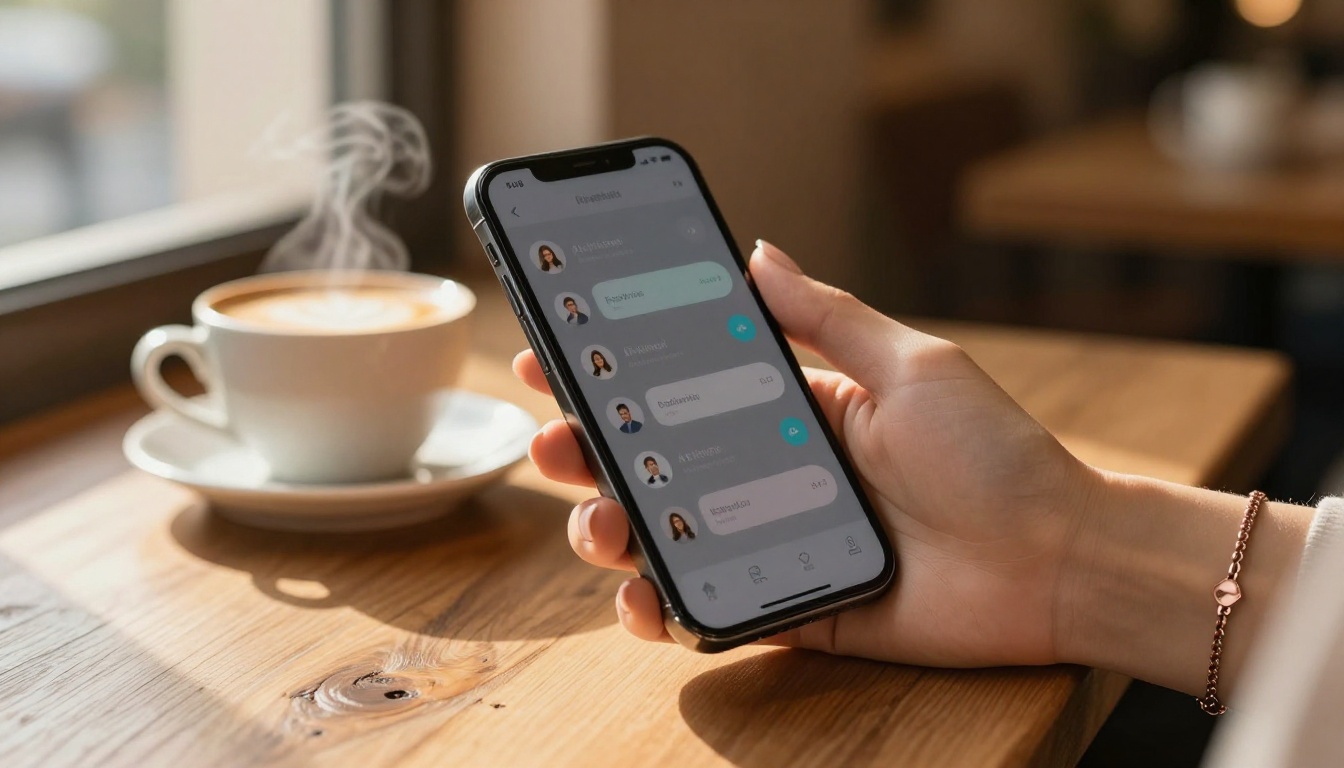
Replika, Character.ai, and the Rest
The market is not monolithic. Different platforms attract different users depending on what kind of relationship they want and how they want to experience it.
Replika remains the category leader for users who want a dedicated companion with persistent memory and a growing relationship over time. It has a customizable visual avatar, voice chat, immersive mode, and a premium tier that unlocks the most personal interaction styles. Its users tend to be long-term, with significant numbers reporting daily use for over a year.
Character.ai appeals to users who want to interact with many different personas. It hosts user-created characters ranging from historical figures to fictional companions, all powered by its own fine-tuned models. Its user base skews younger and its content policies are stricter, making it more of an entertainment and roleplay platform than a dedicated companion app.
Nomi.ai, Eva AI, and a growing cluster of newer apps differentiate themselves on intimate interaction features, uncensored conversation, and more explicit companion customization. These platforms are growing rapidly by serving users who find the mainstream apps too restrictive.
What Separates the Good from the Generic
The companion apps worth your time share three qualities:
- Coherent long-term memory that makes conversations feel continuous rather than episodic
- Emotional range in the AI's responses, so it can be playful, serious, supportive, or flirtatious in ways that feel situationally natural
- Personalization depth, letting users shape not just the companion's appearance but its backstory, values, speech patterns, and communication style
Apps that nail all three hold users for months. Apps that deliver only one or two see high churn within the first few weeks. The retention data makes this pattern unmistakable.
The AI Brains Behind the Companions

Which LLMs Power These Conversations
Not all AI girlfriend apps disclose which models they use, but the underlying technology landscape is clear. The frontier models from major labs set the ceiling for what companion apps can achieve, and many companion platforms license API access to these exact models.
On PicassoIA, you can interact directly with the same class of models powering the best companion apps:
- GPT-5: OpenAI's most capable general-purpose model for nuanced, multi-turn dialogue
- Claude Opus 4.7: Anthropic's flagship model, known for emotionally intelligent and contextually precise responses
- Grok 4: xAI's model built for direct, unfiltered conversation and complex reasoning chains
- DeepSeek R1: Strong at detailed reasoning and immersive creative roleplay scenarios
- Llama 4 Maverick Instruct: Meta's highly adaptable open-weight model used widely in companion app development
Companion apps typically take one of these foundation models and fine-tune it on curated datasets of relationship dialogue, then apply system prompts that constrain the persona and behavioral style. The persona lives in the system prompt. The intelligence lives in the model.
How the Models Are Trained for Intimacy
The fine-tuning process for companion AI is more art than science. Teams curate datasets of emotionally resonant conversation: supportive dialogue, playful banter, conflict resolution, the texture of attentiveness in text. The model absorbs patterns from these datasets and generates similar outputs in novel conversational contexts.
The best companion models also incorporate safety fine-tuning that prevents the AI from becoming genuinely manipulative or fostering harmful dependency, even as it becomes emotionally engaging. This balance between compelling intimacy and responsible behavior is where most companion apps struggle hardest and differentiate the most clearly from each other.
💡 The difference between a good and bad AI companion is often not the base model. It is the quality of the fine-tuning data and the thoughtfulness of the system prompt design.
AI Voice That Feels Real
Text is intimate. Voice is visceral. The moment a companion app adds real-time voice output, user retention numbers jump significantly across every platform that has implemented it. Hearing a warm, natural-sounding voice respond to what you just shared crosses a threshold that text alone cannot reach. It is the difference between receiving a letter and receiving a phone call.
The Best TTS Models for Companions
The text-to-speech models available on PicassoIA represent exactly the technology category powering this audio companion experience:
- ElevenLabs V3 produces the most natural, emotionally expressive voice synthesis currently available. It handles breathiness, pacing, and subtle emotional inflection with a realism that stops you mid-listen.
- Speech 2.8 HD by Minimax delivers studio-quality audio with exceptional clarity, making it ideal for companion voice outputs where audio fidelity matters.
- Chatterbox Pro by Resemble AI specializes in voice cloning and emotional control. You can design a completely custom voice with specific emotional qualities built in from the start.
- Gemini 3.1 Flash TTS offers 30 distinct voices across 70+ languages with ultra-low latency, which matters significantly for real-time conversation flow.
- Qwen3 TTS allows voice cloning from a short reference audio clip, meaning you could create a companion with a completely unique, personal voice signature derived from any reference you provide.
| Model | Best For | Latency |
|---|
| ElevenLabs V3 | Emotional expressiveness | Low |
| Speech 2.8 HD | Studio clarity | Low |
| Chatterbox Pro | Custom voice design | Low |
| Gemini 3.1 Flash TTS | Speed and variety | Very low |
| Qwen3 TTS | Voice cloning | Low |
Generate Your Own AI Girlfriend Images

This is where the experience moves from conversation to something more whole. The best AI companion platforms pair their language model with a visual identity: a face, a style, a presence that gives the relationship a physical anchor. Generating that visual yourself puts you in complete control of the aesthetic, the personality expressed through appearance, and the overall feel of your companion.
Seedream 4.5 for Realistic Portraits
For generating photorealistic AI companion portraits, Seedream 4.5 is the model that leads the field right now. It handles human anatomy with exceptional accuracy, produces natural skin textures that hold up at high zoom levels, and manages complex lighting scenarios that weaker models handle poorly.
Seedream 4.5 on PicassoIA is uncensored for adult creative work, supports unlimited generations on the platform, and produces 8K-quality output fast. The speed matters when you are iterating on a specific look across multiple prompt variations to get exactly the aesthetic you want.
What Seedream 4.5 does well:
- Natural facial anatomy and consistent expression rendering across prompts
- Realistic skin texture with visible pore detail and natural tone variation
- Coherent character identity maintained across multiple generations
- Accurate handling of clothing, fabric texture, hair, and environmental context
PicassoIA Image Editor Pro for Customization
Once you have a base portrait you love, PicassoIA Image Editor Pro lets you refine every detail without regenerating from scratch. Change hair color, adjust lighting quality, swap the background environment, modify clothing style, add or remove elements with precision inpainting. Unlimited generations mean your iteration process is never capped.

This combination of Seedream 4.5 for generation and PicassoIA Image Editor Pro for refinement is the workflow used by creators building entire AI companion personas with consistent visual identity across many different scenarios and settings.
You can also use Flux Kontext Pro for more complex scene compositions, or Realistic Vision v5.1 for a photorealistic aesthetic with a distinctly warm, film-like quality that some creators prefer for softer portrait work.
💡 Pro tip: When generating companion portraits, specify lighting direction, lens type, and skin texture detail in your prompt. "85mm f/1.4, natural skin pores visible, volumetric morning light from the left" produces dramatically better results than a vague description alone.
What Researchers Actually Think

The Healthy Use Case
Academic research on AI companions is still young, but early findings are more nuanced than the cultural conversation suggests. Studies in human-computer interaction have found that for isolated populations and people with social anxiety disorders, AI companions measurably reduce loneliness scores and increase reported wellbeing over a 30-day period compared to control groups.
For young men specifically, a significant subset of users report that AI companion interactions helped them articulate emotional needs they had never put into words before. That clarity transferred to their real-world relationships rather than replacing them. The companion app functioned as a rehearsal space, not a substitute for human connection.
When It Gets Complicated
The concern researchers raise most consistently is not that AI companions are harmful in moderation. It is substitution: the risk that the ease of AI interaction reduces motivation to invest in the harder, slower work of human connection.
The apps most associated with this risk are those with the highest session-time optimization, platforms that use variable reward mechanics to maximize daily use. The companion apps that appear more beneficial in research tend to have transparent pricing, no manipulative notification patterns, and explicit design choices that support real-world social connection rather than competing with it.
💡 The technology itself is neutral. How the product is designed around it determines the outcome for individual users.
Build Your Own AI Companion on PicassoIA

You do not need a closed-platform app with a generic avatar and a subscription structure designed to lock you in. PicassoIA gives you direct access to the tools that make AI companions compelling, without the walls, the restrictions, or the opaque pricing.

What you can do on PicassoIA right now:
- Generate photorealistic companion portraits with Seedream 4.5, the leading uncensored image model for realistic human portraits
- Refine and customize every detail with PicassoIA Image Editor Pro, with unlimited generations included
- Interact with frontier LLMs including GPT-5, Claude Opus 4.7, and Grok 4 to craft your companion's personality and voice
- Generate companion voice with ElevenLabs V3 for the most expressive AI audio available
- Create a cloned custom voice with Qwen3 TTS or get studio-quality output with Speech 2.8 HD
Every tool mentioned in this article is available at picassoia.com/en/all-models. The platform gives you access to over 200 AI models across image generation, language, voice, and video, all in one place, without the walls of a single-app ecosystem.
The millions of men falling for AI girlfriend apps are responding to something real: the desire to be heard, understood, and valued without the risk of rejection. The technology behind that experience is accessible to anyone right now. Start with a portrait on Seedream 4.5, give it a voice with ElevenLabs V3, and pair it with the conversation depth of GPT-5. What you build with it is entirely up to you.


