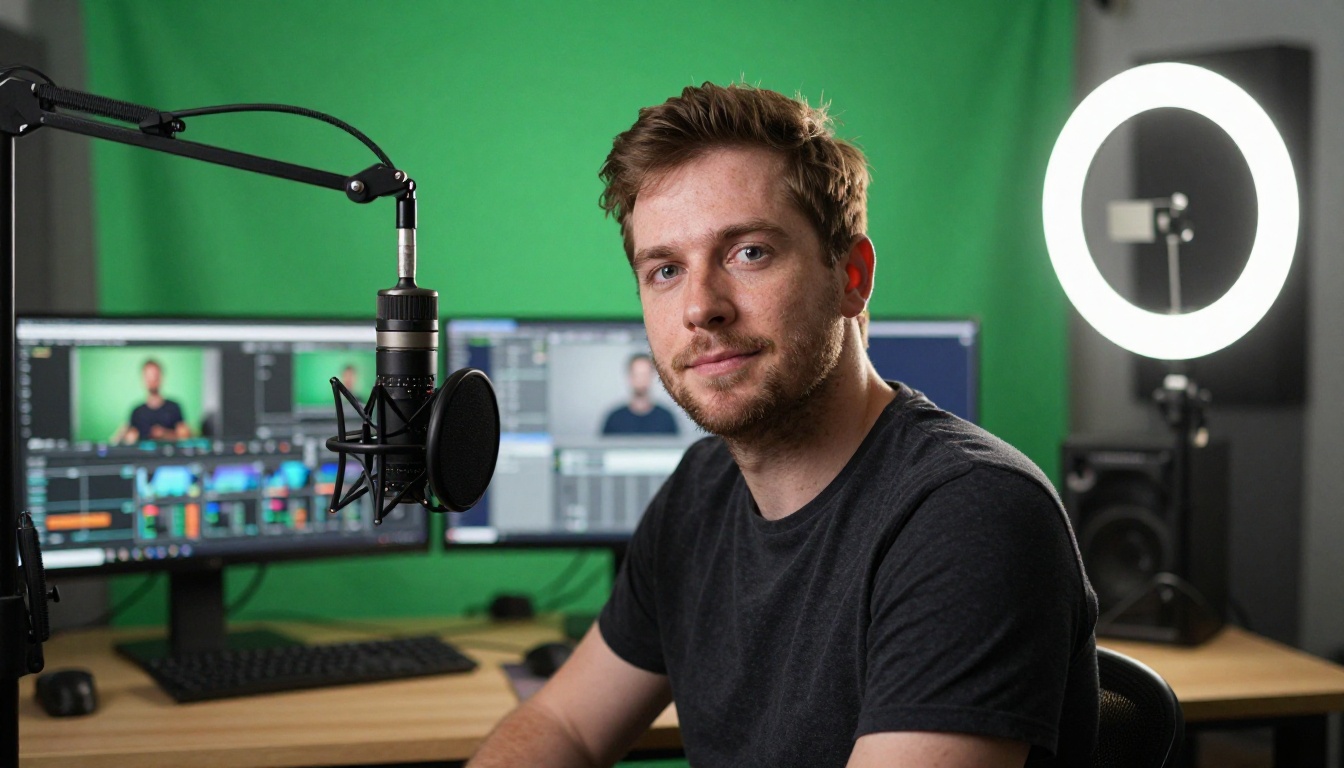
The moment the clip started circulating, nobody questioned it. A well-known face, crisp audio, natural blinking, even the slight asymmetry in how the mouth moved. Security researchers shared it internally. Journalists ran it through their usual verification workflows. Three forensic analysts watched it twice before anyone raised a flag. Then, buried deep in the metadata, one pixel-level inconsistency gave it away. The footage was entirely synthetic, generated from a text prompt in under three minutes.
This is where AI video is right now, and it raises questions that visual intuition alone can no longer answer.
The Clip That Changed Everything
What Actually Circulated
In early 2025, a short video showing a recognizable public figure making a controversial statement circulated through several newsrooms before being flagged as AI-generated. The footage had been created using one of the new high-fidelity text-to-video models, refined with lipsync correction and facial relighting passes. The person in the video never said those words. The voice was synthesized. The background was a composited reconstruction of a real location.
What made this case significant was not the technology itself. It was who got fooled: not casual social media users, but trained professionals operating under standard verification protocols.
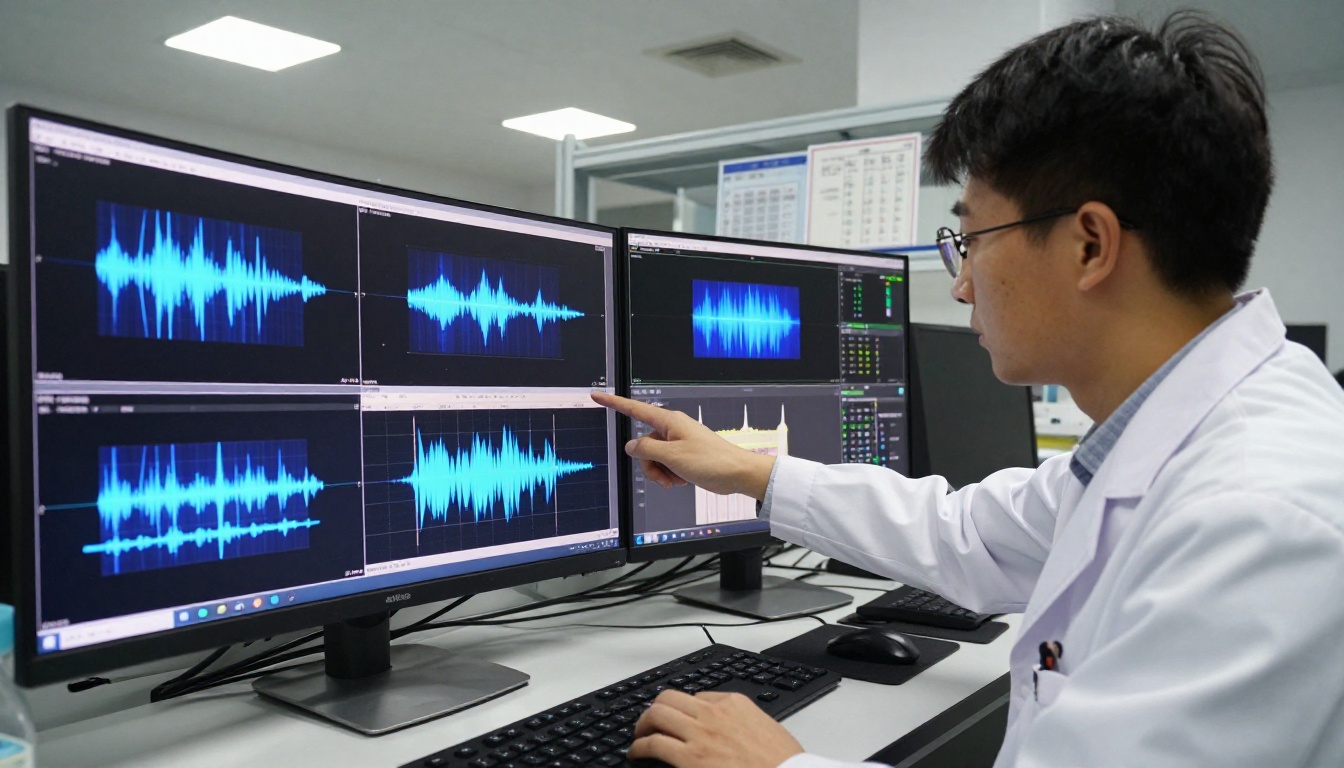
The Anatomy of the Deception
The synthetic video worked because it combined several separate AI systems, each tuned to eliminate a specific category of detection signal:
- Facial coherence: Modern video models maintain consistent facial geometry across frames, eliminating the flickering that gave away early deepfakes
- Micro-expressions: New diffusion-based architectures model subtle muscle movements around the eyes and brow with biological accuracy
- Lighting continuity: Relighting systems adjust skin tone response to match environmental lighting conditions throughout the entire clip
- Audio-visual sync: Lipsync AI aligns phoneme articulation with generated mouth positions at sub-frame precision
None of these features existed in combination just 18 months ago.
Why AI Video Realism Jumped This Fast
The Architecture Shift
The leap did not come from better hardware alone. It came from a fundamental shift in how video generation models handle temporal consistency, which is the problem of making sure that what appears in frame 1 still looks identical in frame 247.
Early video AI treated each frame somewhat independently, then stitched them together. This produced the telltale shimmer, the way hair seemed to breathe, the way eyes would drift slightly. Current architectures like those powering Veo 3, Kling v2.6, and Wan 2.7 T2V process video as a unified spatiotemporal tensor. The model processes the entire clip at once rather than frame by frame.

What 18 Months of Development Did
| Period | Capability Level | Detection Rate by Experts |
|---|
| Early 2023 | Obvious artifacts, inconsistent lighting | ~95% |
| Late 2023 | Improved skin texture, visible seams | ~78% |
| Mid 2024 | Coherent motion, realistic blinking | ~54% |
| Early 2025 | Sub-pixel realism, audio-visual sync | ~31% |
The drop in expert detection rates across two years is not incremental. It is a cliff edge.
💡 Worth noting: Detection accuracy in these figures uses controlled test conditions. In real-world scenarios where videos arrive without context, detection rates fall considerably lower.
Training Data at Scale
Modern video generation systems have been trained on vast corpora of real human video, absorbing the statistical signatures of how real human faces move, breathe, and react. That accumulated knowledge of biological motion is what makes synthetic subjects feel physically present. It is not a single breakthrough but the accumulation of billions of examples of what being human looks like on camera.
How These Videos Get Made
The Text-to-Video Pipeline
Making a convincingly realistic synthetic video follows a consistent pipeline:
- Base video generation: A foundation model like Seedance 1.5 Pro or Sora 2 generates the initial clip from a descriptive text prompt
- Identity injection: A face-consistent video model overlays a specific person's appearance onto the generated subject
- Voice synthesis: A text-to-speech system generates matching vocal output in the correct voice profile
- Lipsync alignment: A lipsync model re-animates the mouth region to match the synthesized audio track precisely
- Post-processing: Relighting, noise addition, and deliberate compression artifacts are applied to match the target platform's expected quality signature
Each step is now accessible through browser interfaces. No technical background required.
The Role of Lipsync Technology
One of the most significant recent developments is the maturation of lipsync systems. Tools that match generated or dubbed audio to realistic mouth articulation have removed one of the last reliable detection signals: the mismatch between what a mouth is doing and what a voice is saying.
A video where the audio and visual tracks were generated completely separately, then aligned by a lipsync system, appears indistinguishable from authentic footage to human observers in most conditions. The two tracks carry no shared generation history, yet the result is seamless.
How to Spot a Synthetic Video
Visual Signals That Remain
Despite the rapid improvement in realism, some detection signals persist, though they are increasingly subtle:
Still detectable (sometimes):
- Hair strand physics in motion still occasionally collapses unnaturally at the tips
- Back molars and tongue-tooth contact during speech remain difficult to model consistently
- Hands, particularly in close-up shots, remain a persistent weakness
- Background subjects sometimes move in rhythmically too-smooth patterns
- Inner ear canal detail is frequently under-resolved in generated frames
No longer reliable signals:
- Eye blinking rate and timing
- Skin pore texture and surface detail
- Basic lighting consistency across the face
- Facial symmetry anomalies
Detection Tools and Their Limits
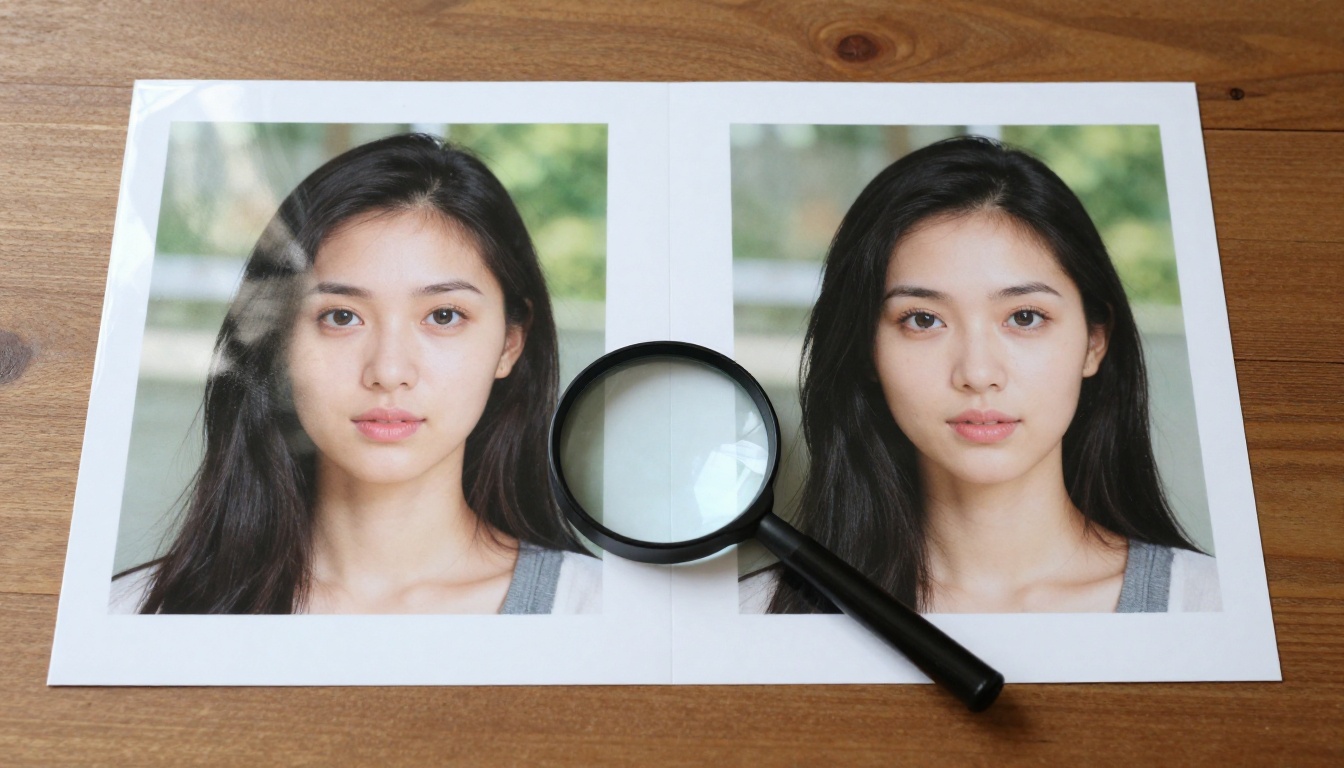
Automated detection systems have been developed by several research institutions, but their performance degrades significantly when video is recompressed or processed through social media platforms. Those platforms introduce their own compression artifacts that obscure AI-generated signatures and make automated detection unreliable.
💡 Practical reality: The most reliable current approach is not visual examination but provenance verification. Check where the video came from, who first uploaded it, and whether the claimed context can be independently confirmed through other sources.
The verification problem has shifted from pixel-level scrutiny to source authentication.
The Models Driving This Realism
Top Video AI Systems Right Now
The realism in current AI video comes from a competitive landscape of models pushing each other forward:

What Separates Good from Expert-Level Output
The difference between a passably realistic video and one that fools trained professionals comes down to three specific factors:
Temporal coherence: How consistently the model maintains subject identity across frames. The top models do this without visible drift over 5 to 10 second clips.
Motion naturalness: Random micro-movements, subtle weight shifts, natural gaze variation. These biological noise signals are what separate synthetic from real at an instinctive level, and leading models have absorbed enough training data to reproduce them.
Lighting response: How skin and surfaces respond to implied off-screen light sources. Cheaper models ignore this entirely. Top-tier models simulate it with physical accuracy.
How to Create Realistic AI Video on PicassoIA
Step 1: Choose the Right Model
On PicassoIA, the starting point is model selection. For maximum realism:
Step 2: Write Prompts That Specify Physics
The biggest differentiator between amateur and professional-looking AI video is how precisely the prompt describes physical behavior:
Weak prompt:
"A woman walking through a park"
Strong prompt:
"A woman in her 30s walking at a moderate pace through a sunlit park, her dark hair moving naturally with her stride, dappled morning light filtering through oak leaves, occasional glances toward the trees, shot from eye level at 24fps with subtle camera drift, Kodak Portra color profile"
The physical details, lighting specification, and camera behavior force the model toward realism rather than generic synthetic movement.
Step 3: Use Image-to-Video for Identity Control
If you need a specific appearance in your video, start with a still image. Models like Kling v2.6 and Wan 2.7 I2V accept a reference image and animate it, maintaining much stronger identity consistency than pure text-to-video generation.
The workflow of generating a still image first, then animating it, produces significantly more consistent subject identity across frames. This is the approach professional creators use for any output requiring a specific face or appearance.
Step 4: Refine the Output
After generation, use super-resolution upscaling to boost detail without regenerating from scratch. For audio-driven content, a lipsync model can align any dubbed audio track to the subject's mouth movements with high precision, creating the seamless audio-visual match that makes AI video convincing.
💡 Pro tip: Generate 3 to 5 variations of the same prompt and choose the best. Video models have enough built-in randomness that identical prompts produce meaningfully different quality levels across runs.
What Experts Are Actually Doing
The Verification Pivot
The security research community has largely accepted that visual examination of high-quality synthetic video is no longer reliable. The response has been a pivot toward provenance-based authentication: cryptographic signing of authentic video at the point of capture, similar in principle to how HTTPS works for web traffic.
Several camera manufacturers are beginning to embed hardware-level signing chips in professional equipment. Authentic footage would carry a verifiable certificate from the capturing device. Video without such a certificate is not automatically fake, but authentic footage could prove its origin with certainty.
This is a longer-term infrastructure solution. In the meantime, the fastest practical test remains: check the source, not the pixels.
Media Literacy Needs a Reboot
The uncomfortable truth is that in 2027, visual intuition is not a reliable guide to video authenticity. The tells that media literacy campaigns trained people to spot, odd blinking, unnatural mouth movement, mismatched lighting, have been systematically eliminated by the same models creating the content.
The more durable skills are:
- Checking where a video first appeared and who published it
- Reverse-searching the original upload across platforms
- Looking for independent corroboration of the claimed events from separate sources
- Treating viral video of high-impact events with proportional skepticism until verified
None of these are visual skills. They are information verification habits that will hold their value regardless of how realistic AI video becomes.
Where This Is All Going
The next generation of video models is already in development. Current research points toward several converging trends:
- Real-time generation: Systems capable of rendering synthetic video at playback speed, enabling live video calls that are indistinguishable from authentic camera feeds
- Physics simulation: Explicit modeling of fluid dynamics, fabric behavior, and rigid body physics for more physically accurate scene content across all elements of a frame
- Cross-modal generation: Unified models that generate coherent audio, video, and spatial data simultaneously, eliminating the multi-step alignment process that currently leaves detectable seams
The gap between synthetic and authentic video that exists today, even if only detectable through careful expert examination under controlled conditions, is likely to narrow further in the coming 12 to 18 months.
💡 The real question now: Not "can AI video fool people" but "which conditions and systems can still distinguish synthetic from real." That shrinking window is where detection research currently lives, and it is getting smaller every quarter.
Try It Now
The same technology producing forensic-grade synthetic videos is available to anyone right now. Whether you want to produce creative content, test how realistic current models actually are, or simply see the outputs firsthand, PicassoIA puts over 100 text-to-video models at your fingertips with no installation or technical setup required.
Start with Veo 3 for maximum cinematic realism, or Wan 2.7 T2V if you want fast results with strong visual quality. Try a specific scene, compare outputs across multiple models, and see exactly where the current ceiling of synthetic realism sits.
The technology reshaping what video means as evidence, as media, and as communication is not behind a wall of complexity. It is accessible, right now, and worth experiencing firsthand before the next wave of models raises the bar again.