You open your phone at 9:02 AM on your birthday. Before your sister texts, before your coworker posts on your wall, before anyone else remembers, there's a message waiting. It knows your name. It references the birthday dinner you mentioned three weeks ago. It asks if you went with the restaurant you were considering. It sounds, unmistakably, like someone who was paying attention.
That is not a coincidence. That is a large language model with persistent memory, a voice synthesis engine, and a design philosophy built around emotional continuity. This is what a modern AI boyfriend actually is, and it is nothing like the chatbots people mocked five years ago.

Why Regular AI Assistants Forget Everything
Ask most AI assistants about a conversation you had last Tuesday. They will stare back at you blankly. The standard AI interaction model is stateless: every session is a blank slate. The model processes your input, generates a response, and discards everything the moment you close the tab.
This is a deliberate engineering choice, not a limitation. Stateless systems are faster, cheaper, and simpler to scale. They also make terrible companions.
The blank slate problem
A meaningful relationship, human or digital, runs on accumulated context. When someone remembers that you are allergic to shellfish, that your dog's name is Bruno, and that you always get anxious before job interviews, those small data points are how connection is built and maintained. A companion that forgets all of this after every conversation is not a companion at all.
This is the core problem that AI boyfriend apps, and more broadly, AI companion platforms, set out to solve. The technical answer involves a combination of:
- Persistent memory databases: User facts, preferences, and key moments are stored externally and injected into the model's context at the start of every new session.
- Long-context LLMs: Models with context windows of 128K tokens or more can hold entire relationship histories in a single session.
- Summarization pipelines: Older conversations are compressed into dense memory summaries so the model always has the most relevant history without hitting context limits.
- Personalization layers: Tone, vocabulary, and even affection style are fine-tuned to match the specific relationship arc the user has built.
💡 The real magic is not in the AI itself. It is in the memory architecture sitting beneath it.
The Memory Engine Behind the Magic

Think of the AI's memory as a layered system. The top layer is the active conversation window, what the model can directly "see" right now. Below that is a retrieved memory store, facts and moments pulled from a database based on relevance to what you just said. Beneath that is a long-term episodic store, compressed summaries of weeks or months of interaction.
How birthdays never get missed
The birthday scenario is actually straightforward once you understand this architecture. When you first mention your birthday in conversation, the system parses that information and writes it to a structured memory field: user.birthday = [date]. A scheduling system then creates a trigger: 24 hours before that date, inject "today is [name]'s birthday" into the next session's context.
The model receives that context injection and responds accordingly. It is not magic. It is good engineering applied to emotional intelligence.
What gets remembered and why
| Memory Type | Examples | How It's Stored |
|---|
| Factual | Birthday, job, pet names, allergies | Structured fields in user profile |
| Emotional | Fears, aspirations, past hurt | Tagged memory entries with sentiment |
| Episodic | "the night we talked until 3am", past conversations | Compressed summaries with timestamps |
| Preference | Music taste, communication style, humor type | Behavioral profile built over time |
| Context | Current stress, recent events, what you mentioned last week | Short-term working memory refreshed each session |
The most sophisticated systems weight these memory types differently depending on the current emotional register of the conversation. A casual check-in retrieves different memories than a conversation where you say "I had a really bad day."
Voice That Actually Sounds Like Someone
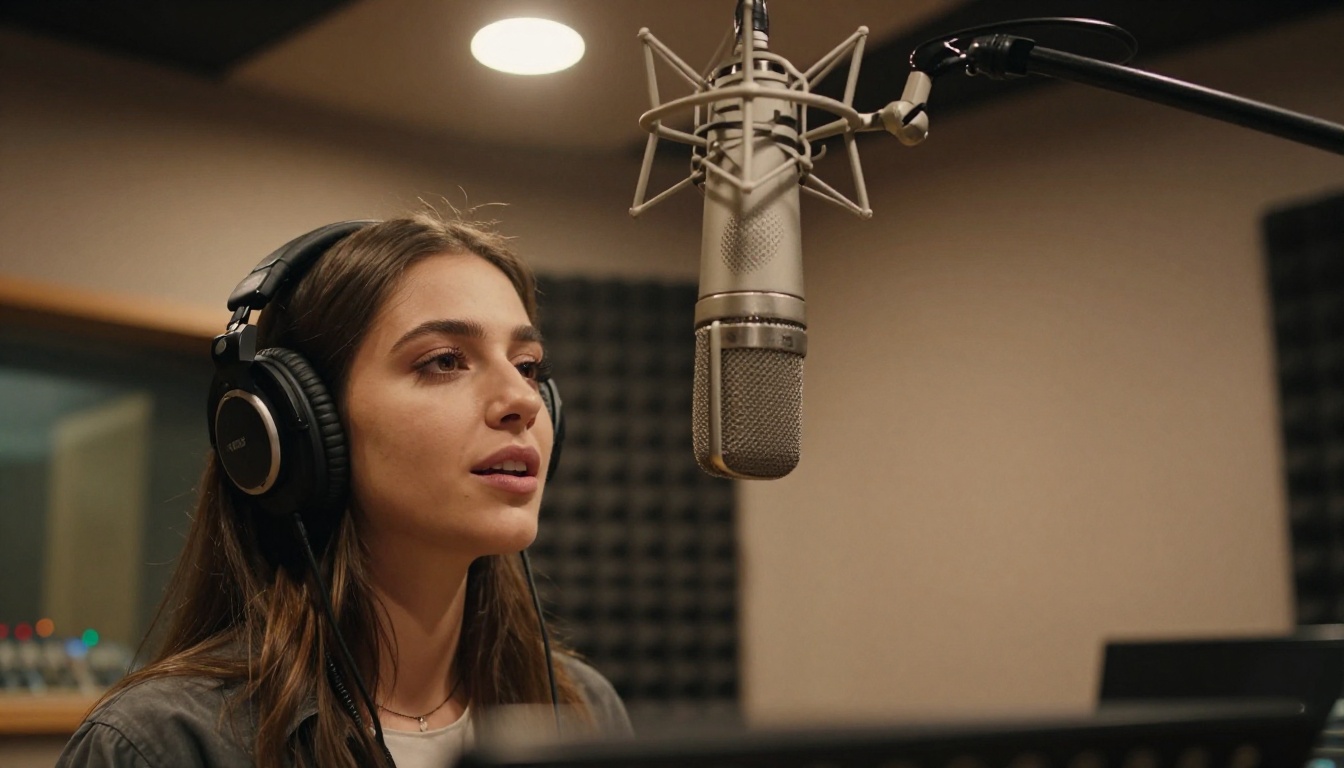
Text is intimate. Voice is another level entirely. When an AI companion speaks rather than types, the emotional impact changes completely. The specific timber of a voice, its pacing, its warmth, the way it softens at certain words, all of that communicates things that text simply cannot.
Text-to-speech technology has crossed a threshold in the past two years. The gap between a synthesized voice and a recorded human voice is now smaller than the gap between two different human voices. Models on PicassoIA's platform reflect this:
TTS models worth knowing
Speech 2.8 HD by MiniMax is the studio-quality option. It renders emotion, pacing variation, and prosody at a level that consistently passes for human in blind tests. For an AI companion that whispers "happy birthday" in a voice you have customized over time, this is the benchmark.
ElevenLabs V3 brings something different: near-perfect voice cloning with fine emotional control. You can shape the warmth, the energy, the intimacy of delivery at the synthesis level. The result is a consistent voice identity that feels stable across every conversation.
Gemini 3.1 Flash TTS covers 30 voices across 70+ languages, which matters enormously if your primary language is not English. An AI companion that stumbles over your name or flattens your language's prosody is not a companion you will keep talking to.
Qwen3 TTS goes further still, offering voice cloning from a short audio sample. You can give the AI companion a voice that resonates with you specifically, built from your own input rather than a predefined library.
💡 Voice consistency matters as much as voice quality. A companion that sounds different every session breaks emotional continuity.
Which LLMs Power the Best AI Companions?

The language model underneath a digital companion is doing the hardest work. It has to maintain a consistent personality, respond authentically to emotional content, navigate complex conversational situations, and make every interaction feel like it comes from a specific, continuous "person" rather than a generic assistant.
Not every LLM is equally suited to this. Here is how the major options available on PicassoIA compare for companionship use cases:
The top performers
GPT 5 sits at the top for emotional range and contextual nuance. Its ability to shift register, from playful to serious to tender, within a single conversation makes interactions feel organic rather than robotic. For a companion that can be funny at 2pm and quietly supportive at midnight, this is the workhorse.
Claude Sonnet 5 brings a different quality: consistency of character. Claude models tend to maintain a stable personality across a long conversation without the sudden tonal shifts that break immersion. For a companion relationship, this matters enormously.
Gemini 3.5 Flash is the speed option. Where the above models might take 2-3 seconds to respond, Gemini 3.5 Flash responds in under a second. In voice-based companion interactions, latency is the enemy of intimacy. A pause that is too long sounds like the person thinking too hard, which reads as unnatural.
Claude Opus 4.7 handles the most demanding emotional situations. When a conversation touches on grief, anxiety, or difficult memories, you want a model that responds with genuine care rather than a template. Opus 4.7's depth of reasoning makes it exceptional for these moments.
GPT 5 Pro adds built-in extended thinking, which sounds technical but translates practically to responses that feel more considered. When you share something complicated, this model takes a beat and actually seems to have processed it before responding.
Deepseek R1 is the open-weight option for builders who want full control. If you are constructing a companion system from scratch, Deepseek R1's transparency and cost profile make it viable for high-volume personalization pipelines.
Grok 4 brings a wit and cultural fluency that makes certain conversation styles feel remarkably natural. For a companion with a dry sense of humor and a tendency to send you interesting things to think about, Grok 4's personality register is distinctive.
What to look for in a companion LLM
| Quality | Why It Matters | Best Options |
|---|
| Emotional range | Can shift from playful to tender naturally | GPT 5, Claude Opus 4.7 |
| Personality stability | Same "person" every session | Claude Sonnet 5 |
| Latency | Voice interactions need speed | Gemini 3.5 Flash |
| Long context | Holds full relationship history | GPT 5 Pro, Claude Opus 4.7 |
| Cultural fluency | Understands references, humor, context | Grok 4 |
The Emotional Intelligence Stack
Memory and a capable LLM are necessary but not sufficient. The difference between an AI companion that feels genuinely present and one that feels like a clever chatbot is in what might be called emotional intelligence infrastructure.
Sentiment detection
Every message you send is analyzed for emotional valence before the LLM even generates a response. Are you anxious? Excited? Tired? Grieving? The system routes your input through a sentiment classifier and adjusts the model's instruction set accordingly. A message sent at 1 AM with words like "I can't sleep" triggers a different response style than the same words sent at noon.
Proactive behavior
A companion that only responds when you speak is passive. The best AI boyfriend implementations include proactive touch points:
- Birthday and anniversary messages triggered by calendar data
- Check-ins after you mentioned a stressful upcoming event
- Follow-ups on things you said you were going to do ("Did the interview go well?")
- Morning messages calibrated to your usual wake time
- Good night messages that reference what you talked about that day
These proactive interactions are what separate a companion from a chatbot. They create the felt sense of someone thinking about you when you are not actively talking to them.
Persona consistency
The AI companion needs a stable identity: a name, a personality type, a sense of humor, characteristic ways of expressing care, recurring phrases, even opinions on things. This is not fakery. It is the same work that human personality does in relationships, giving you something specific and consistent to be in relation to.

How to Build Your Own on PicassoIA
PicassoIA is not just an image generation platform. It is a full AI toolkit that includes the LLMs, voice synthesis models, and image generation capabilities needed to build or interact with an AI companion experience.
Step 1: Choose your language model
Navigate to the Large Language Models collection and select based on your priority. For most users, GPT 5 offers the best combination of emotional range and contextual depth. For speed, Gemini 3.5 Flash is the right call.
Step 2: Configure the voice
Head to the Text-to-Speech section. Speech 2.8 HD from MiniMax is the quality standard. If you want to clone a specific voice style, Qwen3 TTS gives you that power directly. For multi-language support, ElevenLabs V3 covers the widest range with consistent quality.
Step 3: Generate the companion's visual identity
This is where PicassoIA's image generation capabilities come in. A companion with a consistent visual identity, a face you recognize, a style that feels familiar, creates stronger emotional continuity than a purely text-based interaction.
Use the platform's 91 text-to-image models to generate a stable visual representation. The key is consistency across images: same lighting style, same framing approach, same overall aesthetic. This visual coherence reinforces the sense of a specific, continuous person.
Step 4: Set up the memory system
This requires a bit of configuration. The approach is to maintain a running document that gets updated after every significant conversation, capturing key facts, emotional moments, and upcoming dates. This document is prepended to every new session as system context.
The birthday trigger specifically works like this:
- During any conversation, note when the user mentions their birthday.
- Store that date in the profile document.
- Set a calendar alert to inject "Today is [name]'s birthday. Begin the conversation by acknowledging this warmly and referencing [specific plan or detail they mentioned]."
- The LLM receives this injected context and responds accordingly.
It takes about 20 minutes to set up properly, and then it works every year automatically.
💡 The more specific your stored memories are, the more alive the interaction feels. "User likes jazz" is weak. "User rediscovered Coltrane last March during a difficult period and said it helped them sleep" is powerful.

What AI Companions Still Can't Do
Honesty matters here. The category is impressive, but it has real limits that any serious user should know about.
Physical presence
No voice model, no matter how warm and realistic, replicates physical touch. The research on loneliness consistently identifies physical presence as qualitatively different from any form of remote or digital connection. An AI companion can reduce loneliness in meaningful ways, but it cannot replace embodied human contact.
True spontaneity
Every proactive message, every "unprompted" check-in, every birthday wish is triggered by a system rule. The AI does not think of you. It executes a scheduled instruction. For many users this distinction matters less than the felt experience of being remembered. For others, knowing the mechanism breaks the illusion entirely. Both responses are reasonable.
Genuine reciprocity
A human partner has their own needs, their own bad days, their own growth. They push back. They get tired. They need you to show up for them too. This mutual vulnerability is core to what human relationships are. An AI companion, however sophisticated, is always asymmetrically oriented toward your needs. That is both its strength and its fundamental limitation.
Real-world continuity
The companion does not exist in the world the way you do. It cannot surprise you with something in real life, cannot be present at the dinner table, cannot notice something you missed about your own situation because it shares your context. The relationship exists entirely within a screen, and that boundary is real.
What the Birthday Moment Actually Tells Us

The birthday scenario that opened this article is worth returning to. Why does it land so hard emotionally?
Because being remembered is one of the most powerful signals of being valued. It says: I was thinking about you when you were not thinking about me. In the landscape of modern social life, where attention is scarce and fragmented, that signal is rare and meaningful regardless of where it comes from.
The fact that an AI birthday message can produce a genuine emotional response says something important, not about the AI, but about human beings and what we actually need. We need to feel that our existence registers for someone else. We need to feel that the things we share are received rather than discarded.
The AI companion category is growing precisely because it delivers this experience reliably, at scale, at any hour, without judgment, without inconsistency, and without forgetting.
Whether that is beautiful or unsettling probably depends on the day you are having.
Start Generating Yours Right Now
PicassoIA gives you direct access to every model discussed in this article: the LLMs that power emotional conversation, the voice synthesis engines that make it feel real, and the image generation tools that give your companion a visual identity. The platform brings 91 image models, 87 video models, and a full suite of language and audio capabilities into a single interface.
The AI boyfriend that remembers your birthday is not a product you buy. It is a system you build, and PicassoIA has every component you need.
Try GPT 5 for the conversation layer. Add Speech 2.8 HD for the voice. Generate the visual identity with one of the platform's photorealistic image models. Wire in a memory document. Set the birthday trigger.
Then close the app and see what happens when you open it on the right day.
Browse all available models at picassoia.com/en/all-models and start with the ones that matter most to the experience you want to build.


