Creating professional-quality images has fundamentally changed. Where photographers once needed specialized equipment, lighting setups, and location access, AI image generators now deliver photorealistic results across every photography genre. The difference between amateur outputs and professional results comes down to choosing the right tool for each specific application.

The intersection of human creativity and AI technology, captured through volumetric morning light and 85mm lens simulation.
Why Professional AI Image Generation Matters
Photographers and content creators face constant pressure to produce higher volumes of quality imagery. Traditional photography involves location scouting, model coordination, equipment setup, and post-production editing—a process that takes days or weeks. AI image generation collapses this timeline to minutes while maintaining professional standards.
💡 The quality benchmark: Professional AI tools now simulate specific camera lenses (85mm f/1.8, 200mm telephoto), lighting conditions (golden hour, studio softboxes), and film stocks (Kodak Portra 400) with photographic accuracy. This isn't about "generating pictures"—it's about creating specific photographic results.
The market divides into several categories: portrait generators, landscape creators, product photography tools, architectural visualization platforms, and specialized systems for sports, food, fashion, and macro photography. Each category has tools optimized for those specific requirements.
Portrait Photography: Capturing Human Expression
Portrait photography demands understanding of lighting, composition, and human expression. The best AI portrait generators simulate studio lighting setups and natural environmental conditions with photographic accuracy.
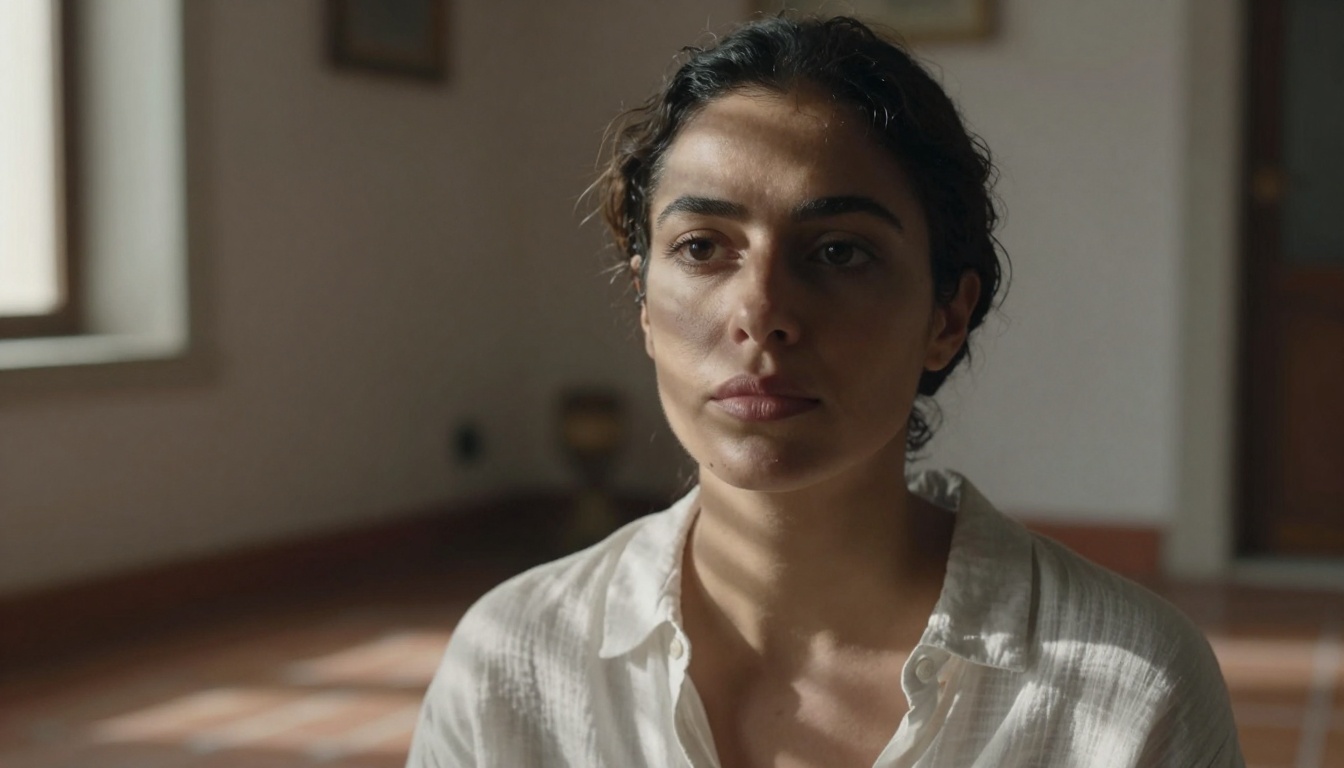
Natural sunlight through Venetian blinds creates dramatic diagonal shadows, captured with 50mm f/1.4 lens simulation.
Key capabilities for portrait generators:
- Skin texture rendering: Natural pores, fine hairs, and realistic skin tones
- Lighting control: Directional light, soft fill, rim lighting, environmental bounce
- Expression variation: Natural facial expressions with appropriate muscle tension
- Composition tools: Rule-of-thirds guides, eye-level positioning, background control
Leading portrait generators include:
| Tool | Specialization | Best For |
|---|
| flux-2-klein-4b | High-fidelity portrait generation | Studio portraits with controlled lighting |
| gpt-image-1.5 | Natural expression capture | Environmental portraits with natural light |
| qwen-image-2512 | Diverse ethnic representation | Global portrait styles and skin tones |
| p-image | Fast iteration and variation | Commercial portrait work with multiple options |
💡 Portrait prompt structure: "Low-angle shot of subject with Mediterranean features, natural sunlight through Venetian blinds creating diagonal shadows, 50mm f/1.4 lens at eye level, Kodak Portra 400 film simulation, RAW 8K photography with shallow depth of field focusing on eyes."
Landscape and Nature Photography
Landscape photography captures environments with atmospheric perspective, natural lighting conditions, and intricate detail rendering. AI landscape generators excel at creating believable natural environments with correct lighting physics.
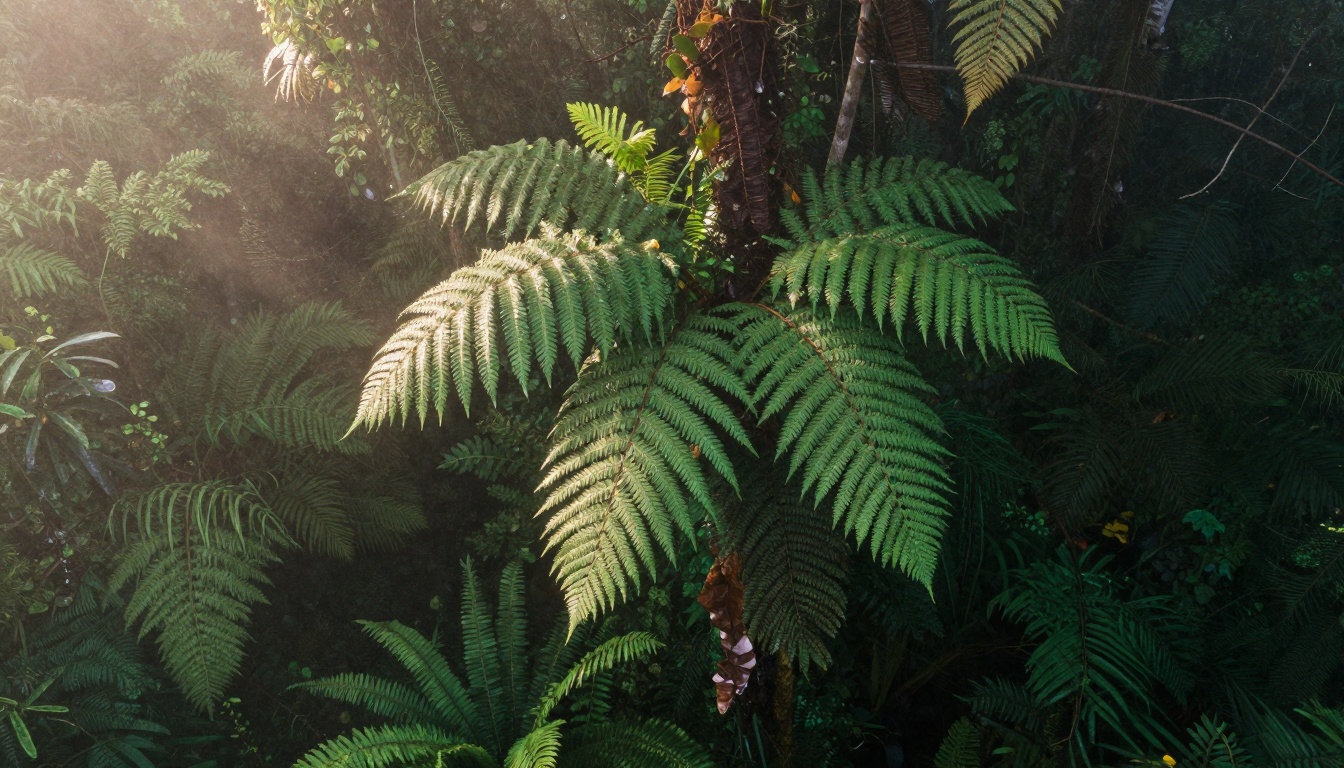
Aerial perspective of tropical rainforest canopy with volumetric morning light beams illuminating water droplets, captured with 200mm telephoto lens.
Critical landscape generation features:
- Atmospheric perspective: Natural haze, depth layers, distance rendering
- Lighting accuracy: Golden hour, blue hour, midday sun with correct shadows
- Environmental detail: Individual leaves, water surfaces, geological formations
- Scale representation: Correct relative sizes of natural elements
Top landscape generation tools:
| Tool | Environment Specialization | Technical Strength |
|---|
| flux-2-max | Mountain and geological landscapes | Rock texture and geological accuracy |
| seedream-4.5 | Forest and woodland scenes | Tree bark texture and foliage detail |
| nano-banana-pro | Water and coastal environments | Wave physics and water surface rendering |
| z-image-turbo | Fast iteration for concept art | Rapid environment visualization |
Practical landscape prompt example: "Close-up aerial perspective of tropical rainforest canopy with morning fog, sunlight breaking through foliage creating volumetric light beams, 200mm telephoto lens from above showing leaf vein textures, Kodak Portra 400 film simulation capturing rich greens with natural contrast, atmospheric perspective through layers of mist."
Food Photography and Culinary Imagery
Food photography requires understanding of texture, reflection control, and appetizing presentation. The best AI food generators simulate professional kitchen lighting, plating techniques, and ingredient detail.
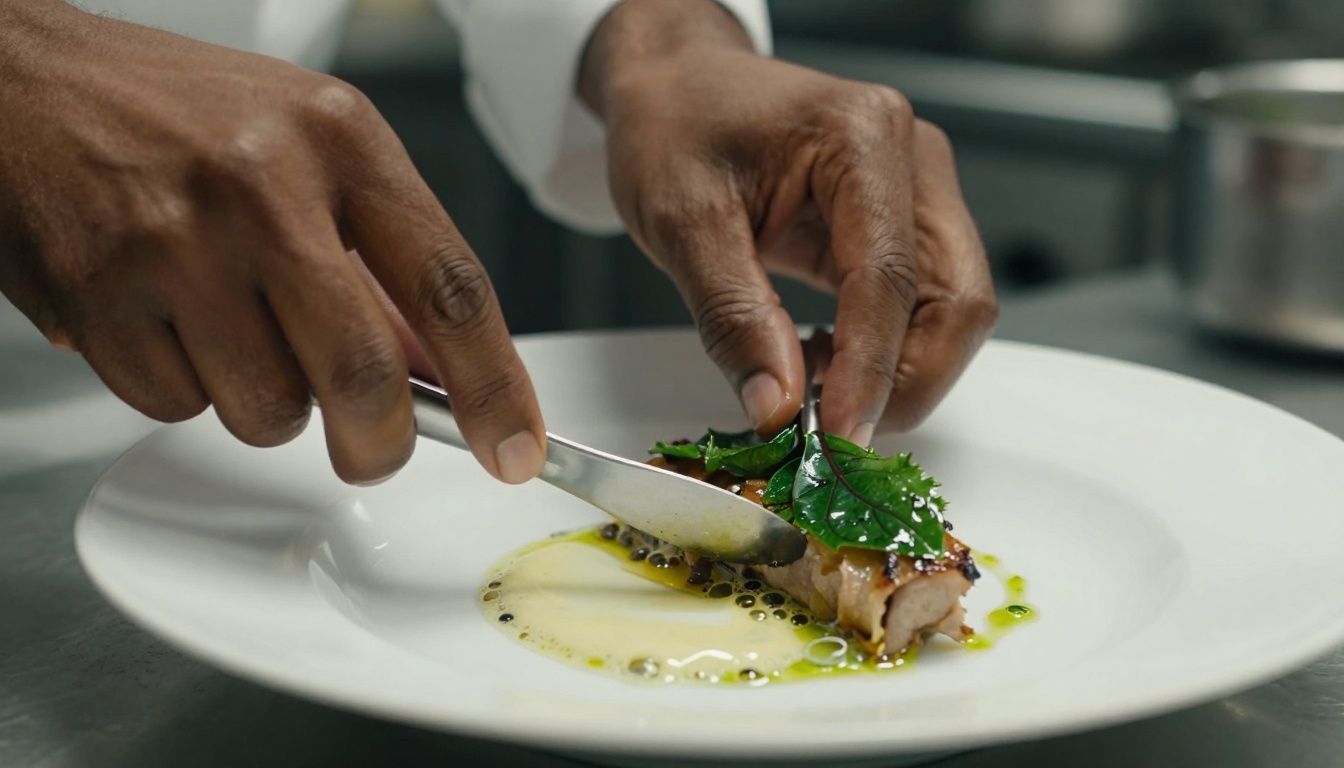
Professional chef's hands plating gourmet dish with side lighting highlighting stainless steel utensils and sauce textures, captured with 85mm f/1.8 macro lens.
Food photography generation requirements:
- Texture rendering: Crust formation, sauce viscosity, herb leaf detail
- Lighting control: Directional highlights, fill for shadow detail, reflection management
- Composition: Plating arrangement, negative space, prop integration
- Color accuracy: Natural food colors without artificial saturation
Specialized food photography tools:
- p-image-edit - Best for ingredient substitution and plating variations
- flux-2-flex - Excellent for texture rendering of baked goods
- qwen-image-edit-plus-lora - Specialized for Asian cuisine with correct ingredient representation
- gpt-image-1.5 - Strong for Western cuisine plating styles
💡 Food photography tip: Specify lighting direction ("side lighting from professional kitchen lamps"), lens choice ("85mm f/1.8 macro lens"), and surface texture ("polished metal plating tools") for professional results.
Architectural and Interior Photography
Architectural photography demands accurate perspective, material texture representation, and environmental lighting simulation. AI tools for architecture must handle complex spatial relationships and material properties.
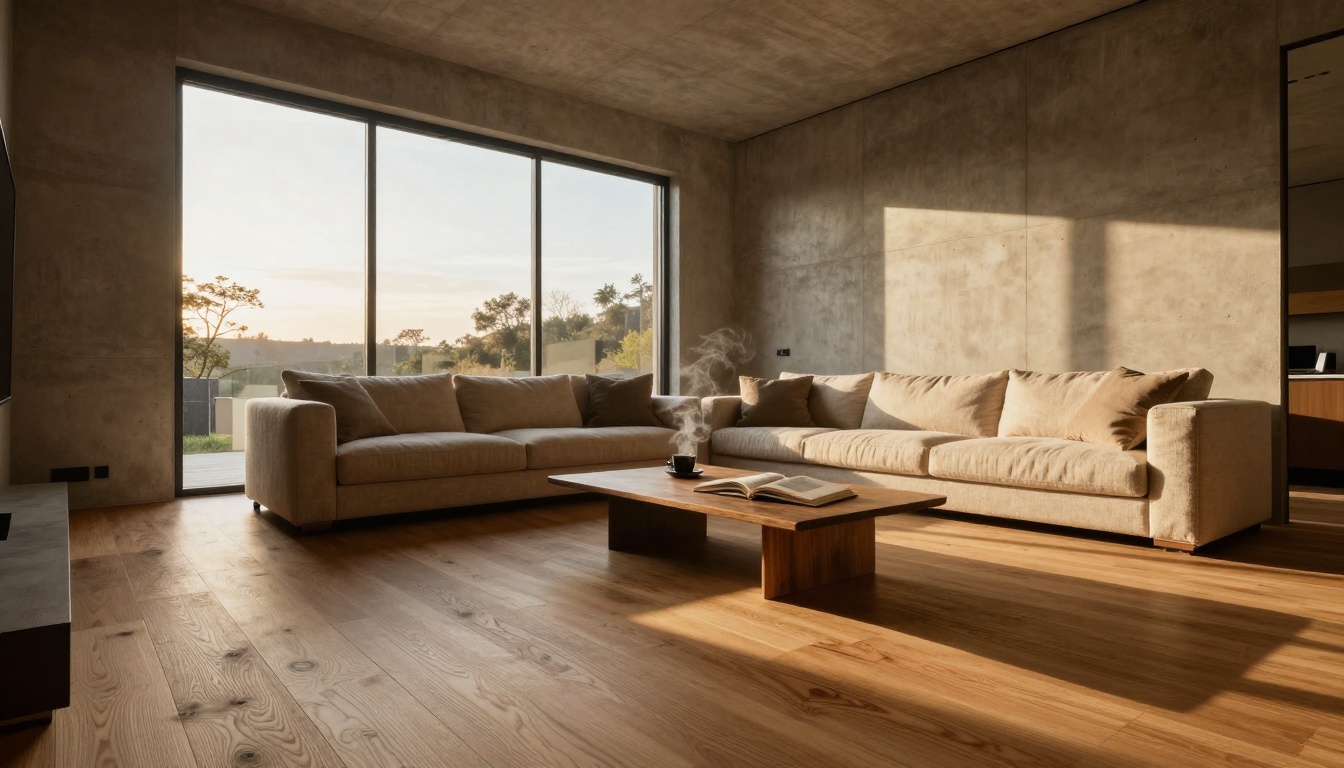
Modern minimalist living room during golden hour with long shadows emphasizing material textures, captured with 24mm wide-angle lens at low height.
Architectural generation essentials:
- Perspective accuracy: Correct vanishing points, spatial proportions
- Material rendering: Wood grain, concrete texture, fabric weave, metal finish
- Lighting simulation: Window light, artificial lighting, shadow behavior
- Human scale elements: Furniture, decor, lived-in details
Architecture-focused AI tools:
| Tool | Architecture Type | Special Features |
|---|
| flux-2-pro | Modern and contemporary | Clean lines, minimalist detail |
| seedream-4.5 | Traditional and historical | Ornamental detail, aged materials |
| p-image | Commercial interiors | Office spaces, retail environments |
| z-image-turbo | Conceptual visualization | Rapid iteration for design concepts |
Architectural prompt structure: "24mm wide-angle lens at low height, golden hour sunlight through floor-to-ceiling windows creating long shadows, natural oak flooring texture visible, linen upholstery weave detail, polished concrete wall surface, Kodak Portra 400 film simulation with natural grain, subtle human elements (book on coffee table, steaming teacup)."
Sports and Action Photography
Sports photography captures motion, athletic form, and dynamic energy. AI sports generators must simulate motion blur, action sequences, and athletic anatomy with accuracy.
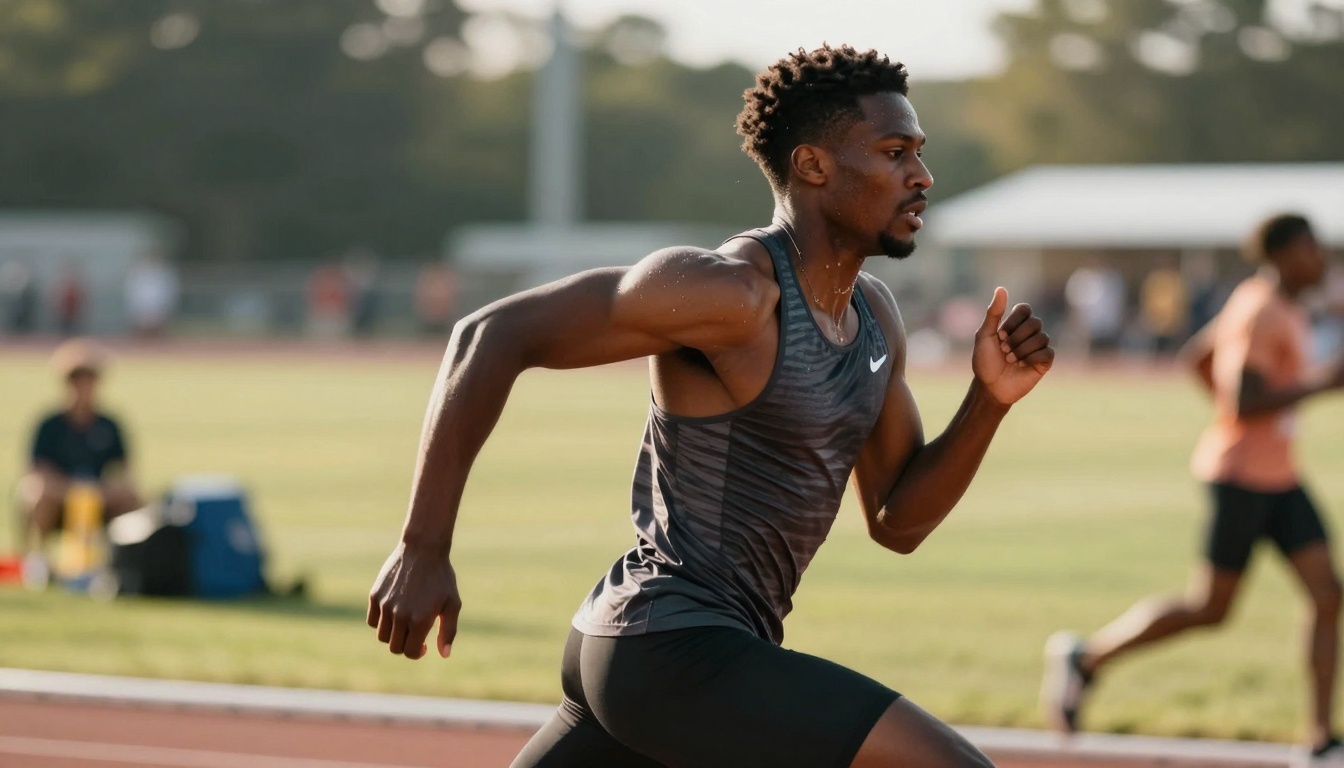
Professional athlete in motion with panning technique showing sharp subject against motion-blurred background, captured with 70-200mm f/2.8 lens at eye level.
Sports photography generation challenges:
- Motion simulation: Panning blur, action sequences, dynamic positioning
- Anatomical accuracy: Muscle definition, athletic form, body mechanics
- Environmental context: Sports venues, equipment, spectators
- Action timing: Peak movement moments, facial expressions during exertion
Top sports photography generators:
- flux-2-dev - Excellent for team sports and field events
- gpt-image-1.5 - Strong for individual athletics and gym scenes
- qwen-image-2512 - Good for combat sports and martial arts
- p-image - Fast iteration for action sequence concepts
Sports prompt example: "Action shot with panning technique, 70-200mm f/2.8 lens at eye level, morning light creating rim lighting on athlete's form, sweat droplets on skin visible, synthetic sportswear texture, motion-blurred track background with spectators, Kodak Portra 400 film simulation capturing dynamic energy."
Product Photography and Commercial Imagery
Product photography requires precise lighting control, reflection management, and material accuracy. AI product generators simulate studio environments with professional lighting setups.
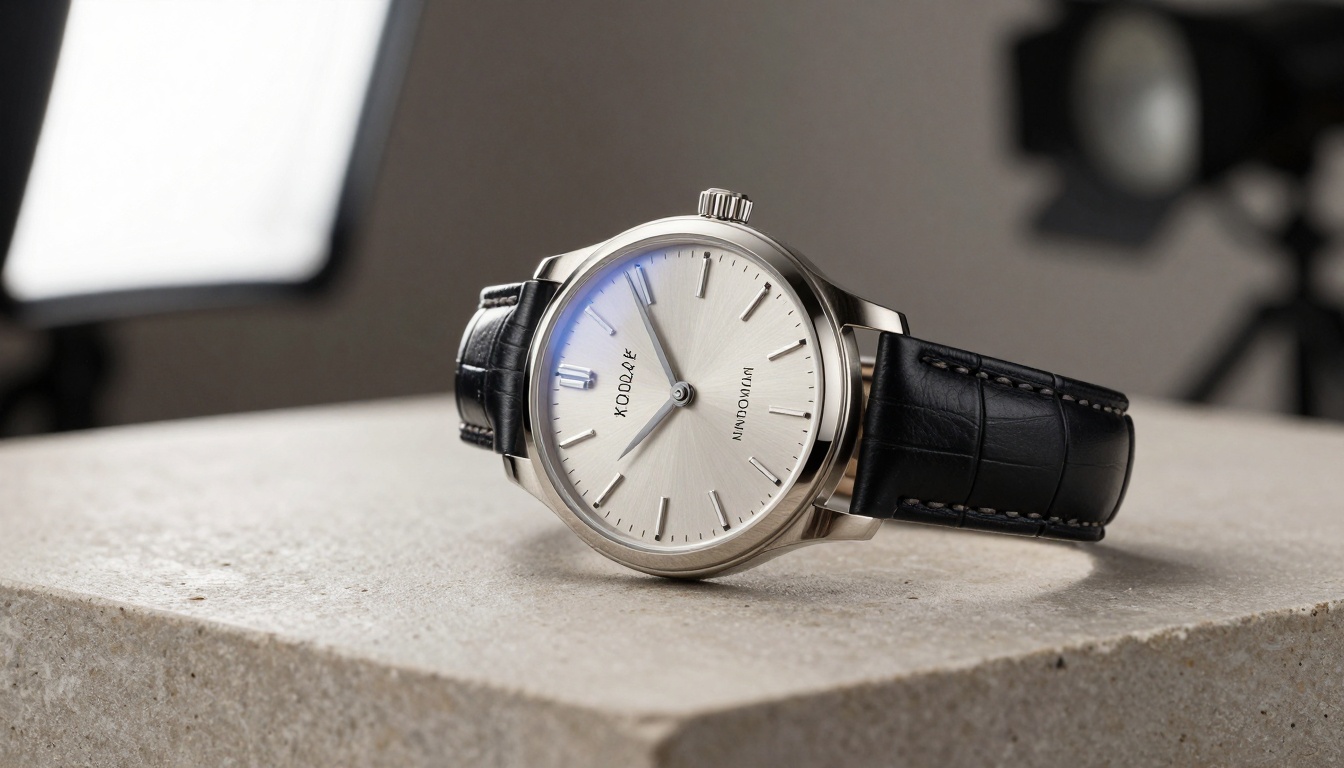
Luxury watch on natural stone surface with controlled studio lighting creating perfect reflections, captured with 100mm macro lens at table level.
Product photography generation requirements:
- Reflection control: Specular highlights, surface reflections, material sheen
- Lighting precision: Softbox simulation, fill light, shadow detail
- Material accuracy: Metal finishes, fabric textures, plastic surfaces
- Composition standards: Product isolation, negative space, branding elements
Professional product photography tools:
💡 Product photography secret: Specify "professional studio lighting with softboxes," "100mm macro lens at table level," and specific material details ("brushed stainless steel finish," "sapphire crystal reflections," "leather strap texture") for commercial-quality results.
Urban and Street Photography
Street photography captures candid moments, urban environments, and natural human interactions. AI street generators must simulate authentic urban atmosphere and spontaneous moments.
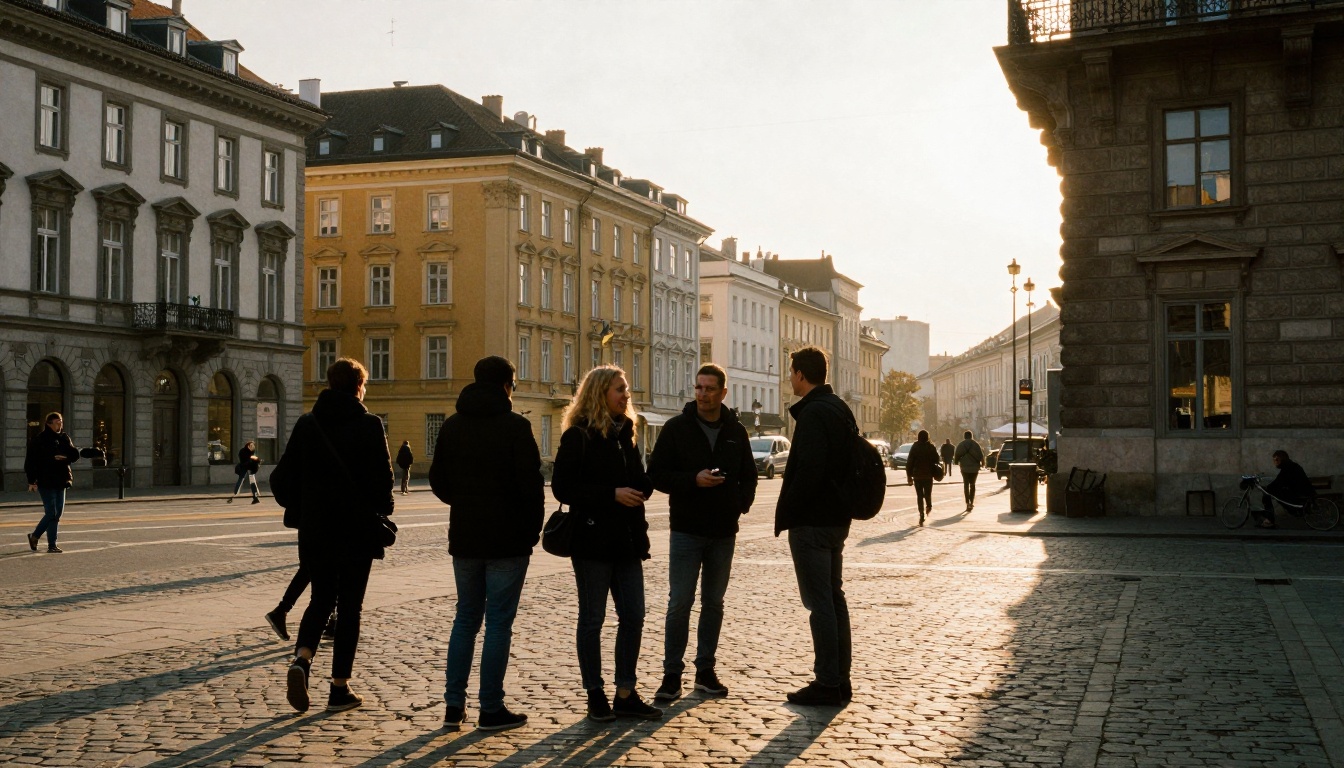
Candid moment in European city square during afternoon light with golden hour creating long shadows, captured with 35mm prime lens at street level.
Street photography generation elements:
- Candid authenticity: Natural expressions, spontaneous interactions
- Urban atmosphere: Architectural context, street life, environmental details
- Lighting conditions: Golden hour, blue hour, midday urban light
- Composition style: Rule-of-thirds, leading lines, environmental framing
Street photography AI tools:
- gpt-image-1.5 - Excellent for human interaction and expression
- seedream-4.5 - Strong for architectural context and urban detail
- p-image - Fast for location scouting and concept testing
- flux-2-flex - Good for weather conditions and atmospheric effects
Street photography prompt: "35mm prime lens at street level, golden hour lighting creating long shadows and warm tones, cobblestone texture visible, architectural details of European buildings, natural expressions of people in motion, atmospheric perspective through afternoon urban haze, Kodak Portra 400 film simulation with natural grain."
Macro and Detail Photography
Macro photography reveals microscopic details and intricate patterns invisible to normal observation. AI macro generators must render extreme detail with scientific accuracy.
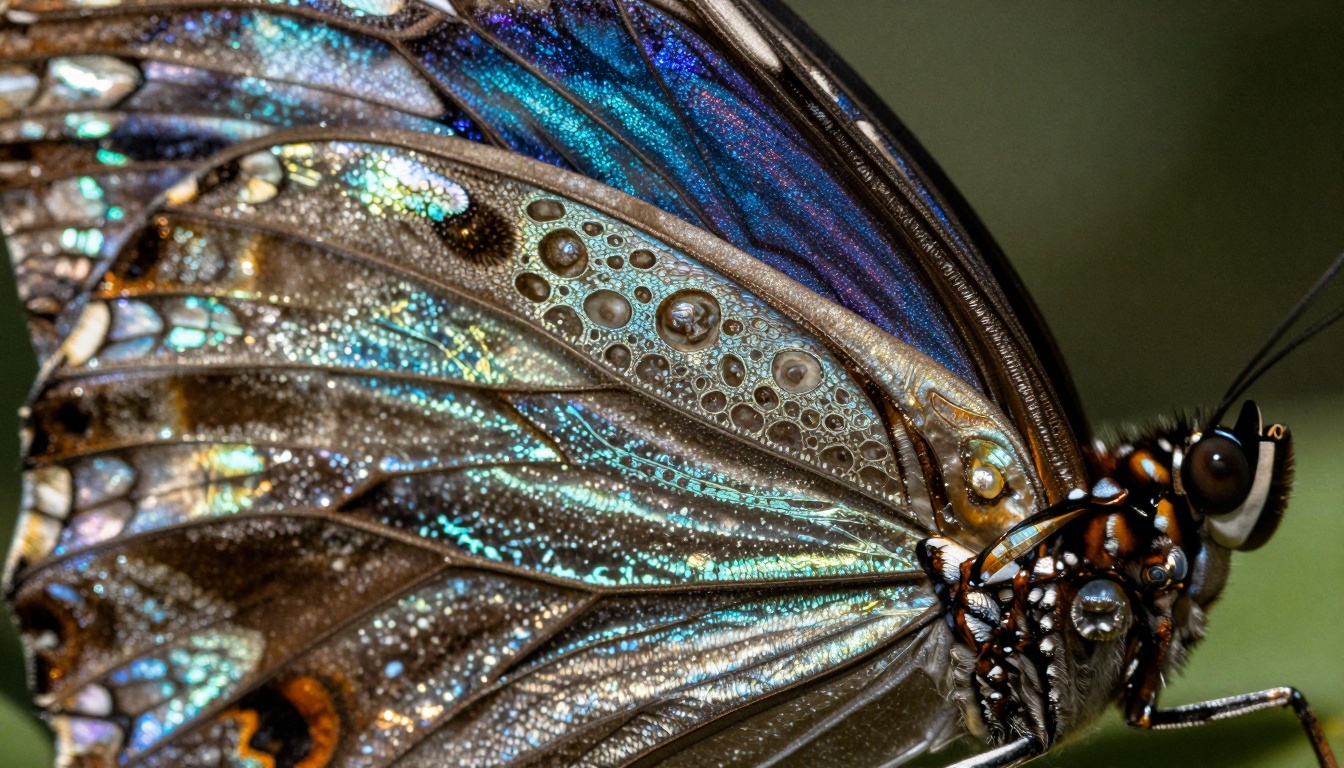
Butterfly wing showing iridescent scales under controlled lighting, revealing microscopic structure of individual scales, captured with 100mm macro lens and ring flash illumination.
Macro photography generation requirements:
- Extreme detail: Microscopic structures, surface textures, pattern accuracy
- Lighting control: Ring flash, directional macro lighting, reflection management
- Depth of field: Extreme shallow focus, focus stacking simulation
- Scientific accuracy: Biological structures, material properties, scale representation
Specialized macro photography tools:
| Tool | Subject Specialization | Detail Level |
|---|
| p-image | General macro and detail | High detail with good lighting |
| flux-2-klein-4b | Biological and natural detail | Excellent for organic textures |
| qwen-image-2512 | Material and surface detail | Good for manufactured surfaces |
| z-image-turbo | Rapid concept exploration | Fast iteration for macro ideas |
Macro prompt structure: "100mm macro lens with ring flash illumination, butterfly wing showing iridescent scales, microscopic structure of individual scales visible, spectral color refraction, shallow depth of field emphasizing three-dimensional scale structure, Kodak Portra 400 film simulation with fine grain."
Fashion and Editorial Photography
Fashion photography combines clothing detail, model presentation, and artistic composition. AI fashion generators must handle fabric texture, garment drape, and editorial styling.
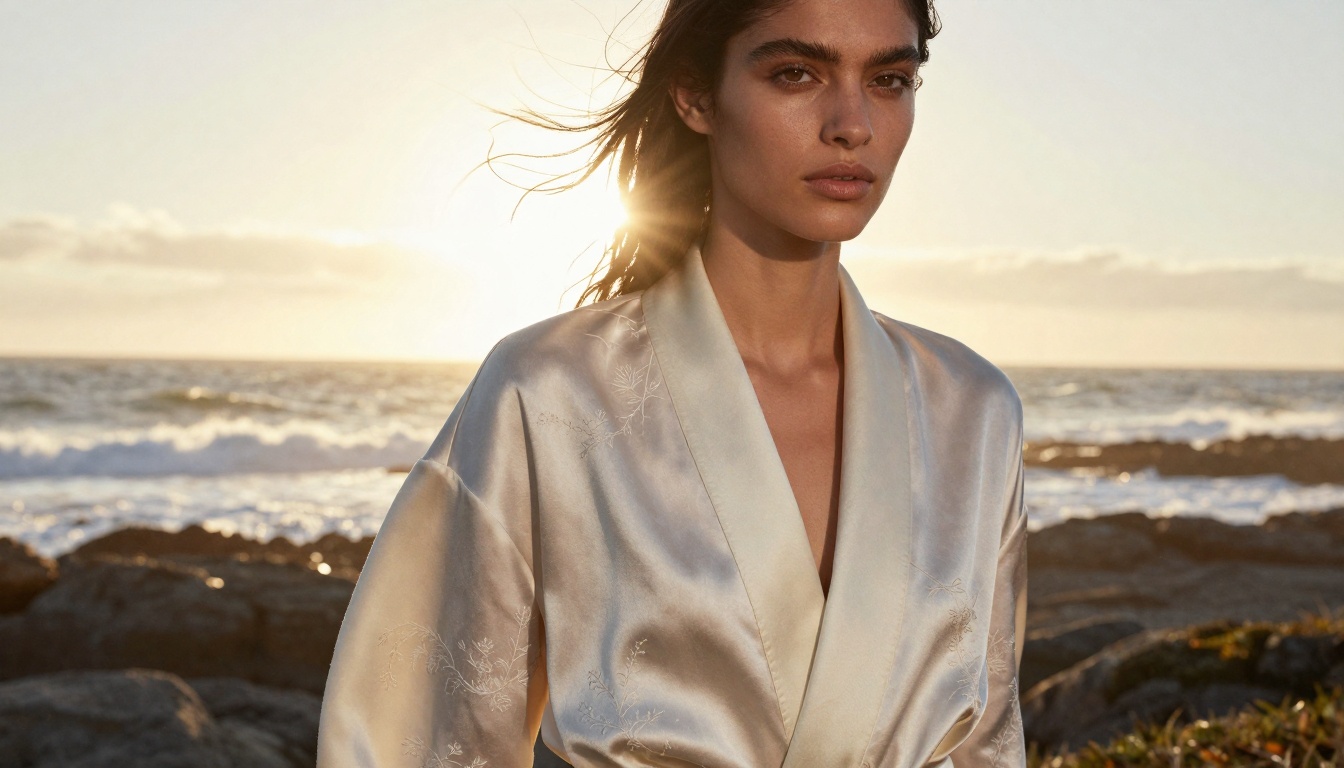
Model in natural environment wearing high-end designer clothing with visible fabric textures, backlighting creating halo effect, captured with 85mm f/1.8 lens during golden hour.
Fashion photography generation essentials:
- Fabric rendering: Material texture, sheen, drape, pattern detail
- Model presentation: Posing, expression, body proportions
- Lighting style: Editorial lighting, fashion studio setups, natural fashion light
- Styling elements: Accessories, hair, makeup, overall aesthetic
Fashion photography AI platforms:
- flux-2-pro - Excellent for high-fashion editorial looks
- gpt-image-1.5 - Strong for commercial fashion and e-commerce
- qwen-image-2512 - Good for diverse model representation
- p-image - Fast for styling variations and concept testing
💡 Fashion photography technique: Specify "85mm f/1.8 lens at eye level during golden hour," "backlighting creating halo effect around silhouette," "front fill light revealing clothing details," and specific fabric descriptions ("silk fabric sheen," "embroidery thread texture") for editorial quality.
With ten specialized AI image generators covering every photography genre, selection depends on specific project requirements. Consider these factors when choosing:
Project requirements checklist:
- Subject type: Portrait, landscape, product, architecture, sports, food, street, macro, or fashion?
- Lighting needs: Natural light, studio lighting, environmental light, or specialized lighting?
- Detail level: General photography, extreme detail, or microscopic rendering?
- Output speed: Rapid iteration needs or single high-quality generation?
- Style requirements: Photorealistic, artistic interpretation, or specific photographic style?
Cost and access considerations:
- Subscription models: Monthly access vs. pay-per-generation
- Commercial licensing: Rights for commercial use and redistribution
- API access: Integration into existing workflows and automation
- Batch processing: Volume discounts for high-volume projects
Technical capability comparison:
| Tool | Speed | Quality | Specialization | Best Use Case |
|---|
| p-image | Fast | High | General purpose | Rapid iteration and concept testing |
| flux-2-klein-4b | Medium | Very High | Portrait and detail | Professional portrait work |
| gpt-image-1.5 | Medium | High | Human and expression | People-focused photography |
| seedream-4.5 | Medium | High | Environment and nature | Landscape and architectural work |
| z-image-turbo | Very Fast | Good | Rapid visualization | E-commerce and volume production |
Practical Workflow Integration
Integrating AI image generation into professional workflows requires strategic planning. Follow this sequence for optimal results:
Phase 1: Concept Development
- Use rapid iteration tools (z-image-turbo, p-image) for concept exploration
- Test lighting approaches, composition ideas, and style variations
- Generate multiple options for client review and direction
Phase 2: Refinement
- Switch to high-quality tools (flux-2-pro, gpt-image-1.5) for final selections
- Refine prompts based on concept phase feedback
- Generate high-resolution versions of approved concepts
Phase 3: Production
- Use specialized tools for final output quality
- Implement specific technical requirements (lens simulation, lighting control)
- Generate commercial-ready imagery with proper licensing
Phase 4: Integration
- Incorporate generated images into design workflows
- Apply final adjustments and compositing as needed
- Deliver completed assets through established channels
The Future of AI Image Generation
Current AI image generation represents the beginning of photographic automation. Future developments will focus on:
Technical advancements:
- Improved physics simulation: More accurate light behavior, material properties, and environmental interactions
- Enhanced detail rendering: Higher resolution capabilities with better micro-detail preservation
- Specialized training: Tools optimized for specific industries (medical imaging, scientific visualization, architectural rendering)
Workflow integration:
- Seamless software integration: Direct plugins for Photoshop, Lightroom, and professional editing suites
- Automated batch processing: Smart systems that understand project requirements and generate appropriate variations
- Collaborative features: Team workflows with version control and approval processes
Creative capabilities:
- Style transfer learning: Systems that learn specific photographer styles and replicate them
- Dynamic composition: AI that understands photographic rules and suggests optimal compositions
- Contextual generation: Tools that consider project context and generate appropriate imagery
Getting Started with AI Image Generation
Begin with these practical steps:
- Identify your primary use case: What photography genre dominates your work?
- Test multiple tools: Try free tiers or trial periods of 2-3 relevant platforms
- Develop prompt expertise: Learn the specific terminology that yields best results for your needs
- Establish quality benchmarks: Define what "professional quality" means for your specific applications
- Integrate gradually: Start with supplemental use before replacing established workflows
Resource allocation strategy:
- Time investment: 10-20 hours for initial learning and testing
- Budget allocation: Start with free tiers, then move to appropriate paid plans
- Skill development: Focus on prompt engineering and tool-specific capabilities
- Workflow adjustment: Modify existing processes to incorporate AI generation
The landscape of AI image generation continues evolving rapidly. Tools that deliver photorealistic results today will become more specialized tomorrow. Photographers and content creators who understand these tools' capabilities—and limitations—gain significant advantages in productivity and creative possibilities.
Ready to create your own professional images? Visit PicassoIA to explore these tools and start generating photorealistic imagery that meets professional standards. The platform offers access to all the specialized generators mentioned here, with interfaces designed for both beginners and professional photographers.


