The way AI handles language crossed a threshold in 2026 that nobody expected to happen this fast. Translation quality has leaped from "good enough for emails" to producing output that professional translators genuinely struggle to distinguish from human work across dozens of language pairs. The models driving this shift are not specialized translation engines anymore. They are large-scale reasoning systems that happen to speak every language simultaneously.
If you work in global communications, content localization, e-commerce, legal services, or media production, the right AI model now determines whether your message lands with full cultural resonance or falls flat. This article breaks down the top AI models for translation and language tasks in 2027, what they each do well, and how to put them to work through PicassoIA.
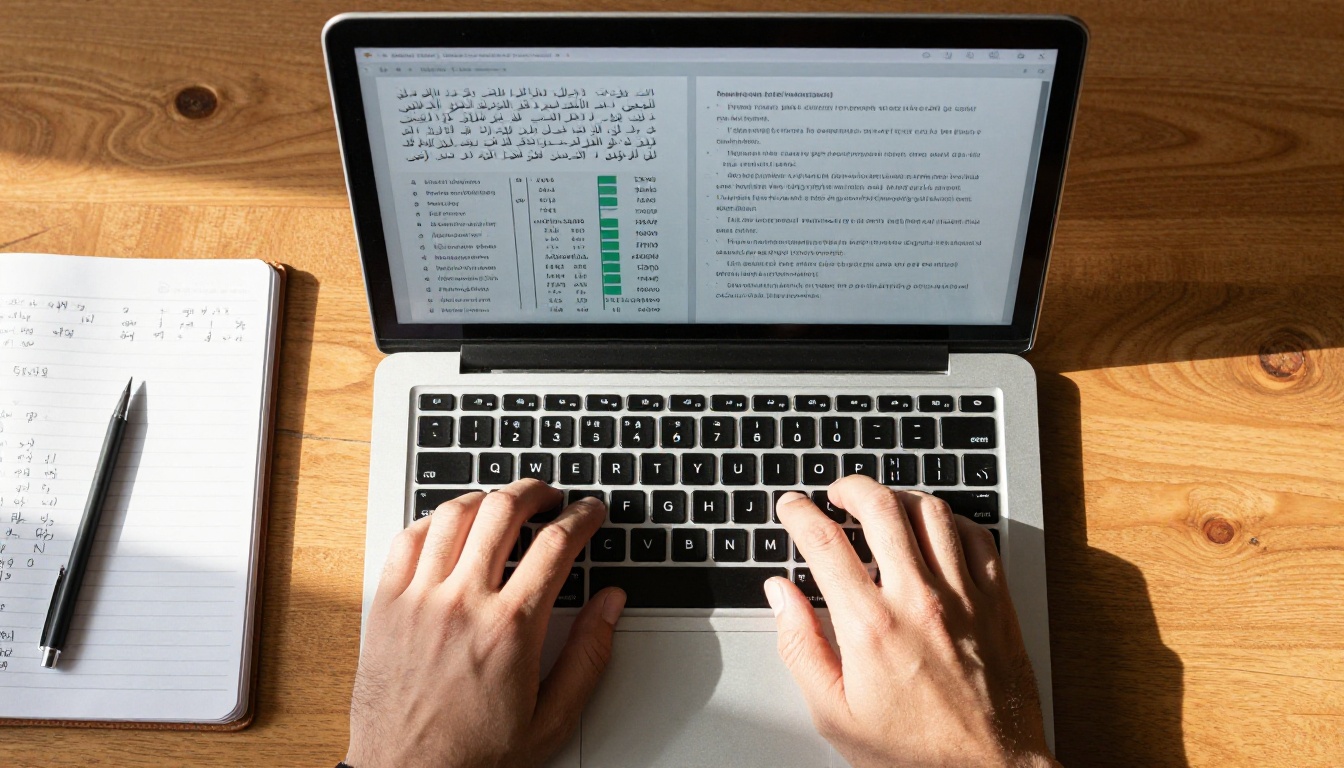
How Translation AI Changed in 2026
From phrase matching to reasoning
Early machine translation worked by pattern matching: find a phrase in the source language, swap in the closest target-language equivalent, repeat. Neural machine translation improved on that by learning statistical relationships across massive corpora. What 2027 models do differently is reason about intent. They ask, in effect: what is this sentence trying to do? A legal clause that must preserve a specific liability shield. A marketing tagline where rhythm matters more than literal accuracy. A technical manual where ambiguity could cause equipment damage.
This shift means accuracy metrics alone no longer tell the full story. The best translation AI in 2027 shows high scores on BLEU and COMET benchmarks, but its real advantage is register awareness: switching automatically between formal and informal registers based on context, matching the tone of the source document rather than forcing a uniform output style.
Why multilingual depth matters now
Businesses that once translated into 5-6 major languages now target 30-50 language markets simultaneously. Low-resource languages (those with fewer than one million training examples in existing corpora) were historically where AI translation fell apart. Several 2027 models have made significant progress on this problem by training on synthetic parallel data generated by stronger models and cross-lingual transfer techniques.
💡 Key insight: A model's multilingual breadth tells you how many languages it supports. Its multilingual depth tells you whether those languages actually work well, or just exist as checkboxes. Test with a low-resource pair before committing to a workflow.

The Best LLMs for Translation Tasks
OpenAI's GPT 5 series
GPT 5 sits at the top of most independent translation benchmarks in 2026. Its strength is not raw throughput but contextual fidelity: it preserves metaphors, idiomatic expressions, and syntactic nuance that smaller models flatten into literal equivalents.
Within the GPT 5 family, the specialized variants each have a distinct role:
- GPT 5.6 Terra: Best for production-grade document translation where output goes directly to print or publication. Highest output quality, moderate generation speed.
- GPT 5.6 Luna: Optimized for fast text replies. Ideal for customer service chatbots that need multilingual response in under two seconds.
- GPT 5.1: The agentic variant. Best for workflows where translation is one step in a longer chain, such as scraping foreign-language news, translating, summarizing, and routing to appropriate teams.
For pure translation work, GPT 5.6 Terra is the reference standard. For speed-sensitive applications, Luna wins on latency without a catastrophic drop in quality.
Google's Gemini 3 series
Google's Gemini models benefit from direct integration with the company's training on multilingual web data at a scale no other provider can match. Gemini 3.1 Pro shows particularly strong performance on Asian language pairs (Japanese, Korean, Chinese) and on Southeast Asian languages that most Western-trained models handle poorly.
Gemini 3.5 Flash is the practical workhorse for high-volume translation pipelines. It handles vision inputs natively, meaning you can feed it a photo of a handwritten document, a street sign, or a printed form and get accurate translation output without a separate OCR step.
Gemini 3 Pro offers strong multimodal reasoning for tasks that combine translation with image or audio analysis, such as translating a product label visible in a photograph or interpreting a multilingual infographic.
💡 Use case tip: For Southeast Asian language pairs (Thai, Vietnamese, Tagalog, Bahasa Indonesia), Gemini 3.1 Pro outperforms GPT 5 in most head-to-head evaluations. The gap narrows significantly for Western European languages.
Anthropic's Claude models
Anthropic's models excel at a specific translation challenge: nuance preservation in long documents. Where GPT 5 and Gemini produce excellent paragraph-level translations, Claude Sonnet 5 maintains consistency across a 50,000-word contract or a full-length novel in a way that competing models struggle to match.
Claude Opus 4.7 goes further, with extended thinking mode: the model reasons about translation choices explicitly before committing, which significantly reduces errors in technical and legal content. For a pharmaceutical regulatory filing or a patent document, that reasoning step is worth the additional latency.
Claude 4.5 Sonnet hits the sweet spot for most professional translation workloads: strong quality, reasonable speed, and a 200,000-token context window that handles long documents without chunking.

DeepSeek and Qwen: strong multilingual alternatives
DeepSeek V3.1 deserves particular attention for Chinese-English and Chinese-European language pairs. Its training data composition gives it cultural context that Western-centric models miss, particularly for business communication styles, idiomatic Mandarin, and formal register in Chinese.
DeepSeek R1 applies chain-of-thought reasoning to translation, which produces measurably better results for technical content where precision matters: patents, academic papers, and engineering manuals where a single mistranslated term can invalidate the entire document.
Qwen3 235B from the Qwen team handles a remarkable range of Asian languages including rare variants and regional dialects of Arabic, as well as strong performance on Swahili, Hausa, and other African languages that most models neglect entirely.
Kimi K2.6 stands out for agentic translation workflows: it can run multi-step pipelines that translate, format, and adapt content for specific platform requirements without manual intervention between steps.
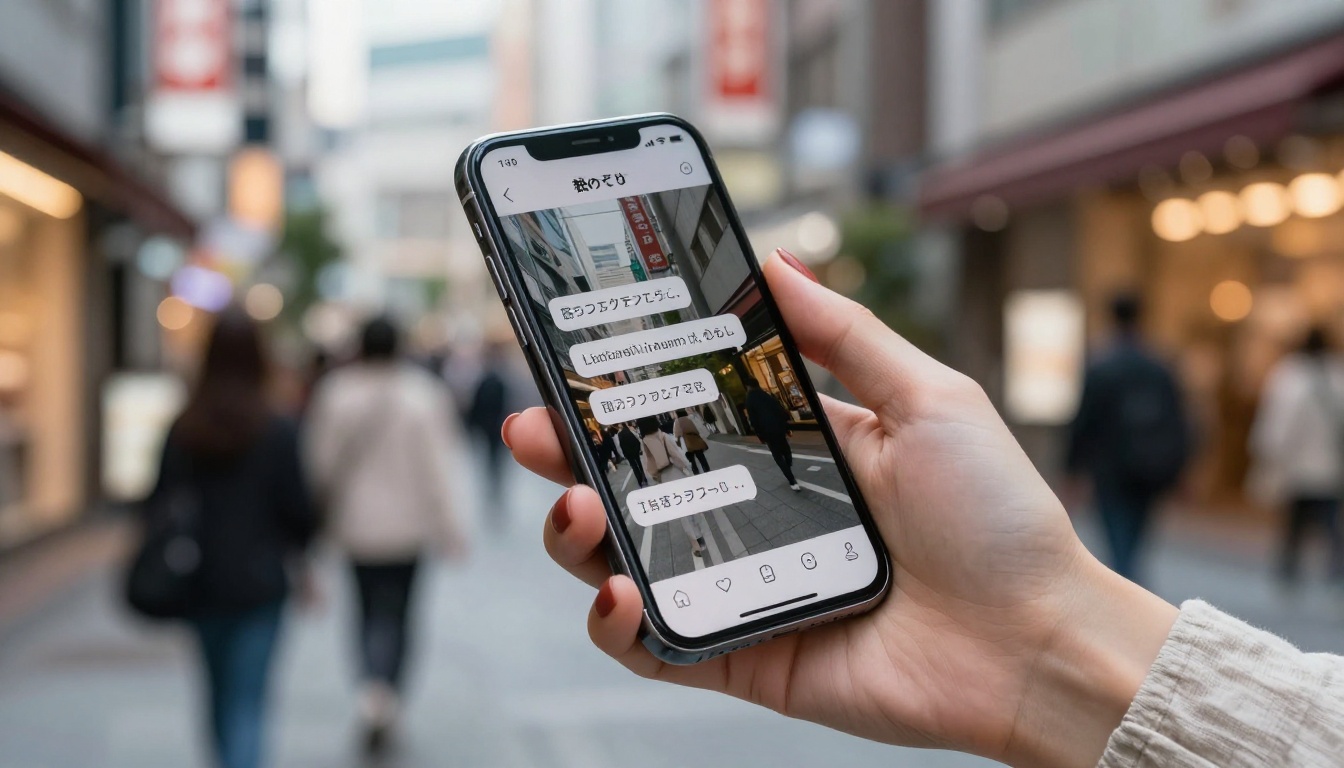
Video dubbing across 90 languages
The most requested translation workflow in 2027 is not text at all: it is video. Businesses that produce training videos, marketing content, or product demos need those assets in every target market's language. Recording new voiceovers in 20 languages is prohibitively expensive, and subtitles create a passive viewing experience that reduces retention significantly.
ElevenLabs Dubbing handles this end to end. Feed it a video file, and it transcribes the original audio, translates the script, synthesizes new voiceover audio in the target language, and syncs the lip movement to the new audio. The model supports 90+ languages, and output quality for major language pairs (Spanish, French, German, Japanese, Portuguese, Arabic) now passes casual viewer inspection reliably.
The practical workflow on PicassoIA:
- Upload your source video to the Dubbing tool
- Select source language (or let the model auto-detect)
- Choose your target language(s)
- Review the auto-generated transcript before finalizing
- Export the dubbed video with synced audio
💡 Quality tip: The Dubbing model performs best when the source audio is clean, without music or background noise. Pre-process noisy audio before feeding it into the dubbing pipeline for optimal output.
Multilingual text-to-speech for localization
Translating text is only half the localization workflow. The other half is delivering that translated content in a natural voice in the target language. Several models on PicassoIA handle this with professional quality:
ElevenLabs v2 Multilingual: 30+ languages with consistent voice quality across language switches within a single passage. Strong for content that mixes languages naturally, such as a French article quoting English sources.
ElevenLabs v3: The most natural-sounding output in the ElevenLabs lineup. Best for podcast narration, audiobooks, and long-form content where listener fatigue from artificial-sounding speech is a real concern.
Gemini 3.1 Flash TTS: 30 voices across 70+ languages. Particularly strong on prosody (the rhythm and intonation of speech) which makes translated content sound significantly less mechanical than competing models at similar speed.
AI Speech Synthesis for Language Workflows
Studio-quality voices in any language
MiniMax Speech 2.8 HD is the go-to option when audio quality cannot be compromised. Studio recording quality at a fraction of the cost of hiring voice talent in each target language. The HD variant processes audio at higher fidelity than the turbo variant, making it the right choice for broadcast, documentary narration, or any output heard through quality speakers or headphones.
MiniMax Speech 2.8 Turbo trades some fidelity for significantly faster generation. For high-volume workflows where you need to generate hundreds of short audio segments (product descriptions, app notifications, IVR prompts across 30 languages), Turbo handles the load without the latency of the HD model.
Voice cloning for brand consistency
One of the most powerful localization use cases in 2027 is voice cloning: training a speech model on a small sample of a brand's existing voice talent, then using that trained voice to generate content in any language. The listener hears the same voice, speaking their native language fluently.
Qwen3 TTS makes this accessible without requiring large audio datasets. The model clones a voice from a relatively short sample and maintains that vocal identity across language switches. Particularly effective for Asian language markets where brand voice consistency has become a significant differentiator.
Resemble AI Chatterbox Pro adds emotion control to voice cloning: you can specify whether the cloned voice should sound authoritative, warm, excited, or neutral, independently of the text content. For localized ad campaigns where emotional tone matters as much as linguistic accuracy, this level of control is a real operational advantage.
Using LLMs for Translation on PicassoIA
PicassoIA hosts several of the most capable LLMs directly, making it straightforward to run translation workflows without setting up separate API credentials or managing rate limits on your own.
How to use GPT 5 for document translation
- Open GPT 5 on PicassoIA
- In the system prompt, specify: source and target language, register (formal/informal), any domain-specific terminology to preserve, and whether idiomatic expressions should be adapted or translated literally
- Paste the source text and run the model
- For long documents, use GPT 5.6 Terra which handles extended context more reliably
The system prompt specification step matters more than most users realize. A well-crafted system prompt that defines domain vocabulary, register, and handling of untranslatable terms can close a significant portion of the quality gap between a generic translation and a post-edited professional one.
Using Gemini 3.5 Flash for visual translation
Gemini 3.5 Flash accepts image inputs directly. For translating documents that exist as scanned PDFs, photographs, or images (invoices, certificates, menus, packaging), this eliminates the separate OCR step that other workflows require.
- Open Gemini 3.5 Flash on PicassoIA
- Upload the image containing text to translate
- Prompt: "Translate all text visible in this image from [source language] to [target language]. Preserve formatting where possible."
- The model returns translated text with structural preservation intact
💡 Accuracy note: Image-based translation works best with clear, high-contrast text. Handwritten text and stylized fonts reduce accuracy significantly. For handwritten documents, Claude Opus 4.7 visual reasoning tends to outperform other models.

Choosing the Right Model for Your Job
Not every translation task needs the most powerful model. Here is a practical decision framework:
High-stakes, long documents (legal contracts, patents, medical records):
Use Claude Opus 4.7. Its explicit reasoning before generating output catches errors that faster models miss.
High-volume, speed-sensitive text (customer support, product listings, UI strings):
Use GPT 5.6 Luna or Gemini 3.5 Flash. Both handle throughput-intensive workloads with acceptable quality at scale.
Chinese, Japanese, Korean, Southeast Asian pairs:
Gemini 3.1 Pro and DeepSeek V3.1 lead the field here.
Video localization:
ElevenLabs Dubbing for full video dubbing. Pair it with an LLM for script review and terminology alignment before the dubbing step to catch errors early.
Multilingual voice generation:
ElevenLabs v3 for maximum naturalness. Gemini 3.1 Flash TTS for breadth of language coverage across 70+ languages.
Low-resource languages (African, Pacific, regional dialects):
Qwen3 235B and Llama 4 Maverick Instruct both show strong results in language pairs that Western-centric models handle poorly.

Where Current Models Still Fall Short
It is worth being honest about where 2027 AI translation still has limits. Spoken language translation with dialect variation remains inconsistent: the same sentence spoken by a speaker from Cairo versus Casablanca can produce meaningfully different translation quality depending on the model's exposure to each dialect during training.
Simultaneous interpretation at the speed and accuracy of a trained human interpreter remains beyond what any deployed model achieves reliably in real-world conditions. Models can assist human interpreters significantly, but they have not replaced them.
Cultural adaptation, which goes beyond linguistic translation into reformatting arguments, humor, and references for a specific audience, remains largely a human task. Models can flag when content has cultural adaptation needs, but executing that adaptation with genuine cultural fluency still requires human oversight for anything that carries significant reputational or commercial stakes.
The practical implication: for critical content, human review of AI translation output is not optional. The models have eliminated most of the labor, but they have not eliminated the need for judgment.
Build Your Multilingual Workflow Today
The translation stack that required five separate vendors and a team of post-editors two years ago now runs inside a single platform. PicassoIA brings together the GPT 5 family, Gemini 3.x, Claude Sonnet 5, and ElevenLabs Dubbing under one roof, alongside dozens of specialized models for every step of the language workflow.
Pick a language pair you work with regularly. Run the same source text through three different models and compare the outputs side by side. You will see the quality differences immediately, and you will know exactly which model to route each type of content through. The time investment for that test is about 20 minutes. The efficiency gains compound across every project that follows.
Browse the full model catalog at picassoia.com/en/all-models and start building the multilingual workflow your content deserves.


