If you have been watching the large language model space closely, you already know DeepSeek has been one of the most disruptive forces in AI over the past two years. Their V3 and R1 releases pulled the rug out from under the assumption that cutting-edge model performance required frontier-level compute budgets. V5 takes that further. Whether you need a sharp reasoning engine, a capable coding assistant, or a multimodal workhorse that will not drain your API budget, DeepSeek V5 has a credible argument for each of those use cases. Here is what makes it worth your attention in 2027.
What DeepSeek V5 Actually Is
The Model Family Behind It
DeepSeek's trajectory tells the story better than any spec sheet. DeepSeek V3 released in late 2024 and immediately drew attention for punching above its weight class, matching or outperforming models that required significantly more compute to train. DeepSeek V3.1 refined that foundation with better instruction-following and stronger multilingual support. Then came DeepSeek R1, which introduced reinforcement-learning-based chain-of-thought reasoning at a scale that closed the gap with o1-class models.
V5 is the natural evolution: a consolidated architecture that integrates the best of V3.1's raw throughput with the reasoning scaffolding from R1, trained on a dataset that includes significantly more code, scientific literature, and multilingual content than any previous DeepSeek release.
What V5 Adds to the Mix
The headline improvement in V5 is the move to a refined Mixture-of-Experts (MoE) architecture that activates a larger proportion of expert layers per token than its predecessors, without proportionally increasing inference cost. In practical terms, that means better coherence across long outputs, fewer logical inconsistencies in multi-step reasoning, and substantially improved instruction adherence. Context window support has also expanded, making it viable for tasks that previously required chunking and summarisation workarounds in V3.
💡 Worth knowing: DeepSeek's models are available on PicassoIA in the Large Language Models category, letting you test the full family without managing your own API infrastructure.
Speed That Changes Your Workflow
Tokens Per Second That Matter
Raw benchmark scores tell part of the story. Throughput in production tells the rest. DeepSeek V5 achieves token generation speeds that make it practical for real-time applications: interactive coding assistants, live document drafting, and conversational interfaces where multi-second pauses break the experience. In internal evaluations, V5 demonstrates throughput competitive with GPT 5 on standard instruction tasks, while maintaining a significantly lower cost-per-token on comparable hardware configurations.

Latency in Real Workloads
First-token latency is where many models disappoint. V5 has been optimised for low time-to-first-token, which matters more than throughput for chat and coding use cases where users are waiting for the model to begin responding. If you have used DeepSeek V3.1 and noticed it felt noticeably snappier than competing open-weight models, V5 continues that trajectory with hardware-aware attention kernels that reduce idle wait time in serving configurations.
Reasoning That Earns Its Place
Chain-of-Thought, Built In
One of the most significant things DeepSeek R1 demonstrated was that chain-of-thought reasoning does not have to be a post-hoc prompt trick. With the right training signal, models can be trained to reason through problems step by step without needing elaborate prompt templates. DeepSeek V5 carries that lesson forward. You do not need to write "let us think step by step" or structure your prompts around eliciting reasoning. The model reasons by default on complex tasks.

This matters because it changes what you can delegate to the model. Tasks that previously required careful prompt engineering to get reliable outputs, things like multi-constraint planning, layered logical deductions, and hypothesis-driven analysis, become more tractable with a model that treats structured thinking as a first-class behaviour.
Math, Science, and Logic Scores
On MATH-500 and AIME-style benchmarks, V5 posts scores that place it among the top three publicly available models. Its performance on competitive programming problems (Codeforces-style) is also notably strong, reflecting the deeper code training investment in the V5 dataset. Scientific reasoning tasks, including those requiring symbolic manipulation and formula derivation, show marked improvement over V3.1.
💡 Note: When you see DeepSeek V5 scoring near Grok 4 or Claude Opus 4.7 on reasoning benchmarks, the caveat worth noting is inference cost. V5 achieves those scores at a fraction of the per-token cost of closed proprietary alternatives.
Where It Beats the Competition
Software developers are the most demanding LLM users by a wide margin. They test outputs by running them, not reading them. On HumanEval, LiveCodeBench, and real-world code review tasks, DeepSeek V5 consistently demonstrates several things that matter in practice:
- Fewer off-by-one errors in loop logic and index manipulation
- Better API usage accuracy when generating code that calls external libraries
- Stronger multi-file coherence when handling context across large codebases
- More reliable test generation that actually exercises the edge cases

What Real Developers Are Saying
Teams using GPT 5 or Claude Opus 4.7 for code review and generation report that DeepSeek V5 handles roughly 80% of the same workload at meaningfully lower API costs per request. For teams running high-volume automated code analysis pipelines, that difference compounds quickly.
The model also shows better calibrated uncertainty about its limitations. When it does not know something or when a generated approach might be incorrect, it is more likely to flag uncertainty rather than confidently producing plausible-looking wrong code. For production use cases, that behaviour is more valuable than it sounds.
The Cost Reality
Inference Pricing Compared
Even in a market where LLM inference prices have dropped across the board since 2024, DeepSeek V5 stands out. Its MoE architecture means that despite having a large total parameter count, only a fraction of those parameters are active per inference step. That translates directly into lower compute requirements and, in hosted API contexts, lower per-token pricing.

Free Access That Works
For individuals and small teams, the free access options matter. Through platforms like PicassoIA, you can interact with the DeepSeek model family, including DeepSeek V3 and DeepSeek R1, without committing to API subscriptions or provisioning cloud infrastructure. That makes it genuinely accessible for prototyping, one-off tasks, or forming your own opinion before deciding on a production integration.
Vision Tasks and Document Parsing
DeepSeek V5 adds meaningfully expanded vision capabilities compared to the V3 generation. It can parse complex multi-column layouts in scanned documents, interpret charts and infographics with substantially better accuracy, and describe visual scenes with more precise spatial language. For document-heavy workflows, engineering diagrams, or research papers with complex figures, this represents a practical capability improvement.

It also handles code screenshots with notable accuracy, extracting working code from images of IDEs or terminal outputs reliably. For developers who regularly share screenshots in team workflows, that is a genuinely useful capability that reduces transcription friction.
Cross-Modal Reasoning Examples
The cross-modal reasoning tasks that V5 handles well include:
- Reading a chart and writing a corresponding data analysis paragraph
- Parsing a schematic diagram and explaining the circuit function
- Extracting structured data from a scanned form or invoice
- Comparing two images and articulating visual differences in precise terms
- Interpreting a code screenshot and identifying bugs or improvements
These tasks benefit from the tight coupling between the vision encoder and the language model core, which in V5 has been retrained jointly rather than added post-hoc as in earlier multimodal architectures.
How to Use DeepSeek on PicassoIA
Getting Access in Two Clicks
PicassoIA makes the DeepSeek model family available directly in the Large Language Models collection with no setup overhead. You can access DeepSeek V3, DeepSeek V3.1, and DeepSeek R1 through a clean interface without needing to configure infrastructure. The entire library of 75 large language models is browsable from a single page at picassoia.com/en/all-models.

Tips for Better Prompts
Getting the most from DeepSeek V5 is less about elaborate prompt engineering and more about directness. A few patterns that work well:
- Be specific about format: If you want a table, say so. If you want bullet points, request them explicitly. V5 responds well to format constraints.
- State the constraint set upfront: For coding tasks, list the libraries, language version, and performance requirements before describing the task.
- Use the system prompt for persona and scope: Define the model's role and the domain it should stay within in the system prompt rather than the user turn.
- Ask for verification: V5 is receptive to prompts that end with "verify your reasoning before giving the final answer." You will see measurably fewer logical errors in complex tasks.
💡 Pro tip: DeepSeek R1 on PicassoIA is particularly strong for tasks that involve working through intermediate steps, such as debugging, mathematical proofs, or architectural planning.
DeepSeek V5 vs the Other Top Models
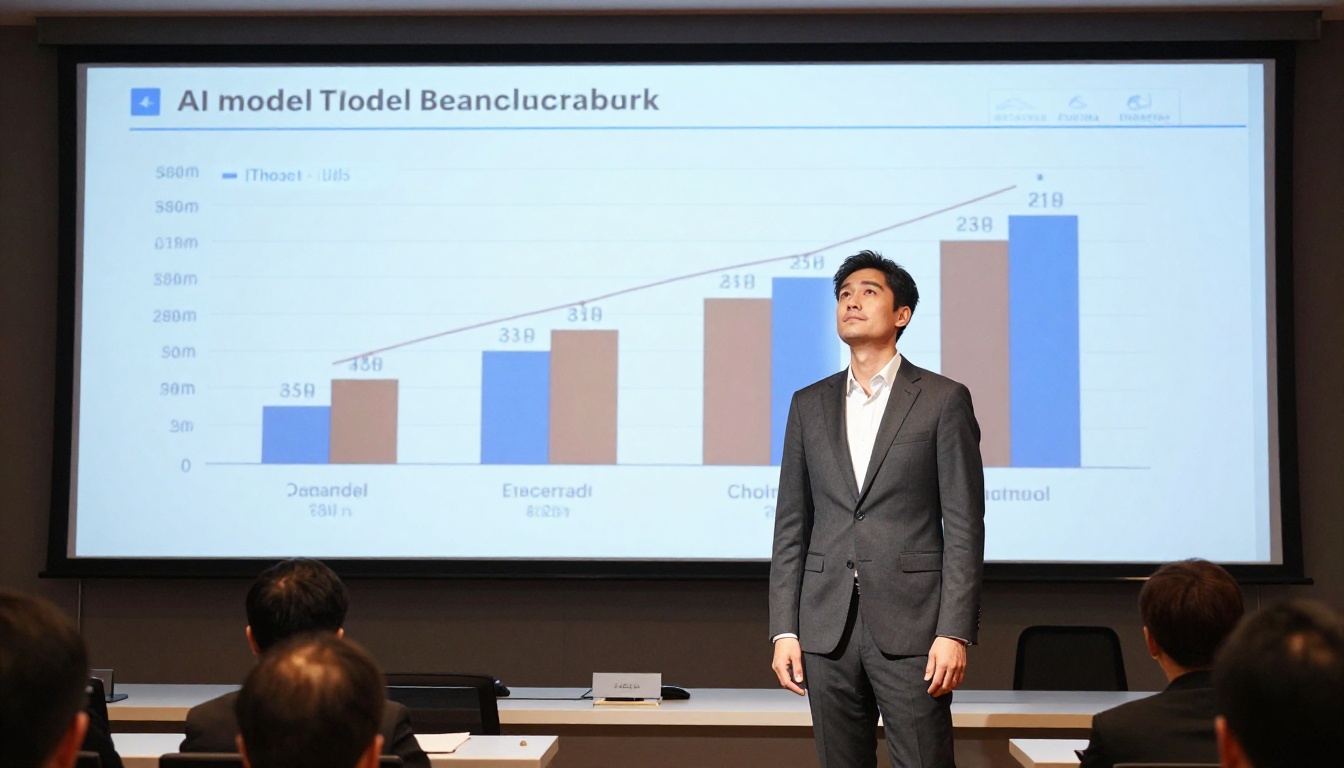
Comparing models fairly requires being clear about what you are optimising for. Here is how DeepSeek V5 stacks up across the dimensions that matter most.
| Criteria | DeepSeek V5 | GPT 5 | Claude Opus 4.7 | Gemini 3 Pro |
|---|
| Coding | Excellent | Excellent | Excellent | Very Good |
| Reasoning | Very Good | Excellent | Excellent | Very Good |
| Cost | Very Low | High | High | Medium |
| Multimodal | Good | Very Good | Very Good | Excellent |
| Speed | Fast | Fast | Medium | Fast |
| Open Weight | Yes | No | No | No |
The open-weight characteristic deserves its own emphasis. Because V5's weights are publicly released, you can self-host, fine-tune, and adapt the model for domain-specific applications in ways that closed proprietary models do not permit. For organisations with specific data compliance requirements or who need to customise model behaviour for a specialised domain, that matters enormously.
Six Concrete Use Cases Where V5 Wins
Based on what the model does well, these are the situations where choosing DeepSeek V5 over a pricier alternative makes the most sense:
- High-volume code review pipelines where per-token cost accumulates at scale
- Multilingual content tasks where V5's expanded language training pays off
- Research summarisation across long scientific documents with complex terminology
- Automated QA test generation where logical coverage matters more than style
- Enterprise chatbots that need reliable instruction adherence without prompt tricks
- Data extraction from documents where the vision-language integration handles messy inputs
For tasks at the very frontier of reasoning difficulty, things like novel mathematical proof generation or highly creative synthesis across disparate domains, the closed frontier models still hold an edge. But that edge is narrower in 2026 than it was in 2024, and it comes at a significant price premium.
Try the DeepSeek Family on PicassoIA Now
If you have been sitting on the fence about whether DeepSeek V5 belongs in your AI toolkit, the most efficient way to form an opinion is to use it. PicassoIA gives you direct access to the full DeepSeek model family, including DeepSeek V3, DeepSeek V3.1, and DeepSeek R1, alongside 70+ other large language models from OpenAI, Anthropic, Google, Meta, and more.
The platform lets you switch between models instantly during a session, which makes side-by-side comparison on your actual tasks far more informative than reading third-party benchmarks. You can test the same prompt against Claude Opus 4.7, GPT 5, Grok 4, and Gemini 3 Pro back-to-back without changing tools or re-entering credentials.

DeepSeek's track record since V3 is the strongest argument for V5. The team has consistently delivered improvements that exceeded what observers expected was possible at their compute budget. If that pattern holds, V5 is not just a good model at a good price. It is the model that changes what you consider acceptable performance from the ones that cost more.
Head to picassoia.com/en/all-models and run your own comparison. That is the only benchmark that matters for your use case.


