Most anime chatbots are deeply mediocre. They look good in screenshots, promise deep roleplay and uncensored conversations, then freeze up the moment you push past the surface. The filter kicks in. The character snaps out of persona. You get a generic refusal message dressed up in a pastel UI. This happens across dozens of platforms, and it keeps happening because most developers optimize for optics, not for what users are actually there to experience.
But a handful of platforms get it right. And when they do, the difference is immediately obvious.
This article breaks down exactly what separates the good anime AI chatbots from the disappointing ones, which technical choices drive that difference, and where visual generation fits into the picture.
Why Most Anime Chatbots Break Immersion
The Filter Problem Nobody Talks About
The fundamental tension in anime AI chatbots is this: the genre is built on emotional intensity, dramatic tension, and often mature themes. Shonen fights, romantic visual novels, psychological horror, slice-of-life intimacy. These tones require a model that can commit to a scene without constantly hedging.
Most mainstream chatbot platforms layer safety filters over their base models. That is reasonable for general-use assistants. But when you are building an anime AI companion specifically marketed for immersive roleplay, those filters create a constant friction that destroys the experience. The character breaks persona. The tone resets. The conversation stops feeling like interaction and starts feeling like negotiation.
The better platforms solve this differently. They do not remove safety at the infrastructure level. They build fine-tuned layers on top of uncensored base models, then let users configure the content ceiling themselves within the platform's defined limits. The model stays in character. The tone holds.
What Users Actually Want
The typical user looking for an uncensored anime chatbot is not necessarily chasing explicit content. The majority want:
- A character that remembers context across a long conversation
- Consistent personality that does not shift based on what topic comes up
- Emotional authenticity that mirrors the genre's tone, whether playful, serious, romantic, or dramatic
- The ability to describe or generate scenes without the chatbot shutting down
That last point is where the visual generation angle becomes critical. An anime AI companion that can actually show you what it is describing, rather than just typing it out, occupies a completely different category of experience.

The Anatomy of a Good Anime AI Chatbot
Personality Depth Over Surface-Level Charm
Surface-level charm is easy. A cute avatar, a few canned responses, a name that sounds like a character from a popular series. Depth is what separates platforms that people return to versus platforms they abandon after twenty minutes.
Depth in an anime character AI comes from a few specific design choices:
- System prompt architecture that defines backstory, emotional triggers, speech patterns, and relationship dynamics in detail
- Long context windows so the model can reference things said 50 or 100 messages back without losing thread
- Temperature calibration that allows for genuine spontaneity within a personality framework, like a tsundere who occasionally slips into warmth or a stoic character who shows micro-reactions
The underlying large language model matters enormously here. Models with higher reasoning capacity and longer context retention produce demonstrably better roleplay. On PicassoIA, options like GPT-4o, GPT 5, and Claude Sonnet 4.6 offer the reasoning depth needed to hold complex character states without collapsing into generic responses.
Memory That Makes It Feel Real
Context window size is only half the story. The other half is how effectively the model uses that context. A model that forgets the user's name after ten messages, or resets an emotional arc because the topic changed, immediately feels hollow.
The best anime roleplay chatbot systems implement persistent memory through:
- Summarization loops that compress earlier conversation turns into compact facts the model can recall
- Explicit relationship tracking within the system prompt that updates as the conversation progresses
- Personality anchoring prompts that reinforce character traits at intervals
This is something you can partially implement yourself when using PicassoIA's LLMs directly. Models like DeepSeek R1 and Kimi K2 Instruct respond well to structured system prompts that establish character frames explicitly.
Context Windows and Why They Matter
Here is a concrete comparison worth understanding:
For uncensored AI chat scenarios, longer context windows mean the model can maintain a coherent scene across many messages without forgetting earlier emotional beats. Claude Sonnet 4.6 with its 200k context is particularly strong for complex, multi-arc roleplay. Gemini 3.5 Flash at 1 million tokens offers the largest effective memory of any model currently on the platform.
Visual Generation: The Missing Piece
When Your Chatbot Can Show, Not Just Tell
Text-only anime AI companions have a ceiling. The conversation can describe a scene in rich detail, but description and visualization are fundamentally different experiences. The platforms that close this gap by integrating image generation are operating at a different level entirely.
This is where AI-generated anime images shift from a bonus feature to a core part of the experience. When the character in your conversation can generate a portrait of herself in the scene you are describing, or produce a visual of the location you are both imagining, the immersion multiplies significantly.
The Image Models That Actually Do NSFW Right
Not all image generation models are built equal, and for adult anime AI content specifically, the differences are stark. Some models have hard-coded restrictions that activate regardless of the platform or prompt framing. Others are genuinely uncensored but produce poor image quality. The best options combine quality with permissiveness.
On PicassoIA, Seedream 4.5 is the top recommendation for this use case. It produces 4K-quality images with strong prompt adherence, handles mature aesthetic styles well from elegant glamour to suggestive scenes, and does not block adult themes at the generation level. The quality-to-freedom ratio is the best currently available on the platform.
💡 Tip: When generating NSFW-adjacent content with Seedream 4.5, specificity in your prompt wins. Describe lighting, clothing details, pose, and emotional expression precisely. Vague prompts produce generic results. Detailed prompts produce exactly what you are imagining.
For users who want more stylized outputs, Flux Krea Dev is excellent for images that feel less algorithmically processed, and Flux Redux Dev is the go-to for generating variations on a character or scene without losing the core aesthetic.
For anime-specific aesthetics, Qwen Image Edit Plus LoRA Photo To Anime converts photorealistic inputs into anime-style outputs with strong style fidelity. This is particularly useful when you want to bridge the gap between a photorealistic character portrait and a clean anime illustration of the same character.
One important note: Seedream 5 Lite is not recommended for NSFW content. It applies content restrictions that Seedream 4.5 does not. Stick with 4.5 for unrestricted results.
Top LLM Backbones for Anime Characters
Which Models Handle Roleplay Best
The LLM underneath the character is what determines how the conversation actually feels. The model's training data, instruction-following capability, and default personality all shape how effectively it can inhabit a character and sustain that performance across a long session.
For high-stakes, emotionally complex roleplay:
- Claude Opus 4.7 is the top performer for narrative depth. It holds intricate character motivations, tracks relationship dynamics across a session, and produces dialogue that feels genuinely literary rather than chatbot-like.
- GPT 5 offers strong instruction following and excellent persona maintenance across long sessions.
For fast, responsive conversations:
- Gemini 3 Flash generates responses quickly without the quality degradation you see in smaller fast models.
- Llama 4 Maverick Instruct is the strongest open-weight option, offering more latitude in how it responds to character framing because of its architecture.
For reasoning-heavy or narrative-driven scenarios:
- DeepSeek v3 handles complex plot logic and character reasoning particularly well.
- Kimi K2 Instruct is a strong performer for agentic character behavior, where the AI takes initiative in moving the narrative forward rather than only responding.
Free vs Premium: The Real Difference
The honest answer is that free tiers on most anime chatbot platforms are too limited to be genuinely useful. Response length caps, shorter memory windows, and queued generation times break immersion at exactly the moments you want it most.
PicassoIA's model selection spans free open-weight models like Llama 4 Maverick and DeepSeek R1 up to frontier models like GPT 5 and Claude Opus 4.7. You can start with the open models to feel out the experience, then upgrade to frontier models when you want better results.
How to Use PicassoIA for Anime AI Content
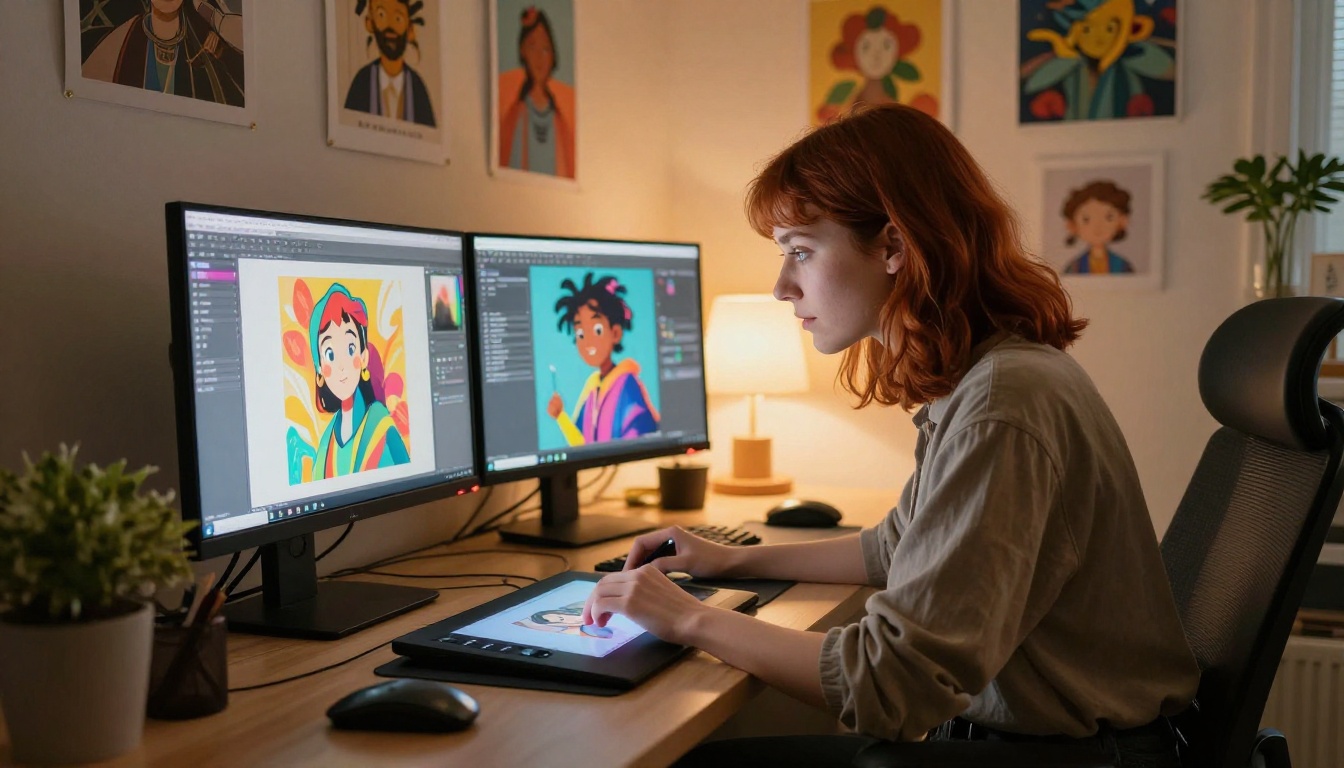
PicassoIA's model collection at picassoia.com/en/all-models is built to handle both the conversational and visual sides of anime AI content. Here is a practical workflow for building out a character experience:
Step 1: Choose your LLM
Go to the Large Language Models category and select your model based on what the session needs. For pure character immersion, Claude Sonnet 4.6 or GPT-4o are reliable starting points. For something more experimental, DeepSeek R1 is worth trying.
Step 2: Build your system prompt
This is where most users underinvest. A strong system prompt includes:
- Character name, age, and archetype (tsundere, kuudere, genki, etc.)
- Backstory with 3-5 specific details
- Speech patterns, whether formal, casual, or using specific catchphrases
- Emotional triggers and response tendencies
- The nature of the relationship with the user
Step 3: Generate character visuals with Seedream 4.5
Once the character is defined in text, switch to Seedream 4.5 and generate a reference portrait. Describe the character precisely: hair color and style, eye color and shape, outfit, expression, and setting.
Step 4: Iterate with Flux for variations
Use Flux Krea Dev or Flux Redux Dev to generate variations at different poses, lighting conditions, or emotional states. This builds out the character's visual library.
Step 5: Generate conversation scene images
As your chat session develops, generate scene images to accompany key moments. Describe the specific emotional beat, physical location, and character state in the image prompt to keep visuals aligned with the conversation.

3 Capabilities Worth Paying For
Not every feature in an AI waifu chatbot platform translates into a meaningfully better experience. These three are the ones that actually move the needle:
-
Unlimited generation without hard caps on messages or image outputs. PicassoIA's Image Editor Pro tier removes the ceiling on image generations, which matters when you are iterating on a character across many sessions.
-
Access to multiple frontier LLMs in the same interface. Being able to switch between GPT 5 and Claude Opus 4.7 for the same character without rebuilding your session is genuinely useful.
-
Image generation at 4K or higher. Reference images at lower resolutions feel cheap. 4K outputs from Seedream 4.5 look like professional digital art.
Red Flags to Watch For
💡 Watch out for: Platforms that advertise "uncensored AI" but route your conversations through a third-party API they do not control. When the underlying model changes its content policy, those platforms lose their differentiation overnight, often without notifying users.
The sustainable version of an uncensored anime AI platform is one that maintains its own fine-tuned models or works with model providers that explicitly support the use case. PicassoIA's integration of models like Seedream 4.5 falls into this category on the image side.
Other red flags:
- No system prompt access, meaning you cannot define your own character
- Response delays over 3 seconds for text generation
- Image generation that fails silently rather than returning an error
- No way to continue a session from where you left off

The anime AI chatbot space has matured fast. Two years ago, any platform with a character avatar and basic chat was competitive. Now users expect:
- Photorealistic or high-fidelity anime visuals generated on demand, not pulled from a static gallery
- LLM-backed conversations that can hold complex narrative arcs for hundreds of messages
- NSFW content that stays within an artistic framework rather than swinging between hard restriction and fully explicit output
- Cross-modal experiences where text and image generation reinforce each other
The platforms that deliver all four are still relatively few. Most excel at one or two but create friction at the integration points. PicassoIA's approach, running 90+ text-to-image models alongside 75+ large language models in the same ecosystem, addresses the integration problem directly. You are not stitching together three separate services with incompatible APIs. Everything lives in one place.
The combination of Seedream 4.5 for unrestricted image generation, Claude Sonnet 4.6 or GPT 5 for conversation depth, and the platform's overall model breadth makes it worth serious attention for anyone building a real anime AI companion experience rather than settling for something that approximates the idea.

Start Building Your Own Anime AI Character
If you have been relying on platforms that consistently disappoint, the practical next step is to try the tools that actually work rather than wait for the mediocre ones to improve.
Head to picassoia.com/en/all-models and start with Seedream 4.5 for your first character portrait. Use Claude Sonnet 4.6 or GPT-4o to build the conversation layer. Iterate on both sides until the character feels coherent across both text and image.
The gap between what most people are using for anime roleplay chatbot experiences and what is actually available right now is significant. The models are there. The image generation is there. The only thing between you and a genuinely immersive anime AI companion experience is the time it takes to put the pieces together on a platform built to handle all of it.


