If you're a content creator working in the adult or NSFW-adjacent space, you've probably already noticed that Google and Alibaba aren't building their flagship AI models for your use case. The mainstream conversation about Veo 3 versus Qwen Image 2 focuses on cinematic quality, creative flexibility, and benchmark scores. But there's a specific question that gets asked constantly in creator communities and almost never answered directly: which one actually handles adult content, and how far can you push it before it breaks?
This article covers both models honestly, explains exactly where their content policies cut off creative freedom, and gives you a clear picture of what to use instead if you need reliable output for NSFW or glamour-style work. No promotional framing, no hedging.
What Veo Actually Is
The first confusion that derails most comparisons is basic: Veo is a video model, not an image generator. When people search "Veo vs Qwen Image 2," they're often comparing apples and oranges without realizing it.
Google's Veo 3 generates video clips from text prompts. The original version produced 4-8 second clips with impressive motion quality. Veo 3.1 improved temporal coherence, meaning characters and environments stay consistent from one second to the next without warping. Veo 3.1 Fast delivers similar quality with shorter generation times. Veo 2 is still available for lower-resolution projects.
What genuinely sets Veo apart from other video models is native audio synchronization. Veo 3 generates ambient sound, music, and dialogue that sync organically with the visuals, without separate audio generation tools. For lifestyle content, fashion campaigns, and narrative video, this is a meaningful capability.

Veo 3 vs Veo 3.1: Real Differences
The jump from Veo 3 to Veo 3.1 is primarily about stability. Earlier outputs sometimes showed facial inconsistency across frames, objects morphing unnaturally between cuts, and lighting that changed without logical cause. The 3.1 update addressed most of these issues. The Veo 3.1 Lite version serves as a lighter-weight option for shorter clips and faster turnaround.
For non-adult creative work, the version hierarchy matters. For adult content, none of it matters because the content policy applies uniformly across all Veo versions.
Veo's Content Policy Is Architecture, Not a Setting
This is the point that creators miss most often: Veo's restrictions are not adjustable. There's no API flag you can set, no developer tier you can access, and no prompt phrasing clever enough to bypass a filter built into the generation pipeline at the infrastructure level.
Google's AI content policies prohibit any sexually suggestive content from Veo. That includes:
- Swimwear or lingerie in contexts that imply sexual intent
- Romantic scenes involving physical contact
- Implied nudity, even artistically framed
- Character poses that would be acceptable in fashion photography but that the model reads as sexual
Creators who have tested this extensively report that even prompts like "woman in a bikini on the beach" fail to generate if the surrounding context or session history triggers the system. The model doesn't give you a partial output. It refuses, and you start over.
💡 Bottom line on Veo: Outstanding video model for anything that doesn't touch adult content. For NSFW or suggestive work, it's not a tool you can use productively.
Qwen Image 2 at Its Best
Qwen Image 2 is Alibaba's text-to-image model, and it's meaningfully different from Veo in both output type and content tolerance. The model generates static images from text descriptions, with strong performance on photorealism, portrait photography, and complex compositional scenes.
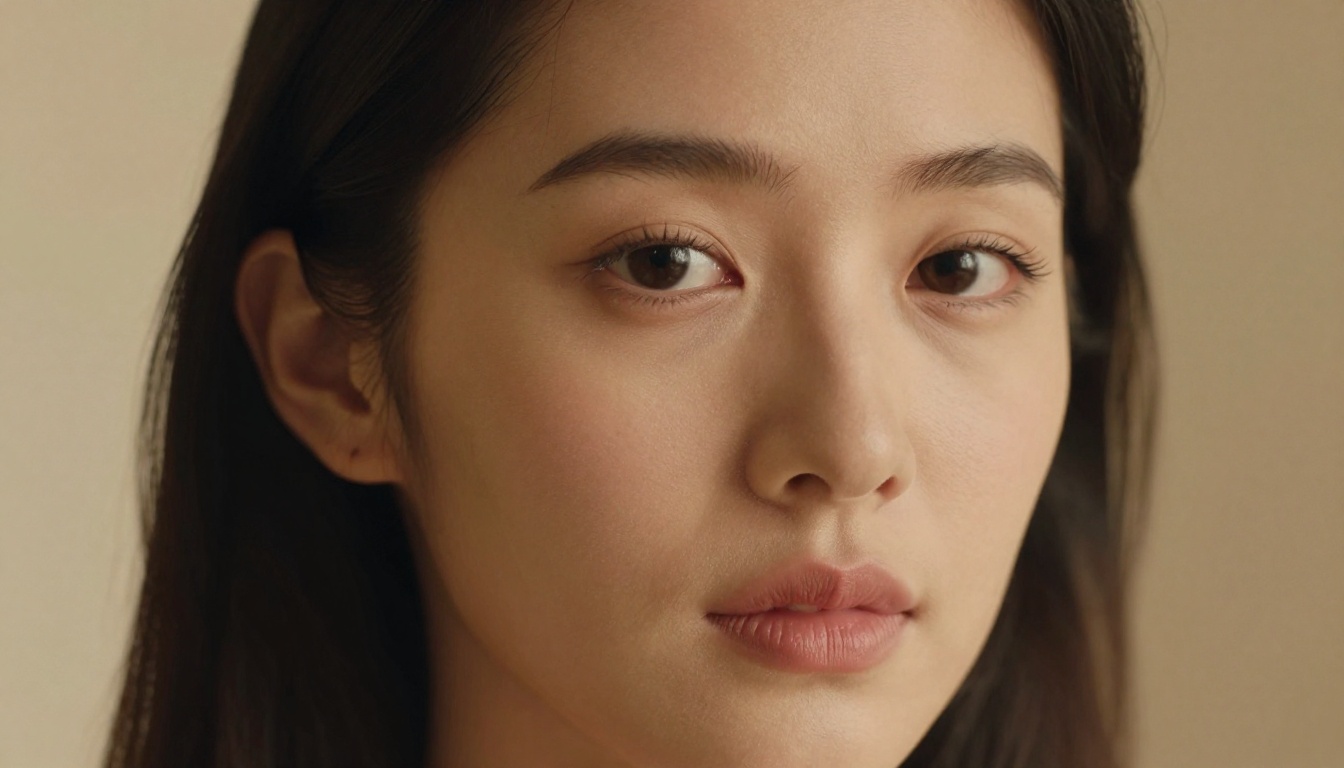
The image quality is genuinely impressive. Qwen Image 2 handles skin rendering better than most models at comparable price points. You get realistic subsurface scattering effects, natural variation in skin tone across different areas of the body, and hair that resolves into individual strands rather than a painted mass. For glamour photography-style generation, this technical quality matters enormously.
Newer versions available on PicassoIA, specifically Qwen Image 3 and Qwen Image 3 Pro, have improved on these qualities further. The 3 Pro version in particular shows a notable step up in fine detail rendering: fabric textures, jewelry, and environmental backgrounds all feel more grounded and specific.
Where Qwen Image 2 Outperforms Competitors
In the "not quite explicit but definitely suggestive" territory, Qwen Image 2 goes further than most mainstream models. It will generate boudoir-style photography with implied nudity. It handles swimwear and lingerie in editorial contexts without refusing. The model responds well to photography terminology in prompts: specifying a lens, a lighting setup, a film emulation all help guide the output toward the artistic rather than the pornographic, which the model's filters treat differently.
This doesn't make it an uncensored model. But it does make it a more workable tool for creators whose content sits in the suggestive rather than explicitly sexual category.
The Gap Between Marketing and Reality
Here's the honest version: Qwen Image 2 is inconsistent. The same prompt can produce a successful result in one session and a refused or sanitized result in the next. This isn't user error. It reflects the probabilistic nature of content filtering combined with context the model carries across a session.
For high-volume adult content creation where you need predictable output, this inconsistency is a production problem. You can't build a reliable workflow around a model that sometimes cooperates and sometimes doesn't. The quality, when it works, is excellent. The reliability, when you need it, isn't there.
Head-to-Head Output Comparison
| Dimension | Veo (Video) | Qwen Image 2 (Image) |
|---|
| Output Format | Video clips (4-30s) | Static image |
| Photorealism | Very High | High |
| Skin Rendering | Excellent (when allowed) | Excellent |
| NSFW Tolerance | Very Low | Low to Medium |
| Prompt Flexibility | Restricted | Moderate |
| Native Audio | Yes (Veo 3+) | N/A |
| Generation Speed | 30s to 3min | 5-20s |
| Cost per Output | High | Moderate |
| Session Consistency | High (for non-adult) | Low |
Realism Where It Counts
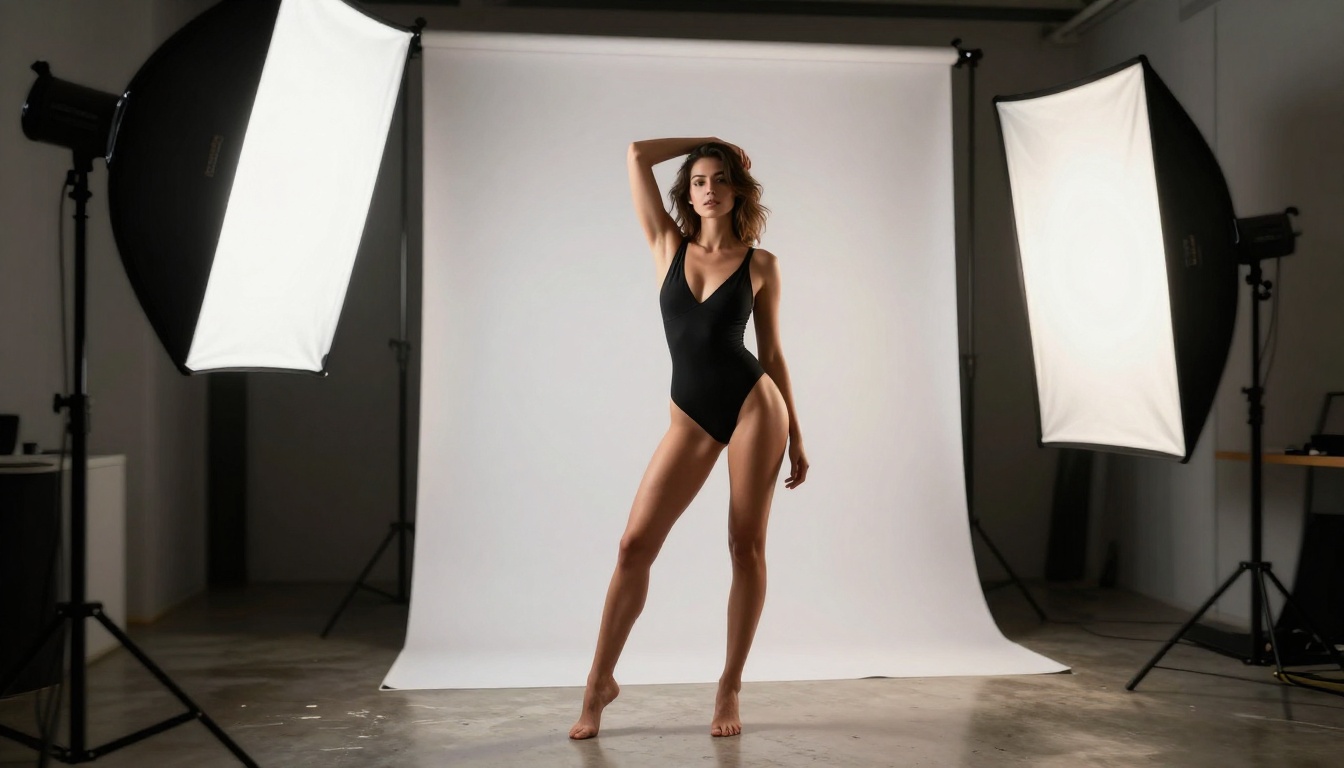
Both models produce photorealistic output within their respective domains. Veo generates video that holds up to casual scrutiny as real footage. Qwen Image 2 produces still images that pass close inspection at high zoom. For adult content specifically, the standard is higher because audiences are more attuned to anatomical inconsistencies, lighting errors, and skin artifacts.
In a controlled test where both models are asked to generate content they're willing to produce, Qwen Image 2 often edges ahead on pure image quality for portrait and glamour work. The static nature of images allows for more computational focus per output, which shows in the detail level.
Consistency Across Sessions
Veo is consistently restrictive. Qwen Image 2 is inconsistently permissive. Neither outcome serves creators who need reliable workflows. For adult content creation at scale, what you need is not occasional success but predictable output quality from session to session.
This is the central argument for switching to purpose-built models: they remove the guessing game entirely.
The Restriction Problem
Veo's Three-Layer Filter
Google's content filtering operates at three points in the Veo pipeline:
- Prompt screening: The text input is analyzed for sexual, violent, or harmful content before generation begins
- Generation monitoring: The model actively avoids generating flagged content during the video synthesis process
- Output review: A post-processing layer checks the completed video before it's returned to the user
Even if you construct a prompt that passes the first layer, the second and third layers can still block your output. This redundancy means there's no single point that clever prompting can exploit. It's not a loophole situation, it's a deliberate three-tier system.
Qwen Image 2's Soft Blocks
Qwen Image 2 uses softer filtering that operates primarily at the output level. The model attempts to generate what's requested and then modifies or refuses based on what it produced. This is why you sometimes get a "sanitized" version that fulfills the compositional intent of the prompt but removes or obscures the adult elements.
The practical effect is that you waste generation credits on attempts that come back modified. At scale, this adds up quickly in both direct costs and time spent curating outputs that aren't what you needed.

Production Speed and Cost
Per-Output Economics
Veo 3 video generation costs vary by platform and access method, but video generation is fundamentally more expensive than image generation. You're paying for more compute time, more output data, and infrastructure costs built into the pricing. At PicassoIA, you access these models through credit bundles that make per-output costs transparent.
For adult content workflows, the economics get worse because of refusal rates. Every generation attempt that gets blocked is a credit spent with nothing to show for it. With Veo's high refusal rate for adult content, the effective cost per usable output becomes very significant very quickly.
Qwen Image 2 is cheaper per attempt and faster to generate, but the inconsistency problem means your cost per usable output is still higher than it would be with a model that succeeds reliably.
Iteration Speed for Adult Creators
Adult content creation typically involves significant iteration. You test variations of poses, lighting, clothing, expressions, and settings before arriving at outputs that work for your audience. A model that takes two minutes to generate and refuses half the attempts is ten times slower than one that generates in ten seconds with a ninety percent success rate.
Qwen Image 2's speed is a genuine advantage here, even accounting for its inconsistency. Veo's generation time makes it poor for iteration under any circumstances, not just for adult content.

Real Alternatives That Actually Deliver
If neither Veo nor Qwen Image 2 serves your actual needs, the answer is purpose-built models on platforms that support adult content creators. PicassoIA hosts a curated range of models that produce high-quality NSFW-adjacent and non-explicit adult content without the constant friction of mainstream safety systems.
Seedream 5 Pro: The Top Choice
Seedream 5 Pro is the strongest image model on PicassoIA for adult-adjacent work. ByteDance built the model with photorealism as a core priority, and it shows in the output. Skin rendering at this quality level, with genuine subsurface scattering, pore-level texture, and realistic lighting interaction, is rare in accessible AI models.
More importantly, it's consistent. You can build a production workflow around Seedream 5 Pro because it produces reliable results across sessions rather than occasionally succeeding and often sanitizing. For creators who bill by output volume, this reliability has direct monetary value.
For editing and detail refinement after generation, PicassoIA Image Editor Pro lets you work inpainting and outpainting over your generated images with unlimited generations. This matters for adult content creation because final outputs often need detail work: face sharpening, proportion adjustments, background replacements. Having an editing layer that doesn't re-introduce restrictions gives you real control over the final result.
Seedance 2.5 for Video
Seedance 2.5 is the video model that fills the space Veo refuses to occupy. It generates up to 30-second clips with the same quality focus as Seedream 5 Pro on the image side. The model handles atmospheric, sensual, and glamour-style video content where Veo 3 would simply block generation and return nothing.
The output quality is competitive with Veo for lifestyle and glamour content. Where Veo 3.1 has an edge in audio synchronization and certain cinematic effects, Seedance 2.5 wins on content flexibility and the willingness to actually complete what you asked for.
Wan 3 is another strong option in the video category for creators working in the adult-adjacent space. Alibaba's video model applies less aggressive filtering than Google's and produces 1080p output with solid temporal consistency. It's particularly strong for longer-form clips and scenes with environmental complexity.
Qwen Image 3 Pro as a Middle Ground
Qwen Image 3 Pro is worth using for creators whose content stays in the suggestive-but-mainstream space. The improvements over Qwen Image 2 in detail and consistency make it more reliable for editorial glamour, artistic portraits, and implied-nudity boudoir work.
If Seedream 5 Pro is your primary model, Qwen Image 3 Pro works well as a secondary for A/B testing different aesthetic approaches. The models have different strengths in terms of lighting style and compositional defaults, which gives your output variety across a content calendar.
Browse the full model catalog at picassoia.com/en/all-models to see what's available across every category.
💡 The direct comparison: Seedream 5 Pro handles non-explicit NSFW with significantly fewer refusals than either Veo or Qwen Image 2. Pair it with PicassoIA Image Editor Pro for post-generation refinement and you have a workflow that holds together at production scale.
| Use Case | Best Model on PicassoIA |
|---|
| Cinematic lifestyle video (non-adult) | Veo 3.1 |
| Glamour photography-style images | Seedream 5 Pro |
| Suggestive images with artistic framing | Qwen Image 3 Pro |
| Sensual video content | Seedance 2.5 |
| Long-form adult-adjacent video | Wan 3 |
| Image editing without restrictions | PicassoIA Image Editor Pro |

How to Use Seedream 5 Pro on PicassoIA
Since Seedream 5 Pro is the practical answer to the Veo vs Qwen Image 2 question for adult content work, here's how to use it effectively.
Step 1: Open the Model Page
Navigate to Seedream 5 Pro on PicassoIA. You'll see the prompt input field, aspect ratio selector, and generation parameters. No API key required: access is handled through PicassoIA's credit system.
Step 2: Write a Photography-Style Prompt
The model responds to photographic language. Specify the subject and pose, the lighting setup (for example: "soft diffused window light from the left"), the camera lens and aperture (for example: "85mm f/1.4 portrait lens, shallow depth of field"), and texture descriptors (for example: "visible pore texture, natural skin warmth, Kodak Portra 400 film grain"). This specificity produces significantly better results than generic prompts.
For NSFW-adjacent content, framing the subject in artistic or editorial photography terms, boudoir, glamour, fine art portrait, helps the model understand the intended aesthetic register.
Step 3: Select the Right Aspect Ratio
Use 16:9 for editorial content, blog headers, and video thumbnails. Use 9:16 for vertical content designed for mobile or story formats. The 1:1 ratio works well for social profile imagery and close-cropped portraits.
Step 4: Refine with PicassoIA Image Editor Pro
After your initial generation, open the image in PicassoIA Image Editor Pro. Use inpainting to refine the face, adjust skin tone consistency, replace background elements, or correct any anatomical issues that appeared in the first pass. The unlimited generations on the editor mean you can iterate without per-attempt cost pressure.
Start Creating Without the Friction
The Veo vs Qwen Image 2 comparison has a clear answer for adult content creators: neither model was built for your use case. Veo 3 is a remarkable video tool with hard restrictions that make it unsuitable for NSFW work. Qwen Image 2 is a strong image model with inconsistent content tolerance that makes it unreliable for production workflows.
Seedream 5 Pro gives you the photorealistic image quality of these flagship models with the content flexibility your work requires. Seedance 2.5 does the same for video, letting you create glamour-style and atmospheric sensual content that Veo 3.1 won't touch.
Both models are accessible directly on PicassoIA without complex API setup or infrastructure management. Run your first generation at picassoia.com/en/all-models and see the difference between working with a tool built for your use case versus constantly fighting one that wasn't.


