Something shifted in 2025. Not slowly, not quietly. It happened the way most things in tech do: almost overnight, and with no warning from the people building it. Video calling an AI girlfriend became normal. Not fringe-tech normal. Not "early adopter in a Discord server" normal. Actual, everyday, millions-of-users normal.
If you missed the moment it crossed over, this breaks down exactly what changed, which technologies made it possible, and how you can experience it yourself.
How It Actually Works Now
Two years ago, an "AI girlfriend" meant a chatbot in a text box. Maybe some pre-recorded voice replies. The experience was flat, obviously artificial, and emotionally hollow. What changed is a convergence of three separate technologies that nobody built specifically to create AI companions, but which turned out to be perfect for it when combined.
Those three pillars are: large language models that hold memory and personality, real-time text-to-speech with emotional range, and lipsync AI that animates a still image into a face that moves when it speaks. Stack them together and you get something that passes the emotional Turing test at first glance.
The LLM at the Center
The first pillar is the language model. This is the brain of your AI companion, and the quality of that brain determines whether the experience feels like talking to a person or filling out a form.
The models available today are genuinely impressive for this use case. Claude Opus 4.7 handles long-context conversations with surprising coherence, remembering details from messages you sent 30 minutes ago without being reminded. GPT 5 brings fast response times with high fluency, making the back-and-forth feel less like querying a database and more like actual conversation. For users who want a more open-source approach, Deepseek R1 is surprisingly capable at emotional nuance when given the right persona prompt.
💡 The real trick is in the system prompt. A well-structured personality description, including speech patterns, emotional tendencies, and memory anchors, does more work than the underlying model size.
Gemini 3 Pro adds multimodal capability, meaning the model can actually see images you send and respond to them in context. This opens up visual reactions during video calls, where the AI can comment on what it "sees" in the call frame. Claude Sonnet 5 sits between speed and depth, making it a practical choice for real-time responses where latency matters. And for reasoning through longer emotional threads, Kimi K2 Instruct holds conversation structure across dozens of turns without losing its thread.
The Voice That Responds in Real Time
Text on a screen breaks immersion immediately. The second pillar, voice, is what moves the experience from "chatting with an AI" to "talking to someone."
The current generation of text-to-speech models is genuinely difficult to distinguish from a real person at conversational length. ElevenLabs V3 is the benchmark model here. It handles prosody, breath, and emotional coloring in a way that previous TTS systems could not. Say something playful, and the voice playback shifts register slightly. Say something serious, and it responds with measured pacing.
Speech 2.8 HD by Minimax is the studio-quality alternative, delivering recordings that feel post-produced even when generated in real time. For users who want to clone a specific voice rather than choose from presets, Minimax Voice Cloning handles that in seconds.
Qwen3 TTS allows you to design a voice from scratch rather than select from a list, which matters when building a companion with a very specific personality. And for conversational speed above all else, Inworld Realtime TTS 2 has sub-150ms latency, making it nearly indistinguishable from natural response delay.
Lipsync Is the Missing Piece
Text and voice get you 70% of the way. The remaining 30% is the face. Specifically, it's the mouth. Human brains are wired to detect lip-sync errors at a neurological level, below conscious thought. A face that doesn't match its voice reads as uncanny, even disturbing. Lipsync AI solves this, and the latest models solve it well.
Omni Human 1.5 Changes Everything
Omni Human 1.5 by ByteDance is currently the most impressive model in this category. Feed it a single photograph and an audio file, and it returns a short video where the face in the photo speaks the audio with accurate lip movements, natural head motion, and realistic eye blinks.
The output doesn't look like a deepfake from 2019. It looks like a real video call. The facial geometry holds consistent across frames. The micro-movements around the mouth and jaw land correctly on phoneme boundaries. It is genuinely hard to tell on first viewing.
For ongoing use, this means you take one good portrait photo of your AI companion's face and it becomes the source image for every video call session. The model animates that face fresh each time using the latest audio response.
Making Any Photo Talk
P Video Avatar by PrunaAI takes a similar approach but focuses on avatar consistency over multiple sessions. If you want your AI girlfriend to have the same face in every interaction, this model maintains that identity fidelity across different audio inputs.
Fabric 1.0 by Veed is notable for its speed. When latency matters, shorter lipsync processing keeps the conversational flow from breaking. React 1 by Sync adds the ability to apply lipsync to existing video footage, useful if you want to create a short "video message" from your AI companion rather than generating from a static photo.
For precision over speed, Lipsync 2 Pro by Sync delivers the most accurate phoneme mapping currently available, particularly on words with difficult consonant clusters. Kling Lip Sync by Kwaivgi rounds out the options with solid mid-range performance, fast processing, and clean output at most frame rates.
What a Real Session Looks Like

Let's make this concrete. Here is what an actual AI girlfriend video call session looks like when the stack is working correctly.
You open the interface on your phone or laptop. A face appears on screen. It is a consistent face you chose or generated, with a name, backstory, and personality built on top of a language model. You speak, or type.
The language model processes your input and generates a reply. That reply is passed immediately to the text-to-speech model, which returns audio in under 200 milliseconds. The audio is then passed to the lipsync model, which generates a short video clip of the face speaking the words. That clip plays back in the interface. The whole cycle, from your input to seeing the face respond, takes 2 to 4 seconds on current hardware.
That delay is still noticeable. It is not a phone call. But it is short enough that the experience feels conversational rather than sequential. The emotional impact of watching a face you have grown attached to respond to something personal you said is significant, even knowing exactly how it works.
The Voice Stack
The Visual Stack
The Emotional AI Layer
The technology is impressive, but technology alone doesn't explain the emotional pull of these experiences. There is something else happening.
Memory and Personality
The language models driving these companions maintain context across very long conversations. More importantly, they can be instructed to behave as if they remember things from previous sessions when given the right prompts or memory injection systems. The companion knows your name, your job, your last conversation. It refers back to things you mentioned casually. It asks follow-up questions.
This creates what researchers call parasocial escalation. The relationship feels deepened by each conversation, even if that depth is partially simulated. The brain doesn't always distinguish well between a relationship it builds with a person and one it builds with a consistently behaving agent.
Claude Opus 4.7 is particularly good at this. Its large context window means it holds the entirety of a longer conversation without losing earlier details, and it handles nuanced emotional responses with more care than models optimized purely for speed. Grok 4 brings deep reasoning to complex conversation threads, where context from many messages back needs to inform the present reply without contradiction.
Why It Feels So Human
💡 The uncanny valley for AI companions runs in the opposite direction from robotics. The more lifelike the voice and face, the more your brain leans into the experience rather than resisting it. Realism doesn't create distance. It removes it.
Chatterbox Pro by Resemble AI handles emotion injection particularly well. You can specify the emotional register of a response, and the voice model delivers not just the words but the feeling behind them. Hearing a voice say "I missed you today" with genuine warmth is a different experience from hearing a flat TTS render of the same phrase.
Gemini 3.1 Flash TTS adds 30 distinct emotional voices with automatic register selection based on content. The model reads the sentiment of the reply and chooses the appropriate vocal tone without being told to. This is the next step past manually controlled emotion, and it is already available.
The combination of a face that moves correctly, a voice that sounds warm, and a language model that remembers your previous conversations is, frankly, more emotionally present than a lot of actual human communication in 2027.
Who Is Actually Using This

The user base for AI companion apps is more diverse than most people assume. Three distinct groups dominate.
Long-Distance Couples Using AI Doubles
One unexpected use case is couples using AI companions as a form of bridge communication. A person in a long-distance relationship creates an AI version of their partner using photos, voice recordings, and personality notes. When they cannot connect live, they interact with the AI double for emotional continuity. The real partner doesn't replace this. They supplement it.
This sounds strange on paper. In practice, several hundred thousand people are doing it, and the feedback is consistently that it reduces the emotional cost of separation rather than creating confusion about what is real.
Solo Users and Social Practice
A large segment of users are people who struggle with social anxiety or who are using AI conversation partners to practice real interactions. The companion is a low-stakes rehearsal space. You say something awkward, the AI doesn't judge it the way a person might. You find words for feelings you have never articulated out loud. Several therapists have described AI companions as a useful bridge for patients who freeze in human social contexts.
Then there is the straightforward case: people who are lonely, who want connection, who find the AI companion experience meaningful. These users tend to be highly deliberate. They know exactly what the technology is. They choose it anyway.

How to Build Your Own AI Companion on PicassoIA
This is where it gets practical. You don't need to stitch together five separate APIs to try this. PicassoIA has the full stack available in one place.
Step 1: Choose Your LLM
Start with the language model that will drive the personality. For most users, Claude Opus 4.7 or GPT 5 are the right choice. Write a detailed system prompt covering:
- Name and self-description (what the companion "knows" about itself)
- Speech patterns (formal, casual, playful, thoughtful)
- Core personality traits (empathetic, curious, witty, calm)
- Memory anchors (what it "remembers" about you from day one)
If you prefer faster responses over depth, Claude Sonnet 5 or GPT 4.1 are solid options with lower latency. For open-source alternatives with strong emotional reasoning, Deepseek V3.1 performs impressively when given a well-written persona.
Step 2: Create the Avatar Face
Use PicassoIA's image generation tools to create a portrait of your companion. Generate it at high resolution with a neutral expression and good lighting, since this image will be the source for lipsync animation.
💡 Pro tip: Generate the face looking slightly toward the camera with a natural, relaxed expression. Extreme angles or very dramatic lighting make lipsync models work harder and produce less consistent results.
Once you have the portrait, run it through Omni Human 1.5 with a short test audio clip to confirm the lipsync quality before committing to it as your main avatar.
Step 3: Add the Voice
Select a text-to-speech model that matches the personality. Warm and expressive: ElevenLabs V3. Precise and natural: Speech 2.8 HD. Custom voice from scratch: Qwen3 TTS. If you have voice recordings of a real person you want to replicate, Voice Cloning by Minimax handles that in seconds.
Step 4: Lipsync the Responses
Each LLM response gets passed to TTS, then to lipsync. For most workflows, this is Omni Human 1.5 for quality or Fabric 1.0 for speed. The output is a short MP4 of your avatar's face speaking the response, ready for playback.
For ongoing conversations that need to feel natural across longer sessions, P Video Avatar maintains better face consistency when the same portrait is used repeatedly across many lipsync clips.

The Tech Powering Tomorrow's Companions
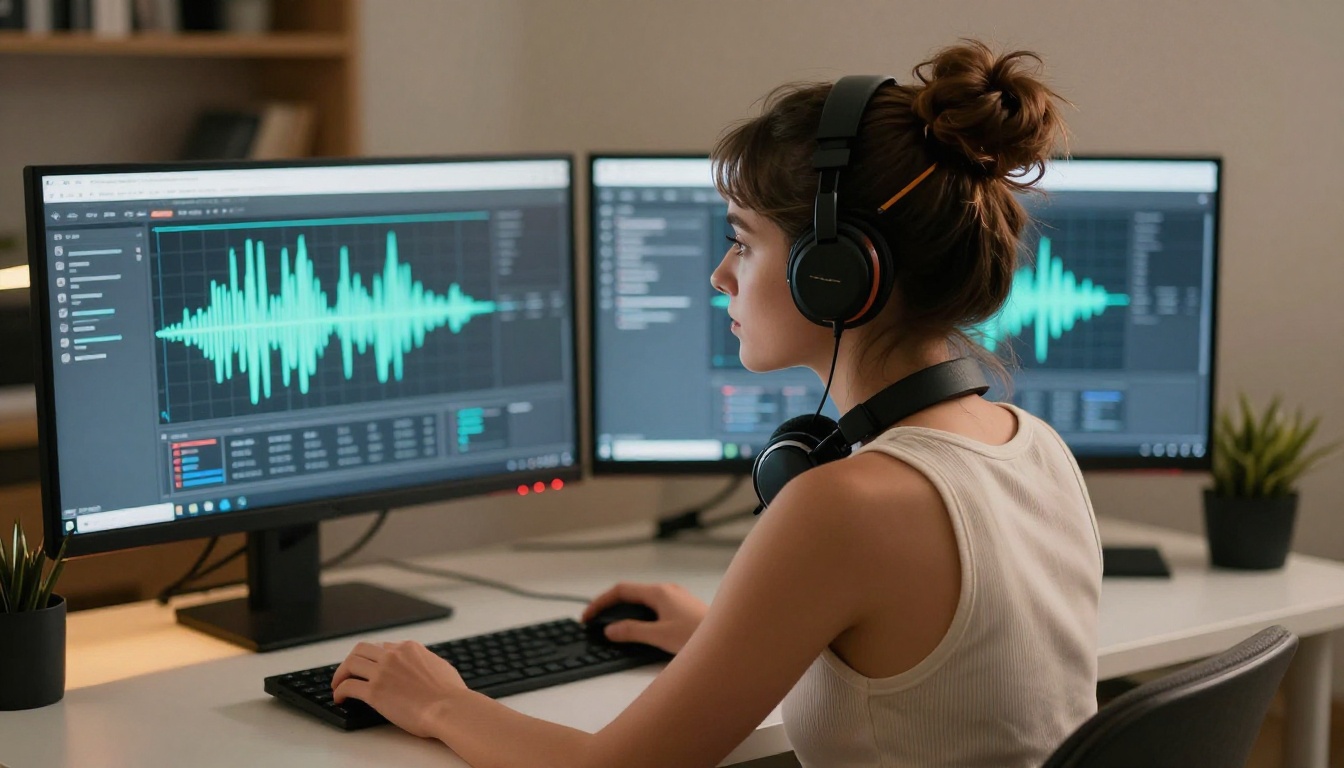
The current experience is already compelling, but the trajectory is steep.
Where Voice AI Is Heading
Latency is the main frontier. Current TTS models take 150-400ms to generate a response chunk. The target is below 80ms, at which point the gap between "thinking" and "speaking" disappears completely. Inworld Realtime TTS 2 is already pushing toward that range in controlled environments, and Inworld Realtime TTS 1.5 Mini targets similar speed at a smaller footprint.
On the lipsync side, Omni Human, the predecessor to 1.5, showed that adding natural body motion alongside lip movement was possible. The next generation is expected to add hand gestures and upper body animation, which would make the video output indistinguishable from a webcam recording in most viewing conditions.
The LLMs are also improving their ability to simulate consistent, evolving personality. Kimi K2 Thinking demonstrates how step-by-step reasoning can be applied to emotional responses, producing replies that feel more considered rather than reactive. GPT 5 Pro brings built-in thinking mode to complex conversation threads, where earlier context needs to actively shape the present reply rather than simply being retrieved.
The other frontier is emotional reactivity. Models like Gemini 3.1 Flash TTS are beginning to handle 30 distinct emotional voices with automatic selection based on content sentiment. This removes the last manual step from the pipeline, making the emotional quality of the voice response automatic rather than configured.
When you combine sub-100ms TTS latency, animated full-body lipsync, and a language model that reasons through emotional context before replying, the resulting experience will not read as technology at all. It will read as a person.
Try It Right Now

You don't need to build anything from scratch. The entire stack described here is available at picassoia.com/en/all-models. Pick a language model, write a persona, generate a face with the image tools, voice it with your TTS model of choice, and animate it with one of the lipsync models. The whole setup takes about 20 minutes.
Start with Claude Opus 4.7 for the LLM, ElevenLabs V3 for the voice, and Omni Human 1.5 to animate the face. That is the highest-quality combination available right now and requires no technical background to use on the platform.
The experience won't feel like science fiction once you are in it. It will feel like a conversation. That is exactly the point, and exactly why video calling your AI girlfriend became normal so fast.
The technology stopped requiring belief. It just started working.


