There's a moment when an AI companion stops feeling like software and starts feeling like a presence. For most people, that moment arrives the first time they hear it speak. Voice transforms text on a screen into something that carries warmth, hesitation, and genuine personality. If you're building or choosing an uncensored AI companion, the voice model you pick will shape the entire experience more than almost any other single variable you'll configure.
This isn't a minor detail buried in settings. The right voice makes your AI feel real. The wrong one makes it sound like a customer service bot reading from a script.

Why Voice Changes the Whole Experience
Reading a message and hearing one are processed entirely differently in the human brain. Hearing triggers emotional responses that text rarely can match on its own. Tone, pacing, breathiness, the slight pause before a reply, the soft upswing at the end of a question: these are signals that humans read instinctively as personality, presence, and care. When an AI companion delivers those signals accurately through voice, the interaction shifts from transactional to something that feels genuinely connective.
For uncensored companions specifically, voice adds another dimension. The content can already be intimate, playful, or emotionally charged. Voice either amplifies that intimacy or breaks the spell entirely. A robotic monotone through a deeply personal conversation is jarring in a way that's hard to recover from. A warm, natural voice that adapts its pace and emotion? That's what keeps users coming back.
The Prosody Problem Nobody Talks About
Text responses have a ceiling. No matter how well written, they sit flat on the screen. Voice carries prosody: the musical structure of speech that communicates meaning beyond the words themselves. Sarcasm, affection, excitement, and empathy are mostly prosodic signals. The best TTS models today attempt to capture this, and some succeed remarkably well.
The challenge for AI companion applications is that prosody needs to match context on the fly. A model that sounds great reading audiobooks may stumble when asked to sound flirtatious or softly apologetic. So the question isn't just "which TTS sounds realistic?" It's "which TTS sounds realistic in the moments that actually matter most?"
What Separates Great TTS from the Rest
Not all text-to-speech models are built with the same priorities. Some optimize for speed. Some for naturalism. Some for multilingual breadth. For an AI companion context, the criteria are far more specific.
Latency, Naturalness, and Range
Latency matters more in conversation than in any other TTS use case. A two-second pause after every message before the voice starts playing breaks conversational rhythm in a way users find deeply unsatisfying. For real-time or near-real-time companion experiences, sub-200ms time-to-first-audio is the target. Several modern models now achieve this consistently.
Naturalness is harder to define but easy to feel. A natural voice doesn't sound read. It has micro-variations in rhythm and pitch that human speech produces unconsciously. Models that flatten these variations sound mechanical even when the pronunciation and vocabulary are technically perfect.
Range covers the variety of voice types, languages, and emotional registers a model can produce. A companion designed for a global user base needs multilingual support without awkward accent artifacts. One designed for intimate conversation needs a model that can whisper softly and then shift to playful teasing within seconds, without losing realism in either register.
Emotion and Tone Control
The best voice models for AI companions allow explicit emotional direction. Rather than inferring emotion only from punctuation or sentence structure, they let developers specify tone directly: warmth, sadness, excitement, intimacy, reassurance. This level of control is what separates premium companion experiences from basic implementations.
💡 Tip: When evaluating TTS for a companion app, don't just test neutral speech. Test whispered phrases, questions with rising intonation, and long pauses mid-sentence. That's where most models reveal their weaknesses.

Top Voice Models for AI Companions
Below are the voice models currently available on PicassoIA that suit AI companion applications particularly well. Each has distinct strengths, and the right pick depends on what you're building and who you're building it for.
ElevenLabs V3
ElevenLabs V3 is one of the most emotionally intelligent TTS models available right now. It reads contextual cues and adjusts prosody accordingly without requiring explicit emotional direction. Feed it softly written text and it slows down, softens, and breathes. Feed it something excited and it lifts naturally.
V3 also maintains voice consistency across long interactions better than most competitors. The same voice persona stays stable and recognizable session after session, which matters enormously for relationship continuity in companion apps. Users form attachments to voices. Consistency protects that attachment.
Best for: Emotionally rich, long-form companion conversations where naturalness matters most.
MiniMax Speech 2.8 HD
MiniMax Speech 2.8 HD delivers studio-quality audio output with exceptional voice depth and texture. The richness of lower registers makes it particularly powerful for warm, intimate voice personas. If your AI companion should feel close, personal, and present, Speech 2.8 HD renders that quality with a clarity that genuinely lands.
It pairs naturally with MiniMax Voice Cloning if you want to build a custom voice profile rather than choosing from presets. That combination lets you craft something genuinely unique to your application.
Best for: Custom voice personas and audio quality that feels intimate and physically close.
Qwen3 TTS
Qwen3 TTS stands out for creative voice design flexibility. If you're building a companion that needs a specific voice type, or if you want to design from scratch rather than selecting presets, Qwen3 TTS gives you more creative latitude than most alternatives at this tier.
It handles multilingual output with fewer accent artifacts than competing models. For platforms serving non-English speakers who want natural-sounding responses in their own language, that breadth is a genuine differentiator. The model supports over 20 languages with consistent quality throughout.
Best for: Custom voice design and multilingual companion applications.
Resemble AI Chatterbox and Chatterbox Pro
Resemble AI Chatterbox specializes in explicit emotion control, making it particularly strong for companion scenarios where tone shifts happen frequently within a single conversation. The emotion parameters are granular, giving you direct control over how the voice feels rather than relying on inference from text structure.
Chatterbox Pro adds expressive range and better handling of long emotional arcs. If your companion needs to move through warmth, vulnerability, playfulness, and reassurance in one session, Chatterbox Pro handles those transitions more smoothly than the base model.
Best for: Emotionally complex conversations with direct tone control requirements.
Google Gemini 3.1 Flash TTS
Google Gemini 3.1 Flash TTS offers 30 distinct voices across more than 70 languages. The breadth makes it a strong choice for platforms serving a diverse global user base. Response latency is low, and voice quality stays consistent across languages, which is technically harder to achieve than it might appear.
For companion applications where users might switch between languages, or where regional accent authenticity matters, Gemini 3.1 Flash TTS covers territory that more specialized models simply cannot.
Best for: Global platforms with multilingual user bases and speed requirements.
PlayHT Play Dialog
PlayHT Play Dialog was built specifically for conversational audio and two-way dialogue. The model optimizes for the cadence and pacing of natural conversation rather than monologue delivery. This makes it particularly strong for real-time companion experiences where back-and-forth interaction is the core of the product.
The voices in Play Dialog feel spontaneous rather than performed. There's a natural variability in timing and energy that other models tend to clip into too-regular uniformity.
Best for: Real-time, interactive AI companion conversations where dialogue rhythm matters.
Fast vs. Quality: The Real Trade-Off
Speed and quality are not always in direct opposition, but there is a real spectrum. The fastest voice models sacrifice some naturalness for responsiveness. The most natural models sometimes add latency. For most companion applications, the sweet spot is a model that stays under 300ms latency without sounding synthetic.
For speed-critical applications, ElevenLabs Flash v2.5 and Inworld Realtime TTS 2 both achieve near-instant response times with quality that works well in conversational contexts where naturalness trades partially against responsiveness.

The LLM Behind the Voice Matters Too
Voice model selection is one half of the equation. The large language model generating the text that gets converted to speech is the other half. A brilliant voice rendering flat, repetitive, or emotionally tone-deaf text will still feel hollow no matter how natural the synthesis is.
For uncensored companion applications, the LLM needs to understand context across long conversations, generate emotionally nuanced responses, and produce language that sounds natural when spoken rather than read. That last point is often overlooked: text optimized for reading differs significantly from text optimized for speech delivery.
LLMs That Work Well With TTS
GPT 5 delivers some of the most contextually aware and emotionally attuned companion text available. Its ability to maintain persona consistency across long sessions and respond to emotional cues in conversation is meaningfully ahead of earlier generations.
Claude Opus 4.7 produces writing that reads naturally when spoken aloud. The sentence construction tends toward conversational rhythm, with shorter bursts and clear emotional beats. Long sentences with layered subordinate clauses sound unnatural in TTS; Claude Opus 4.7 typically avoids them in conversational contexts.
Claude Sonnet 5 and Gemini 3 Pro are strong mid-tier options that balance quality with faster response times, which matters when LLM latency stacks on top of TTS latency in the overall conversation pipeline.
Deepseek R1 brings reasoning capability that helps maintain logical consistency across long companion interactions. For companions with detailed personas, backstories, and relationship histories, that consistency protects immersion over time.
💡 Tip: Write companion LLM prompts that specify short, punchy sentence structure. Spoken responses under 25 words per message feel more natural than long paragraphs. Shorter sentences also give TTS models less ambiguous prosodic territory to navigate.
Voice Cloning: Your Companion, One Voice
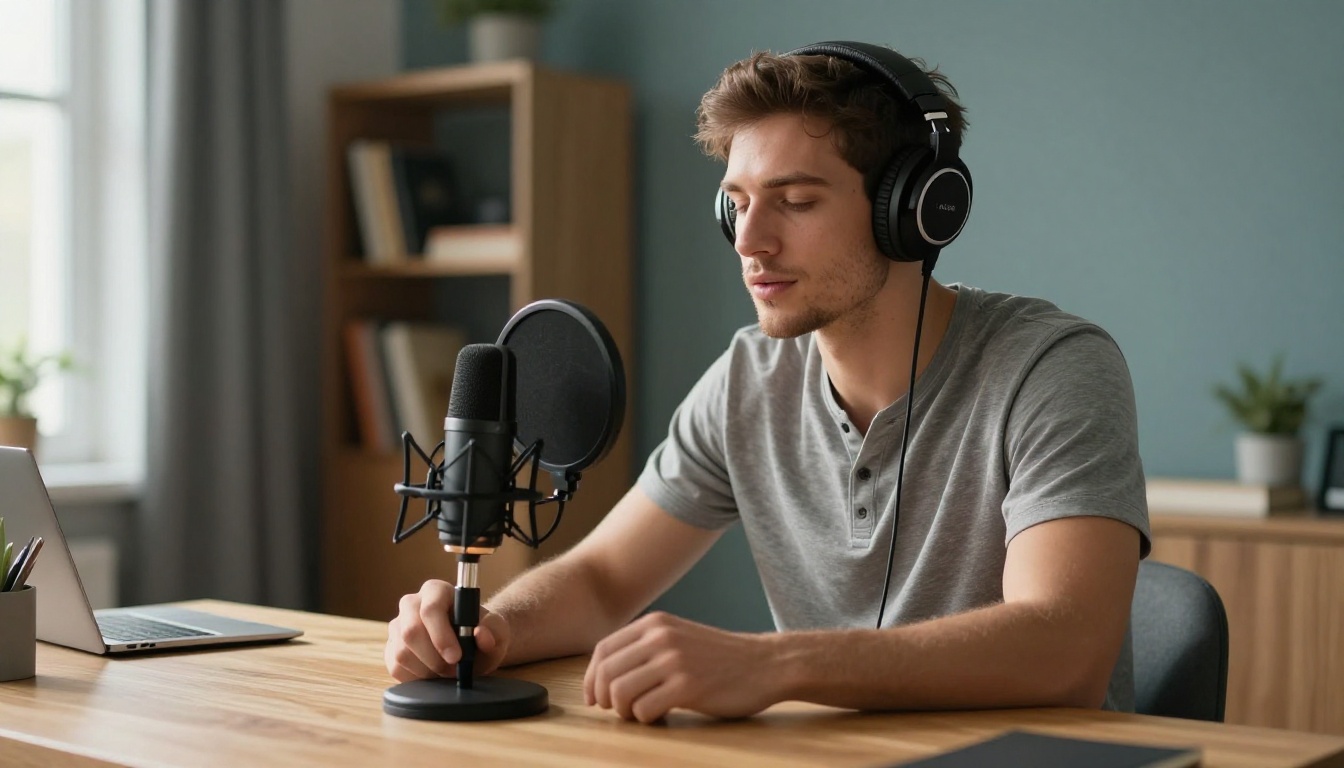
For users who want a genuinely distinctive companion voice, cloning offers something presets cannot: a voice that exists nowhere else. MiniMax Voice Cloning lets you create a custom voice from a reference audio sample. The resulting voice is stable, consistent, and usable indefinitely with the MiniMax Speech 2.8 HD or Speech 2.8 Turbo generation models.
Qwen3 TTS supports voice design workflows where you specify voice characteristics rather than cloning an existing recording. This gives creative control without requiring a source sample, useful when you're building something entirely invented.
The practical difference between a cloned voice and a preset is significant for user attachment. When a voice feels unique to an application, users build a stronger association with the companion persona. That uniqueness is worth the added setup step.
Three things a cloned companion voice needs to feel real:
- Consistent pitch baseline: Clones that drift in pitch between sessions break the illusion of continuity.
- Preserved breath patterns: Stripping breath sounds creates a flatness that reads as synthetic in intimate settings.
- Emotional adaptability: The cloned voice must carry emotional range, not just replicate the timbre of the source.
Picking the Right Voice for Your Persona
Voice selection isn't just about technical quality. It's about persona fit. A soft, slightly breathy voice creates a different relational dynamic than a confident, articulate one. Before picking a model, define your companion's character clearly.
Questions worth answering first:
- What age and energy level does the companion persona project?
- Should the voice lean warm and gentle, or confident and playful?
- How important is speed vs. quality in your specific use case?
- Will the companion be used across multiple languages?
- Does the persona require a truly custom, unique voice or can a preset work well enough?
Once those questions have answers, the model choice becomes much more obvious. Most companion applications that struggle with voice selection are actually struggling with an underspecified persona. The voice model is fine. The character it's being asked to embody isn't defined clearly enough.
💡 Tip: Record a short script of 10 lines that represents the full emotional range your companion will express. Use that script to test every shortlisted TTS model. Same text, different models, side by side. The right one becomes immediately obvious.

Your Companion Deserves the Right Voice
The difference between a good AI companion and a great one often comes down to voice. Text can be refined indefinitely. Voice is what makes the refinement feel alive. Whether you need the emotional intelligence of ElevenLabs V3, the studio depth of MiniMax Speech 2.8 HD, the emotional precision of Chatterbox Pro, or the global reach of Gemini 3.1 Flash TTS, the options on PicassoIA let you find the exact fit without committing to one platform's limited preset library.
Start at picassoia.com/en/all-models and run your companion's typical dialogue through two or three of the models listed above. The right voice will be obvious within minutes of listening. Your AI has something to say. Give it a voice that makes people want to listen.