Two video models have been dominating creator conversations in 2027: Wan 2.7 from the Wan team and Luma Ray 3 (now at version 3.2) from Luma AI. Both can generate stunning AI video from text or images, but when the content gets adult, the results between these two diverge sharply. If you create suggestive, glamour, or NSFW content, picking the wrong model costs you time, quality, and creative freedom. This comparison breaks down exactly how each model performs on adult-themed prompts, raw output quality, speed, and where to use them without hitting content walls.
What These Two Models Actually Are
Before getting into the NSFW performance, it helps to understand what each model was built to do and how they differ at a structural level.
Wan 2.7: Three Variants, One Powerhouse
Wan 2.7 is not a single model. It is a family of three specialized tools, each optimized for a different starting point in the content creation process:
- Wan 2.7 T2V (Text to Video): Generates up to 1080p video directly from a text prompt. Strong on realism, motion coherence, and detailed scene rendering with accurate subject positioning.
- Wan 2.7 I2V (Image to Video): Takes any still image and animates it with fluid, consistent motion. This is particularly powerful for NSFW use because you can generate a precise image first and then bring it to life without losing the visual fidelity you built in the image stage.
- Wan 2.7 R2V (Reference to Video): Animates a subject from a reference image while preserving consistent identity across multiple clips. Extremely useful for maintaining a consistent character appearance across a series of generated videos.
The Wan 2.7 architecture prioritizes motion realism and temporal consistency. Scenes hold together over time without characters morphing mid-clip or backgrounds flickering, two issues that plagued earlier open-source video models heavily. The training approach also means fewer hard content restrictions compared to models built under strict commercial safety guidelines.
Luma Ray 3.2: HDR Cinematic Output
Luma Ray 3.2 is Luma AI's flagship text-to-video model and it produces genuinely beautiful footage on non-restricted content. The model outputs HDR-quality video with exceptional color grading, deep exposure control, and lighting depth that reads as truly cinematic even on short clips. Ray 3.2 also has a faster companion, Ray Flash 2 720p, which trades some resolution for speed when you need rapid iterations.
Where Ray 3.2 pulls ahead on mainstream content, it stumbles on NSFW prompts due to Luma's strict content policy enforced at the API level. This is the central tension in this comparison and the reason many adult content creators have moved away from it entirely.
💡 Quick take: Wan 2.7 was trained with fewer restrictions and handles adult prompts naturally and without refusals. Ray 3.2 produces arguably better cinematic quality on safe content but filters aggressively on anything suggestive or adult.
This is the real reason you are reading this article, so the comparison here is direct and specific.
Wan 2.7 and Adult Content
Wan 2.7 consistently handles suggestive and adult-themed prompts without refusing them or stripping the content down to sanitized output. Prompts involving swimwear, lingerie, implied nudity, and mature themes generally produce what you actually specified. The model does not hallucinate clothing onto subjects you deliberately left uncovered in your prompt, which is one of the most frustrating behaviors in censored models.
What Wan 2.7 handles well for adult content:
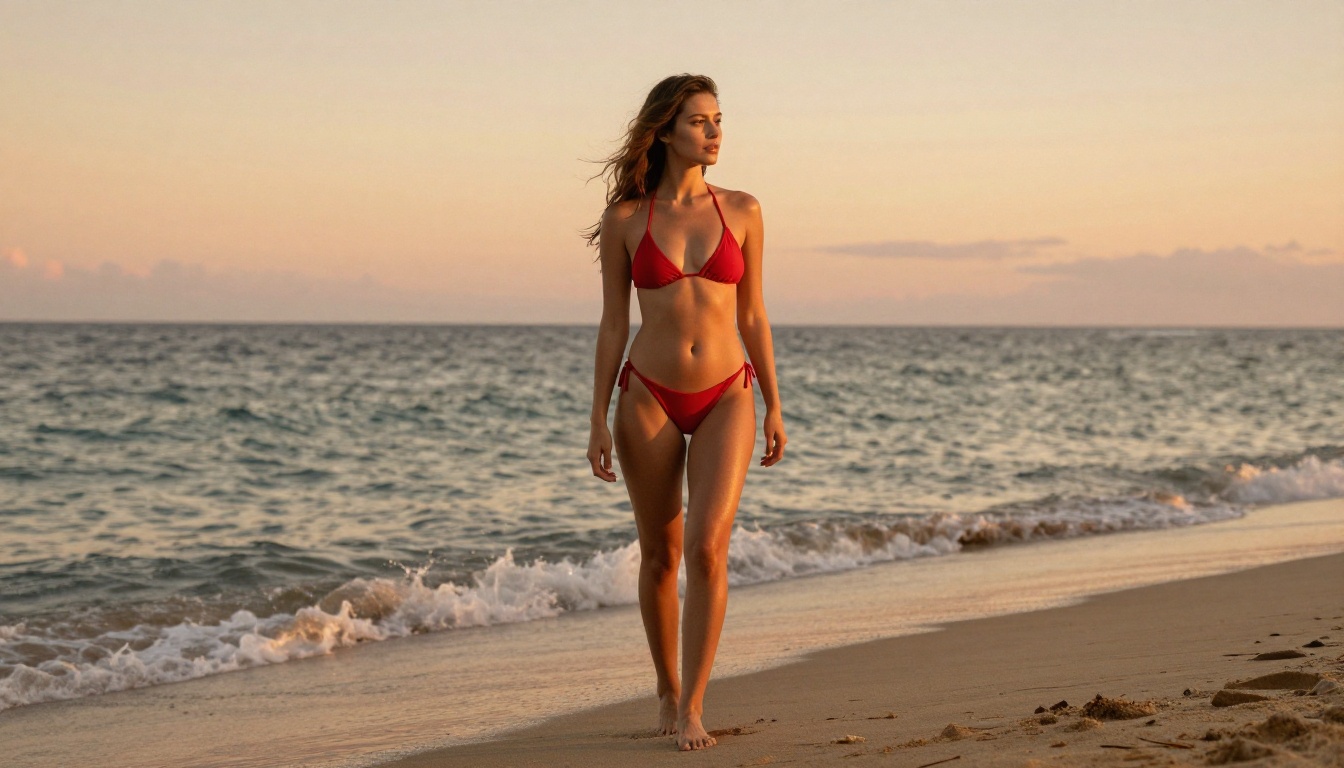
- Bikini and swimwear scenes with natural body proportions and realistic fabric
- Lingerie scenes with accurate skin tone, texture, and body positioning
- Intimate settings such as bedrooms, spas, and pools without the model over-sanitizing the framing
- Close-up body animations from the I2V variant with consistent skin texture across frames
- Adult character consistency across multiple clips via the R2V variant
- Scenes with implied nudity where the subject stays in the frame as described
The primary advantage here is that Wan 2.7, especially when accessed via platforms like PicassoIA that implement it without layering additional content filters on top, gives you genuine uncensored output rather than a watered-down interpretation of your creative vision.
Luma Ray 3 and Content Restrictions
Ray 3.2 imposes content moderation at the model level, not just at the platform level. Prompts that lean even mildly into suggestive territory frequently produce:
- Outright prompt rejection messages before generation begins
- Automatically dressed outputs, where subjects appear clothed in items you never described
- Blurred or compositionally altered results that remove the adult element you specified
- Generic "safe" outputs that bear little resemblance to what you wrote
This behavior is not specific to one platform accessing Luma's API. It is baked directly into the Ray 3.2 model itself. For creators focused on adult content, this makes Ray 3.2 an unreliable NSFW tool regardless of which interface you use to access it.
💡 Bottom line: For NSFW video generation, Wan 2.7 wins outright. Ray 3.2 is not the right tool for this use case and no platform workaround changes that.
Video Quality Head-to-Head
Setting NSFW aside for a moment, how do these models compare on raw output quality when both are generating content they will actually produce?
Resolution and Sharpness
| Feature | Wan 2.7 T2V | Luma Ray 3.2 |
|---|
| Max resolution | 1080p | HDR 1080p |
| Sharpness | High | Excellent |
| Color depth | Natural | HDR-boosted |
| Exposure control | Good | Very good |
| Skin texture realism | Excellent | Good |
| Temporal consistency | Excellent | Good |
Ray 3.2 has a genuine edge in color depth and exposure quality, producing footage that looks more deliberately graded and cinematic on neutral content. Wan 2.7 counters with better skin texture realism and temporal stability, both of which matter more for adult content specifically where close-up character quality is the priority.
Motion Realism
Wan 2.7 handles motion coherently across all three variants. Characters move with natural physics, hair and fabric respond to movement believably, and the model rarely produces the stuttering or spatial teleporting artifacts that define lower-tier video models. The I2V variant is especially smooth when animating still photography, preserving the source image composition while adding organic-feeling motion to the scene.
Ray 3.2 also performs well on motion but can produce unnaturally smooth, almost plastic-looking movement on characters in some outputs. It excels at large-scale cinematic motion such as camera sweeps, environment movement, and atmospheric clips, but can look over-processed on tight character animation where skin and fabric need to move naturally.
Prompt Adherence
This is where Wan 2.7 pulls further ahead specifically for adult content creators. The model follows detailed prompts closely, including specific descriptors about clothing (or lack of it), poses, settings, and lighting. If your prompt is well-written and specific, Wan 2.7 tends to deliver it without reinterpretation.
Ray 3.2 reads prompts more loosely on mainstream content, which can produce pleasant surprise results for general video creation. But this same interpretive behavior extends to its content filtering: it will actively reinterpret your adult prompt into something safe without informing you it has done so. You get output, it just is not what you wrote.
Speed, Cost, and Access

Both models are accessible via PicassoIA without needing a separate API account or paying premium per-video rates. PicassoIA gives you a consistent interface to run either model side by side, which is genuinely useful for testing prompt variations across both.
How to Use Wan 2.7 on PicassoIA
PicassoIA hosts all three Wan 2.7 variants, each suited to different starting points in your content workflow.
Using Wan 2.7 T2V
- Open Wan 2.7 T2V on PicassoIA
- Write a detailed prompt: include subject, setting, lighting, mood, and the specific motion you want to see
- Set resolution to 1080p for maximum output quality
- Submit and wait for the render (typically 2 to 4 minutes)
Prompt tips for NSFW T2V:
- Be specific about clothing and setting: vague prompts produce vague results, especially on body-focused content
- Include lighting direction such as "warm sunset backlight from the left" or "soft overhead studio light"
- Add motion descriptors: "slowly turns toward camera", "walks toward the ocean", "raises arms above head"
- Avoid stacking excessive NSFW keywords: one precise scene description outperforms a list of explicit terms
- Describe camera angle: "low angle looking up", "medium shot from waist up", "wide shot full body"
Using Wan 2.7 I2V: The Most Reliable NSFW Workflow
This is the approach most adult creators rely on. You generate a precise source image first, then animate it, which gives you exact control over the visual before motion is applied.
Step 1: Generate a photorealistic source image with Seedream 4.5. This is the top NSFW image model on PicassoIA, producing 4K images with no content filtering on adult themes, accurate anatomy, natural skin texture, and precise prompt adherence. Starting with Seedream 4.5 gives you a perfect frame zero for your video.
Step 2: Take your generated image URL and submit it as the source input to Wan 2.7 I2V
Step 3: Write a motion prompt that describes how the subject moves from that still starting frame, what the camera does, and how the environment changes
Step 4: Output is 5 to 10 seconds of fluid animation built directly from your source image
💡 The Seedream 4.5 to Wan 2.7 I2V pipeline is the most reliable NSFW video workflow available right now. You control the exact visual at the image stage and then add motion without losing the fidelity you built in.
Using Wan 2.7 R2V for Consistent Characters
Wan 2.7 R2V is the right option when you need the same character appearing consistently across multiple video clips. Upload a reference image of your subject, then write different motion and scene prompts for each individual video. The model preserves facial features, body proportions, hair, and general appearance across different generations.
For adult creators producing series-format content or building a recurring character, this is the feature that sets Wan 2.7 apart from any other video model on the market. You can maintain visual character consistency from clip to clip without manual editing or post-production compositing.
How to Use Luma Ray 3.2 on PicassoIA
Despite its NSFW limitations, Ray 3.2 still earns a role in adult content production for specific use cases.
Where Ray 3.2 contributes to adult workflows:
- Cinematic B-roll: Environmental establishing shots, location footage, and ambient scene-setting clips
- Setting-only videos: Bedroom environments, pool decks, hotel rooms, and intimate spaces rendered without characters present
- Transition clips: Fade-in and fade-out filler between character scenes where quality matters more than content specifics
- Atmospheric renders: Lighting conditions, weather effects, and environmental mood that character-focused models spend less time perfecting
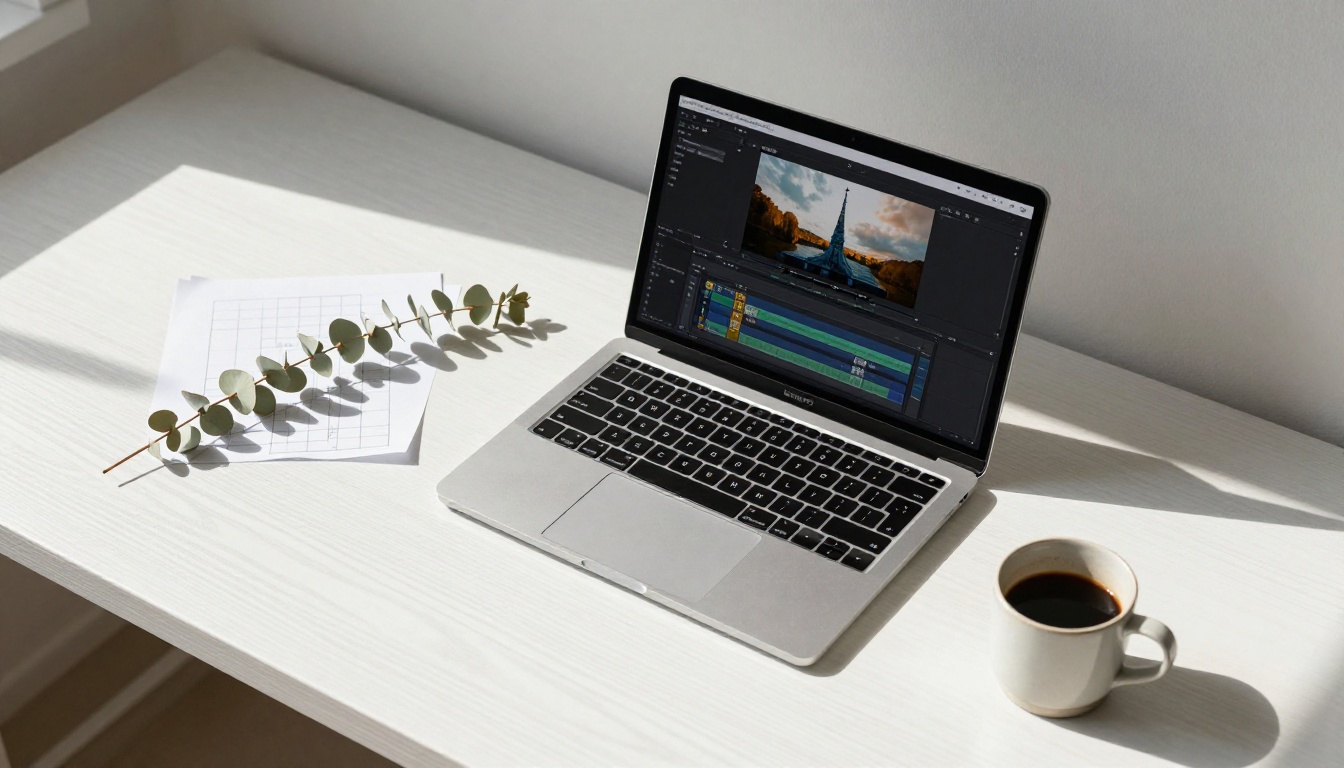
For these use cases, Ray 3.2 complements a Wan 2.7 workflow rather than competing with it. Mixing environment clips from Ray 3.2 with character clips from Wan 2.7 in post-production gives you better overall production value than either model alone.
Other Strong NSFW Video Options on PicassoIA
Wan 2.7 is not the only model on PicassoIA with solid adult content performance. Three others are worth testing as part of your workflow:
Seedance 2.5
Seedance 2.5 is ByteDance's flagship video model and handles NSFW content with strong motion realism comparable to Wan 2.7. Its primary advantage is clip length: it supports up to 30-second outputs, making it better suited for longer continuous scenes. The free version, Seedance 2.5 Lite, gives unlimited free generation on PicassoIA with no credit cost, making it the most accessible starting point for testing NSFW video output.
Kling v3
Kling v3 from Kwai is fast, generates 1080p output, and handles suggestive content with fewer refusals than Luma models. It performs particularly well on character motion and facial expression quality, two areas where adult content creators need reliable results.
Kling v2.6
Kling v2.6 is the previous generation but still generates excellent output for adult content workflows where iteration speed matters more than absolute resolution. Running multiple variations quickly to find the best output is often more valuable than a single slow perfect render.
The Real NSFW Video Workflow in 2025
Most serious adult AI video creators are not using a single model. The actual production workflow in 2025 looks like this:
- Generate source images with Seedream 4.5: 4K, uncensored, photorealistic, with precise prompt adherence
- Animate character scenes via Wan 2.7 I2V for fluid motion from your source image
- Maintain character consistency across clips using Wan 2.7 R2V with a reference image
- Add environmental B-roll with Ray 3.2 for setting shots and atmospheric filler
- Extend runtime using Seedance 2.5 for 20 to 30 second continuous scenes
This combination is the most efficient path to professional-quality adult video content right now. Each model contributes what it does best, and PicassoIA lets you access all five from a single interface.
The head-to-head breakdown:
| Criteria | Wan 2.7 | Luma Ray 3.2 |
|---|
| NSFW support | Yes, unrestricted | No, heavily filtered |
| Max resolution | 1080p | HDR 1080p |
| Motion quality | Excellent | Excellent |
| Skin texture realism | Excellent | Good |
| Prompt adherence | High | Moderate |
| I2V support | Yes (Wan 2.7 I2V) | Limited |
| Character consistency | Yes (Wan 2.7 R2V) | No dedicated variant |
| Cinematic color quality | Good | Excellent |
| Generation speed | Fast (2-4 min) | Moderate (3-5 min) |
| Free access on PicassoIA | Yes | Yes |

Common NSFW Prompt Mistakes to Avoid
Whether you use Wan 2.7 or any other uncensored model, these are the prompt errors that produce weak results:
Vague subject descriptions. Writing "a beautiful woman" produces generic output. Writing "a brunette woman in a white lace bralette, standing by a floor lamp, three-quarter view" produces what you actually want.
No motion instruction. Wan 2.7 I2V still needs a motion prompt even though you are providing a source image. Without it, the model produces minimal movement. Always describe what moves and how: "slowly raises her arms", "turns to the right and looks back over her shoulder", "fabric moves gently in the breeze".
Stacking explicit keywords. Piling adult terminology into a prompt rarely improves the output. Clear, visual scene descriptions work better than keyword lists in every model that handles NSFW content.
Skipping the image-first workflow. The T2V variant is faster but gives you less control. If you need a specific body type, clothing, or composition, generating the image with Seedream 4.5 first and then using I2V is always worth the extra step.
Start Creating on PicassoIA Right Now
The verdict is straightforward: Wan 2.7 is the NSFW video model winner and it is not particularly close. Ray 3.2 is exceptional for what it does but it is the wrong tool for adult content regardless of platform, prompt strategy, or workarounds.
For the most powerful NSFW video workflow available today, start with Seedream 4.5 for photorealistic source images, feed them into Wan 2.7 I2V for animation, and use Wan 2.7 R2V when you need character consistency across a series. Add Seedance 2.5 when you need longer clips and Ray 3.2 for cinematic setting shots.
Every model mentioned in this article is available on PicassoIA without a separate API account or per-video premium costs. The full catalog of video and image models, including 87 text-to-video options and unlimited free tiers, is at picassoia.com/en/all-models.