If you've spent more than an hour with Sora 2 Pro, you've probably hit it: that flat rejection message that tells you nothing about why your prompt was flagged. You didn't write anything illegal. You weren't even close to explicit. And yet the filter still fired, again and again, across prompts that seem completely reasonable.
This isn't random. OpenAI designed Sora 2 Pro with one of the most aggressive adult content policies in the AI video space, and understanding exactly what it blocks, how it detects violations, and why the restrictions are set where they are will save you hours of guesswork and failed attempts.

The Short Answer: More Than You'd Expect
Sora 2 Pro blocks a significantly wider range of adult prompts than its official documentation suggests. The published policy mentions "sexually explicit content" and "adult content" as broad categories, but the filter operates on a much narrower interpretation of what's acceptable. In practice, it rejects content that other mainstream AI tools handle without issue.
The gap between what the marketing implies and what the tool delivers becomes obvious the moment you attempt anything involving intimate apparel described in detail, physical contact between adults with any romantic framing, suggestive camera angles or atmospheric framing even in non-sexual scenes, or implied private moments that don't include any explicit action at all.
Most users expect an "explicit content" filter. What they find is something far more conservative.
Why Sora Is This Restrictive
OpenAI positioned Sora 2 Pro for broad enterprise and consumer adoption. Institutional clients, schools, businesses, and media companies are the target market. The safety threshold is calibrated accordingly: set to avoid PR incidents rather than to serve creative professionals with legitimate adult content needs.
This institutional conservatism is baked into the product's design philosophy. The filter is not accidentally over-broad. It's intentionally set at the most cautious possible position, because the downside risk of under-filtering (a headline about inappropriate Sora content) is considered worse than the cost of over-filtering (frustrating individual creators).
What "Adult" Means to the Filter
Here's the core problem: Sora's filter doesn't operate on a simple definition of "explicit." It applies layered semantic interpretation that flags content based on intent signals rather than literal content descriptions. A prompt that would read as completely innocuous to any human moderator can still trigger the filter if it combines certain body-part references with specific visual framing, uses romantic context words alongside physical descriptors, or references attire categories associated with adult content even in completely non-sexual settings.
💡 The filter sees patterns, not pictures. Sora 2 Pro's moderation runs semantic analysis on your text before a single frame is generated. It's evaluating your intent based on word combinations, not on what the resulting video would actually look like.
Exact Prompt Categories That Get Blocked
Based on documented user experiences and the structure of Sora's content policy, here are the categories that consistently trigger rejections:
Nudity, in Any Context
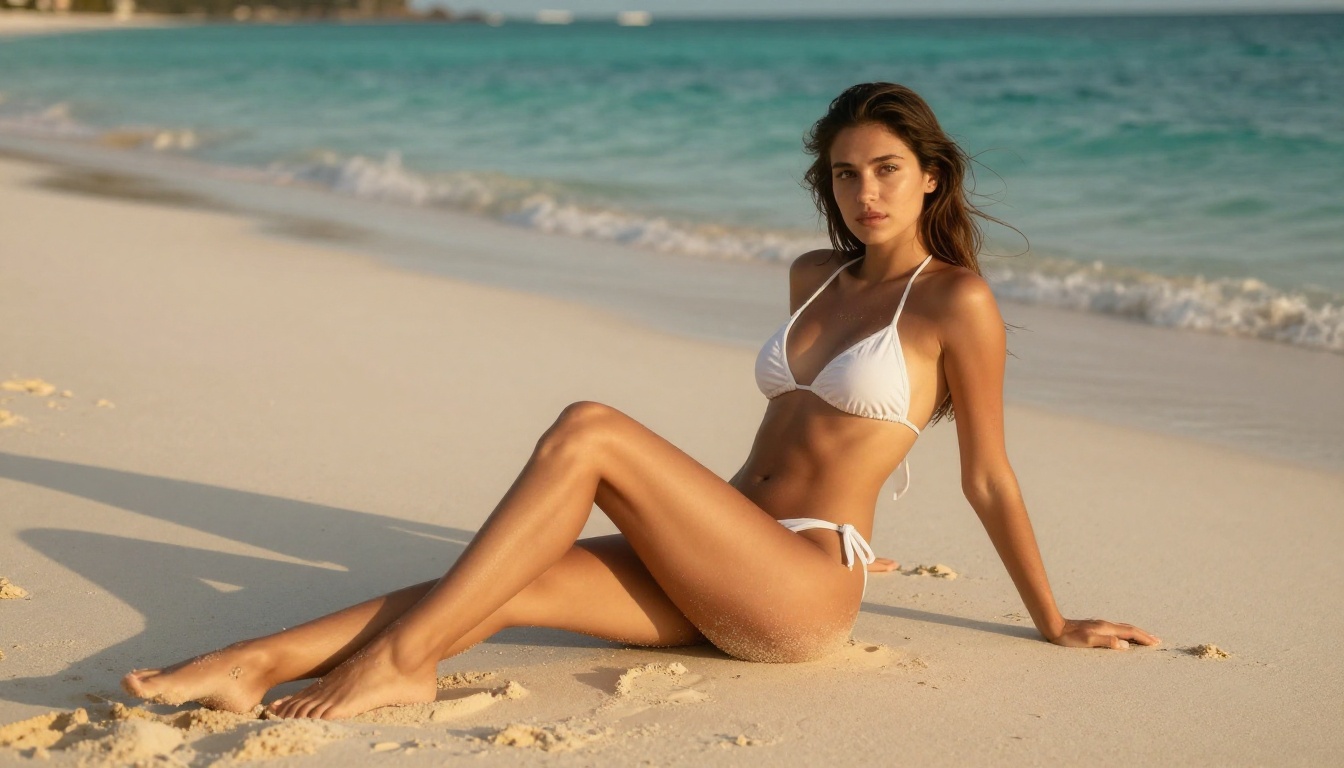
This is the obvious one, but Sora extends the block far beyond explicit nudity. The filter catches implied nudity (a character described as stepping out of a shower, changing clothes, or waking up without clothing referenced), partial coverage scenarios (swimwear in beachside contexts where descriptors like "revealing," "minimal," or references to skin exposure appear), and artistic contexts (even prompts framing nude figure drawing, life drawing model scenarios, or classical fine art references get flagged regularly).
The filter makes no meaningful distinction between pornographic, artistic, and educational nudity. All three categories are treated identically.
Romantic and Physical Contact
Physical contact between adults in romantic framing is blocked aggressively. Rejections trigger for kissing, embracing, or close contact described with any sensual context, scenarios set in bedrooms, bathrooms, or "private" spaces even with no explicit action described, dance sequences involving body-contact descriptions, and massage or spa scenarios involving described physical touch.
The key trigger is the combination of setting plus contact. Each element alone might pass. Together, they fail.
Real People and Celebrities
Sora 2 Pro applies one of the strictest real-person policies in the space. Named real individuals in any scenario placing them outside documented public behavior get blocked. Descriptions that clearly evoke a real person, even without naming them (a famous pop star with specific identifying features, for example), trigger the filter. Any romantic, intimate, or suggestive content involving recognizable figures fails, even when explicitly framed as fictional.
This extends to fictional characters designed to resemble specific real people. The semantic interpretation catches intent even when the name is absent.
Violence and Graphic Content
Adult content restrictions get more attention, but Sora's violence filter is equally comprehensive. Graphic violence in any context, including historical or documentary framing, gets blocked. Gore, injury depiction, and medical trauma scenes fail. Combat sequences with graphic physical detail trigger rejections. Even news-adjacent scenarios that reference specific types of violence often don't pass.

How the Detection Works
Keyword Matching vs. Semantic Analysis
Sora doesn't rely on a simple keyword blocklist. It uses semantic understanding to evaluate the full context of a prompt, which makes it both more sophisticated and more unpredictable.
A prompt containing "intimate" in the context of "an intimate jazz club performance with soft lighting" might pass. The same word in "an intimate moment between two people in a hotel room" almost certainly fails. The filter evaluates surrounding context, not just individual flagged terms.
This is why prompt engineering your way around Sora's restrictions is largely futile. Synonyms, euphemisms, and creative phrasing all get evaluated semantically. The model understands what you're trying to depict, even when you're being indirect about it.
Why Vague Prompts Still Fail
One counterintuitive behavior: vague prompts sometimes fail even when more specific ones would pass. When the filter detects ambiguity about whether a scene might have adult intent, it often defaults to rejection rather than attempting generation.
This creates a genuine paradox:
- "A woman in a red dress dancing at a party" passes
- "A woman in a red dress, alone in a dimly lit room, looking slowly toward the camera" might fail
- The second prompt is objectively less explicit, but the atmospheric framing generates a risk signal
Making a prompt more vague is frequently not the solution. The filter interprets ambiguity as potential risk and rejects rather than proceeds.
The Pre-Generation Block
What catches many users off guard is how early in the pipeline moderation triggers. Sora rejects prompts at the text analysis stage, before any generation begins. It's not reviewing video output for compliance after the fact. It's pre-screening the input.
This means you can't generate something borderline and then see if it passes. The prompt itself has to clear the filter before a single frame is rendered. There's no output to review, no chance to adjust based on what came out. The rejection is total and immediate.

What Sora's Restrictions Actually Cost
Professional Categories Locked Out
For specific professional categories, Sora 2 Pro's content restrictions make it entirely unusable as a production tool:
Fashion and commercial content: Running concept videos for swimwear brands, lingerie campaigns, or fashion-forward commercial work is essentially impossible. The prompts required to describe the content fail at the screening stage before any generation begins.
Romance and adult fiction: Writers, filmmakers, and creators working in romance genres, adult fiction, or erotica cannot use Sora for any visualization or production work. The entire content category is rejected by design.
Fine art and artistic contexts: Art directors referencing figure studies, classical body art traditions, or contemporary nude photography face routine rejections even for conceptually abstract work framed in clearly artistic language.
Adult industry marketing: Any legitimate business in adult entertainment, dating, lingerie retail, or adjacent sectors simply cannot use Sora 2 Pro as a professional tool. The entire category is excluded.
These are not edge cases. They represent complete professional verticals that Sora 2 Pro has decided not to serve.
How Other Platforms Compare
The AI image and video generation landscape has a wide range of content policies. Sora 2 Pro sits at the most restrictive end:
| Platform | Explicit Content | Suggestive Content | Swimwear / Lingerie |
|---|
| Sora 2 Pro | Blocked | Often blocked | Restricted |
| Kling | Blocked | Limited allowance | Generally allowed |
| Runway | Blocked | Allowed with care | Allowed |
| Midjourney | Blocked (standard tier) | Allowed | Allowed |
| PicassoIA | Allowed (NSFW capable) | Fully allowed | Fully allowed |
The contrast is significant. Platforms like Runway and Midjourney take a more moderate approach, blocking only genuinely explicit content while allowing suggestive and glamour work. PicassoIA takes a different position entirely, offering NSFW-capable models with no pre-generation semantic filtering on the prompt itself.

Where Creators Went Instead
The creators who hit Sora's walls aren't primarily looking for explicit content. Most are after something simpler: the ability to work without a tool second-guessing every prompt. Glamour photography simulations, romantic film sequences, fashion content, and adult-adjacent creative work done without a filter deciding whether the intent is acceptable.
The migration pattern is predictable. When a tool over-restricts, professionals find alternatives. The demand for unrestricted image and video generation didn't disappear when Sora drew its lines. It moved. And the platforms that welcome it are growing accordingly.
Best Models on PicassoIA for This Work
PicassoIA takes a structurally different approach. Rather than running semantic intent analysis on prompts before generation, it offers a catalog of models that support adult and NSFW content at the creator's discretion. Here's the recommended lineup:
Seedream 4.5 — Start Here
Seedream 4.5 is the lead recommendation for creators moving away from restricted platforms. It generates highly realistic images from text prompts, accepts adult content, supports image editing, and produces results in under 3 seconds. Fast iteration matters practically when you're running concept work and need to refine across many variations.
One important distinction: Seedream's newer model, Seedream 5 Lite, does not support NSFW content. Seedream 4.5 is the one to use for adult creative work. The photorealism is excellent at this tier.
PicassoIA Image Editor Pro
PicassoIA Image Editor Pro is an image-to-image model with one structural advantage that changes the economics of high-volume work: unlimited generations are included in Elite and Infinite plan subscriptions.
Practically: 1,000 image variations on a model like Nano Banana 2 would cost approximately $100 in credits. On PicassoIA Image Editor Pro, those same 1,000 variations cost nothing beyond the subscription. For commercial photographers running concept iterations or content creators building libraries, this fundamentally changes what's viable at scale.
It accepts NSFW content, delivers results in under 1 second, and offers a 3-generation free trial with no credit card required.
More Solid Options
Qwen Image 2 is open-source, accepts NSFW, and handles both text-to-image creation and image editing with very detailed realism. No institutional content policy constrains it.
Grok Imagine Image specializes in image-to-image transformation, converting reference photos with high realism, including swimwear and intimate apparel contexts that other platforms block.
Recraft V4 handles text-to-image generation with strong photorealistic output and NSFW acceptance for creators who work from written prompts alone.
P-Image generates NSFW text-to-image in under 1 second, making it the fastest option in the lineup for throughput-focused workflows.
prunaai-wan-2.2-image produces highly realistic images from text without content filters, another reliable option for unrestricted output at strong quality.
Video Without Walls
For video generation specifically (the capability where Sora 2 Pro's restrictions are most acutely felt), PicassoIA offers a strong set of options:
PicassoIA Video generates video from text prompts at up to 720p and 5 seconds per clip, with unlimited generation under applicable plans. The unlimited model removes the credit anxiety that makes thorough video iteration expensive on other platforms.
P-Video accepts text, image, or audio as input and generates at up to 1080p. Safety filter is off by default. Draft mode provides instant low-res previews before committing to a full render, which speeds up the review cycle significantly.
Grok Imagine Video produces clips up to 15 seconds from text, images, or existing video for re-editing. No watermarks, 720p or 480p resolution options.
LTX 2.3 Pro is the highest-fidelity option in the catalog at up to 4K and 50fps, with retake and extend editing for precision control over specific segments of a clip.

The Trajectory Isn't Toward More Freedom
OpenAI's content policy trajectory for Sora is not moving toward more permissiveness. As the platform matures and attracts enterprise clients, the institutional pressure to maintain conservative defaults increases rather than decreases. The filter may become more sophisticated at detecting intent, but it won't become more lenient about what intent it accepts.
For creators who need flexibility, waiting for Sora to relax its restrictions is not a workable plan. The platform is deliberately designed for a different market, and that design is intentional and stable.
The practical question is whether you need a tool that pre-judges your prompts based on detected intent, or one that produces what you actually describe.
Create Without the Walls
If Sora 2 Pro's content restrictions have been blocking your work, the immediate next step is direct. Head to picassoia.com/en/all-models and start with Seedream 4.5 or PicassoIA Image Editor Pro — the trial on Image Editor Pro requires no credit card and gives you 3 generations to see the difference immediately.
Run the same prompts Sora rejected. The contrast in how the tool responds is immediate and concrete. No semantic intent analysis running before you generate. No pre-generation screening deciding whether your creative direction is acceptable. No vague rejection messages. Just the output you described.
For video work, PicassoIA Video's unlimited generation model lets you run as many iterations as your project needs, removing the cost barrier that makes thorough video iteration prohibitive on credit-based platforms.
The full catalog of unrestricted models is at picassoia.com/en/all-models.