The moment a person lifts a coffee cup, the fluid inside sloshes in a specific way. When fabric falls from someone's shoulder, gravity and air resistance interact in patterns that are instantly recognizable as real. Human perception has been calibrated by millions of years of watching physical objects in motion, which is exactly why AI-generated video has always felt wrong to us, even when we could not articulate why.
Sora 2.5 changes that. Not completely. Not perfectly. But in ways that matter enough to shift how serious creators think about AI video tools.
This article breaks down the specific areas where Sora 2.5 makes measurable progress: temporal coherence, physics simulation, and camera intelligence. Then it looks at how the broader ecosystem of text-to-video models available on PicassoIA stacks up and what the competition does differently.
The Motion Problem AI Video Always Had
Why Physics Broke Every Early Model
The first generation of text-to-video models treated video as a sequence of images. Generate a frame, then another frame, then another, and stitch them together. The problem is that the physical world does not work frame by frame. A ball rolling across a table does not reset between frames. Its velocity, its spin, its relationship to gravity, its interaction with the surface, all of these persist through time as a continuous physical process.
Early models produced clips that had a dreamlike quality, with objects morphing unexpectedly between frames and backgrounds shifting in ways that violated basic continuity. The visual information was often compelling, but the physics were wrong in ways that made footage unusable for professional work.
Newer open-source options improved iteration speed dramatically. Models like Wan 2.7 T2V from WanVideo and LTX 2.3 Pro from Lightricks pushed temporal consistency to new levels, but the underlying challenge remained the same: video generation models are optimized to produce plausible-looking individual frames, not physically accurate simulations of the world.

What "Motion Artifacts" Actually Look Like
Motion artifacts are the specific failure modes that reveal synthetic video origin. They include:
- Ghosting: Semi-transparent remnants of objects appearing in positions they occupied in earlier frames
- Jitter: Objects vibrating slightly between frames with no physical cause
- Morphing hands and fingers: One of the most common tells, where the number of fingers or shape of hands changes across frames
- Background instability: Textures on walls or floors shifting or breathing between cuts
- Impossible fluid dynamics: Water that does not flow, cloth that does not fall, hair that freezes mid-motion then teleports
Sora 2.5 addresses these systematically. The model uses a joint space-time attention mechanism that processes frames not as independent images but as segments of a continuous 4D volume, where time is the fourth dimension. This approach makes physical consistency a structural property of the generation process rather than something the model learns to fake.
💡 The critical insight: Sora 2.5 does not simulate physics from first principles. It has learned a powerful prior over what physically plausible motion looks like from massive video data training, and then applies that prior consistently across the temporal dimension.
Temporal Coherence, Finally Done Right
Object Permanence Across Frames
Object permanence is the basic cognitive understanding that objects continue to exist even when they move out of view or change position. For AI video models, maintaining object permanence means ensuring that a person's shirt stays the same color when they turn around, that the coffee cup remains on the table when the camera pans away and returns, and that the dog's tail maintains the same length throughout the shot.
Sora 2 was already significantly ahead of its contemporaries in this regard. Sora 2.5 extends this with what OpenAI describes as improved world state tracking, where the model maintains an internal representation of object positions, properties, and relationships that persists across the entire clip duration.
The practical effect is striking. In test clips, cameras can pan 180 degrees and return to find objects exactly where they were, with correct shadows and lighting for the new camera angle. Characters can walk behind obstacles and emerge correctly on the other side. Liquids can pour and accumulate realistically in containers.

How Scene-Level Thinking Changes Everything
The older frame-to-frame approach meant that each generated frame was asking: "What should this frame look like?" Sora 2.5's architecture shifts that question to: "What is happening in this scene, and what should it look like right now?"
That distinction might sound philosophical, but it has concrete consequences. A model thinking at the frame level will generate a fire that flickers unpredictably because fire pixels are probabilistically varied. A model thinking at the scene level understands that this specific fire started from this specific point and has been burning for this many seconds, and its current state follows causally from all of that.
It is the difference between hallucinating a video and remembering one.
Models like Ray 3.2 from Luma AI have also made significant strides in scene-level coherence, particularly for camera motion. Seedance 2.5 from ByteDance approaches the problem from a different architectural angle, prioritizing motion smoothness and audio synchronization. Each has strengths, but Sora 2.5's world state tracking is currently the most robust implementation of scene-level thinking available commercially.
Sora 2.5 and Fluid Physics
Water, Cloth, and Soft Body Simulation
Three categories of physical simulation are consistently the hardest for AI video models: fluid dynamics, cloth simulation, and soft body physics. These are hard for exactly the same reasons they are computationally expensive in traditional VFX pipelines: the underlying physical equations produce chaotic, non-linear behavior that is highly sensitive to initial conditions.
Watch water pour from a jug in a Sora 2.5 clip and compare it to any competitor from two generations ago. The stream narrows correctly as it falls, surface tension creates a realistic attachment at the spout lip before breaking, and impact splash patterns follow fluid dynamics. The model has seen enough real water footage that its learned prior over fluid motion is now genuinely accurate.

Cloth simulation shows similar advancement. Fabric responds correctly to gravity and movement: a coat billows when a character turns quickly, settles with accurate weight, and wrinkles form at joints and pressure points in physically plausible patterns. Hair follows wind direction consistently throughout a clip rather than changing direction between frames.
Why These Are So Hard to Get Right
The difficulty is not just computational. It is that fluid and cloth physics are deeply non-local: what happens to one part of a flowing material depends on what is happening to every other part simultaneously. A wave in water affects upstream and downstream conditions. Fabric tension at one point pulls on adjacent areas.
Current video diffusion models generate spatial information via attention mechanisms that, while powerful, were not explicitly designed to capture these non-local physical dependencies. Sora 2.5 appears to compensate for this with a combination of larger training data volume and a model scale that gives it the representational capacity to approximate these interactions implicitly.
💡 For creators: This means prompts describing complex physical scenarios (rain hitting a puddle surface, silk blowing in wind, hair underwater) are now far more likely to produce usable footage than they were even six months ago.
Camera Intelligence That Feels Human
Cinematic Shot Language Without a Crew
Professional cinematography has a vocabulary: rack focus, dolly zoom, Dutch angle, handheld, tracking shot, crane up. These terms describe not just camera position but the relationship between camera and subject over time, including what the movement communicates emotionally.
Sora 2.5 has internalized this vocabulary in a way that earlier models had not. Prompting for a "slow dolly-in on a speaker's face" produces footage where the camera movement has weight and intentionality. A "handheld follow shot" produces slight, realistic camera instability that reads as human-operated rather than randomly jittered.

This is an area where Gen 4.5 from Runway has been particularly strong, and where Kling v3 from Kwai has made notable advances in motion control precision. The competitive field is tight here, with each model showing different strengths in how they interpret cinematic language.
Dynamic vs. Static Composition
A static camera does not mean nothing is moving. The camera holds, but subjects move through the frame, lighting changes, ambient motion continues. Sora 2.5 handles static camera clips with particularly good ambient motion, meaning trees sway believably, curtains move in air currents, and background activity continues with appropriate variety.
Dynamic camera clips present a different challenge: as the camera moves, the entire background must reproject correctly, occluded areas must be filled plausibly, and depth relationships must be maintained. Sora 2.5's strength in world state tracking directly supports dynamic camera performance, since the model maintains a coherent 3D world model that the camera is moving through rather than generating new background pixels on the fly.
How Sora 2.5 Compares to the Competition
Side-by-Side: The Models Worth Watching
The text-to-video field has compressed dramatically in capability over the past year. Here is an honest assessment of where the major models stand:
| Model | Temporal Coherence | Physics Accuracy | Camera Control | Native Audio | Max Resolution |
|---|
| Sora 2 Pro | Excellent | Excellent | Strong | Yes | 1080p |
| Veo 3.1 | Very Good | Very Good | Good | Yes | 1080p |
| Seedance 2.5 | Good | Good | Good | Yes | 1080p |
| Kling v3 | Good | Moderate | Very Good | Partial | 1080p |
| Ray 3.2 | Good | Moderate | Very Good | Yes | 1080p |
| Wan 2.7 T2V | Good | Moderate | Moderate | No | 1080p |
| Hailuo 02 | Very Good | Good | Moderate | No | 1080p |

Where Each Tool Outperforms the Rest
No model does everything best. Veo 3.1 from Google produces audio-synchronized video with ambient sound quality that is currently unmatched: rain sounds wet, footsteps have correct surface resonance, and dialogue timing aligns naturally with mouth movement.
Kling v2.6 remains the strongest option for motion control precision, particularly for sports and action content where specific movement paths matter. Ray 3.2 excels at cinematic camera moves and generates footage with a film-like quality that sits naturally alongside professionally shot material.
Seedance 2.5 from ByteDance stands out for long-form consistency. Up to 30 seconds of temporally coherent footage is a significant practical advantage for storytelling applications where multiple cuts need to match.
For creators who need to pick one starting point and iterate, the practical advice is to match the tool to the content type:
Short Films and Storytelling That Now Work
What Changes for Independent Filmmakers
Before Sora 2.5-class models existed, AI video was genuinely limited to short illustrative clips: product reveals, abstract visuals, background elements. The motion quality was not good enough for narrative work because character consistency failed, physics broke, and camera moves felt artificial.
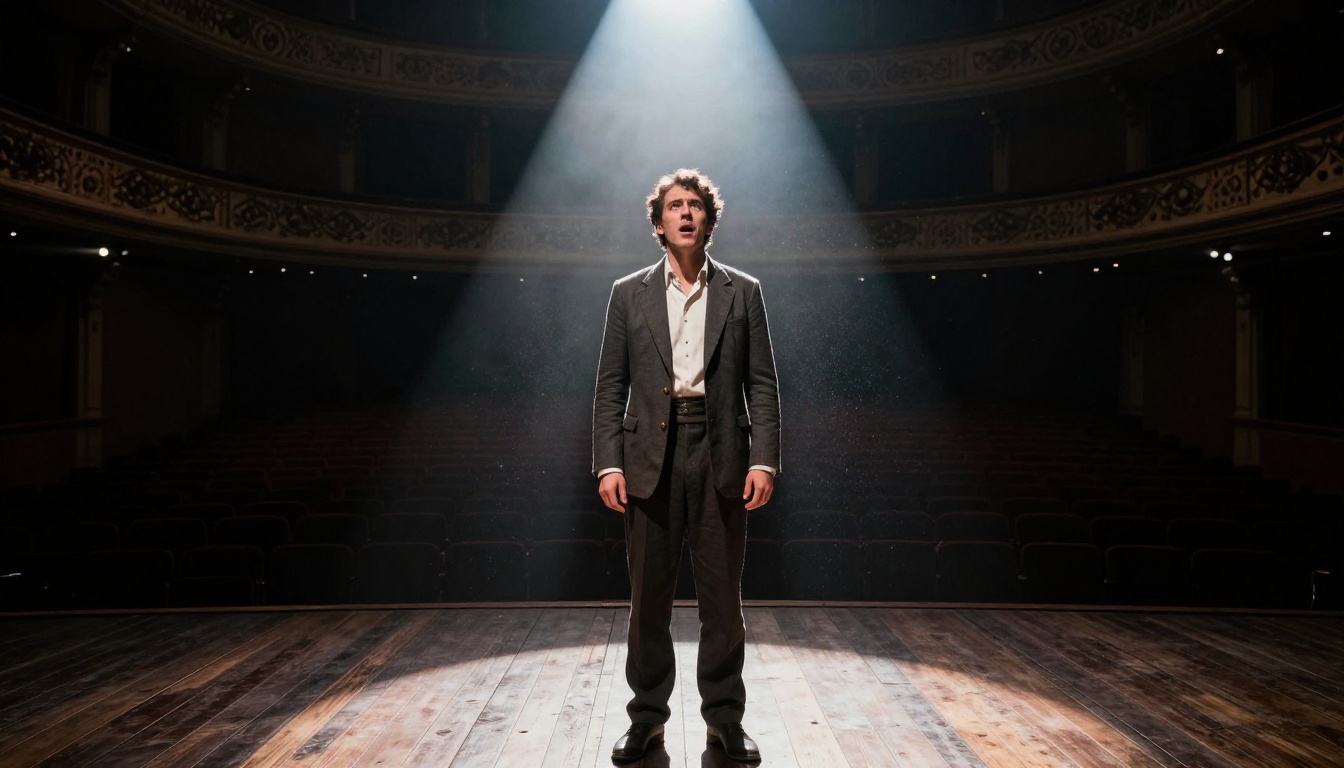
The improved temporal coherence in Sora 2.5 changes the calculus for independent creators. A filmmaker who can write detailed, technically specific prompts can now produce footage for:
- Scene-setting establishing shots that match a specific location's atmosphere
- Cutaway inserts showing objects, environments, or events referenced in dialogue
- Abstract or symbolic sequences where physical realism enhances emotional impact
- Proof-of-concept footage for pitching projects to investors or collaborators
The Narrative Possibilities Opening Up
The useful frame is not "AI replaces filmmaking" but "AI expands what is possible at a given budget." A short film with a $5,000 production budget could not previously include a scene shot from a helicopter, or a crowd sequence with a hundred extras, or a historical setting that requires period-accurate set dressing. With sufficiently capable AI video, some of those sequences become accessible.
The primary limitation that remains is character consistency across cuts. If your film requires the same person to appear in multiple separate AI-generated shots, current models including Sora 2.5 will not reliably maintain identical face geometry and physical characteristics. This is where Kling Avatar v2 and P Video fill a specific niche, using reference images to anchor character appearance across generations.
Commercial and Product Video, Reimagined
From Concept to Output in Minutes
For commercial applications, the calculus looks different from narrative filmmaking. Commercial video is typically short (15 to 60 seconds), shot-centric rather than character-driven, and heavily focused on visual quality and product presentation rather than story continuity.
This is where Sora 2.5's physics improvements pay off most directly for practitioners. A product video for a skincare brand needs water to look real. A food advertising clip needs steam, sauce, and texture to behave convincingly. A fashion video needs fabric to move beautifully in wind.

The workflow for a commercial video brief now looks like this for many production teams:
- Concept and storyboard: Use an LLM like GPT 5 or Claude Sonnet 5 to rapid-prototype concepts from a brief
- Visual reference: Generate still frames to align with client expectations before committing to video generation
- Video generation: Produce clips using the most appropriate text-to-video model for the content type
- Post-production: Color grade, add licensed music, composite any product shots
For many short-form commercial applications, this pipeline compresses days of pre-production into hours and production days into minutes of generation time.
💡 The quality bar that matters: The question is not whether AI video looks as good as a RED camera in controlled conditions. It is whether it looks good enough for the specific output channel: social media, email campaigns, presentations, or client pitches. For many of those contexts, current model quality already clears the bar.
The Technical Architecture Behind the Motion
Why Diffusion Models Handle Time Differently
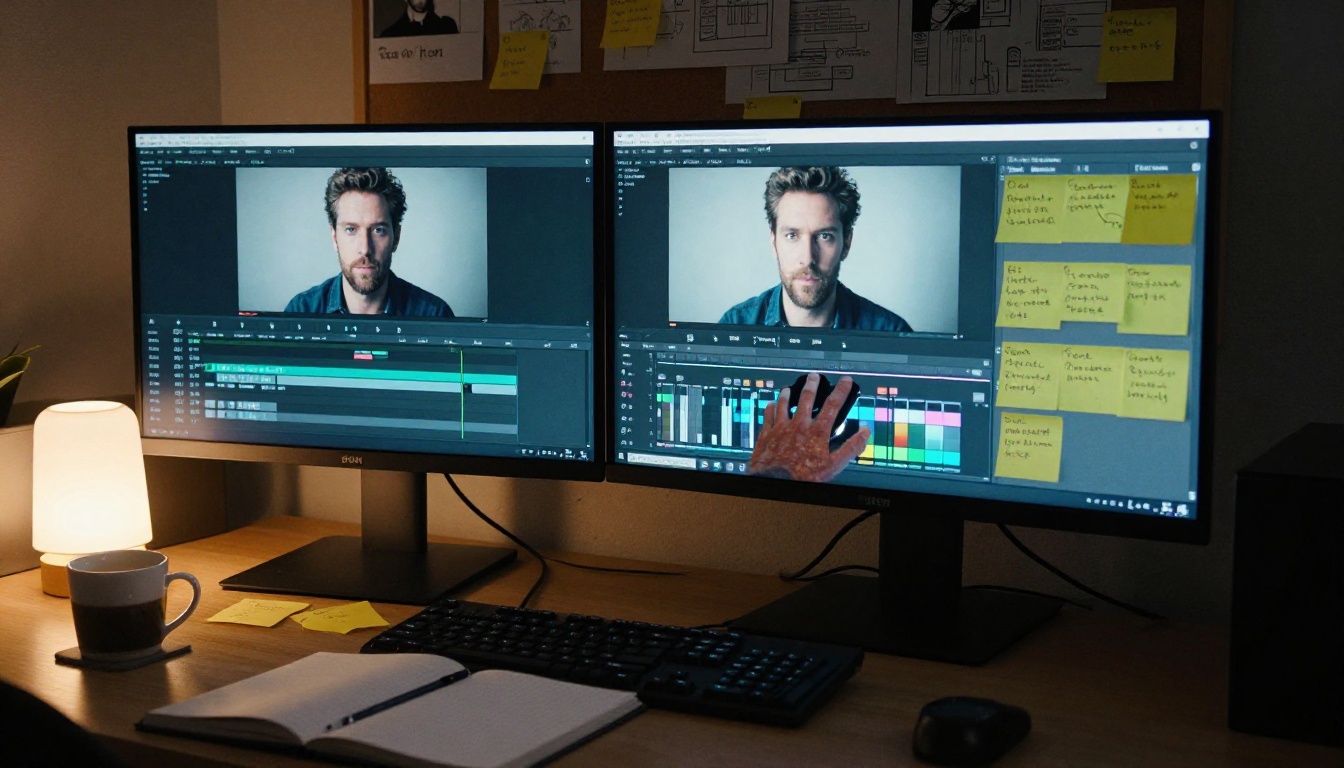
Video diffusion models face a challenge that image diffusion models do not: they must be consistent in three spatial dimensions and one temporal dimension simultaneously. Early approaches handled this by training on frames independently, which is why temporal artifacts were so common.
The architectural innovation that Sora-class models employ is a joint space-time attention mechanism. Rather than attending only to spatial neighbors (pixels near each other in a single frame), the model attends to spatiotemporal neighbors (voxels near each other in both space and time). This makes it structurally harder for the model to produce temporal inconsistencies, because the same attention weights that ensure local spatial coherence also ensure local temporal coherence.
Scale as a Physics Prior
There is no explicit physics engine inside Sora 2.5. The model does not run fluid simulation equations or solve Navier-Stokes for water motion. What it has instead is a massive statistical model of what real physical phenomena look like in video, built from training on an enormous corpus of real-world footage.
This approach works better than expected because physics in the real world is highly regularized: water behaves the same way on Tuesday as it does on Saturday. A model with enough training data will learn the distribution of physically valid water motion so well that generating samples from that distribution produces physically accurate-looking results.
The implication is that model scale directly translates to physics accuracy. Larger models trained on more data will have more accurate physics priors, which is exactly the trajectory Sora has been on from version 1 through 2.5.
Create AI Video on PicassoIA Right Now
Every model discussed in this article is accessible from a single platform. PicassoIA hosts Sora 2, Sora 2 Pro, Veo 3.1, Seedance 2.5, Kling v3, Ray 3.2, and more than 80 additional text-to-video models in one place, alongside the full suite of large language models for prompt refinement.
The fastest way to build intuition for what Sora 2.5 does right with motion is to generate clips with the same prompt across multiple models and compare the results directly. Start with a simple physical scenario (water pouring, fabric in wind, a person walking on a textured surface) where physics accuracy is easy to evaluate visually. The differences between models will be immediately apparent, and you will quickly develop a sense of which tool suits which type of project.
Prompt specificity is the skill that compounds fastest. Vague prompts get averaged-out results. Detailed prompts that specify lighting direction, camera lens characteristics, physical material properties, and motion speed give the model enough constraints to produce footage that matches a clear creative vision.
Start generating. The gap between what AI video could do a year ago and what it can do today is large enough that most assumptions about its limitations are now outdated. The models available right now, including Sora 2.5 and its competitors on PicassoIA, are capable of producing footage that would have required significant crew, equipment, and location scouting just 18 months ago.
That gap keeps closing. The creators experimenting now are building the prompt fluency and workflow intuition that will matter most as the technology continues to advance.


