April 2026 is shaping up to be one of the most active periods in AI history. In just seven days, multiple labs shipped major model updates, video generation crossed a new threshold of realism, and several tools that once felt experimental now feel genuinely production-ready. If you have been trying to keep up with AI news, this is the week's breakdown with the signal separated from the noise.
The LLM Race Is Not Slowing Down

The large language model category got measurably more competitive this week. OpenAI's GPT-5 continues to hold its position as the most widely deployed general-purpose model, but the real momentum is in the variants surrounding it. GPT-5 Pro ships with built-in extended thinking for complex multi-step tasks. GPT-5 Mini generates text instantly at significantly lower latency, and GPT-5 Nano targets real-time edge applications where response speed is the primary constraint.
Anthropic has been equally productive. Claude Opus 4.7 is the current top-tier option for workflows that require both deep code reasoning and visual input in a single model. For writing, editing, and everyday development tasks, Claude 4 Sonnet offers a strong balance of output quality and processing speed that most teams will find practical.
Google's Gemini Family Adds Depth
Google's Gemini 3.1 Pro is the week's standout multimodal model. It handles long documents, images, and code within a single context window with notably better coherence than previous versions. The lighter Gemini 3 Flash continues to be the practical choice for speed-sensitive applications where sub-second responses matter more than maximum accuracy.
DeepSeek Stays Relevant
Chinese AI lab DeepSeek has become impossible to ignore. DeepSeek R1 set a new standard for accessible chain-of-thought reasoning, and DeepSeek v3.1 is running in thousands of production environments for code and text generation, matching proprietary alternatives on many benchmarks at a fraction of the cost.
xAI's Grok 4 is getting attention for tasks that require real-time data reasoning, and Moonshotai's Kimi K2 Thinking delivers step-by-step problem solving that competes with the best paid frontier models. Kimi K2 Instruct rounds out the family with strong general-purpose chat capabilities.
💡 If you want to test several of these models without switching platforms, PicassoIA hosts all of them in one place under the Large Language Models section.
AI Video Hit a New Ceiling
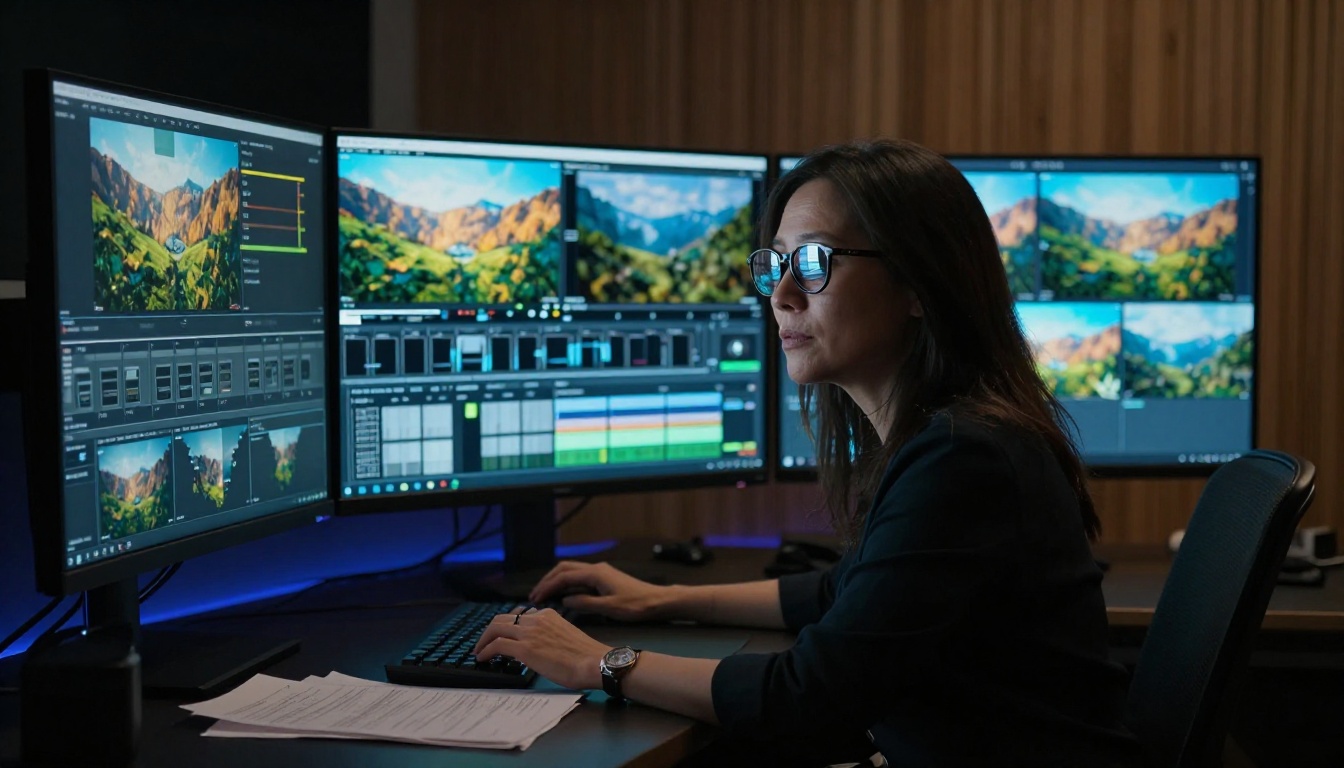
Video generation is the most dramatic story in AI this week. The gap between AI-generated video and professional production quality is narrowing faster than almost anyone expected. Several models released or updated this week produce output that would have been considered top-tier from a visual effects studio just eighteen months ago.
Google Veo 3.1 Sets a New Benchmark
Veo 3.1 from Google is generating 1080p video from text prompts with motion coherence that outperforms previous iterations by a clear margin. The fast variant, Veo 3.1 Fast, delivers that quality level without extended wait times, making it usable in iterative creative workflows where you need to test multiple concepts quickly. For reference, Veo 3 with its native audio generation remains one of the most impressive single-model video experiences available this month.
Kling v3 for Cinematic Work
Kwai's Kling v3 Video is gaining traction with video creators who need smooth, cinematic motion from both text prompts and static image inputs. The companion Kling v3 Motion Control variant adds per-character animation direction with a level of precision that was not possible in earlier versions. For production teams with faster turnaround needs, Kling v2.6 and Kling v2.6 Motion Control remain strong mid-tier options.
Wan 2.7 Pushes Open-Weight Video Further
The Wan 2.7 T2V model turns text directly into 1080p video with consistent subject tracking across frames. Wan 2.7 I2V animates still images with impressive temporal stability, which makes it particularly useful for product photography and portrait animation. The companion Wan 2.7 R2V extends these capabilities to subject-driven animations.
ByteDance's Seedance 2.0 adds native audio to video outputs, removing the need for separate audio post-production in many short-form content workflows. Seedance 2.0 Fast delivers similar results at higher speed for teams that prioritize throughput over maximum output quality.
For 4K output, LTX 2.3 Pro from Lightricks is the strongest available option this week. Pixverse v5.6 remains popular for quick, social-ready clips, and Hailuo 2.3 from Minimax shipped with notable improvements in cinematic movement quality. OpenAI's Sora 2 Pro also continues to attract attention for high-fidelity prompt-to-video work.
What actually changed in AI video this week:
- Native audio is now standard in leading models, not a premium add-on
- 4K resolution is accessible without enterprise-tier pricing
- Image-to-video pipelines are more temporally consistent with fewer artifacts between frames
- Motion control now allows per-character and per-frame direction in several models
💡 All of the video models mentioned above are available on PicassoIA, letting you compare outputs across models without separate subscriptions or API setup.
AI Image Generation in April 2026

Image generation has matured past the "is it real?" question. The current challenge is about control, consistency, and how precisely a model follows nuanced creative prompts, especially for complex multi-subject scenes or brand-specific visual styles.
What the Creative Industry Cares About Now
The text-to-image category on PicassoIA hosts over 91 models, and the platform continues adding the latest releases as they ship. The focus this week has shifted toward prompt adherence and style consistency across a series of outputs rather than single-image quality alone.
What creative teams are prioritizing right now:
- Photorealistic output for marketing and product visualization workflows
- Consistent character appearance across multiple generations within a single project
- Style replication from reference images with minimal quality degradation
- High-resolution outputs without upscaling artifacts in fine detail areas
ControlNet-based approaches remain the industry standard for teams who need to control image structure as well as visual style. Pose control, edge detection, and depth map conditioning give production teams the precision to generate exactly what they sketch or reference, rather than depending entirely on how a text prompt gets interpreted by the model.

The combination of strong base models and ControlNet precision means that image generation in 2026 is no longer a lottery. Teams who invest time in prompt structure and reference workflows are producing consistent, brand-aligned visual assets at a pace that was simply not achievable two years ago.
Reasoning Models That Actually Think

The category of "reasoning models" is no longer a niche interest. It is becoming the default expectation for any model used in workflows where accuracy matters more than response speed.
Why Reasoning Matters in 2026
Standard language models predict the next token based on prior context. Reasoning models work through a problem step by step before producing their final output. The practical difference is significant: a reasoning model is far less likely to give a confident but wrong answer to a logic or math problem.
GPT-5 Pro has built-in extended thinking enabled by default. Kimi K2 Thinking applies the same approach and is free to access. DeepSeek R1 pioneered the open-weight reasoning approach, and its influence is visible in nearly every new reasoning-capable release this month. OpenAI's O4 Mini rounds out the options for teams needing fast, affordable reasoning for everyday logic tasks.
Three workflows where reasoning models outperform standard LLMs:
- Multi-step math and quantitative problems where intermediate errors compound into wrong final answers
- Legal and contract analysis where precision matters more than fluency or speed
- Code debugging where the model needs to trace execution paths rather than guess at likely fixes
💡 If your current workflow uses a standard LLM for tasks involving sequential logic, switching to DeepSeek R1 or Kimi K2 Thinking can reduce error rates without requiring any changes to your existing prompt structure.
Llama 4 and the Open-Source Momentum
Llama 4 Maverick Instruct and Llama 4 Scout Instruct from Meta continue to reshape what open-weight AI looks like in production. Both models handle chat, summarization, long-document tasks, and code generation with performance that tracks closely against proprietary alternatives at a fraction of the deployment cost.
For teams with data privacy requirements, budget constraints, or a preference for self-hosted infrastructure, Meta's continued investment in open-weight models is one of the most practically significant developments in AI this month. The quality ceiling for open models has risen sharply, and the gap between open and closed-weight models is narrower today than it has ever been.
The broader open-source ecosystem benefits from this too. With Meta Llama 3.1 405B Instruct still widely used in production and Llama 4 now available, teams have a clear open-weight upgrade path that does not require switching to a proprietary API.
Audio and Speech AI Steps Up
Audio generation had a quieter week in terms of headline announcements, but the capabilities being consolidated and shipped are worth tracking carefully for anyone in content production.
Text-to-Speech Gets More Human
The current generation of text-to-speech models is producing output that is difficult to distinguish from a human voice in controlled listening conditions. Tone variation, natural pacing, and emotional nuance are all improving with each model iteration. For content creators who rely on scripted voiceovers, the quality threshold for AI-generated narration has crossed into genuinely usable territory for most video content types, including long-form explainers and product demos.
Speech-to-Text at Near-Perfect Accuracy
On the transcription side, speech-to-text models are now operating at accuracy levels that remove the need for significant manual correction in most standard recording environments. Clean audio with a single speaker typically produces transcripts that require minimal editing before publishing or processing downstream.
AI Music Generation for Production Teams
AI music generation has matured into a practical tool for content teams who need background music, jingle variations, or thematic scoring on demand. Describing a desired mood, tempo, and instrumentation through a text prompt and receiving a polished output in under a minute is changing how smaller production teams operate, particularly in social video, branded content, and podcast production.
Super Resolution Gets Sharper

Image upscaling has always been one of the most immediately practical AI applications, and this week's updates reinforce why it remains one of the most-used features on PicassoIA.
The Best Upscalers Available Right Now
Real ESRGAN remains the go-to free option for upscaling photos to 4x their original resolution with reliable general detail preservation. For portraits specifically, Crystal Upscaler produces noticeably better skin texture and facial detail at 4x scale compared to general-purpose models. For the highest quality ceiling regardless of subject type, Image Upscale by Topaz Labs scales to 6x while maintaining edge sharpness that competing models tend to soften. Recraft Crisp Upscale is the strongest choice for graphic content and illustrations where clean edges matter more than photorealistic texture simulation.
💡 If you are generating images at 512px or 768px for speed, running them through Real ESRGAN or Crystal Upscaler afterward produces results comparable to native high-resolution generation in most practical use cases.
Why This Week's Releases Actually Matter

The volume of AI releases has been consistently high for months, but this week's updates stand apart in one specific way: they represent convergence. Multiple modalities, from text to video to audio to image processing, are reaching professional quality thresholds at the same time. The barrier to building full, AI-powered creative workflows is lower than it has ever been.
For a developer, a creator, or a business team, the practical implication is this: the tools to produce professional-grade content at scale now fit within a single accessible platform, without deep technical infrastructure or large team headcount.
What actually changed for everyday users this week:
- You no longer need separate specialized platforms for video generation, image creation, and audio production
- Reasoning models are now accessible without paying for the most expensive API tiers on the market
- Open-weight models like Llama 4 and DeepSeek mean enterprise-quality AI is no longer gated behind premium subscription pricing
- Native audio in video models removes a production step that previously required dedicated audio tooling and post-production time
The combination of stronger open models, multi-modal native capabilities, and lower access costs means that 2026 is the year where AI-powered production becomes a practical reality for teams of any size, not just those with large budgets or dedicated technical infrastructure.

Every model discussed in this article is available to use on PicassoIA without managing API credentials, signing up for multiple separate platforms, or configuring your own cloud infrastructure. The platform brings together the latest LLMs, video generators, image tools, and upscalers in one place, with no switching required between tools.
If you want to put this week's AI releases to work immediately, here is where to start:
The question in 2026 is not whether AI can handle professional creative work. It already can. The question is how quickly you start putting these tools into your own workflow and seeing the results for yourself.


