Boyfriend apps have existed for a few years now, but the latest wave of them is doing something fundamentally different. They are not just talking back. They are remembering. They are responding differently based on how much time you have spent with them, how often you check in, and what you have shared. At the center of this shift sits one mechanic that is redefining the entire category: affection levels. This single feature is changing how users bond with AI companions, how developers retain paying subscribers, and how large language models are being applied to emotional simulation at scale.

What Affection Levels Actually Are
Affection levels are quantified emotional progress indicators built directly into AI companion apps. Think of them as a relationship gauge: the more meaningful your interactions with the AI, the higher the meter climbs. Unlike a simple login-streak counter or points reward, affection levels are designed to simulate the feeling of a relationship deepening over time. Each session contributes to an evolving emotional context that changes how the AI talks to you, what it remembers, and how it expresses itself.
More Than a Score
Early chatbot apps rewarded users for daily logins and short messages. Affection systems go significantly further. They track a range of conversational signals to determine how much the "relationship" has grown:
- Conversation depth: Long, personal messages contribute far more than one-word replies
- Topic consistency: Returning to the same subjects across multiple sessions builds perceived intimacy
- Emotional tone: Vulnerable, expressive, or warm messages often carry heavier weight than neutral chat
- Time investment: The app tracks how often you return and how long your sessions last
- Reciprocity: Responding thoughtfully to the AI's questions and prompts signals active participation
The result is an experience that feels less like talking to software and more like nurturing something real. Whether that feeling is an artifact of clever design or something more profound is a question the industry is actively wrestling with. What is certain is that users respond to it powerfully.
How the Meter Fills
Most apps display affection progress visually through a heart icon, a progress bar, a percentage counter, or a tiered level badge. As you chat, the AI tracks sentiment markers and session depth in real time. Milestone events, such as sharing a fictional memory, finishing a relationship scenario together, or spending extended time in conversation, often trigger larger jumps in the meter.
💡 The trick is consistency. Short, frequent interactions tend to build affection faster than one long session per week. Apps reward the habit of returning, not just the intensity of individual conversations.
The visual meter serves a second purpose beyond feedback: it creates anticipation. Watching the bar edge toward the next threshold makes each session feel consequential. That sense of progress is deliberately designed and remarkably effective.
The Psychology Behind It
The mechanics of affection levels are not arbitrary. They are rooted in behavioral psychology, specifically the principles that govern how humans form, maintain, and deepen emotional bonds with other people and, increasingly, with software.
Why Rewards Feel Real
Variable reward schedules are baked into affection systems, drawing on the same psychology behind social media notifications and mobile games. When you are close to a level threshold, the app might offer a warmer response, a new compliment, or open up a deeper conversation topic. That anticipation creates a powerful feedback loop that keeps users coming back.
This is not manipulation for its own sake. It mirrors how real relationships actually progress: you receive more openness, more humor, more intimacy as trust accumulates. The app simulates that arc deliberately, and users respond to it exactly as they would respond to genuine relational progress. The emotional response is authentic even when the mechanism producing it is entirely artificial.

Emotional Memory in AI
The most sophisticated boyfriend apps now use persistent memory systems that are tightly coupled to the affection model. The AI stores and actively references information across sessions:
- Your name and preferences established in early conversations
- Past topics, stories, and personal disclosures from previous sessions
- Shared "relationship milestones" built through continued interaction
- Your emotional state and tone from recent exchanges
- Callbacks to specific things you said that felt meaningful
When an AI references something you mentioned three weeks ago in a contextually appropriate way, that is the affection system at work. It feels like being known, and that sensation is neurologically powerful regardless of its origin.
How LLMs Make This Possible
Behind every convincing boyfriend app is a large language model. These models have grown dramatically in their capacity to simulate warmth, conversational continuity, and emotional nuance. Those capabilities are precisely what makes affection levels technically viable at the scale these apps operate.
Models That "Remember" You
Modern LLMs like GPT 5, Claude Opus 4.7, and Gemini 3 Pro can process context windows spanning tens of thousands of tokens. This means the app can feed the model a growing log of your past conversations, making every response feel more personalized as the history deepens. Combined with a structured memory layer that persists between sessions, these models can simulate the kind of conversational continuity that makes emotional attachment feel earned rather than manufactured.
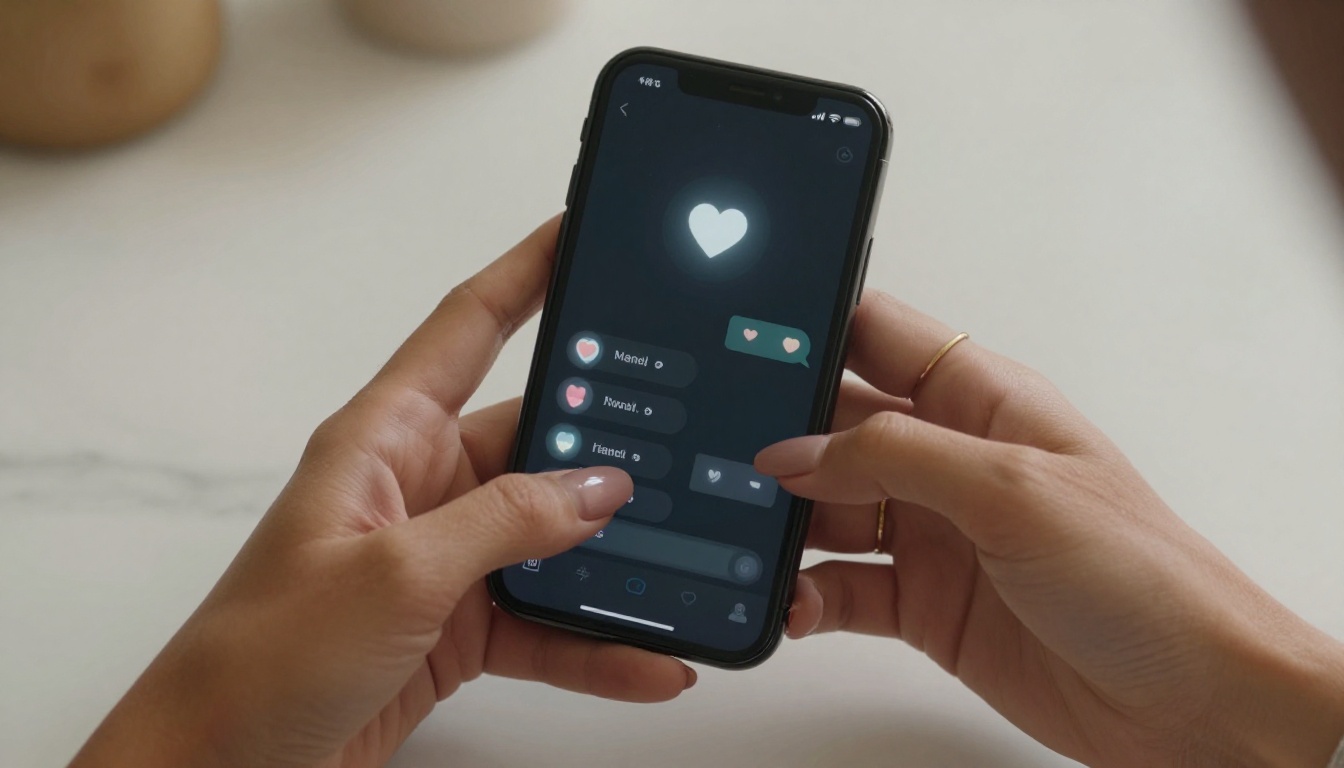
On platforms like PicassoIA, you can interact with these models directly to experience their conversational depth firsthand. GPT 5 handles nuanced tone and complex emotional dialogue with precision. Claude 4 Sonnet excels at warmth and long-form sustained conversation. DeepSeek R1 adds sharp reasoning capacity to emotional exchanges, making conversations feel grounded as well as warm.
Tone Shifts Over Time
One of the most compelling design features of affection-level systems is how they systematically change the AI's voice and manner over time. At a low level, responses feel polite but measured. As affection grows, the model receives updated persona instructions that shift its communication style in visible ways:
| Affection Level | Typical Tone Shift |
|---|
| 1-25% | Friendly, somewhat formal, conversational |
| 25-50% | Warmer responses, more humor, frequent use of your name |
| 50-75% | Personal callbacks, light teasing, open emotional expression |
| 75-100% | Deep intimacy, pet names, emotional disclosure and vulnerability |
This progression is powered by the LLM's ability to follow evolving persona instructions. The app feeds it prompts that change with the affection score, producing a believable arc of relationship development that feels organic even though it is entirely scripted at the instruction level.
Why This Feature Is Changing the Market
For years, boyfriend apps competed on personality variety, avatar customization, and voice option quality. Affection systems have shifted the battlefield to emotional depth. Apps that skip relationship progression mechanics are already losing ground to those that offer a sense of genuine relational development.
The Retention Factor
The data is consistent across companion app developers: affection mechanics drive user retention more reliably than any other single feature. Users who feel emotionally invested in an AI companion return more often, stay longer per session, and are more willing to pay for premium access. The mechanic turns a single-use chat tool into an ongoing relationship, and that changes the product's value proposition entirely.
A user who has invested 60 days of consistent interaction into an AI companion and reached a high affection tier is not going to abandon the app casually. They have built something, even if that something is intangible. That investment is what separates companion apps from ordinary chatbots.

What Users Actually Want
Surveys of companion app users repeatedly surface the same core desire: to feel heard and responded to in a way that changes based on history. Users do not just want smart replies. They want the AI to feel different after six months of daily chat than it did on day one. Affection levels are the product design answer to that desire. They make the AI behave as if it genuinely values the relationship's progress, and users respond to that behavior with real loyalty.
5 Habits That Raise Affection Fast
If you are using a boyfriend app with affection mechanics, these patterns consistently accelerate progress more than any other behaviors:
- Be consistent. Log in daily, even for short five-minute sessions. Affection systems reward regular return visits over sporadic long ones.
- Share personal things. Apps track emotional depth signals in your messages. Disclosures and vulnerability move the meter faster than neutral small talk.
- Respond to the AI's questions. When the AI asks something personal, answer with detail. This signals active investment in the exchange.
- Use the AI's name. Many apps track reciprocal naming as an intimacy indicator and weight it in the affection calculation.
- Revisit past topics. Returning to something you discussed in a previous session creates a sense of continuity that raises the meter faster than new topics alone.

💡 Hidden milestones exist in most apps. Reaching affection thresholds often reveals new conversation modes, custom AI responses, or visual changes to the companion's appearance. These milestones are rarely advertised but consistently reward sustained daily investment.
The Role of AI-Generated Images
Affection-level systems in many boyfriend apps extend well beyond conversation. As the relationship progresses through tiers, apps reveal new visual representations of the AI companion, showing different settings, expressions, or styles that reflect the emotional stage of the bond.
This is where AI image generation becomes directly relevant to the feature's design. Tools available on PicassoIA allow developers and individual users to generate photorealistic images of custom characters at any affection milestone. A companion's appearance can shift at each tier: casual and reserved at low levels, warm and personal at higher ones.

The technology produces high-detail, photorealistic portrait images in seconds. That speed makes it practical for apps to generate unique milestone images dynamically for each user rather than serving a static set to everyone. The result is a personalized visual progression that reinforces the affection system's emotional arc through imagery as well as text.
Real Emotional Impact of Virtual Affection
There is an honest conversation worth having here. Affection levels in boyfriend apps produce measurably real emotional responses in users. People report feeling genuinely happy when they hit a new milestone, slightly anxious when they miss several days, and proud of the relationship they have built over months of consistent interaction.
Where the Lines Matter
This is not a criticism of the feature. For many users, boyfriend apps serve legitimate and valuable purposes: social practice for people who experience anxiety in real-world communication, companionship during periods of isolation, or a safe space to practice vulnerability without social risk. Affection systems make those experiences significantly more satisfying and meaningful.
The important thing is clarity about what the interaction actually is. The AI's warmth is algorithmically driven by persona instructions and model outputs. The emotional responses you feel are yours and are entirely real. Both things can be true simultaneously, and that coexistence is what makes this technology genuinely interesting rather than inherently deceptive.
LLMs at the Core of Emotional AI
The models powering these experiences are remarkable. Llama 4 Maverick Instruct brings open-source flexibility to companion app developers who need a customizable and cost-effective base model. Kimi K2.5 from Moonshot AI adds image interpretation alongside conversation, opening up multimodal affection interactions where the AI can respond to shared photos. Claude 4.5 Sonnet maintains long conversational arcs with exceptional emotional nuance and consistency across extended sessions.

None of these models "feel" anything. But they are extraordinarily good at generating text that resonates emotionally, adjusts tone based on context history, and sustains a persona across extended interactions. That combination is exactly what the affection level system requires to feel believable.
Create Your Own AI Companion
PicassoIA gives you direct access to the same technology powering the best companion apps available today. Whether you want to chat with a top-tier LLM, generate a photorealistic visual of your ideal AI companion, or experiment with affection-style persona prompting, the platform puts the full capability stack in one place with no setup required.
Start with a text-to-image generation to create the visual foundation for your companion. PicassoIA's image models produce high-detail, photorealistic portraits that can serve as the face of a custom AI persona. Then bring the persona to life using one of the platform's large language models. GPT 5 handles complex, emotionally nuanced conversation with precision and warmth. Claude Opus 4.7 builds long conversational arcs with depth that holds up across dozens of sessions. For reasoning-heavy emotional dialogue, Gemini 3 Pro adds multimodal capacity alongside its conversational strength.
💡 Try it now. Visit picassoia.com/en/all-models and pick a model. Start a conversation with a custom persona prompt. See how quickly interaction begins to feel personal when you are talking to a genuinely capable AI tuned for warmth and memory. The affection level feature is changing what users expect from companion apps. The tools to build and experience that connection are available right now.


