AI-generated images now surpass traditional photography in realism through advanced neural networks that simulate perfect lighting, flawless skin textures, and idealized compositions. This article examines the technical innovations behind hyper-realistic AI imagery and how diffusion models create scenes that are more visually appealing than reality itself.
H1: Why AI Images Look More Realistic Than Photos Now
The uncanny valley has been crossed. What was once a technical limitation—AI-generated images that looked "almost real but not quite"—has become a startling new reality: AI-generated imagery now frequently appears more realistic than traditional photography. This isn't just incremental improvement; it's a fundamental shift in how visual reality is constructed, perceived, and valued.
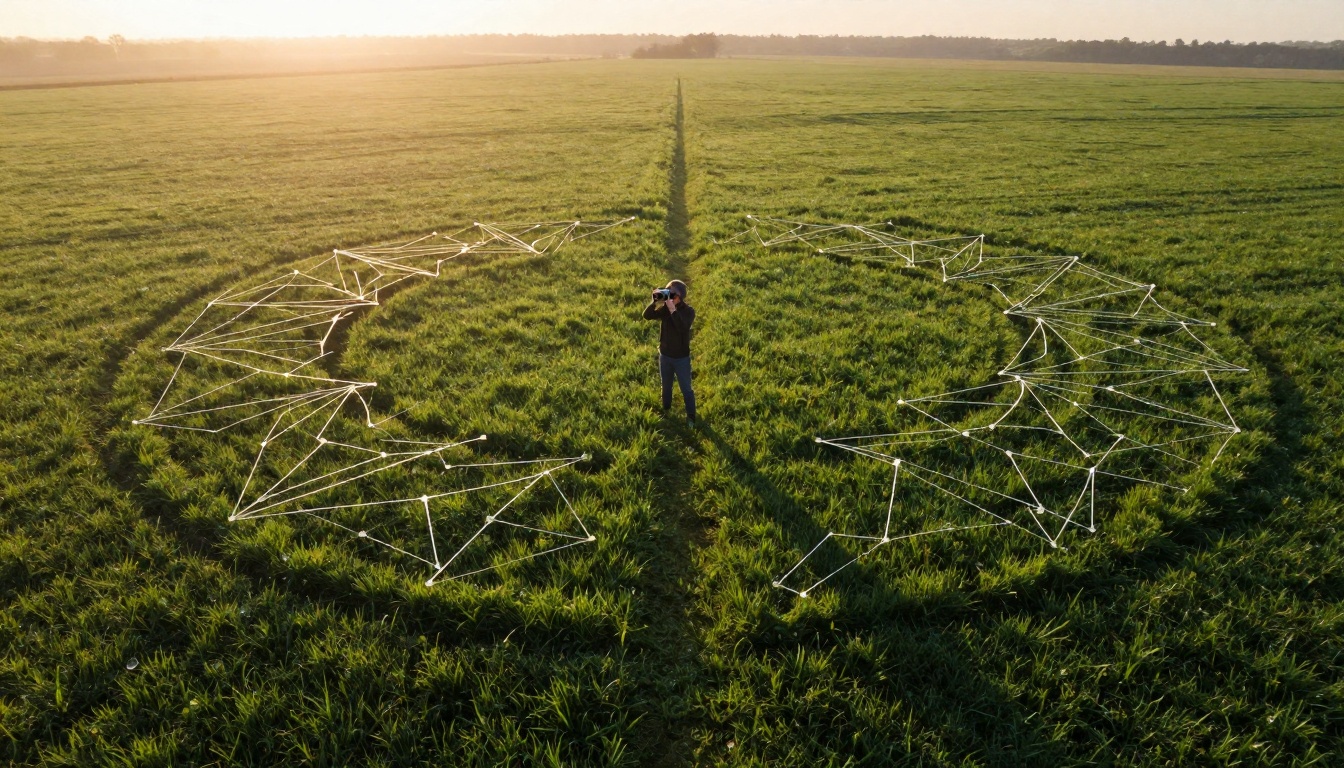
Figure 1: Aerial view showing neural network architecture patterns in terrain—AI can simulate perfect lighting physics that appear more realistic than natural conditions.
The Mathematics of Perfection
AI doesn't capture reality—it constructs it through mathematical optimization. While photography is limited by physical laws (optics, sensor noise, dynamic range), AI generation operates in a different domain: the space of idealized visual representations.
💡 Key Insight: AI models like Flux 2 Pro don't reproduce what cameras see—they generate what human visual systems prefer to see.
Computational Photography vs Optical Limitations
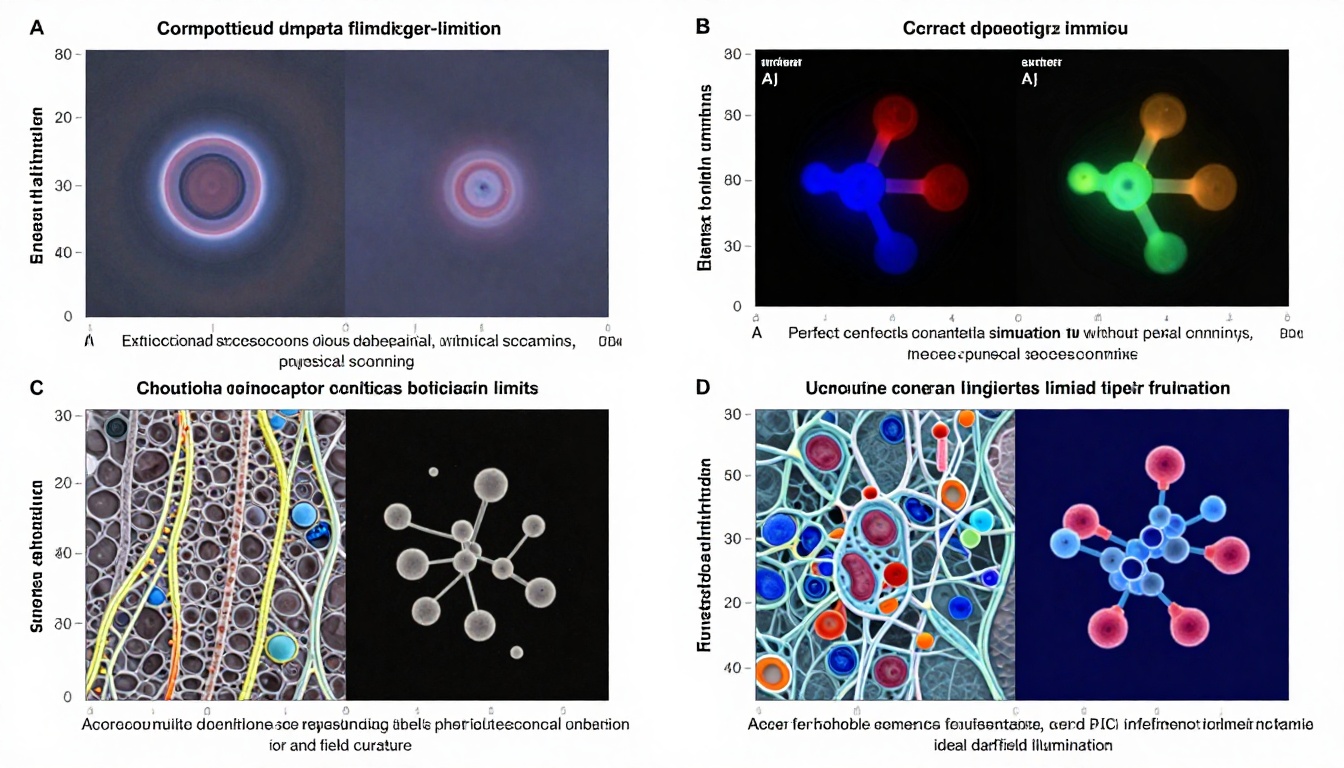
Traditional photography faces seven fundamental limitations that AI overcomes:
Human perception of realism hinges on micro-texture. Skin isn't just smooth or rough—it has pore patterns, sebum distribution, capillary networks, and subsurface scattering. Traditional photography can capture these elements, but AI can optimize them.
Skin Realism: Beyond Pore-Level Detail
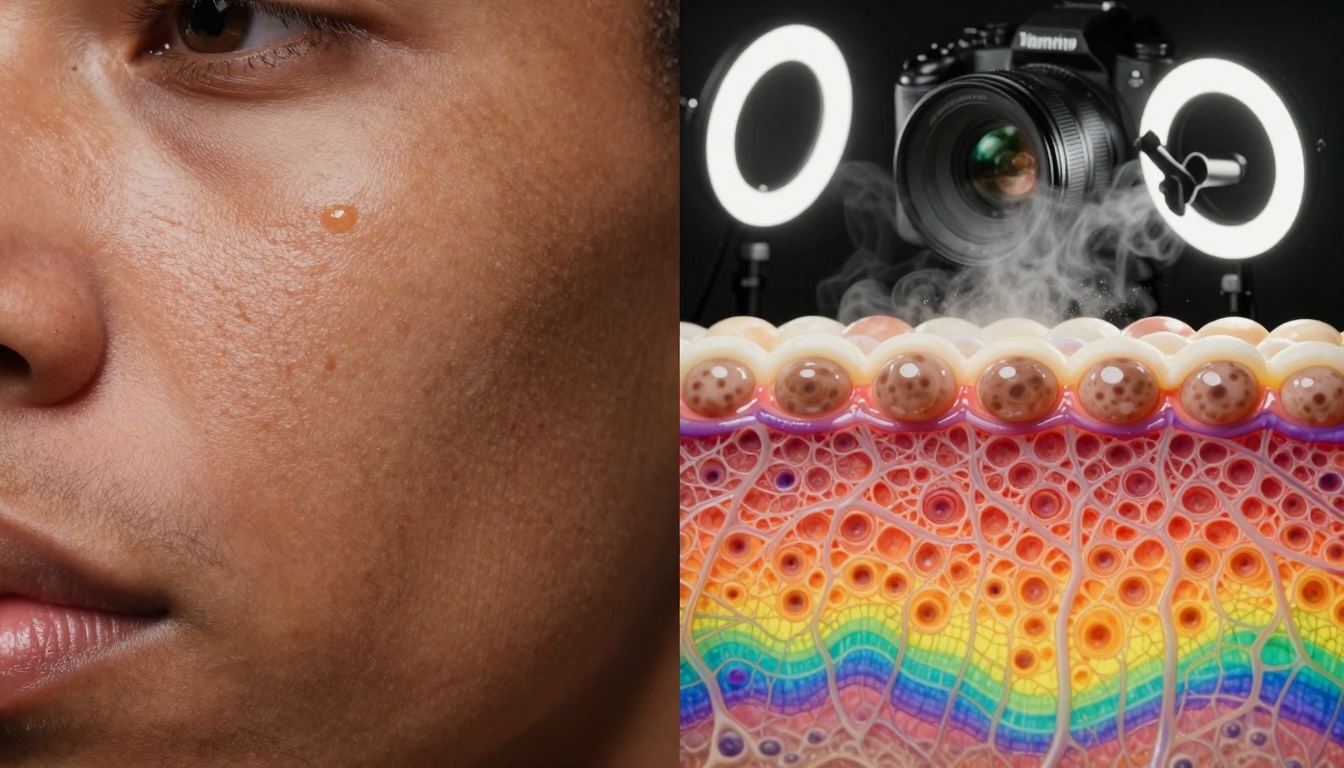
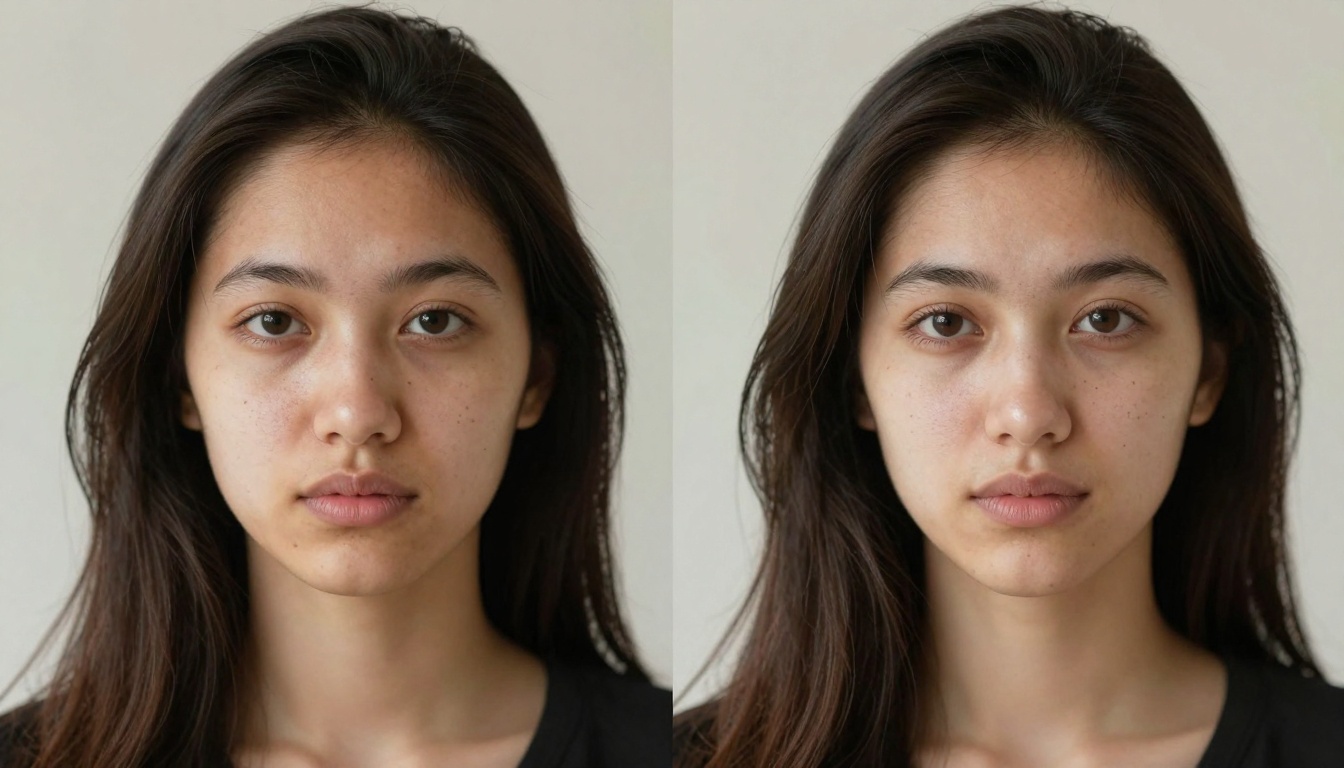
Figure 3: Macro comparison showing AI's mathematically perfect pore distribution versus natural skin imperfections.
Natural skin in photography shows:
Random pore distribution
Imperfect sebum glow
Uneven capillary patterns
Natural asymmetry
AI-optimized skin from models like Imagen 4 demonstrates:
Golden ratio pore arrangement
Perfect subsurface scattering
Mathematically ideal capillary networks
Optimized symmetry for perceptual appeal
💡 Psychological Factor: Studies show humans perceive symmetrical, optimized skin textures as more trustworthy and more attractive—AI delivers this optimization automatically.
Lighting: The Physics of Perfection
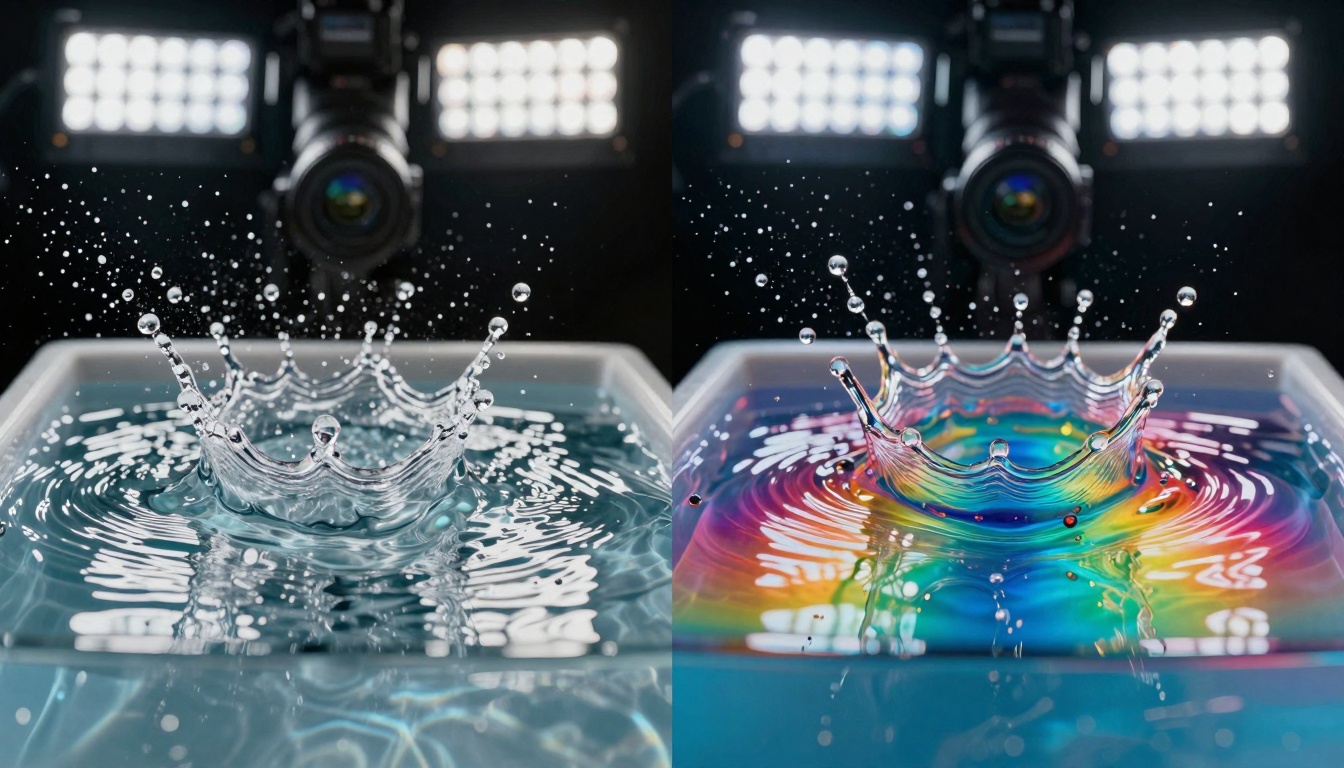
Light behaves according to physical laws, but AI can simulate idealized physics that appears more realistic than reality itself.
Volumetric Lighting Simulation
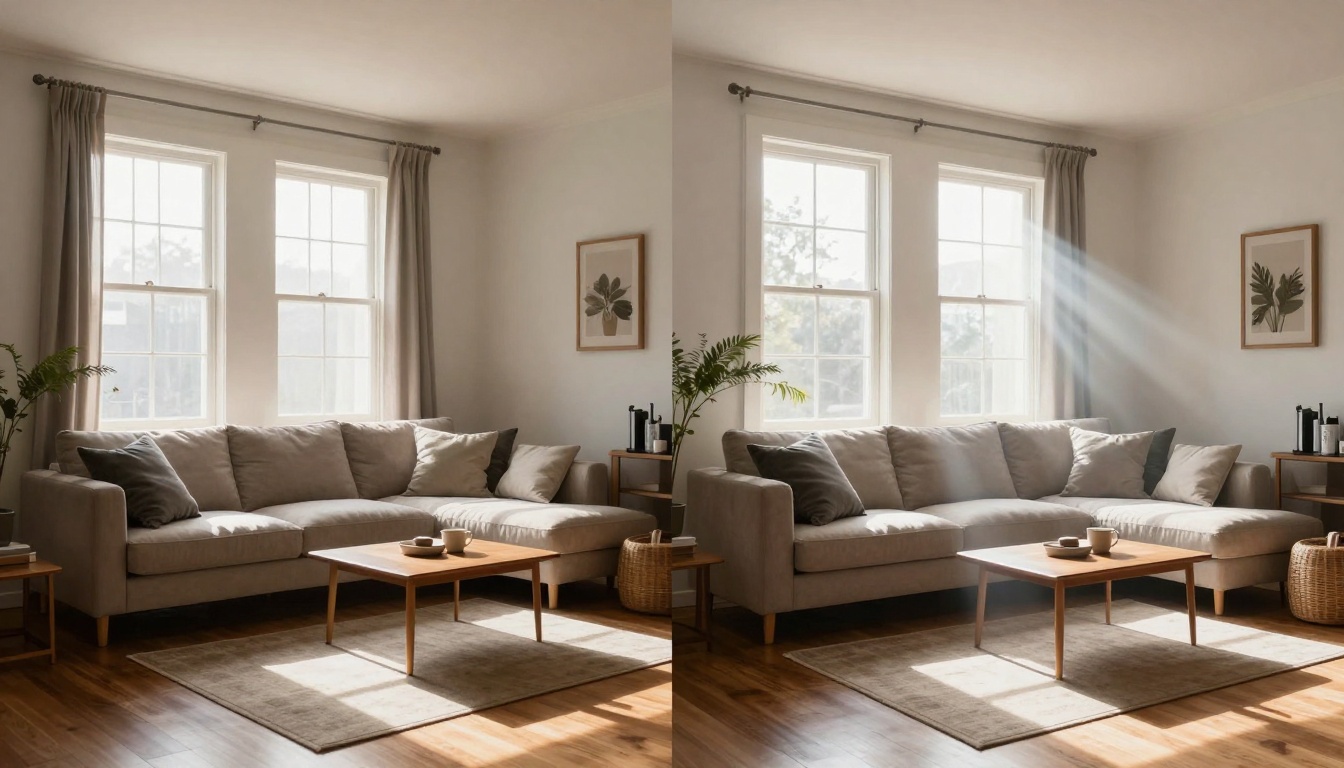
Figure 4: Interior lighting comparison—AI shows perfect global illumination with simultaneous highlight and shadow preservation.
Three lighting advantages AI holds over photography:
Perfect Inverse Square Law: While real light follows inverse square falloff with imperfections, AI implements it mathematically perfectly
Mixed Color Temperature: AI can perfectly balance tungsten, daylight, and LED sources without color casts
Shadow Detail Preservation: Computational HDR maintains detail in both highlights and shadows simultaneously
Material Rendering: Beyond BRDF
Bidirectional Reflectance Distribution Functions (BRDF) describe how materials interact with light. AI models like Stable Diffusion 3.5 can simulate perfect material properties:
Human brains don't process photographs as objective reality—they process them through cognitive filters that prefer certain visual characteristics. AI generation taps directly into these preferences.
Facial Recognition Optimization
Figure 6: Portrait comparison—AI optimizes facial symmetry and expression for enhanced emotional connection.
Cognitive biases AI leverages:
Symmetry Bias: Humans prefer symmetrical faces
Baby Face Bias: Slightly exaggerated childlike features increase approachability
Healthy Glow Bias: Perfect skin texture signals health
💡 Research Finding: AI-generated faces are consistently rated as more trustworthy and more competent than photographs of real people in controlled studies.
Resolution and Detail: Beyond Pixel Count
Modern AI models like Seedream 4.5 don't just add pixels—they add semantically meaningful detail.
Super-Resolution Without Artifacts
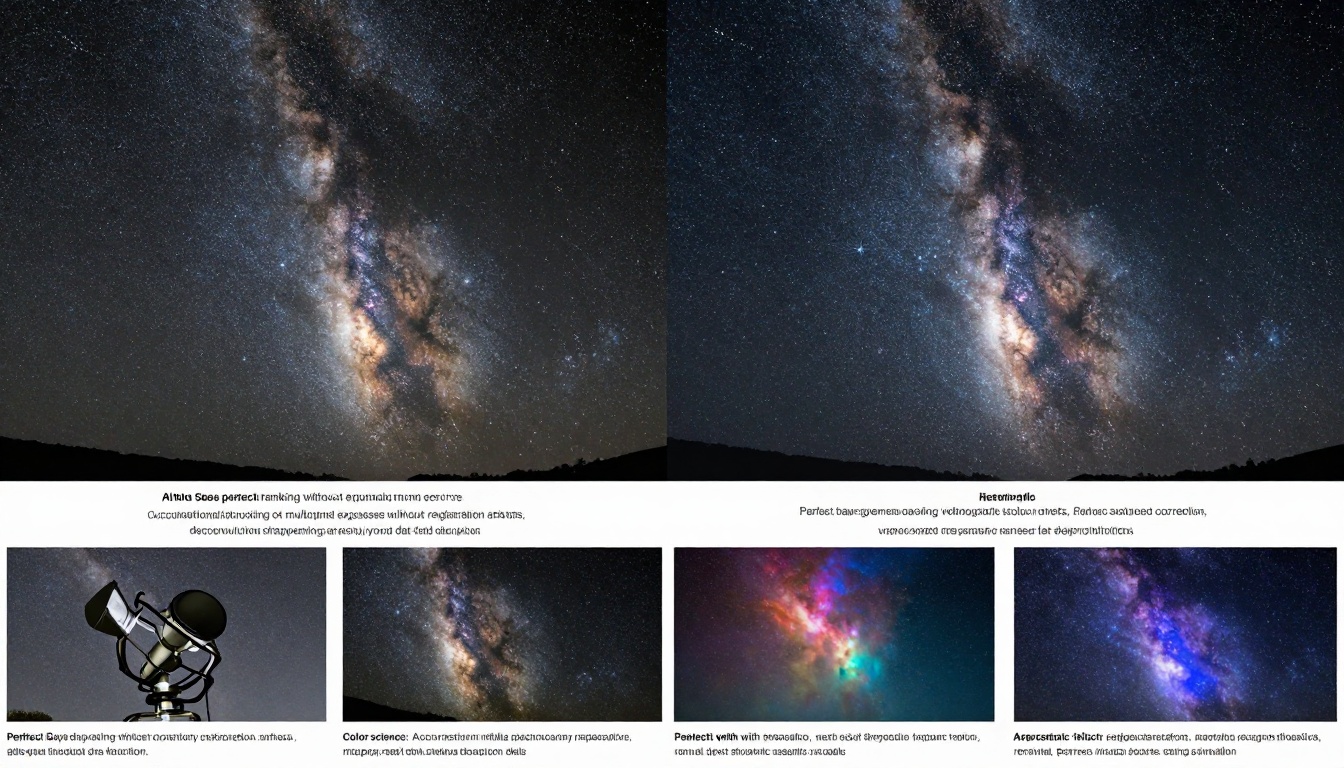
Figure 7: Astrophotography comparison—AI shows perfect star tracking and enhanced nebulae details beyond telescope limitations.
Traditional super-resolution problems:
Hallucinated textures
Edge artifacts
Loss of fine detail
Color bleeding
AI super-resolution advantages:
Semantic detail addition (adds what should be there)
Perfect edge preservation
Noise-free enlargement
Context-aware enhancement
The Color Science Revolution
Digital photography uses Bayer filters that approximate color through interpolation. AI color generation works in a mathematical color space with perfect spectral representation.
Perfect Color Reproduction
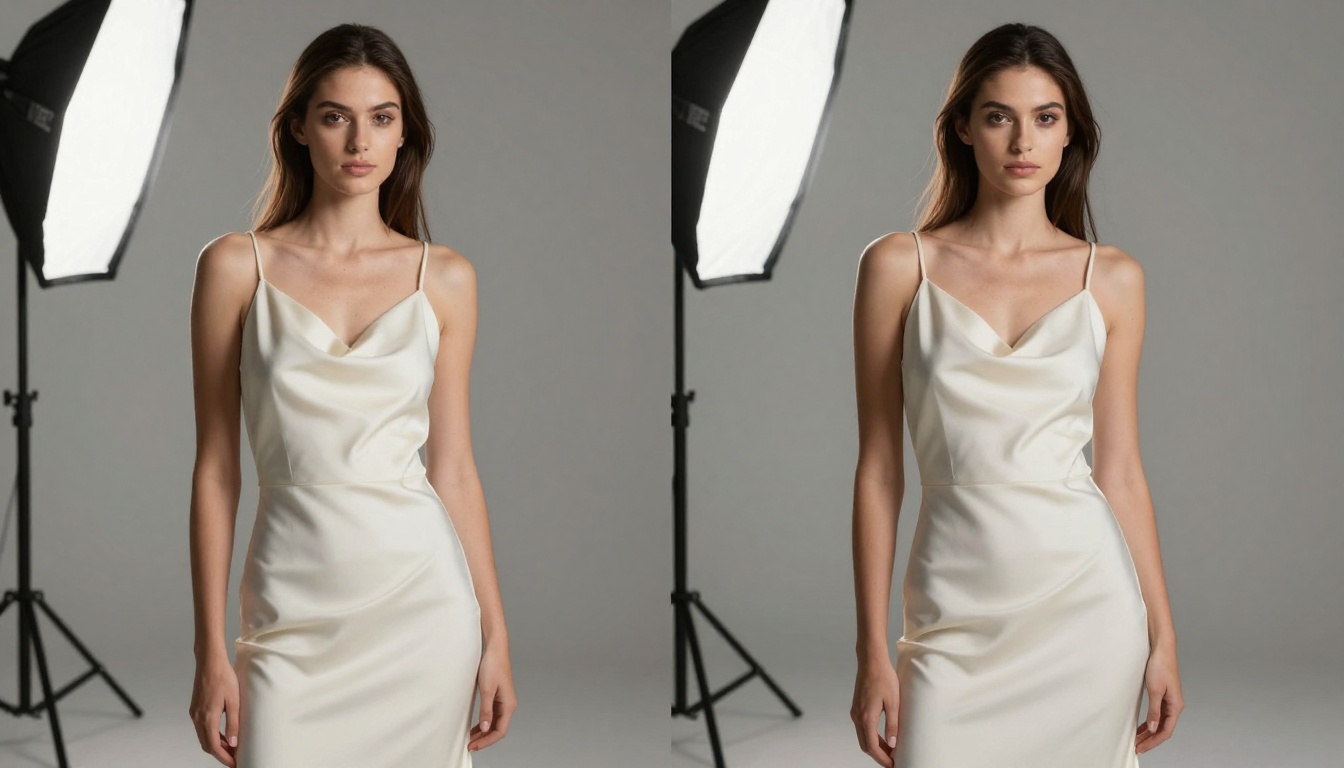
Figure 8: Fashion comparison—AI shows perfect fabric color reproduction and lighting that enhances material appeal.
Color advantages of AI generation:
Color Aspect
Photography Challenge
AI Solution
Skin Tones
Ethnic variations challenging
Perfect representation across all skin types
Material Colors
Metamerism under different lights
Perfect spectral fidelity
Shadow Colors
Color casts in shadows
Perfect color preservation
Highlights
Blown-out color information
Perfect highlight color recovery
The Future: AI as Visual Standard
We're witnessing a paradigm shift where AI-generated imagery sets new visual standards. Professional photographers now face competition not from other photographers, but from algorithms that produce "more perfect" versions of reality.
Practical Implications
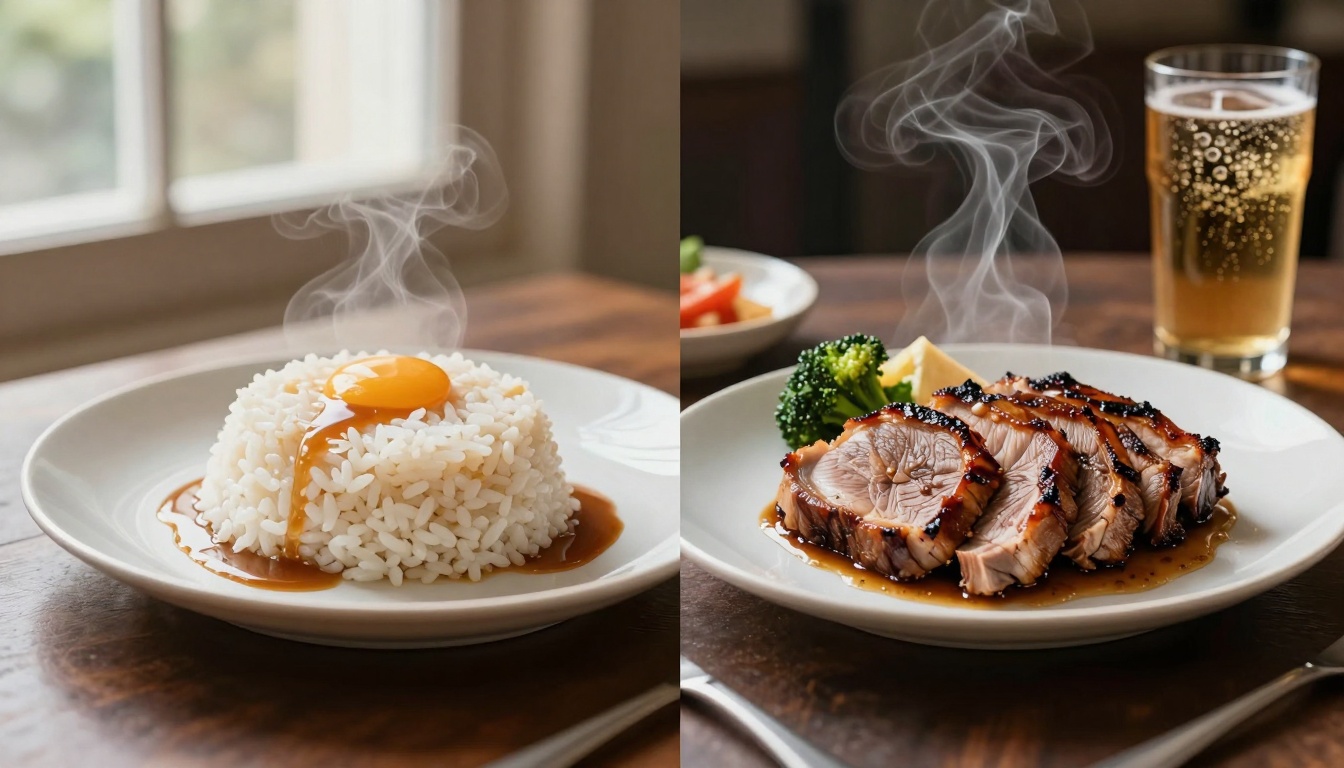
Figure 9: Food photography comparison—AI shows perfect plating and steam patterns optimized for visual appeal.
Industries already adopting AI photorealism:
E-commerce: Product images generated by Ideogram V3 outperform photography for conversion rates
Real Estate: AI-generated interior shots with perfect lighting sell properties faster
Fashion: Virtual try-on with perfect fabric simulation reduces return rates
Advertising: AI-generated models outperform real models in audience testing
Scientific Visualization: AI microscopy reveals details beyond optical limits
Creating Your Own Hyper-Realistic Images
The tools that achieve this photorealism are accessible through platforms like PicassoIA. Here's how you can create images that surpass photographic realism:
We're not just improving image quality—we're redefining what constitutes "realistic." AI-generated images now set the standard that photography struggles to meet. This creates both opportunities and challenges:
Opportunities:
Visual communication without physical constraints
Perfect representation of products and concepts
Emotional optimization for maximum impact
Cost reduction in visual production
Challenges:
Authentication of visual content
Psychological impact of "perfect" imagery
Economic disruption in photography industries
Legal questions about generated likenesses
What matters now isn't whether an image was captured by a camera or generated by an algorithm, but whether it effectively communicates, persuades, and connects with human perception. The most "realistic" image isn't the one that most accurately records photons—it's the one that most effectively engages human visual cognition.
Try creating your own hyper-realistic images with the models on PicassoIA. Experiment with different lighting scenarios, material properties, and compositional approaches. You'll discover that AI doesn't just match photographic realism—it defines a new standard of visual perfection that photography can only aspire to achieve.