Every month, something shifts in the AI world. A new model drops with a benchmark number that quietly breaks the last record. A startup releases weights that outperform last year's frontier system. The pace feels relentless, sometimes overwhelming. But it is not magic, and it is not hype. There are real, compounding forces behind why AI models keep getting better monthly, and understanding them changes how you think about every tool you use.
The Compute Flywheel
More GPUs, More Power
The single biggest driver of AI progress is raw compute. Scaling laws, first formalized by OpenAI researchers in 2020, showed something counterintuitive: if you throw more compute at a bigger model with more data, performance improves in a predictable, almost mathematical way. This was not obvious before. Everyone expected diminishing returns. Instead, the curve kept climbing.
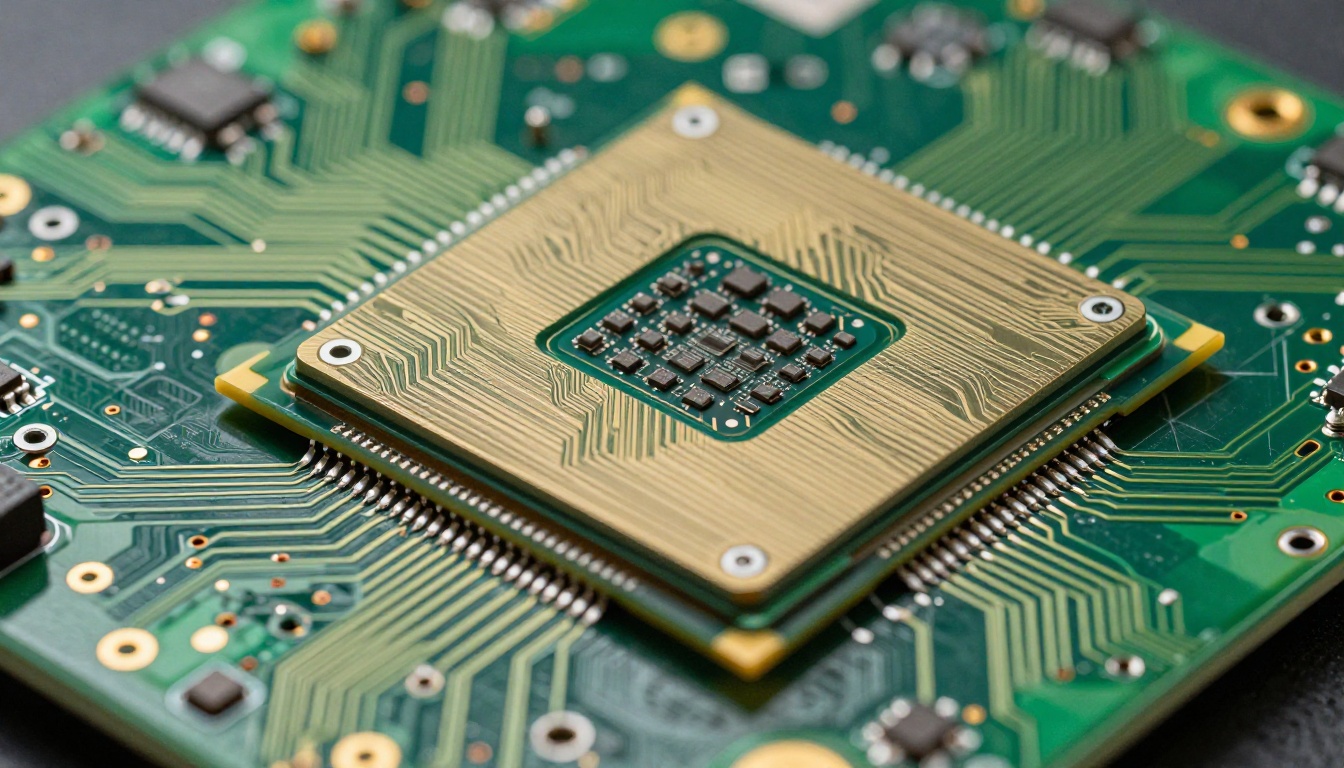
The hardware side keeps pace. NVIDIA's H100 chips deliver roughly 10x more throughput for AI training than the A100 generation that preceded them. The B200 chips push further. Every generation of hardware unlocks model capabilities that simply were not achievable before, not because the algorithms changed, but because the raw multiplication capacity crossed a threshold.
What is especially interesting is the feedback loop: better models drive more revenue for AI companies, which funds more GPU purchases, which enables better models. It compounds on itself continuously.
- Training throughput doubles roughly every 18 months with new silicon
- Memory bandwidth improvements allow bigger context windows
- Interconnect speeds between chips reduce training bottlenecks
- Cooling technology lets data centers pack more compute per square meter
Inference Gets Cheaper Too
Training is only half the story. Inference, the act of running a model to generate responses, has gotten dramatically cheaper. Techniques like quantization (reducing floating-point precision without major quality loss), speculative decoding, and flash attention have slashed the cost of running large models.
💡 When inference costs drop by 10x, companies can afford to run far bigger models in production, which means users interact with better AI every day, not just in research demos.
This virtuous cycle explains why models available free today would have cost thousands of dollars per query just three years ago. Cheaper inference means more deployment, which means more usage data, which means better fine-tuning opportunities.
Training Data Quality Has Shifted
Synthetic Data Changed Everything
For years, the bottleneck was labeled data. Human annotation is slow and expensive. You need people to read text, watch videos, label images, and write corrections. There is a hard ceiling on how fast you can produce quality training data with human labor alone.
Synthetic data broke that ceiling.
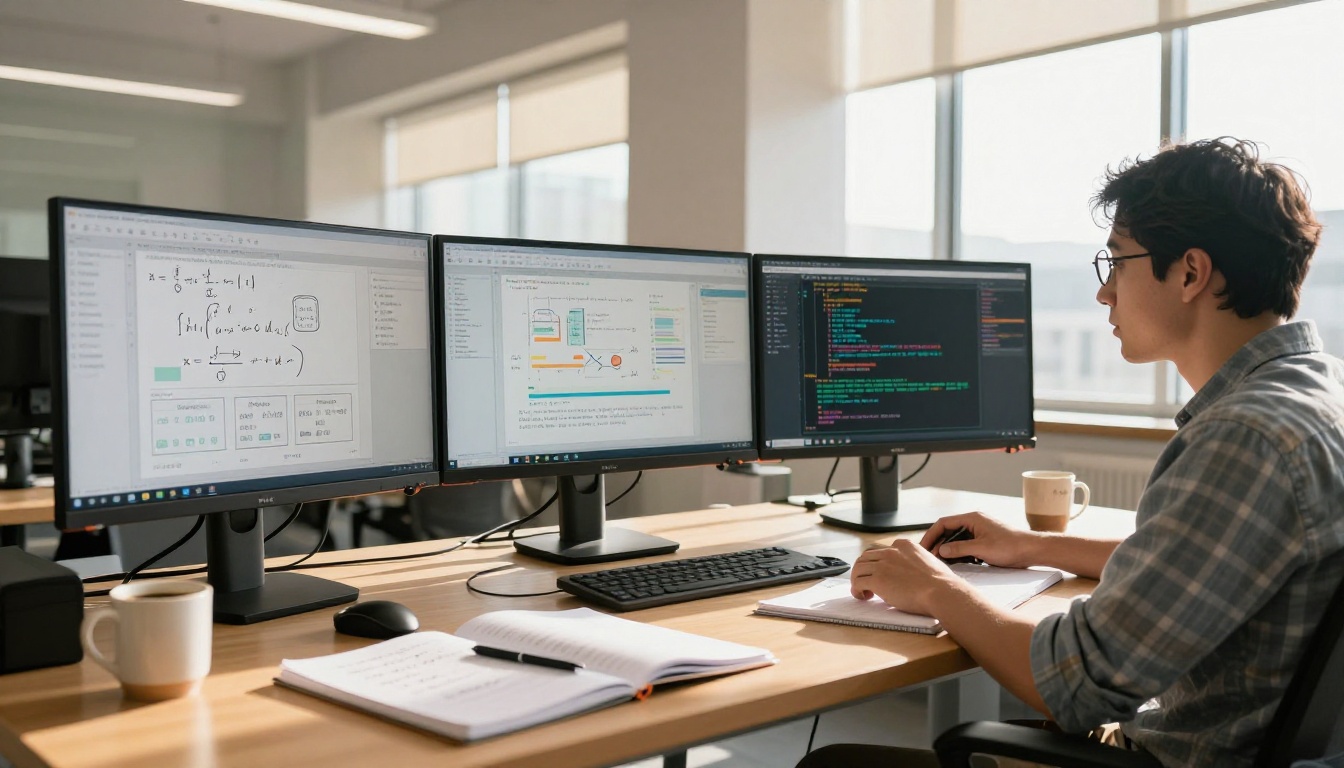
The idea is straightforward: use an already-capable AI model to generate training data for an even more capable model. GPT 5 generates thousands of high-quality reasoning examples. Those examples train the next version. Models like GPT 5.4 are products of this recursive improvement loop. The same applies to math, code, and science reasoning tasks.
| Data Type | Pre-2023 Status | 2025-2026 Status |
|---|
| Human annotations | Primary source | Supplementary |
| Synthetic reasoning chains | Rare | Standard practice |
| Curated web text | Dominant | Mixed with synthetic |
| Code execution traces | Limited | Widespread |
| AI-judged preference data | Experimental | Core training pipeline |
Models trained on synthetically generated proofs can verify and extend those proofs, producing richer training sets than any human team could assemble. This is why mathematical reasoning scores have jumped dramatically in recent model generations.
Human Feedback at Scale
Reinforcement Learning from Human Feedback, or RLHF, was the technique that turned raw language models into helpful assistants. Training a model to match human preferences, rather than just predict next tokens, produced dramatically more useful outputs.

But RLHF has its own scaling problem: you need humans rating outputs. The solution has been hybrid systems that combine sparse human feedback with AI-as-judge evaluators. A capable model evaluates thousands of responses per second, flags the best ones, and trains the next version. Claude 4 Sonnet and Claude Opus 4.7 from Anthropic are products of this refined constitutional AI and preference optimization approach. Alignment and capability improve simultaneously, and they improve fast.
Architecture Breakthroughs Don't Stop
From Transformers to Reasoning Chains
The transformer architecture, introduced in 2017, is still the foundation for virtually every major language model. But what is built on top of it has evolved dramatically. The most important recent development is extended thinking, sometimes called chain-of-thought reasoning at inference time. Instead of returning an answer immediately, models spend compute tokens working through a problem before committing to a response.
💡 The insight is that the same model, given more tokens to reason with before answering, can dramatically outperform its instant-answer version on hard problems. No new training required, just a smarter inference strategy.
DeepSeek R1 demonstrated this powerfully: a model that reasons through problems step by step before answering consistently outperforms larger models that answer immediately. Gemini 3.1 Pro applies multi-step reasoning to complex document analysis. Grok 4 from xAI applies similar reasoning depth to real-time information retrieval tasks.
Mixture of Experts Models
Another architectural shift is the Mixture of Experts (MoE) design. Traditional dense models activate all parameters for every token. MoE models activate only a specialized subset of parameters per input. The practical result: you get the capability of a very large model at a fraction of the inference cost.
Llama 4 Maverick Instruct and Llama 4 Scout Instruct from Meta both use MoE designs that allow them to punch above their parameter weight. DeepSeek v3.1 became a notable case study: a model with 671B total parameters but only 37B active per token, performing at frontier levels at a fraction of the compute cost.
When you can train and run models more efficiently, you can iterate faster. More experiments per dollar means more breakthroughs per month.
The Open Source Acceleration Effect
Meta's Llama Changed the Game
Before Meta released the original Llama weights in 2023, serious AI research required either being at a frontier lab or paying for API access. The open release democratized experimentation. Thousands of researchers worldwide could now fine-tune, probe, and improve AI models without waiting for corporate product cycles.
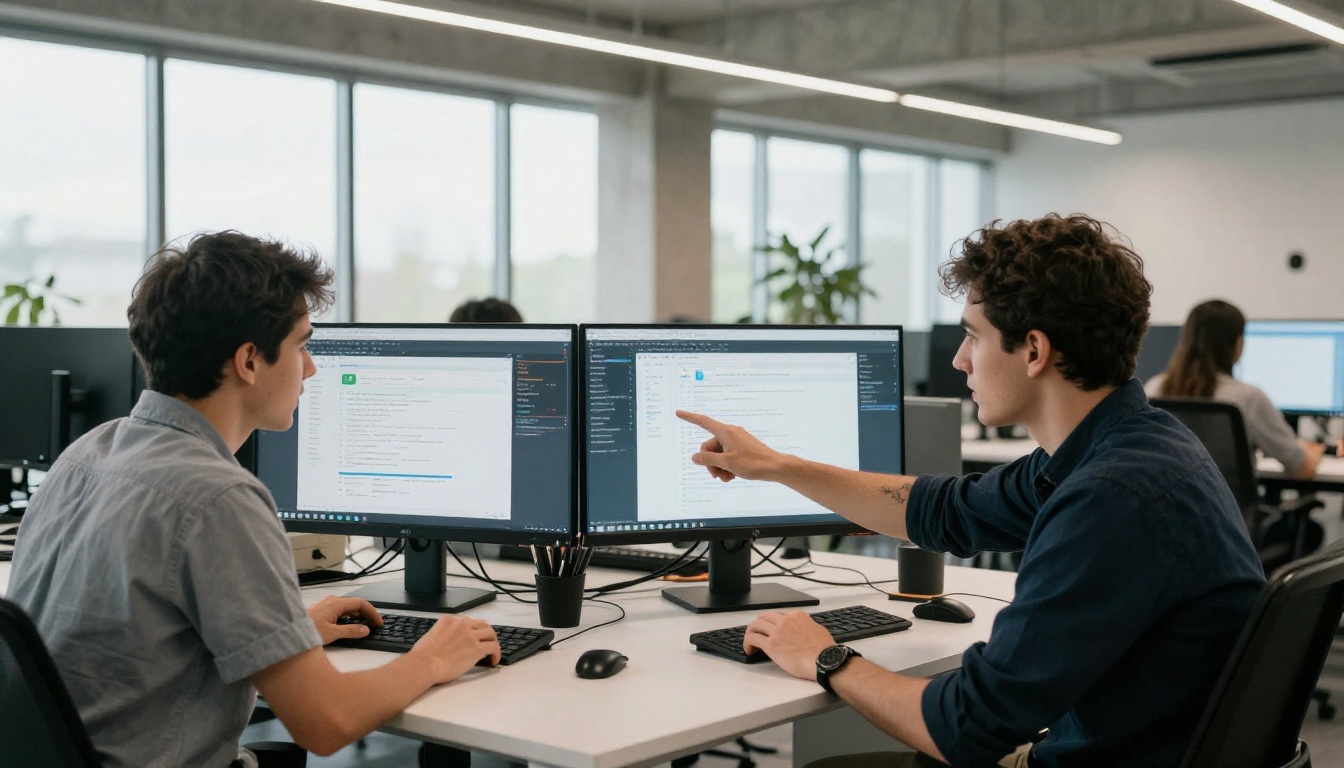
The effect compounded. Every paper, every fine-tuning technique, every safety fix discovered by the open source community fed back into the broader research ecosystem. Even closed labs benefited, as published findings from community researchers informed internal roadmaps. Gemini 3 Flash and Gemini 2.5 Flash from Google improved partly through alignment research that originated in the open research community.
The release cadence accelerated too. When Meta ships Llama 4, the community has fine-tuned variants available within days. This creates a parallel improvement track running alongside the closed-model development cycles, effectively doubling the pace of usable innovation.
DeepSeek's Surprising Efficiency
The DeepSeek releases in late 2024 and 2025 were a genuine shock to the industry. DeepSeek v3 reportedly trained for a fraction of the cost comparable Western models required, and it matched or exceeded them on several benchmarks. The follow-up DeepSeek R1 applied reinforcement learning for reasoning in a way that significantly outperformed then-current models on math and logic tasks.
The implication is important: the improvement cycle is not limited to companies with billions in GPU budgets. Efficiency innovations can compress progress dramatically. When a smaller team demonstrates a better approach, every other lab studies and adopts it within months.
Why Benchmarks Jump So Fast
Models Are Trained to Ace Benchmarks
When you see a model score 95% on a reasoning benchmark that models scored 60% on two years ago, that improvement is partially real and partially methodological. Benchmark saturation is a known problem. Once a benchmark becomes widely cited, models get trained, explicitly or implicitly, on data that resembles those benchmark problems.
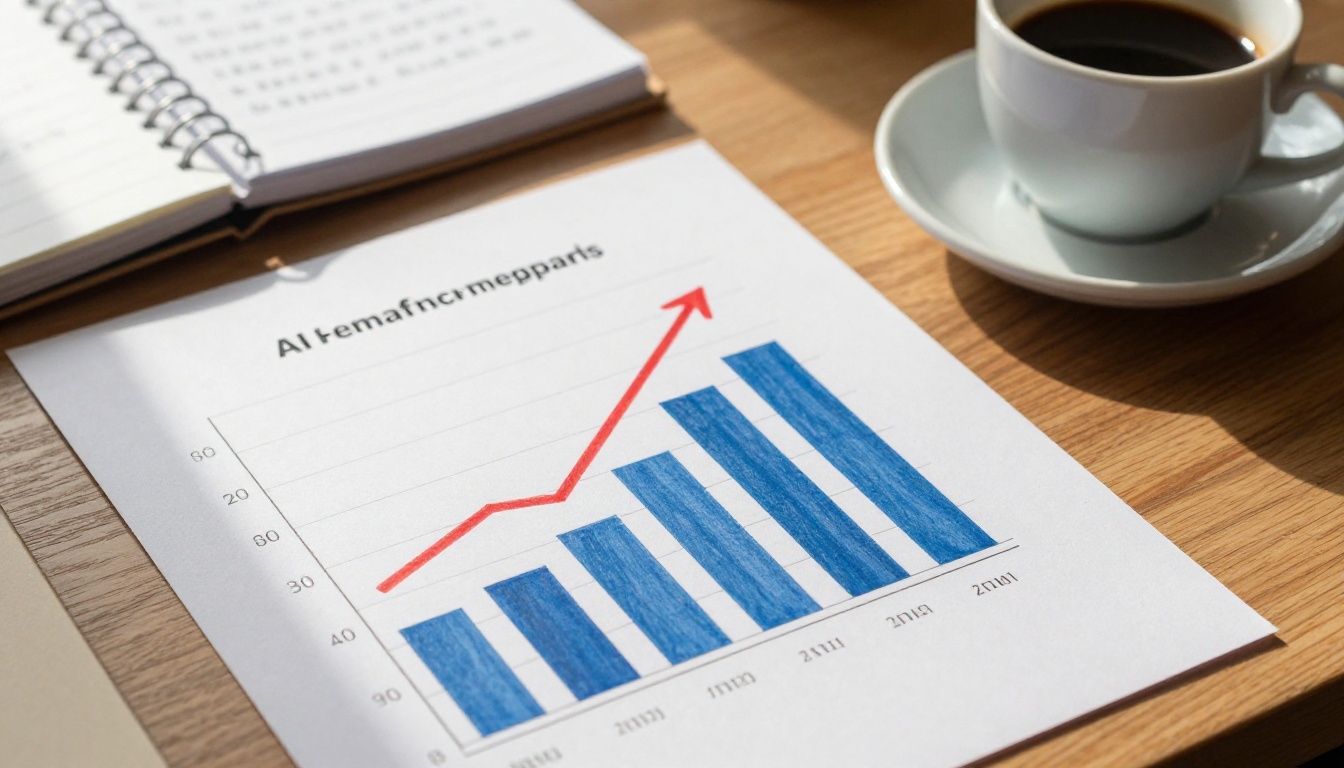
This does not mean the models are not improving. It means the jump from 60% to 95% on a specific test overstates the real-world improvement. The actual progress is substantial, but not always as dramatic as leaderboard numbers suggest. The response from the research community has been to create harder, more dynamic benchmarks: tasks that include solving novel math problems specifically excluded from training data, writing working code that passes unseen test suites, or answering questions about events after training cutoffs.
What Real Progress Actually Looks Like
Real progress is best measured through blind evaluations where humans compare outputs without knowing which model produced them. These tests consistently show that the best models today outperform 2023 models across nearly every task category. Writing quality, reasoning depth, coding accuracy, and factual accuracy have all improved materially.
💡 Kimi K2 Instruct from Moonshot AI and Kimi K2 Thinking represent an emerging class of models that perform exceptionally well on code generation and multi-step reasoning, scoring near the top of blind evaluations in 2025 and 2026.
The honest summary: AI models really are improving monthly. The degree varies by task. Reasoning and coding have improved the most. General conversation has improved moderately. Genuinely novel scientific discovery remains the hardest problem.
Who Is Driving the Monthly Race
The Current Leaderboard Reality
The AI model landscape in 2027 is no longer dominated by a single company. It is a genuine multi-horse race with real competition across every capability dimension.
No single model wins every category. Each lab optimizes for different strengths, and each release pushes the others to respond. This competitive pressure is itself a major driver of the monthly improvement pace.
The infrastructure cost underlying all of this is staggering. A single top-tier training run costs tens of millions of dollars. Data centers are being built at a pace not seen since the internet infrastructure boom. Every company knows that if they slow down, a competitor captures the lead and the market. That awareness is structural, baked into every roadmap and every quarterly budget.
What This Means for AI Image Generation
Better Models Mean Better Visuals
The same dynamics driving LLM improvement apply to image generation models. Better training data, improved architectures, and faster iteration cycles have transformed what is possible in AI imagery.

Two years ago, AI image models struggled with hands, text within images, and complex compositions. Today, the best text-to-image models produce photorealistic output that requires expert examination to distinguish from real photography. The improvement has followed the same pattern as LLMs: more compute, better training data including synthetically generated caption data, and architectural refinements like improved diffusion sampling and consistency training.
The cadence is monthly here too. Models release new checkpoints, fine-tuned variants emerge from the community, and the baseline capability keeps rising. If you have not tried current-generation image models in the last few months, the output quality will likely surprise you.
Key improvements that have compounded over time:
- Prompt adherence: Models now follow detailed instructions with high fidelity
- Photorealism: Skin texture, lighting physics, and material properties are dramatically more accurate
- Consistency: Characters and scenes stay coherent across multiple generations
- Resolution: Native 8K output is increasingly common without post-processing
- Speed: Generation times that took minutes now take seconds
Create Something With These Models Right Now
You do not need to wait for the next monthly release to benefit from today's best AI capabilities. Picasso IA gives you direct access to the models driving this progress, including top-tier LLMs for text and reasoning, plus a full suite of text-to-image models capable of producing the photorealistic, high-fidelity imagery that was impossible just 18 months ago.

The platform brings together 91 text-to-image models, 87 video generation models, super-resolution tools for upscaling your work, and the full lineup of leading LLMs in one place. You can chat with GPT 5, reason through complex problems with DeepSeek R1, generate images with the current best text-to-image models, or run your existing images through super-resolution to produce print-ready outputs.
The monthly improvement cycle means the platform gets more capable every time a new checkpoint drops. The models you use today will be better next month. That is not a promise. It is a pattern backed by three years of consistent evidence, driven by the compute flywheel, synthetic data loops, open source collaboration, and the competitive pressure of a race where no one can afford to stand still.
Pick a project. Open Picasso IA. See what the current generation of AI actually produces when you put it to work.


