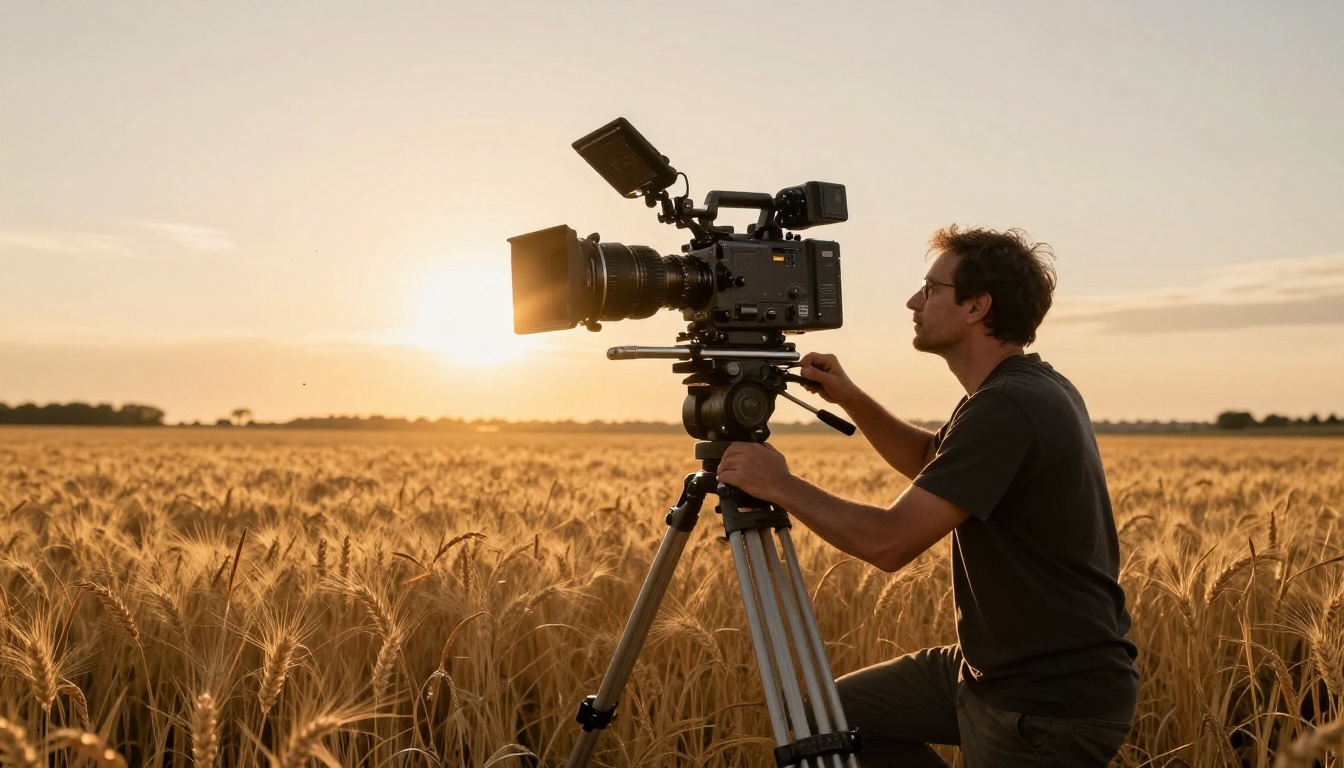
Something shifted in the past 24 months, and it happened without a formal announcement. AI-generated video crossed a threshold that years of incremental progress could not crack on its own. Where it once produced footage that any viewer could identify as synthetic within seconds, today's models produce clips that require deliberate, frame-by-frame scrutiny to identify as machine-made. This is not normal progress. It is a phase transition driven by several simultaneous technical breakthroughs that compounded each other's effect.

The Quality Jump Nobody Expected
It Happened Fast
The speed of the change is worth sitting with. In early 2023, AI video had a signature look: faces that subtly shifted between frames, background textures that shimmered without cause, physics that defied gravity in small but obvious ways. These were not minor artifacts. They were the defining visual signature of the medium.
Then came a wave of model releases that rewrote the baseline. Sora 2 from OpenAI demonstrated cinematic coherence that surprised researchers who had been watching the field closely. Google's Veo 2 and then Veo 3 produced footage with environmental physics that held up to close scrutiny. Kling v2.6 from Kwai set new benchmarks for human movement fidelity. And Seedance 1.5 Pro from ByteDance added synchronized native audio to photorealistic output, making clips feel complete in a way that silent generation never did.
The question is not whether this leap happened. It is why.
What "Real" Actually Means to a Camera
Before going further, it helps to clarify what photorealism requires at a technical level. A real camera does not simply capture reality. It captures light as it physically behaves through a specific lens, onto a specific sensor, under specific conditions. This introduces natural vignetting, lens distortion, chromatic aberration at color edges, motion blur proportional to shutter speed, depth-of-field falloff driven by aperture, and the characteristic grain of a sensor at a given ISO setting.
Beyond the camera itself, the real world has temporal continuity: an object in frame 23 is physically identical to the same object in frame 24, with changes in position, lighting, and shadow that obey the laws of physics.
AI models do not simulate any of this directly. They have to absorb the statistical patterns of all of it from training data. For years, that absorption was incomplete in precisely the ways that made AI video obviously synthetic. What changed is that the architecture for how that absorption happens was redesigned from scratch.
The Engine Inside: Diffusion Models
From Images to Video Frames
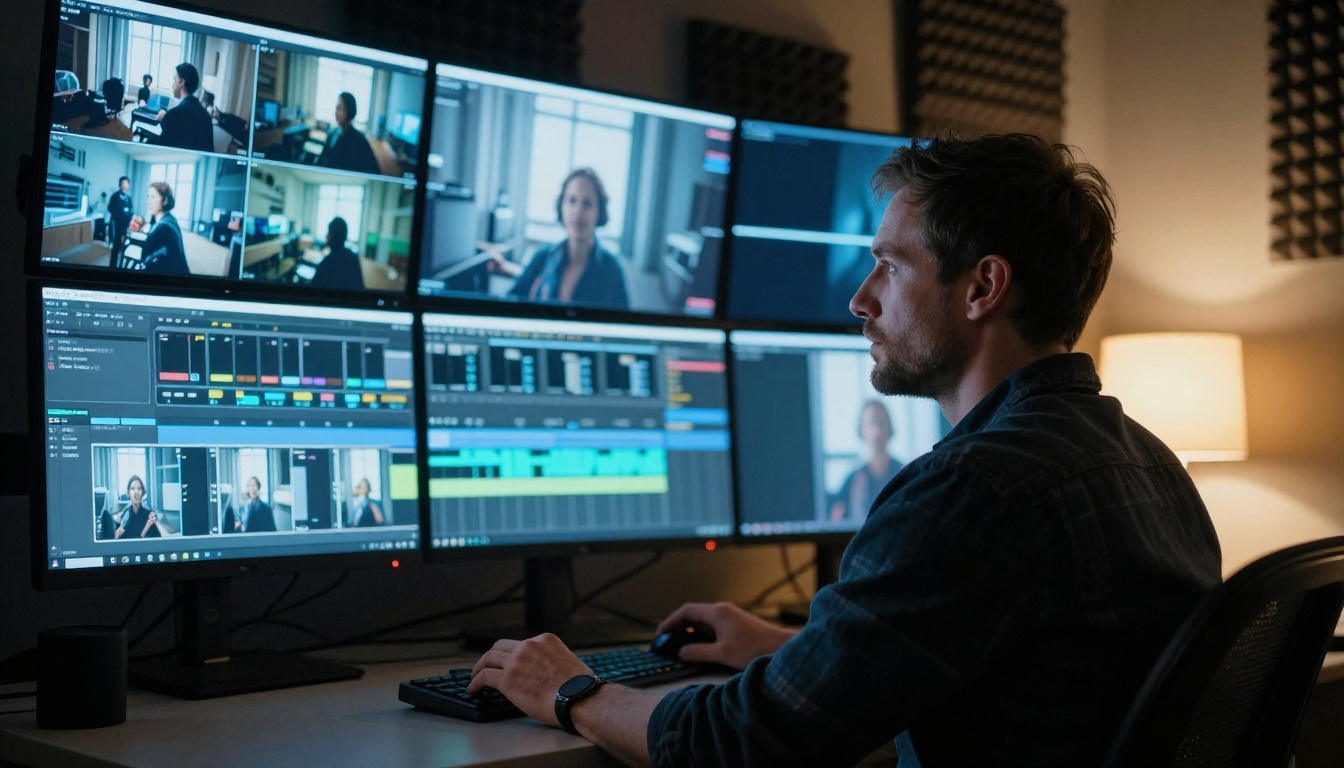
The architecture driving modern AI video is the latent diffusion model, the same class of model behind photorealistic AI image generation. The principle is elegant: the model is trained to remove noise from a structured representation, working backward from static randomness toward coherent, meaningful content. Given a text prompt as guidance, it produces an image that matches the described content.
For images, this process is relatively contained. For video, the complexity multiplies by an order of magnitude. You are not generating one image. You are generating a sequence of images that must share physical continuity. The same chair in frame 1 and frame 47 must be the same chair, with the same texture, the same material response to light, the same geometric solidity.
Early video diffusion models attempted to solve this by generating frames independently and interpolating between them. The result was always visible: a temporal smearing where motion felt assembled rather than continuous.
The architectural change that broke through this ceiling was the adoption of spatiotemporal attention, sometimes called 3D attention. Rather than attending to spatial relationships within a single frame, these mechanisms allow the model to simultaneously consider relationships across frames. When generating a specific pixel in frame 23, the model consults not just the surrounding pixels in frame 23 but the corresponding pixels in frames 20, 21, 22, 24, and 25. This produces a form of short-term physical memory that prior architectures simply did not have.
Why Noise Becomes Reality
The denoising process in diffusion models is more than a cleanup operation. It is where the model's internalized representation of physical reality gets applied. At each step of the denoising process, the model is effectively asking: given what I know about how the world looks, what should this noisy patch resolve to?
What makes the latest generation of models different is the scale and quality of what they know. Models trained on hundreds of millions of high-resolution video clips, with careful curation to remove low-quality or physically inconsistent footage, develop nuanced statistical models of physical reality. They have seen enough examples of how afternoon light falls across a concrete surface to reproduce it without being explicitly told what concrete looks like or how sunlight behaves.
💡 Photorealism in models like Wan 2.7 T2V is not a filter applied over less realistic output. It is the consequence of a model that has internalized the second-order statistics of real footage at a level that earlier models could not reach.
The Hardest Problem: Frame Consistency
Why Old AI Video Flickered
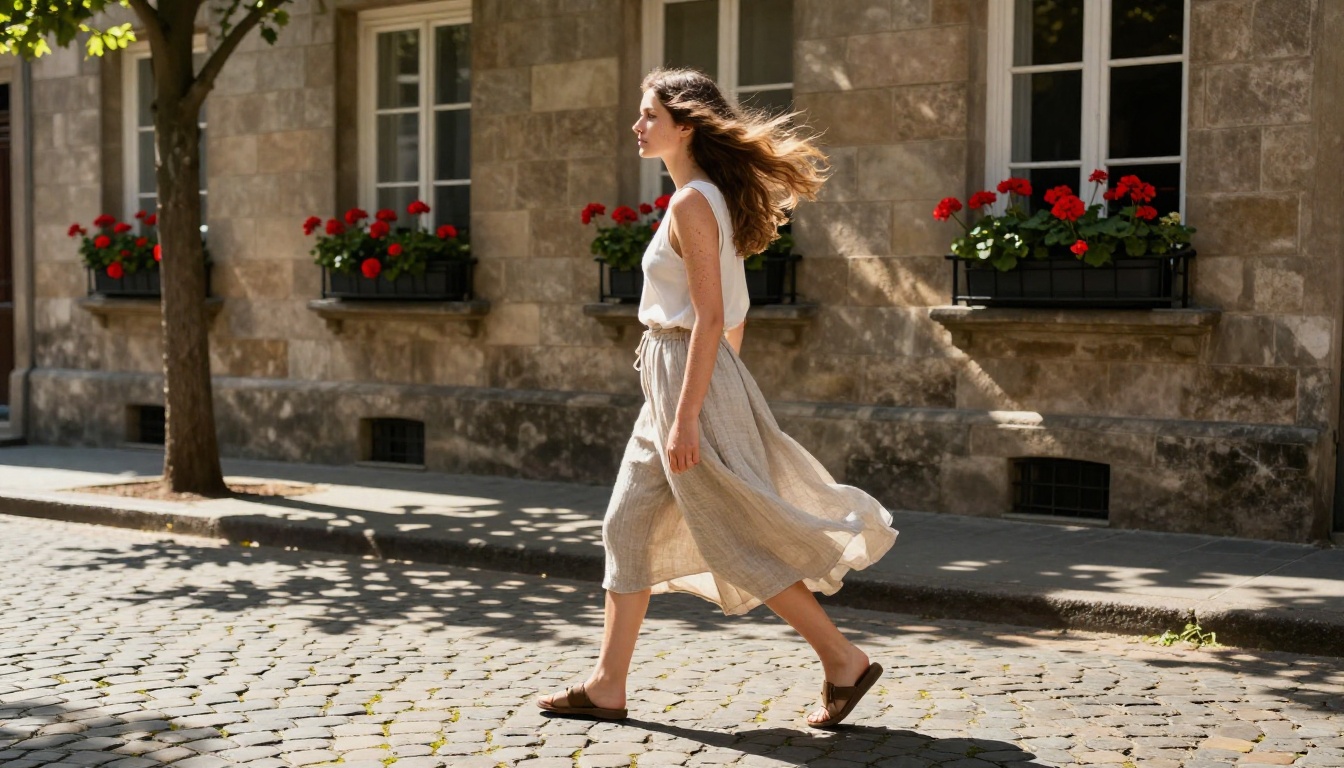
Temporal inconsistency was the most diagnostic failure mode of early AI video. Watch archived examples from 2022 and the pattern is immediately visible: a face that subtly changes between frames, a background that shifts slightly without cause, a shadow that appears and disappears with no relationship to any light source.
Each frame was individually plausible. The sequence was not. The model had no mechanism to enforce consistency across time, so every frame was an independent probability draw from a distribution, and those distributions did not perfectly overlap.
This produced the flickering that became synonymous with AI video. More observant viewers sometimes described it as "the oil painting effect": the impression that the subject was being continually repainted rather than filmed.
How Temporal Attention Fixed It
The solution was not simply adding more frames to a context window. It required rethinking how the model's internal representations are organized across time.
Modern models like Hailuo 02 and Pixverse v5 maintain a latent representation of the entire video sequence, not individual frames. When generating frame 47, the model does not start from scratch. It updates an existing representation that already encodes the physical state of the scene from all prior frames. This is fundamentally different from frame-by-frame generation, and the difference shows immediately in the output.
| Problem | Old Approach | Modern Solution |
|---|
| Flickering faces | Independent frame generation | Temporal attention windows |
| Warping backgrounds | No spatial anchoring | Latent spatial anchoring |
| Inconsistent lighting | No light model | Physics-conditioned generation |
| Changing object shapes | No 3D geometry model | Implicit 3D representations |
| Unnatural motion | Simple frame interpolation | Flow-based motion priors |
Motion That Feels Human
Physics Under the Hood
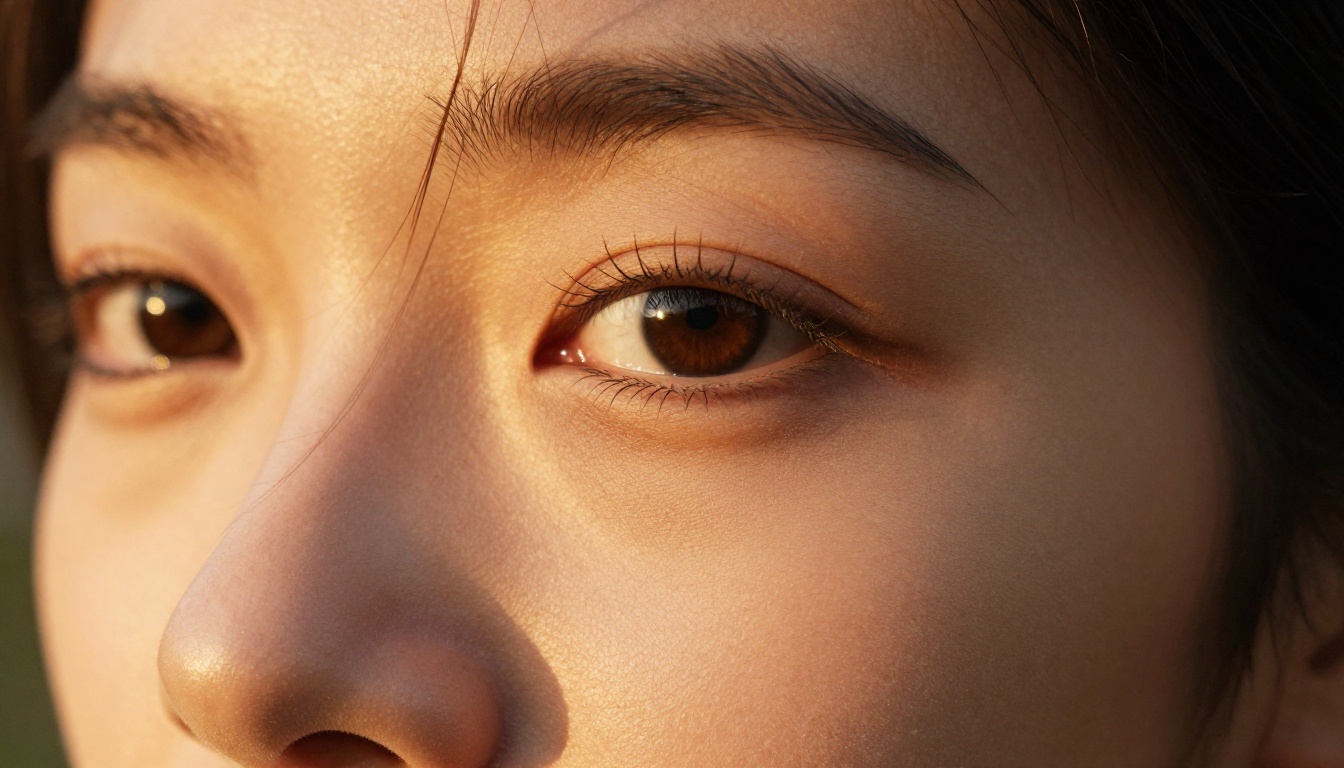
Of all the failure modes in AI video, nothing betrayed synthetic origin more consistently than motion. Real movement has weight, momentum, and inertia. A person sitting down causes their clothing to compress and shift with specific physics. Hair moving in wind separates into individual strands with independent trajectories. Liquid surfaces form specific turbulence patterns based on viscosity and velocity.
Early models produced motion that was plausible at a glance and unconvincing on inspection. The movement patterns they reproduced were statistical averages of observed movement, not physically governed sequences. The result was motion that looked slightly off in ways that viewers registered intuitively without being able to name precisely.
The latest generation incorporates what AI researchers call implicit physics priors: deeply embedded representations of physical law that the model builds from training on footage of the physical world. The model does not run a physics engine. It reproduces the statistical signatures of physically valid motion because it has absorbed enough real footage to internalize those signatures.
This is why Kling v3 Video handles ocean waves convincingly, why LTX 2 Pro produces fabric that folds with appropriate stiffness, and why Wan 2.7 I2V can animate a still portrait with movement that carries the specific weight of a real body.
Natural Imperfection as a Signal
This insight is counterintuitive but critical: imperfection is information. Real footage is never perfect. There is always camera shake, focus breathing, natural motion blur, grain, the micro-jitter of a handheld camera, optical aberrations at lens edges. These "flaws" are not noise to be removed. They are the visual signature of a physical camera recording a physical world.
When early AI models produced footage that was too clean, too stable, too geometrically perfect, human viewers registered discomfort. The visual processing system, calibrated by a lifetime of watching real footage, read the absence of natural imperfection as a signal that something was wrong.
Modern models incorporate controlled, physically realistic imperfections: the specific grain pattern of a high-ISO sensor, the natural focus drift of a zoom lens, the characteristic movement of handheld footage. These are not artifacts. They are authenticity signals that the best models have absorbed from training on real cinematography.

The Data That Changed Everything
Scale Changes Quality
The widely cited relationship between data scale and model performance is real, but scale alone does not explain the quality jump in AI video realism. What changed alongside scale was curation and resolution.
Models trained on web-scraped video at 480p absorb the visual statistics of low-quality internet content: compression artifacts, poor color grading, unstable camera work. Models trained on curated libraries of professionally shot 4K footage absorb something categorically different: the visual language of controlled lighting, deliberate camera movement, and optically accurate color science.
The other data-side change was the growth of labeled temporal datasets: video annotated with information about camera type, focal length, lighting conditions, and physical properties of subjects. This labeling allows training signals that directly supervise the model's reproduction of the physical phenomena that determine how real footage looks.
- Resolution matters: 4K training data encodes fine-grained texture that 480p cannot
- Curation matters: Cinematically shot footage teaches camera physics, not just visual statistics
- Labels matter: Annotated physical properties provide direct supervision for the hardest phenomena to reproduce
- Diversity matters: Wide coverage of lighting conditions, environments, and motion types produces robust generalization
💡 The realism of Seedance 2.0 is a product of both architecture and data. Neither alone would have produced the quality gap visible between it and models from two years prior. Both had to improve simultaneously.
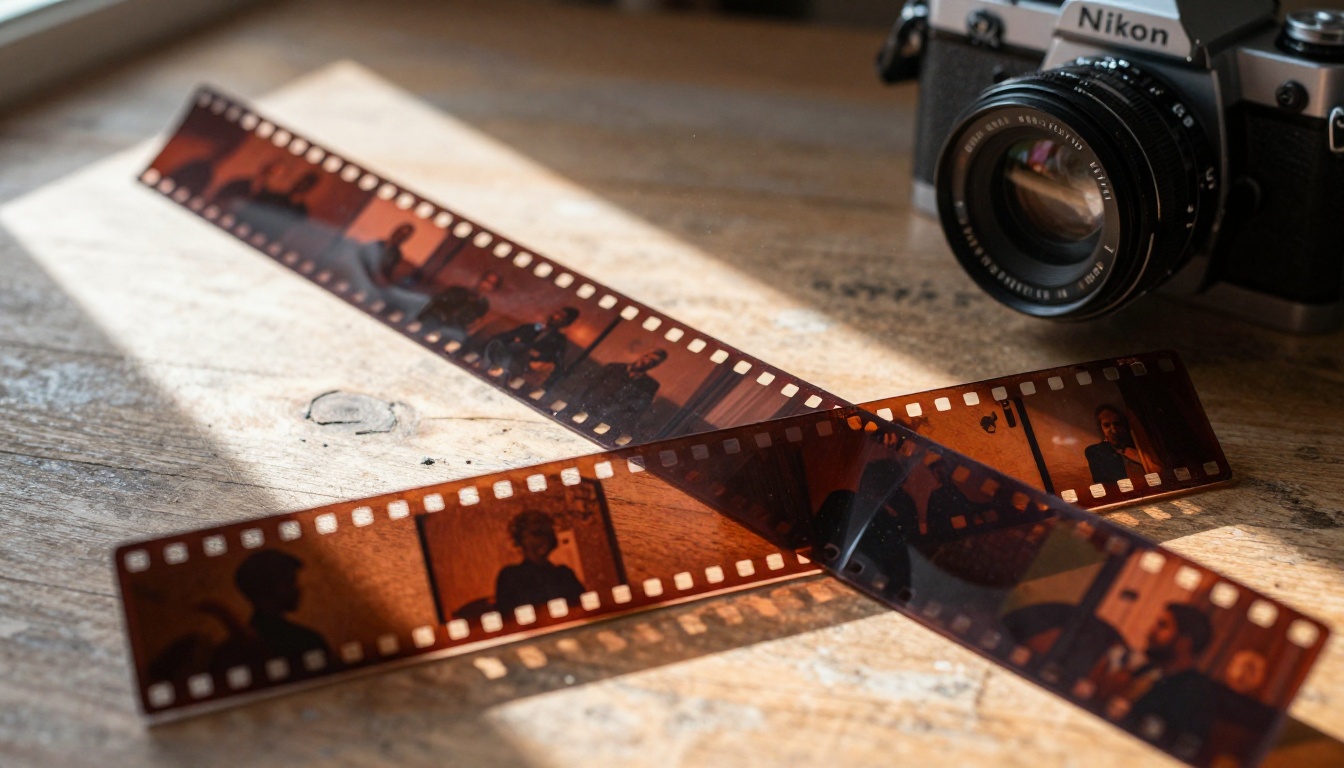
Top Models Producing Hyper-Real Video Right Now
Google Veo 3 and Veo 3.1
Veo 3 is Google's most capable video model and one of the most photorealistic publicly available systems. It generates 1080p video with native audio and demonstrates exceptional temporal consistency over clips up to 8 seconds. Veo 3.1 improves on generation speed and motion coherence, while Veo 3 Fast delivers comparable quality at reduced generation time for production workflows that require rapid iteration. Veo 2 remains a strong option for users prioritizing environmental physics.
Kling v3 and v2.6
Kling v3 Video from Kwai delivers cinematic-grade output with some of the strongest human movement fidelity available. Kling v2.6 sits just below it in the lineup and remains excellent for portrait and close-subject work. For users who need explicit control over motion paths, Kling v3 Motion Control and Kling v2.6 Motion Control allow fine-grained direction of how subjects and cameras move within the generated scene.
Wan 2.7, Sora 2, and Hailuo
Wan 2.7 T2V from Wan Video produces 1080p with strong physics handling and consistent environmental detail. Sora 2 sets standards for narrative coherence in longer clips. Hailuo 02 from Minimax has become a production staple for fast, high-quality output, with Hailuo 2.3 pushing environmental realism further with every iteration.
LTX 2 Pro and Seedance 1.5 Pro
LTX 2 Pro from Lightricks specializes in native 4K video with exceptional surface texture rendering, making it the go-to choice when fine-grained detail is the priority. Seedance 1.5 Pro generates photorealistic video with synchronized audio from a single text prompt, making it one of the most complete and production-ready outputs in the current generation. LTX 2.3 Pro takes the 4K output further with tighter motion control and reduced artifacts at high detail.
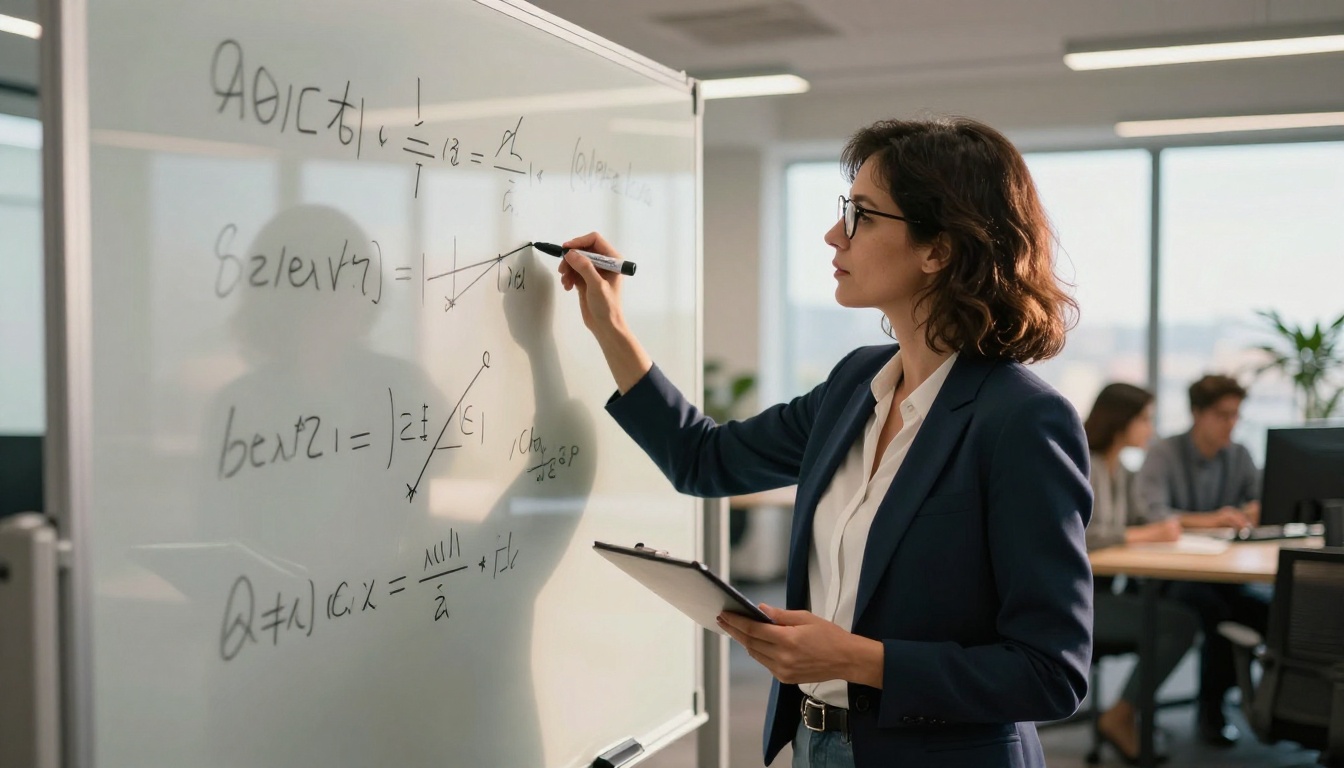
How to Get Photorealistic Output Yourself
Prompts That Signal Real Cameras
The single most common mistake when prompting video models is vagueness. "A person walking in a city" gives the model too much latitude. It fills the gaps with statistical averages, and averages do not produce realism.
Photorealistic prompts need cinematographic specificity. Compare these two approaches:
Weak: "A woman walking through a city at night"
Strong: "A woman in her late 30s walking through a rain-slicked London street at 11pm, sodium vapor streetlights reflecting in shallow puddles on wet asphalt, her dark wool coat slightly damp with fine rain, slight natural handheld camera movement, 85mm equivalent lens, shallow depth of field with background bokeh from shop windows, visible breath condensation in cold air, photorealistic, cinematic 1080p"
The second prompt encodes physical phenomena. The model has absorbed enough real footage of these conditions to reproduce them with fidelity. The first leaves those variables to chance.
Use this structure for consistently realistic outputs:
- Subject and action: Who or what, doing what, with specific physical detail
- Environment: Location, time of day, weather, surface textures
- Camera specification: Lens equivalent, movement type (handheld, tripod, tracking), shooting distance
- Lighting: Direction, quality (soft, hard, diffused), color temperature
- Atmosphere: Grain, haze, moisture, temperature cues, organic imperfections
Model Selection by Subject
Different models have different strengths across content categories:
| Content Type | Recommended Model | Reason |
|---|
| Human subjects, portraits | Kling v3 Video | Strongest human motion fidelity |
| Natural environments | Veo 3 | Best environmental physics |
| Fast output, 1080p | Hailuo 02 Fast | Speed with minimal quality trade-off |
| 4K detail work | LTX 2 Pro | Native 4K texture rendering |
| Animate a still photo | Wan 2.7 I2V | Image-to-video with strong coherence |
| Cinematic clips with audio | Seedance 1.5 Pro | Native audio synchronization |
The Image-to-Video Workflow
For maximum control over photorealism, the most reliable method is starting with a still image. Generate your scene as a high-quality still first, then use image-to-video models like Wan 2.7 I2V or Kling v2.6 Motion Control to animate it. This gives you full visual control over the aesthetic before committing to motion generation.
💡 When using Ray from Luma or Pixverse v5, shorter clips consistently maintain temporal coherence better than long ones. Four to six seconds at high quality tends to outperform eight seconds at equivalent settings.

The Gap Is Closing Fast
The boundary between real and AI-generated video is thinner right now than at any previous point, and every major model release narrows it further. The technical foundations that drove this leap, spatiotemporal attention, implicit physics priors, high-resolution curated training data, and billion-parameter denoising networks, are all still improving on their own trajectories. The models that represent the frontier today will likely serve as the baseline within 12 to 18 months.
The practical implication is that the window to build real fluency with these tools, while they are still novel enough to confer a creative advantage, is right now. The filmmakers, marketers, and content creators who put in the time to study what these models respond to, and to develop the prompting specificity that separates great output from average output, will be significantly better positioned as AI video becomes a standard production tool.
Every model discussed in this article is available directly on Picasso IA, with no API setup or local installation required. Pick the model that matches your subject matter, write a prompt that encodes physical specificity, and see what the current state of the art actually looks like. The output will likely be more convincing than you expect, because that is precisely what just happened.