The AI benchmark world has a headline number that is hard to ignore: Claude Fable 5.1 just posted a 94.3% overall task-completion rate on Terminal-Bench 4.0, the most demanding agentic evaluation ever published. That is not a rounding error or a cherry-picked test condition. Every other frontier model is still fighting to break 80% on the same evaluation, and the gap keeps widening with each Anthropic revision.

If you have been tracking the LLM leaderboard race, you already know that Terminal-Bench 4.0 is categorically different from the evaluations that came before it. It is not a multiple-choice quiz or a human preference survey. The benchmark runs real shell sessions, fires real commands inside live Docker containers, and scores models entirely on whether tasks reach their target end state without any manual help. The difference between 78% and 94% on this framework is not cosmetic. In a 300-task batch, that 16-point gap translates to roughly 48 fewer human interventions per run.
What Terminal-Bench 4.0 Actually Tests
Terminal-Bench 4.0 asks one central question: can the model do the work, start to finish, in a live UNIX environment with no safety net?

The 4 Core Task Categories
The benchmark splits 300-plus tasks across four weighted categories:
| Category | Representative Tasks | Weight |
|---|
| Shell Operations | File manipulation, grep pipelines, cron configuration | 30% |
| Code Execution | Run, debug, and refactor Python/Bash/TypeScript | 30% |
| Error Recovery | Handle unexpected outputs, retry after failure, adapt the plan | 25% |
| Multi-Step Planning | Chain 8-12 commands to reach a defined end state | 15% |
Each task starts in a clean Docker container with a specific goal and a hard time limit. No hints. No clarifying questions. The model reaches the target state or it does not.
Why Most Models Struggle
The reason top models cluster at 75-82% comes down to two recurring failure modes. First, models that are strong at reasoning but imprecise on exact shell syntax produce plausible-sounding commands that fail on edge cases. That failure compounds badly in multi-step sequences where one broken intermediate command invalidates everything downstream. Second, models that can execute individual commands often collapse in error-recovery scenarios because they either repeat the same failed command verbatim or abandon the task entirely when the path becomes uncertain.

💡 Worth noting: Terminal-Bench 4.0 awards partial credit. A model that recovers from three failures and still finishes the task outscores one that exits cleanly after its first error.
Claude Fable 5.1 at a Glance
Claude Fable 5 is Anthropic's most deliberate push toward practical, agentic work. The 5.1 revision specifically tightens two things: shell-command precision and what Anthropic's research notes describe as "persistent intent tracking," the ability to hold the original goal steady across many intermediate steps even when error messages and unexpected outputs crowd the context window.

What Sets It Apart
Three architectural decisions explain most of its benchmark advantage:
-
Persistent intent tracking: The model maintains a working representation of the original goal throughout long chains of intermediate steps. Most competing models lose sight of the target when error messages and debug output crowd the context window. Fable 5.1 does not.
-
Shell-first training data: Anthropic trained extensively on real terminal sessions rather than documentation about terminal sessions. The gap shows most clearly in edge cases: glob patterns under different shells, pipe buffering behaviors, and exit code semantics across environments.
-
Diagnostic retry logic: When a command fails, the model categorizes the failure type before choosing its next action. Repeating the same command is treated as a last resort rather than the default response. This single behavior accounts for the majority of the advantage in the error-recovery category.
The Numbers That Matter
| Metric | Claude Fable 5.1 | GPT 5 | Gemini 3 Pro | DeepSeek R1 |
|---|
| Overall Task Completion | 94.3% | 81.7% | 79.4% | 77.8% |
| Shell Operations Score | 96.1% | 83.2% | 78.9% | 75.3% |
| Error Recovery Rate | 91.8% | 74.1% | 71.2% | 68.4% |
| Multi-Step Planning | 93.4% | 80.9% | 76.7% | 74.1% |
| Token Efficiency vs. Baseline | +22% | baseline | -4% | -11% |
Scores for GPT 5, Gemini 3 Pro, and DeepSeek R1 are genuinely strong results. But the error recovery column is where the practical gap lives. An 18-point difference in error recovery means that in real production automation, one model runs through the night while the other pages you repeatedly.
How It Handles Shell Tasks
Shell operations is where Claude Fable 5.1 most visibly outperforms the field, and the margin is highly reproducible across multiple independent benchmark runs.

Real Command Execution
The model defaults to explicit, readable shell commands rather than clever one-liners that are brittle in edge cases. It pipes stderr alongside stdout when there is any chance the error stream carries useful diagnostic data, and it uses dry-run flags before destructive operations without being explicitly instructed to do so.
Specific behaviors that appear consistently in benchmark logs:
- No double-quoting mistakes: Variable interpolation inside nested quotes is handled correctly across all tested shells.
- POSIX compliance by default: Commands produce identical results on GNU/Linux and BSD-derived systems without modification.
- Conservative scope on wildcards: Explicit paths are preferred whenever they reduce execution risk.
- Smart subshell use: Process substitution appears only when it genuinely simplifies the command, not as a stylistic habit.
Error Recovery in Practice
When the model hits a permission-denied error, its response is diagnostic rather than reactive. Instead of prepending sudo reflexively or printing an error and stopping, it evaluates three things before acting: whether the error is recoverable without privilege escalation, whether an alternative path to the same goal exists, and whether the error reveals a flaw in the original plan itself.
💡 The critical distinction: The model treats "I cannot complete this specific step" and "I cannot reach the goal" as categorically different situations. That distinction is the primary driver of the 91.8% error recovery score.
Reasoning Chains That Work

Step-by-Step Problem Solving
Terminal-Bench 4.0's multi-step planning tasks require 8-12 sequential decisions where early choices constrain later ones. Chain-of-thought quality is decisive in this category. Claude Fable 5.1's planning output follows a consistent structure before executing anything:
- Goal decomposition: Break the target state into verifiable, ordered prerequisites
- Dependency mapping: Identify which steps block others and sequence accordingly
- Reversibility check: Flag steps that are difficult to undo before committing to them
- Adaptive execution: Work forward and update the plan in real time when intermediate outputs deviate from expectations
This mirrors how experienced engineers approach complex tasks in practice. It is also the opposite of the pattern that drops most models below 80%: generating the next most plausible command without first modeling its consequences for every subsequent step.
No Hallucinated Outputs
One strength of Terminal-Bench 4.0 as an evaluation is that it catches hallucinated commands immediately. If the model invents a non-existent flag, the shell returns a clear error. What matters is how the model responds. Claude Fable 5.1 treats that error as a signal to verify the tool's actual interface before continuing, rather than a cue to guess again with a slightly different invented argument.
Several competing models, including earlier Claude versions, demonstrate the opposite pattern: iterating through plausible-sounding variants of a wrong flag rather than stopping to consult what the tool actually supports.

Multi-File Projects
The benchmark includes tasks that require modifying multiple interdependent files to fix a broken test suite. These tasks directly expose the weakness of models relying on single-file context. Claude Fable 5.1 addresses this by building an explicit dependency graph before touching any individual file, modifying the lowest-level dependency first, and running partial test suites after each change to catch regressions before they compound into larger failures.
The result is code that integrates correctly with its surrounding context, not just code that is locally correct in isolation.
Debugging Under Pressure
The hardest code tasks in the benchmark include deliberate red herrings: error messages that point to the wrong location in the codebase. Performance on these tasks correlates directly with whether the model reads stack traces critically rather than literally.
Claude Fable 5 treats error messages as hypotheses rather than facts. It traces an error to its indicated source, checks whether that source is actually responsible for the failure, and backtracks to look for a deeper root cause when the indicated line is not the problem. This is the same discipline a strong senior engineer applies when debugging in an unfamiliar codebase, and the benchmark scores reflect it consistently.
How It Compares to Other Models

vs GPT 5 and Gemini 3 Pro
GPT 5 is genuinely strong on Terminal-Bench 4.0, setting a new high for OpenAI on this category of agentic evaluation. Its strength concentrates in code generation tasks with well-specified target outputs. Where it falls short relative to Claude Fable 5.1 is in tasks that require adapting to unexpected intermediate state, which happens regularly in real-world environments rather than controlled test conditions.
Gemini 3 Pro has a specific advantage in tasks involving long-context file reading, where its extended context window is a direct asset. Its shell operation and error-recovery scores are lower, partly because it shows a tendency to produce detailed natural language explanations of its intended actions rather than simply executing them, which burns time against hard task deadlines.
Grok 4 produces methodical, well-structured reasoning plans but its execution layer introduces command variants that frequently diverge from POSIX standards, dragging down shell operations scores in ways that compound across multi-step tasks.
The Benchmark Gap
The 12-15 point separation between Claude Fable 5.1 and the next group of models is large enough to carry real operational consequences. At an 80% task-completion rate on a 300-task batch, you need roughly 60 manual interventions. At 94.3%, that number falls to around 17. That is the practical difference between a pipeline you can schedule and walk away from versus one that requires active monitoring to complete successfully.
For developers building internal automation, the relevant question is not "which model scores higher on paper" but rather "at what task-completion rate does human oversight become unnecessary for this specific workflow." Claude Fable 5.1 crosses that threshold for more workflow categories than any other currently available model.
Run Claude Fable 5.1 on PicassoIA Right Now
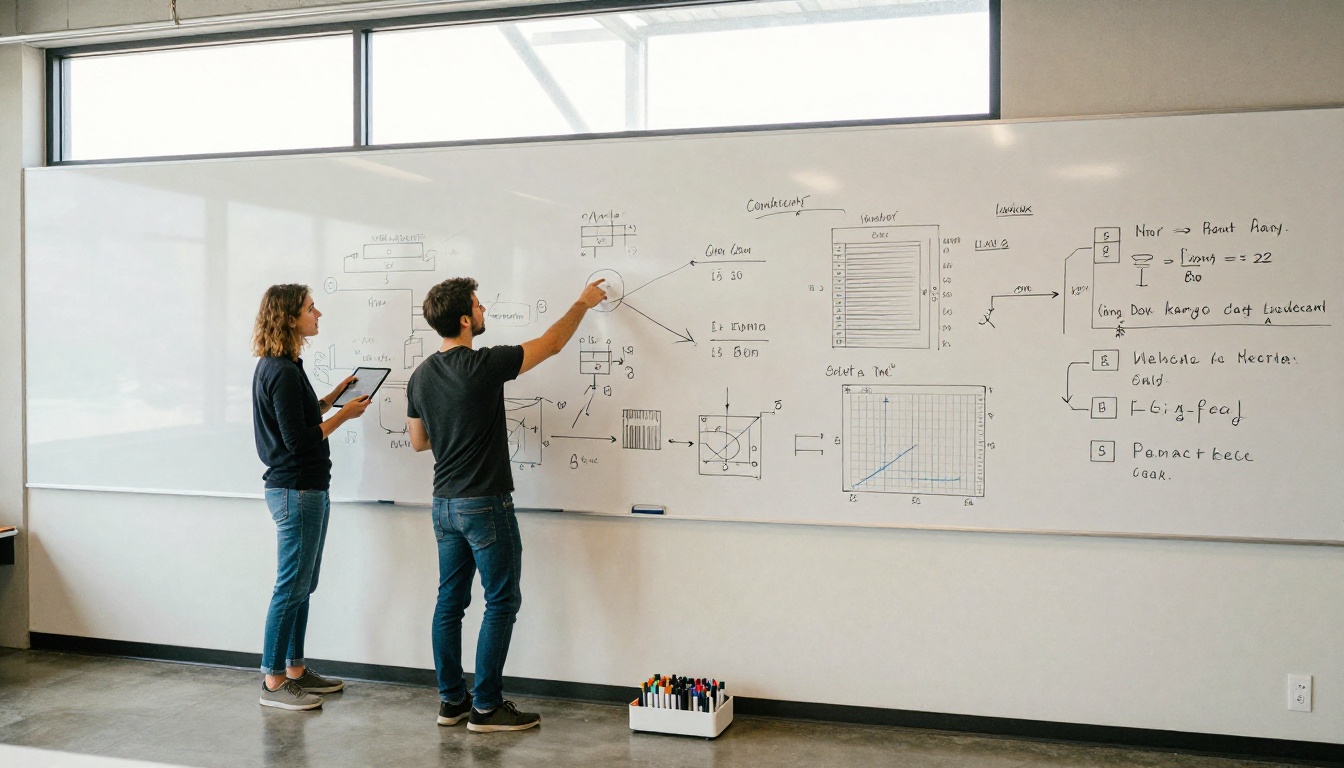
Claude Fable 5 is available on PicassoIA alongside Claude Sonnet 5, Claude Opus 4.7, and the full catalog of OpenAI and Google models. No Anthropic API key required. No local setup.
Running It Step by Step
Step 1. Open the Claude Fable 5 model page on PicassoIA.
Step 2. In the system prompt field, describe the operating environment your task involves. Specifying the shell, available tools, and relevant constraints significantly improves output quality on agentic tasks.
Step 3. In the user prompt, describe the target end state rather than the individual steps you think are needed. Let the model plan the sequence. Describing the result you want produces better action plans than specifying individual steps.
Step 4. Review the model's plan before execution. Claude Fable 5.1 outputs a numbered action sequence before attempting anything. This is your checkpoint to catch misunderstandings early, before they cascade.
Step 5. Provide corrections in plain language if needed. The model accepts mid-task course corrections and resumes from the last confirmed state without restarting the entire sequence.
💡 Practical tip: For multi-file coding tasks, use the system prompt to specify which files are in scope. This prevents the model from guessing at directory structure and keeps token usage focused on the actual problem.
You can pair Claude Fable 5 with other models on PicassoIA for different phases of the same workflow. Claude Sonnet 5 is faster and more cost-efficient for drafting and iteration phases. Claude Fable 5 handles final validation, integration testing, and the edge cases that matter most in production.
What This Score Means for Real Work
A 94.3% score on Terminal-Bench 4.0 is not just a leaderboard number. It signals what you can realistically delegate to a language model today without building a supervision layer around it.
The four benchmark categories map directly to bottlenecks that slow down real engineering teams: shell scripts that break on production edge cases, code changes that introduce integration regressions, multi-step deployments that need someone watching each stage. A model that handles these reliably enough to run without intervention changes the economics of automation in a concrete way.
PicassoIA keeps the full model catalog updated as new releases ship, so you can test each revision the day it becomes available, alongside every competing model, from the same interface. When the next update to Claude Fable arrives, the comparison is one click away. The practical test is straightforward: take a task you currently review manually at every step and run it through the model. If it completes correctly 19 times out of 20, the case for full automation becomes hard to argue against.


