The video creation landscape has undergone a seismic shift in 2027. What was once the exclusive domain of Hollywood studios and corporate marketing departments with six-figure budgets has become accessible to anyone with a laptop and an idea. The surge in AI video generator adoption isn't just another tech trend—it's a fundamental reimagining of how moving images are created, distributed, and consumed.
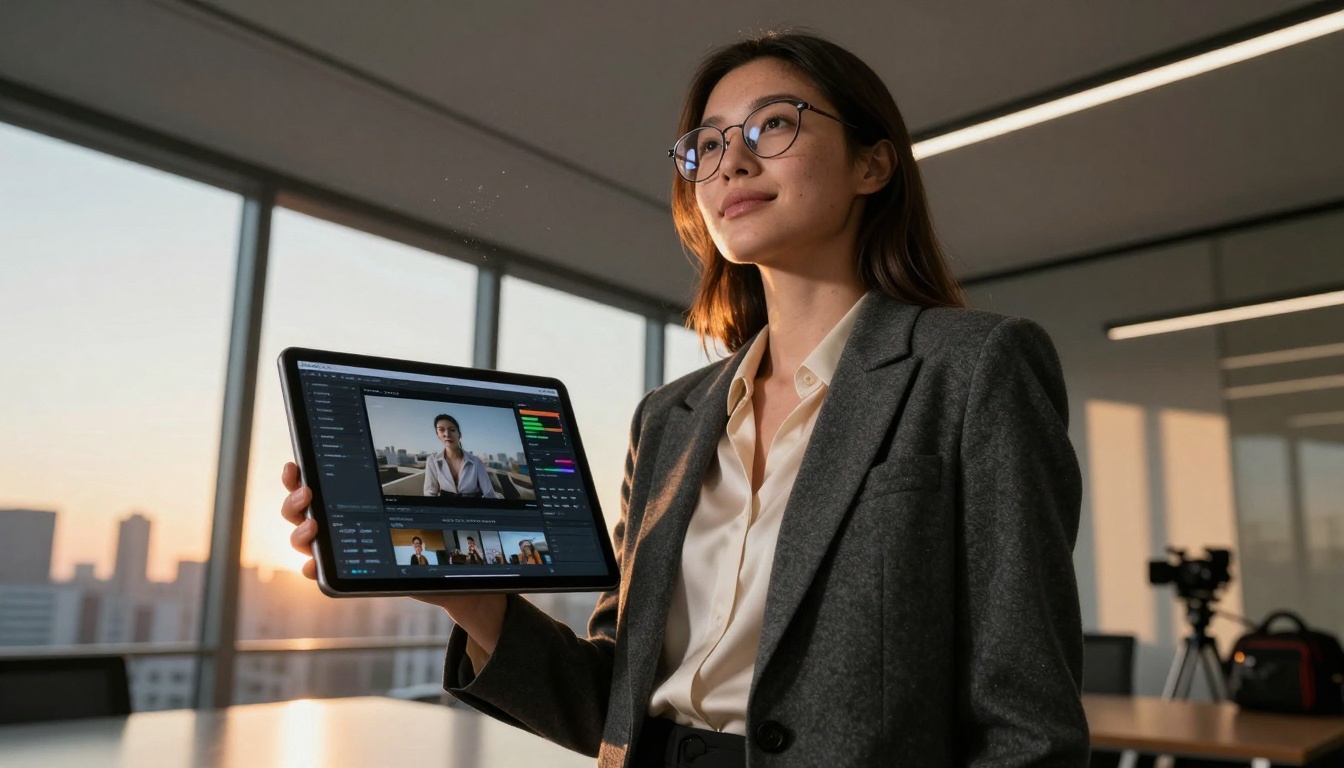
Extreme low-angle shot showing the efficiency gains from AI video generation
The 2026 Video Creation Revolution
In 2022, AI-generated videos were novelty items—glitchy, 2-second clips that looked more like digital art experiments than usable content. By 2024, quality had improved but still required significant post-production work. Then 2026 arrived, and something clicked. The quality threshold was crossed where AI-generated footage became indistinguishable from professionally shot video in many applications.
💡 The tipping point: When AI video quality reached cinema-grade at consumer prices, adoption went from experimental to essential.
Three factors converged:
- Computational breakthroughs in diffusion models and transformer architectures
- Massive training datasets exceeding petabytes of video content
- Consumer hardware capable of real-time inference without cloud dependencies
The result? Platforms like Sora 2 Pro and Veo 3.1 deliver 30-second clips with cinematic lighting, natural motion, and emotional performances that rival mid-budget film productions.
From Expensive Productions to Instant Results
Traditional video production followed a predictable, painful formula:
| Traditional Process | AI-Generated Equivalent |
|---|
| Pre-production: 2-4 weeks of planning, storyboarding, casting | Prompt engineering: 15-30 minutes of refining text descriptions |
| Production: 3-5 day shoot with crew of 12+, equipment rental, location fees | Generation: 5-15 minutes of GPU processing time |
| Post-production: 2-3 weeks of editing, color grading, sound design | Refinement: 1-2 hours of parameter adjustment and style matching |
| Total Cost: $25,000 - $250,000 | Total Cost: $50 - $500 |
| Timeline: 6-8 weeks | Timeline: 2 hours - 2 days |
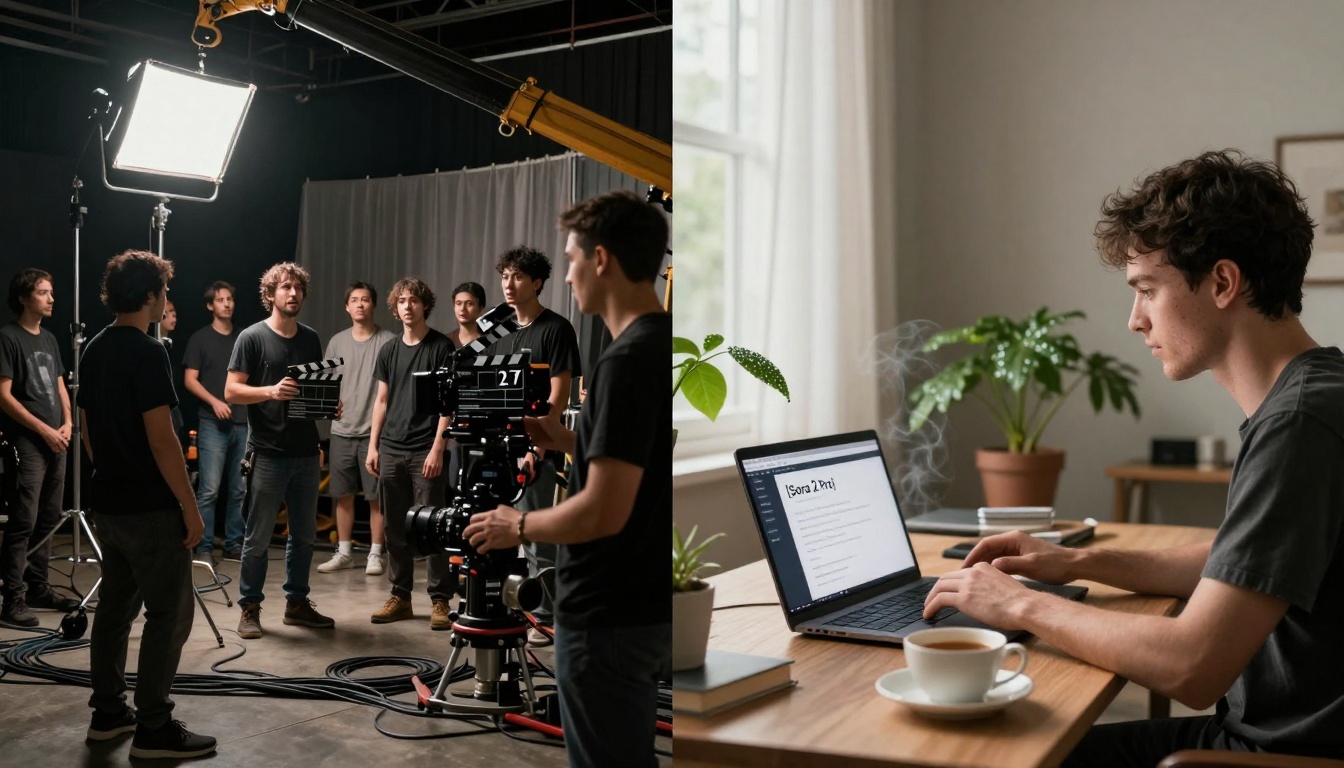
Visual comparison showing the dramatic reduction in complexity and resources
Small businesses that could never afford professional video now create high-converting marketing content for their social channels. Educators produce interactive lesson materials without film school degrees. Nonprofits tell compelling stories about their impact without hiring production companies.
The financial math became undeniable: why spend $50,000 on a corporate video when a $500 AI-generated version performs equally well in engagement metrics?
Democratizing High-Quality Content
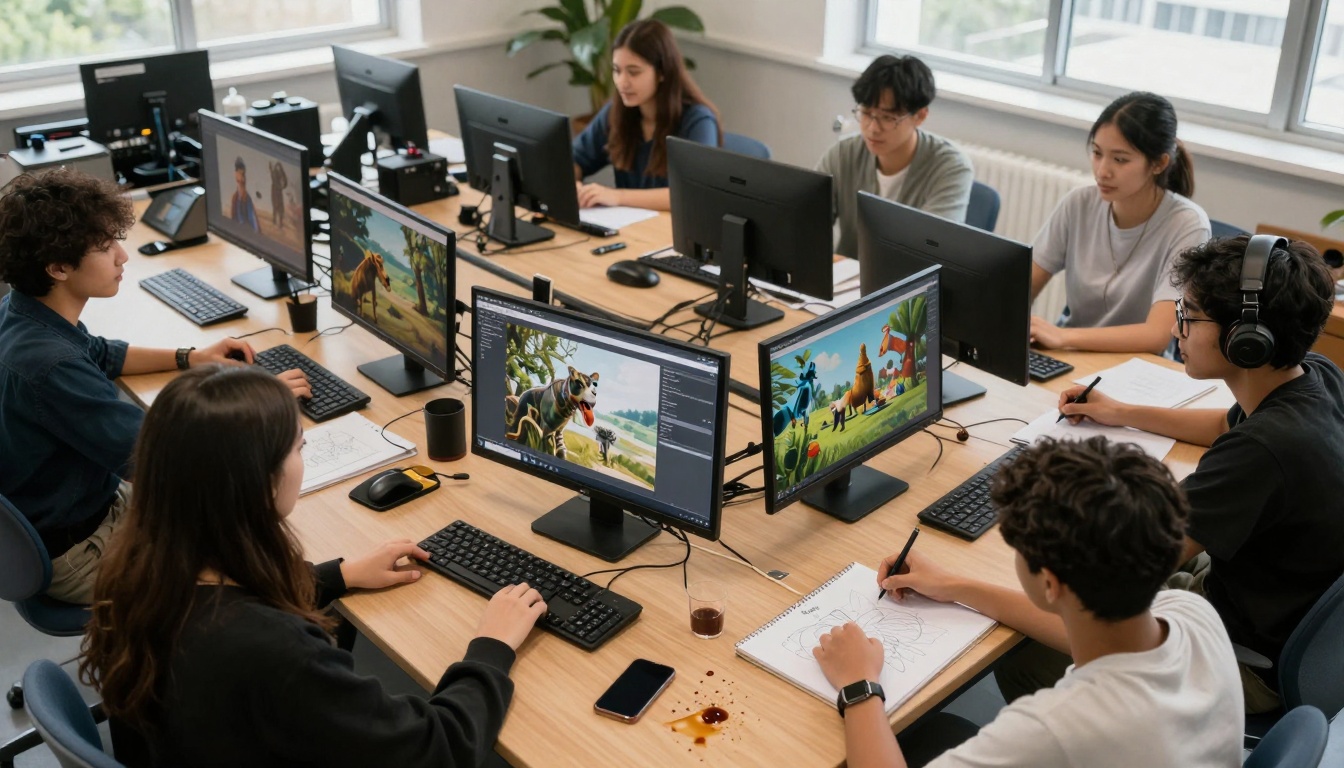
Overhead view showing diverse creators accessing tools previously reserved for professionals
The most profound shift isn't technological—it's cultural. Video creation moved from being a specialized skill requiring years of training to being a literacy similar to writing or basic design. Consider these real-world applications:
For educators: A high school physics teacher creates 3-minute videos demonstrating quantum mechanics concepts using Kling v2.6 to visualize electron behavior at atomic scale.
For small businesses: A local bakery generates weekly "behind-the-scenes" content showing artisanal bread-making processes, increasing Instagram engagement by 300% without hiring a videographer.
For healthcare: Medical professionals create patient education videos explaining complex procedures using clear visual metaphors generated by AI.
For personal use: Families preserve memories by recreating historical moments or visualizing future scenarios for milestone celebrations.
The barrier wasn't just cost—it was complexity. Traditional video required understanding cameras, lighting, sound, editing software, color theory, and narrative structure. AI video generators reduce this to prompt engineering—describing what you want to see in natural language.
How AI Video Generators Actually Work

Macro visualization of the complex neural architectures powering modern AI video generation
Behind the simple interface lies extraordinarily complex technology. Modern AI video generators like WAN 2.6 T2V use a three-stage pipeline:
1. Text Understanding & Scene Planning
- Natural language processing breaks down prompts into visual concepts
- Temporal planning determines motion sequences and scene transitions
- Style extraction identifies requested visual aesthetics (cinematic, documentary, animated)
2. Frame Generation & Consistency
- Diffusion models generate individual frames with photographic quality
- Temporal transformers ensure consistency across frames (character persistence, object continuity)
- Physics engines simulate realistic motion, lighting changes, and environmental interactions
3. Post-Processing & Refinement
- Noise reduction and artifact removal
- Color grading and cinematic treatment
- Audio synchronization for platforms that support sound generation
The secret sauce in 2027 models is motion understanding. Earlier systems treated video as sequences of independent images. Current systems understand camera physics, object permanence, and narrative flow—creating videos that feel directed rather than generated.
Not all AI video generators are created equal. The 2026 market offers specialized tools for different use cases:
| Platform | Best For | Key Strength | Sample Output |
|---|
| Sora 2 Pro | Cinematic narratives, emotional performances | Character consistency, facial expressions | 30-second short films with emotional arcs |
| Veo 3.1 | Documentary, educational content | Realistic physics, natural environments | Nature documentaries, scientific visualizations |
| Kling v2.6 | Marketing, product demos | Style control, brand consistency | Product launch videos, animated explainers |
| WAN 2.6 I2V | Image-to-video transformations | Motion extrapolation, temporal coherence | Turning still photos into dynamic scenes |
| Seedance 1.5 Pro | Social media, short-form content | Fast generation, trending styles | TikTok-style clips, viral content |
💡 Platform selection tip: Match your content goals to platform specialties. For emotional storytelling, choose Sora 2 Pro. For educational content, Veo 3.1 excels at realistic physics.
Creative Possibilities You Haven't Imagined
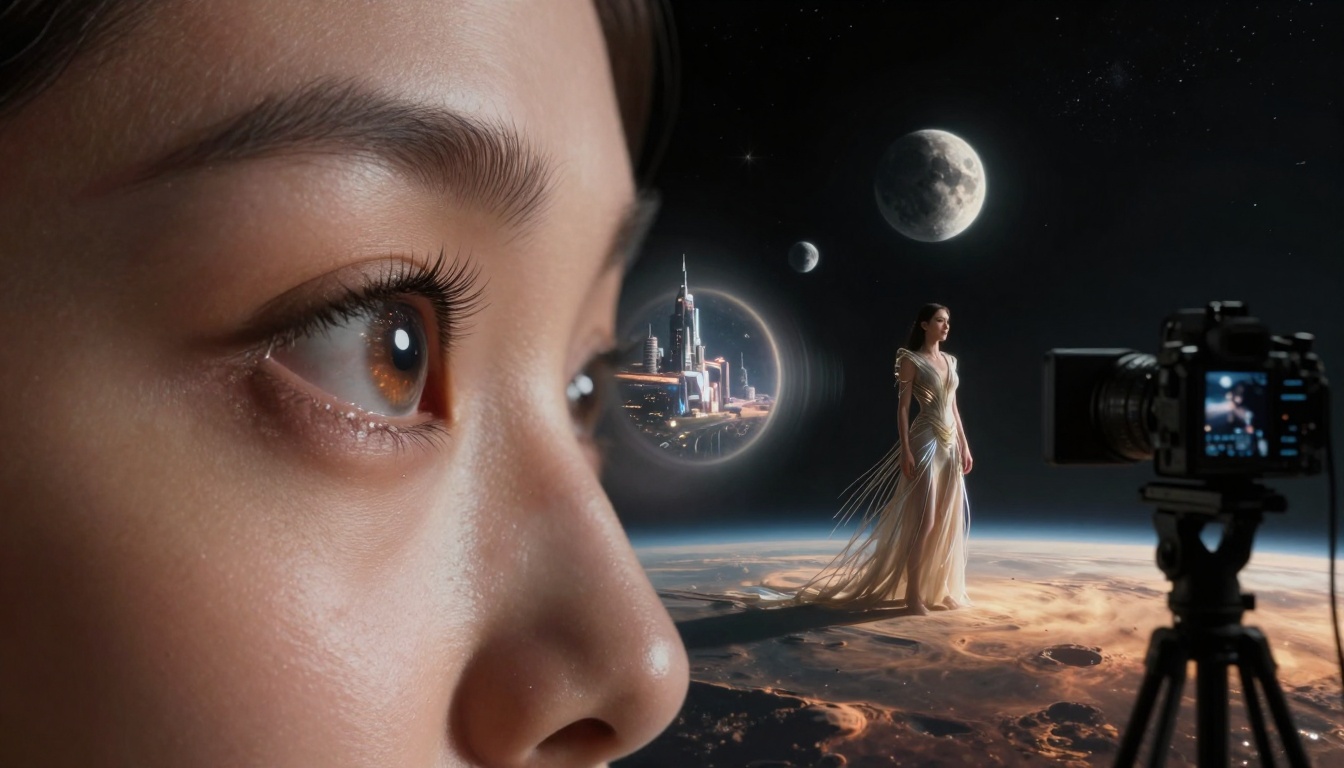
Visualization of camera movements physically impossible with traditional equipment
The most exciting aspect isn't replicating what we could already do—it's enabling what was previously impossible. Consider these creative breakthroughs:
Hyper-personalized content: An e-learning platform generates unique video lessons for each student based on their learning style, pace, and interests. The system adapts visual complexity, narration speed, and example scenarios dynamically.
Historical reconstruction: Museums create immersive experiences showing historical events with accurate period details, clothing, and environments based on archaeological data and historical records.
Concept visualization: Architects and urban planners generate fly-through videos of unbuilt projects, allowing stakeholders to experience spaces before ground is broken.
Impossible perspectives: Camera movements that would require zero-gravity environments or microscopic drones—zooming from satellite view to cellular level in continuous shots.
Style fusion: Blending artistic movements—what would a Kubrick-directed nature documentary look like? Or a Wes Anderson-style corporate training video?
The constraint shift from "what can we physically film" to "what can we imagine" represents the most significant creative expansion since the invention of the motion picture camera.
Business Impact and ROI
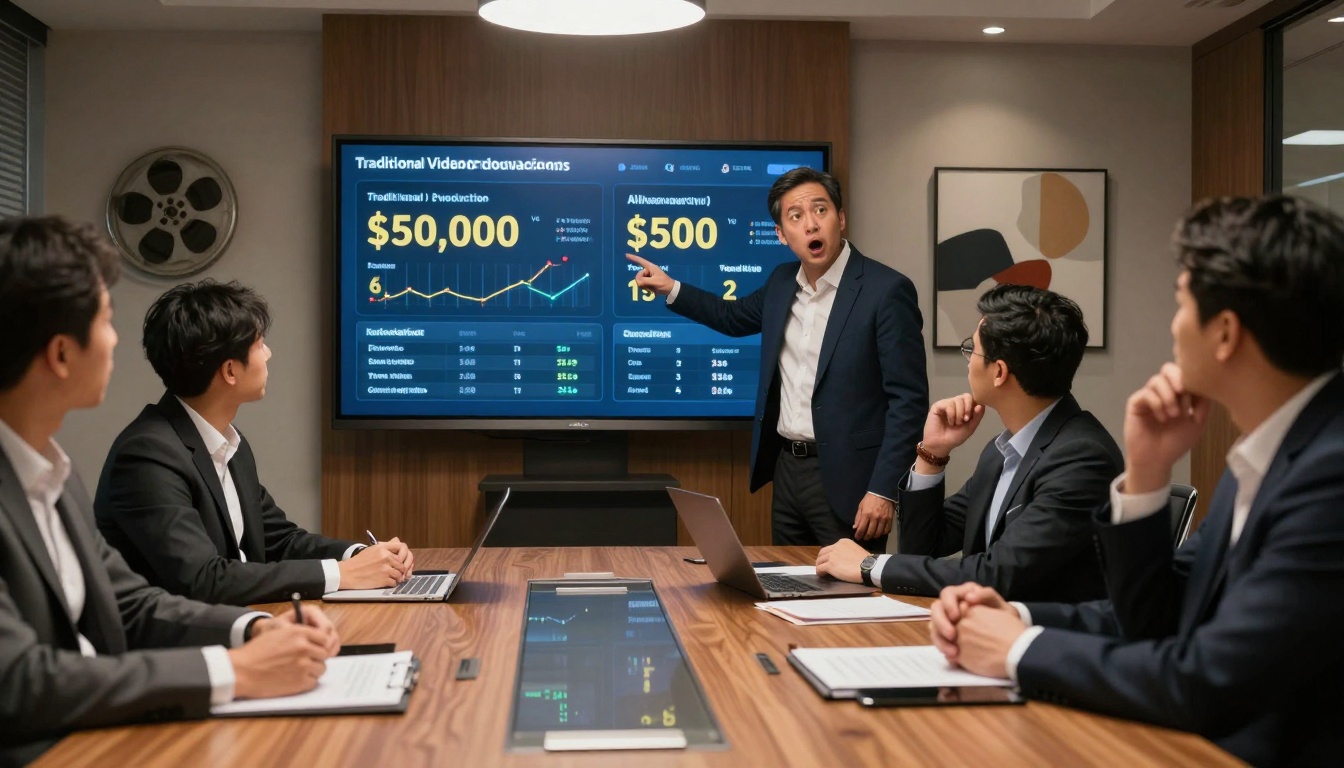
Executive meeting analyzing the dramatic cost savings from AI video adoption
The business case became undeniable in early 2026 when case studies revealed consistent patterns:
Marketing departments reported:
- 83% reduction in video production costs
- 400% increase in content output volume
- 35% higher engagement on AI-generated vs traditional videos (attributed to faster adaptation to trending topics)
Training & development teams found:
- 70% faster content creation for new product training
- 42% improvement in knowledge retention with AI-generated visual explanations
- Unlimited scalability for global workforce training in multiple languages
Content creators experienced:
- 10x output with similar quality levels
- New revenue streams from niche content previously unprofitable to produce
- Competitive advantage through rapid response to cultural moments
The financial implications extend beyond direct cost savings. Consider the opportunity cost of not adopting: competitors producing 50 videos per month while you struggle with 5. Or the speed-to-market advantage of launching product videos simultaneously with product release rather than weeks later.
Quality Evolution: The 2026 Threshold
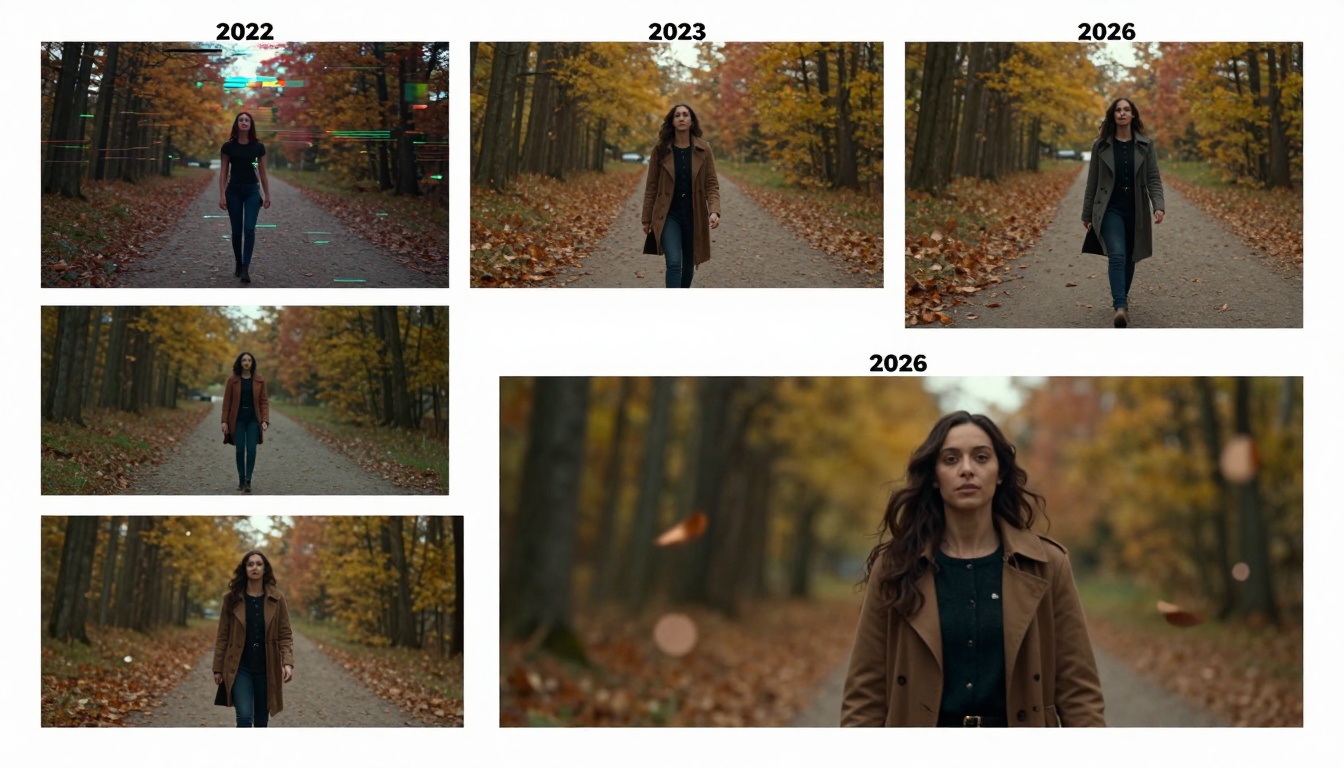
Four-quadrant timeline showing the rapid quality improvement from 2022 to 2026
Understanding why 2026 became the inflection point requires examining the quality progression:
2022: Novelty phase
- 2-4 second clips
- Significant artifacts and inconsistencies
- Recognizably artificial aesthetics
- Limited practical applications
2023-2024: Improvement phase
- 5-10 second durations
- Reduced artifacts but still noticeable
- Useful for abstract concepts and animations
- Beginning of commercial adoption
2025: Near-photorealistic phase
- 15-20 second clips
- Individual frames indistinguishable from photography
- Motion still slightly unnatural
- Widespread experimental use
2026: Cinema-grade phase
- 30+ second narratives
- Perfect temporal consistency
- Emotional performance capability
- Indistinguishable from mid-budget productions in many genres
The 2026 breakthrough came from three technical advances:
- Temporal transformers that understand scene progression rather than frame-by-frame generation
- Physics-informed models that simulate real-world motion, lighting, and material interactions
- Emotional intelligence in character animation, creating performances with authentic facial expressions and body language
Getting Started with AI Video Creation
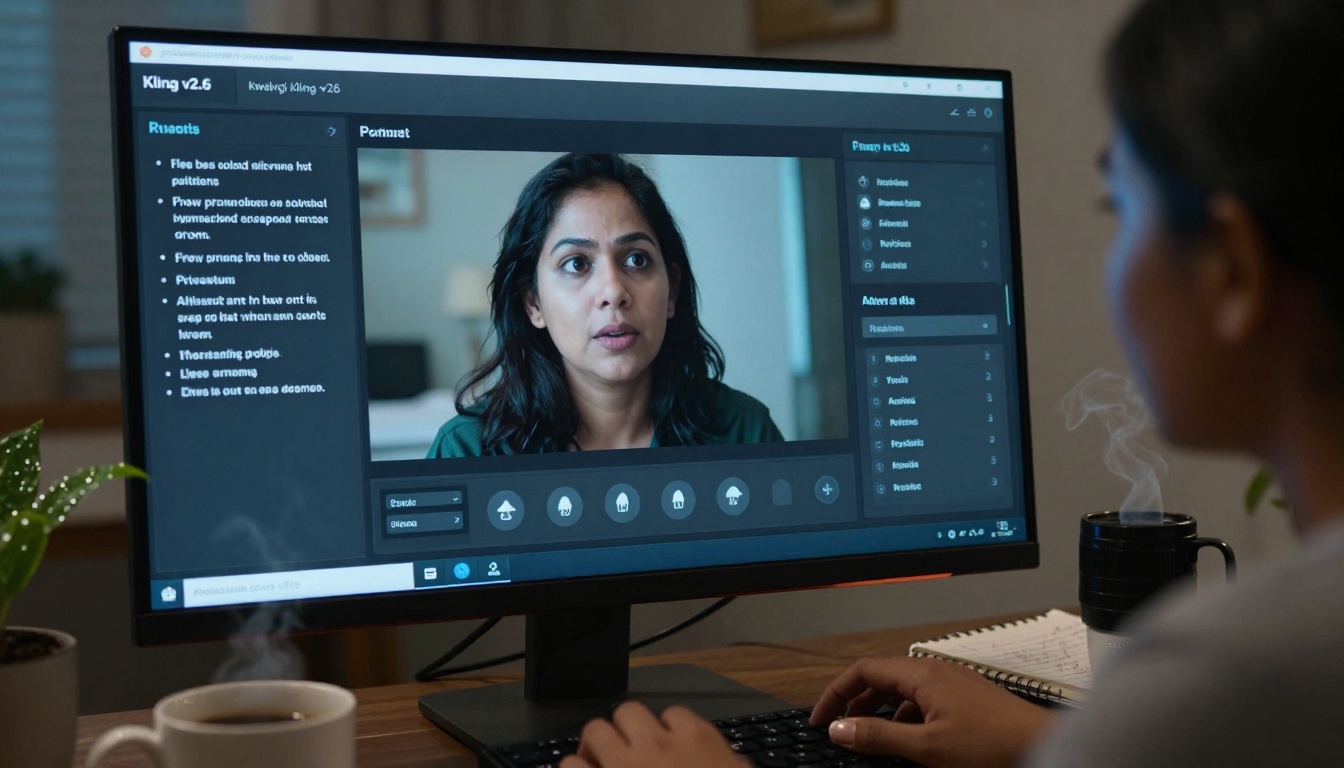
Interactive tutorial showing accessible onboarding for first-time users
Starting with AI video generation requires less technical knowledge than learning traditional video editing software. Here's a practical roadmap:
Week 1: Foundation
- Choose your platform based on primary use case (see comparison table above)
- Master basic prompts: Start with simple scenes, then add detail layers
- Understand parameters: Motion intensity, style consistency, duration controls
Week 2: Skill Building
4. Study cinematic language: Camera angles, lighting terms, shot composition
5. Practice narrative structure: Beginning-middle-end within 30-second constraints
6. Experiment with styles: Try different genres to understand platform capabilities
Week 3: Production Workflow
7. Develop prompt templates for recurring content needs
8. Establish quality review process for consistent output
9. Integrate with existing tools: Editing software, distribution platforms
Week 4: Optimization
10. Analyze performance metrics: Which videos get highest engagement?
11. Refine based on data: Double down on what works
12. Scale production: Batch processing, automation where possible
💡 Pro tip: The most successful creators treat AI video as collaboration rather than automation. Provide clear creative direction through detailed prompts, then refine based on results.
Global Impact and Accessibility
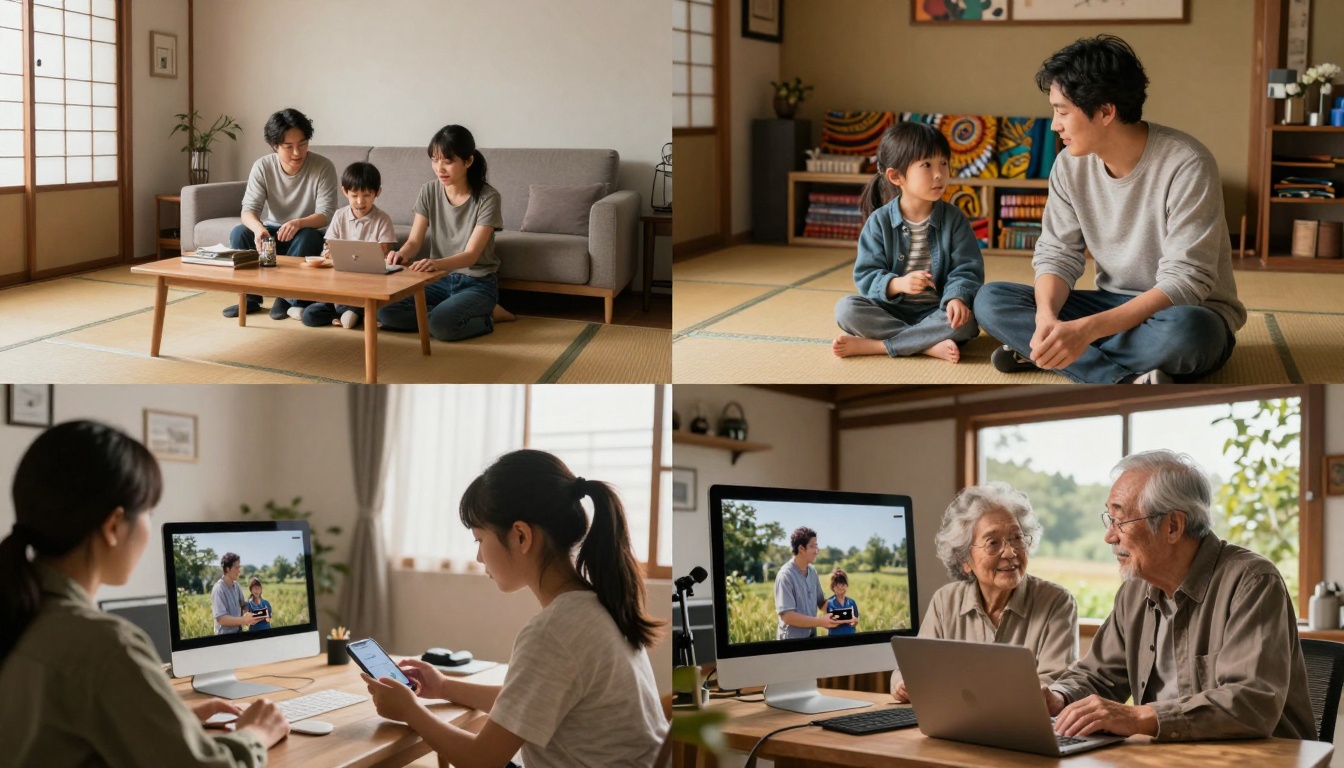
Multi-region visualization showing diverse applications worldwide
The democratization effect reaches far beyond Western creative industries. Consider these global applications:
In developing regions: Educational content creation in local languages without requiring translation of existing Western materials. Custom videos addressing region-specific challenges like agricultural techniques or healthcare information.
For marginalized communities: Representation in media where traditional production would never allocate resources. Stories told from perspectives historically excluded from mainstream media.
In accessibility: Real-time video description generation for visually impaired audiences. Sign language interpretation synthesized for any video content.
For preservation: Indigenous cultures documenting traditions, languages, and histories through visually rich narratives that engage younger generations.
The technology's lowest common denominator—text description—makes it inherently more accessible than camera-based production. Anyone who can describe what they want to see can create it, regardless of technical skills, physical ability to operate equipment, or financial resources for production.
The Future Is Already Here
The question "why is everyone trying AI video generators in 2026?" has a simple answer: because they work. Not as novelty, not as compromise, but as legitimate production method that delivers quality results at unprecedented speed and cost.
The adoption curve follows classic technology diffusion patterns: innovators (2022-2023), early adopters (2024), early majority (2025), and now the late majority jumping in during 2026 as quality reached the "good enough" threshold for mainstream applications.
What comes next? Integration with other creative tools, real-time generation for interactive experiences, personalized content at scale, and perhaps most importantly—new forms of storytelling we haven't yet imagined because our thinking has been constrained by physical production limitations.
The most successful creators in this new landscape won't be those who replicate traditional video with AI tools, but those who explore what's uniquely possible with this technology. They'll discover narrative structures that work across 15-second social clips and 30-minute immersive experiences. They'll blend genres in ways that would be prohibitively expensive with physical production. They'll tell stories from perspectives that cameras could never capture.
The tools are here. The quality threshold has been crossed. The economic case is proven. The only question remaining is what you'll create with them.
Ready to explore AI video generation? Platforms like Picasso IA offer access to leading models including Sora 2 Pro, Veo 3.1, Kling v2.6, and WAN 2.6 T2V. Start with simple prompts, iterate based on results, and discover what becomes possible when your imagination is the only constraint.


